 Semiahmoo Siding
 Siding Built for Ferndale's Coastal Climate
Ferndale sits close enough to the Salish Sea and the Semiahmoo waterfront that homes here deal with a specific mix of weather stress most inland Washington towns don't see. You get the marine layer moisture common to all of Whatcom County, plus a steady dose of salt-laden air moving in off the water, plus the long gray stretch of fall-through-spring rain that never really lets a house dry out. Add in the shade from mature evergreens on a lot of Ferndale properties, and you've got ideal conditions for moss, algae, and slow-motion moisture damage to work on a home's exterior year after year.
None of that means a house here is doomed to look tired after a decade. It means the exterior materials and the installation details matter more in Ferndale than they would somewhere dry and sunny. That's the lens we bring to every siding, roofing, window, and deck job we do in this area.
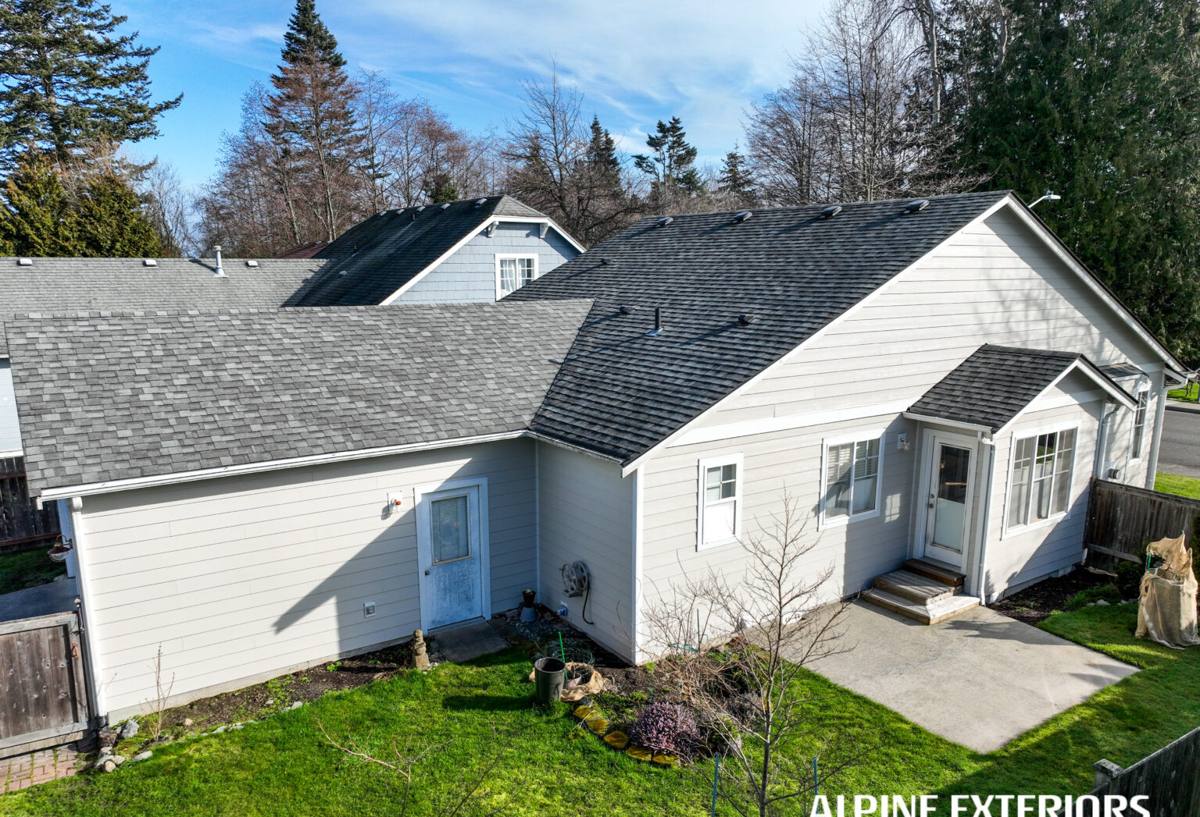
What Local Homes Are Actually Up Against
Salt Air and Metal Fasteners
Proximity to Semiahmoo Bay and the broader Salish Sea means airborne salt finds its way onto siding, trim, and fasteners. Over time, salt exposure accelerates corrosion on lower-grade metal components and can leave a dull, gritty film on painted surfaces that holds moisture against the wall. It's a slow process, but it's constant, and it's one reason fastener quality and coating durability matter as much as the siding material itself.
Driving Rain and Wind-Driven Moisture
Whatcom County storms don't just fall straight down — wind off the water pushes rain sideways into wall assemblies, especially on west- and south-facing elevations. That kind of driving rain finds every gap in flashing, every poorly caulked seam, and every spot where siding wasn't lapped correctly. A material that swells, cups, or delaminates when it takes on water is going to show it faster here than in a drier climate.
Moss, Algae, and a Long Growing Season
Shade, humidity, and mild temperatures give moss and algae a long season to establish themselves on north-facing walls, under eaves, and anywhere airflow is restricted. Beyond the cosmetic issue, moss holds moisture against the siding surface, which is a problem for any material that isn't dimensionally stable or that relies on a surface paint film to keep water out.
Why We Install Only James Hardie Fiber Cement
We made a deliberate decision years ago to standardize on James Hardie siding and stop installing vinyl, LP SmartSide, primed spruce, cedar, or other fiber cement brands. That's not a marketing position — it's a practical one, built around what actually holds up under the conditions described above.
- Non-combustible core: Hardie fiber cement is engineered from cement, sand, and cellulose fiber, giving it a fire-resistance profile that wood-based and vinyl products can't match.
- Moisture and rot resistance: Fiber cement doesn't absorb water the way wood-based composite products do, and it won't warp or delaminate the way lower-grade panel products can when driving rain gets behind trim or laps.
- ColorPlus factory finish: A baked-on finish applied under controlled conditions holds color and resists fading and chipping far better than field-applied paint, which matters in a climate where repainting is disruptive and expensive.
- Climate-engineered HZ product lines: Hardie's HZ5 formulation is built specifically for cold, wet Pacific Northwest conditions rather than a generic national spec.
- Strong transferable warranty: A meaningful warranty that survives a change of ownership matters to resale value, especially in a market where buyers ask exterior maintenance questions up front.
We're upfront that Hardie isn't the cheapest option on the shelf, and it does require correct installation to perform the way it's designed to. But given what we see on older homes in this area — moss-packed trim, swollen panel edges, chalky faded paint — it's the material we're willing to put our name behind.
What We Won't Install, and Why
Vinyl Siding
Vinyl is inexpensive and easy to source, and for a lot of climates it does an adequate job. In a coastal, high-moisture area like Ferndale, though, vinyl's weak points show up: it can warp or become brittle with age and temperature swings, seams and panel laps give moisture a path behind the material, and it doesn't offer the fire performance of fiber cement. We'd rather not put our crew's name on a product that's likely to need premature replacement in this climate.
LP SmartSide and Other Wood-Composite Products
LP SmartSide has real advantages — it's lighter than fiber cement and easier to cut and handle. Its wood-strand core, though, is more sensitive to sustained moisture exposure than cement-based siding, and in a climate with Ferndale's rain totals and humidity, any breach in the factory coating or field-cut edge sealing becomes a long-term liability. We don't think that trade-off makes sense here.
Primed Spruce and Cedar
Real wood siding has genuine curb appeal, and cedar in particular has a long history in this region. But both primed spruce and cedar demand an ongoing maintenance commitment — recoating, caulking, and moisture monitoring — that most homeowners don't sign up for and don't keep up with. Left unmaintained in a shaded, damp Whatcom County lot, wood siding is one of the fastest materials to show rot and moss staining.
Other Fiber Cement Brands (Cemplank, Allura)
These are legitimate fiber cement competitors to Hardie, and the core material science is similar. Our decision to standardize on Hardie comes down to the ColorPlus finish quality, the HZ5 climate-specific formulation, and the depth of Hardie's warranty and installer network in this region — consistency we can stand behind on every job rather than switching specs project to project.
Siding Material Comparison
| Material | Moisture Performance | Fire Resistance | Typical Maintenance |
|---|---|---|---|
| James Hardie Fiber Cement (HZ5) | Excellent — dimensionally stable, won't swell or rot | Non-combustible | Low — factory finish, occasional wash |
| Vinyl | Fair — seams and laps vulnerable to wind-driven rain | Combustible, can melt/warp | Low, but shorter service life in this climate |
| LP SmartSide | Fair — wood-strand core sensitive to sustained moisture | Combustible | Moderate — edge sealing, coating checks |
| Cedar / Primed Spruce | Poor without diligent upkeep | Combustible | High — regular recoating and caulking |
Beyond Siding: Roofing, Windows, and Decks in a Wet Climate
Siding doesn't work in isolation. On most Ferndale homes, the roof, windows, and any deck or exterior structure are all managing the same moisture load, and a weak point in one system puts stress on the others. A roof with failing flashing sends water down behind siding it was never meant to touch. Windows with degraded seals let moisture into wall cavities near the frame. A deck built without attention to ledger flashing and proper drainage rots from the inside before it shows anything on the surface.
Because we handle siding, roofing, windows, and decks, we look at a property as one connected exterior system rather than a single line-item job. That matters most in a climate like this one, where water finds the path of least resistance and doesn't announce itself until damage is already underway.
Why a Local Crew Matters Here
Whatcom County's coastal microclimate isn't identical to Seattle's, Portland's, or inland Washington's. Wind exposure off the bay, the length of the wet season, and how much shade and moss pressure a given lot sees can vary block to block in a place like Ferndale. A crew that works this area regularly knows which elevations tend to take the worst driving rain, where flashing details need extra attention, and how much clearance to leave for airflow behind siding on shaded walls. That local knowledge shows up in fewer callbacks and a longer-lasting installation, not just a faster one.
What a Siding Project Looks Like
Signs It's Time to Look Closer
- Persistent moss or algae staining that returns soon after cleaning
- Soft spots, swelling, or visible gaps at panel seams and trim joints
- Paint that's chalking, peeling, or fading unevenly across elevations
- Rising energy bills that point to failing insulation or air sealing behind old siding
- Visible fastener corrosion or staining streaking down from nail heads
- Warping or cupping panels, especially on west- and south-facing walls
What Correct Installation Involves
Fiber cement performs the way it's supposed to only when it's installed to manufacturer spec: correct fastener type and spacing, proper clearances at grade and roof lines, weather-resistant barrier and flashing details done right the first time, and factory-cut or properly sealed field cuts. Skipping these details is the single biggest reason any siding material — Hardie included — underperforms in a coastal Pacific Northwest climate.
Cost Factors to Expect
Every home is different, but a few factors consistently move the price on a Ferndale siding project: the size and complexity of the home's exterior (dormers, multiple stories, and trim detail all add labor), whether existing siding needs to be removed and disposed of, the condition of the sheathing and weather barrier underneath once old siding comes off, and the specific Hardie product line and color chosen. We'll walk through all of that in a real, on-site estimate rather than a ballpark guess over the phone.
If your Ferndale home is due for new siding, or you're weighing options after noticing moss, staining, or wear on your current exterior, we're happy to take a look and give you a straightforward, no-pressure estimate. There's a form below to get that started.