 Semiahmoo Siding
 Point Roberts Is Its Own Kind of Exposure
Point Roberts sits on a small peninsula that hangs off the bottom of Boundary Bay, cut off from the rest of Whatcom County by Canadian soil. That geography matters for a lot of reasons, but for a siding contractor, what matters most is the exposure: homes here sit close to open water on more than one side, catch wind off the Strait of Georgia and Boundary Bay with very little to break it, and see the same wet, gray Pacific Northwest weather pattern that defines the whole Semiahmoo area — just with more salt in the air and fewer windbreaks between the house and the water.
That combination of salt air, driving rain, and a long moss season is a real, physical load on a home's exterior. It doesn't show up overnight. It shows up over years, in the form of failed caulk joints, swollen trim, streaked or stained siding, and moss creeping up from the north-facing wall until it's holding moisture against the material year-round. Point Roberts homes need siding, trim, and roofing that were built to take that punishment — not products that were engineered for a drier climate and are just doing their best out here.
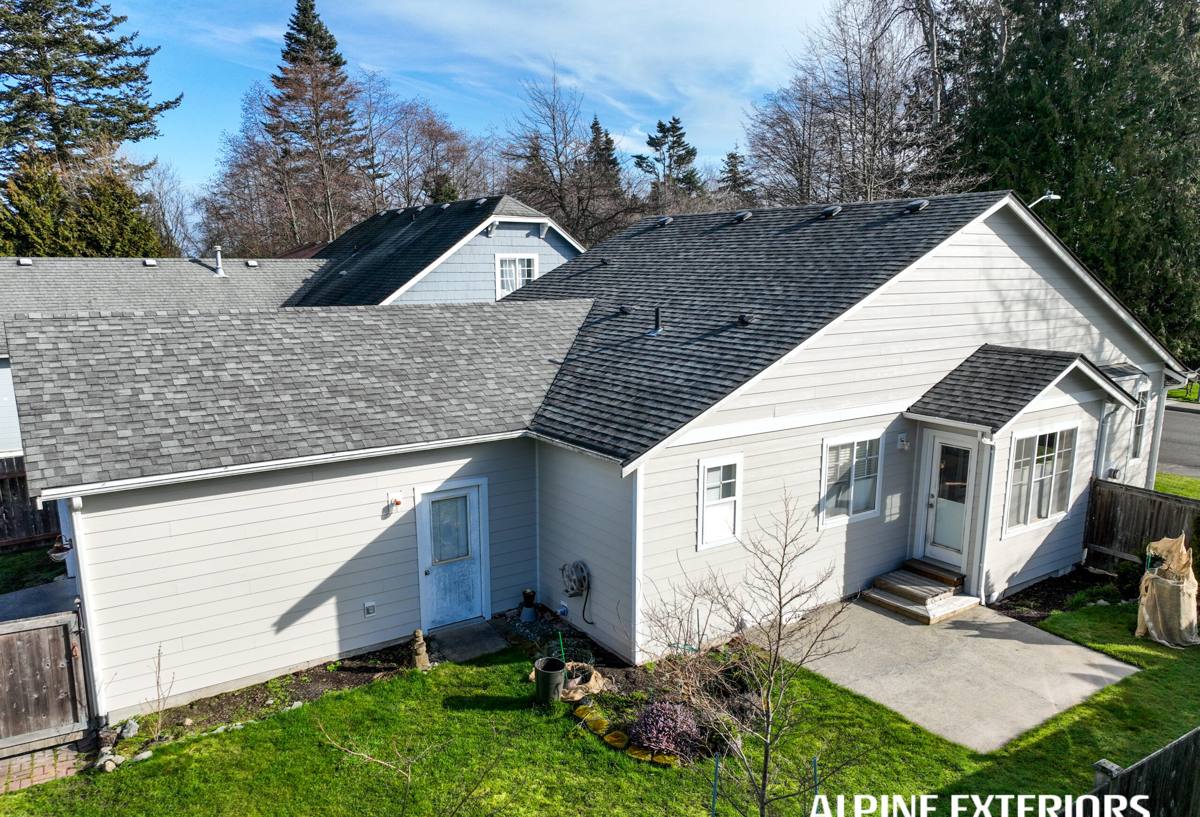
What Salt Air Actually Does to a House
Salt air isn't just a coastal cliché. Airborne salt is corrosive to exposed metal — fasteners, flashing, gutter hardware — and it accelerates the breakdown of paint films and caulk. On a home a few blocks from the water, that means:
- Faster degradation of standard paint finishes, especially on south and west-facing walls that also take direct sun
- Corrosion-prone fasteners and flashing if the wrong metal or coating was used originally
- Caulk joints around trim and window flashing drying out and cracking sooner than they would inland
- A general dulling or chalking of siding color over time on lower-quality or unfinished materials
None of this means a house near the water is doomed — it means the materials and detailing need to account for the environment they're actually in, not a generic one.
Driving Rain and Wind-Driven Water
Point Roberts gets the same wet-season rain as the rest of the Semiahmoo area, but with less tree cover and open exposure on multiple sides, that rain often arrives sideways. Wind-driven rain finds every weak point in an exterior — a gap in caulking, a poorly lapped piece of trim, a nail hole that wasn't sealed. Over time, water that gets behind siding rather than running off it is what causes rot in the sheathing and framing underneath, which is a far more expensive problem than the siding itself. Good water management — correct flashing, proper laps, rainscreen or drainage gap where called for, and siding that doesn't absorb and hold moisture — matters more here than in a sheltered inland lot.
Moss Season: Longer and More Persistent Here
"Moss season" in the Pacific Northwest usually means the wet months when shaded, north-facing, or slow-to-dry surfaces stay damp long enough for moss and algae to take hold. On the Point Roberts peninsula, with its marine humidity and long stretches of overcast, damp weather, that window tends to run longer than it does further inland. Moss on a roof is a well-known problem — it lifts shingles and holds water against the roof deck. Moss and algae streaking on siding is more of a cosmetic and maintenance issue, but it's still a sign that a surface is staying wet longer than it should, and on porous or absorptive siding materials, prolonged dampness against the surface is exactly the condition that leads to swelling, cracking, or coating failure over time.
A siding material that doesn't absorb water the way wood-based products do handles a long moss season a lot better — it may still need an occasional wash-down, but it isn't taking on moisture every time it's damp.
Why We Only Install James Hardie Fiber Cement
We made a standard for our company: James Hardie fiber cement siding, and nothing else. Not because every alternative is a bad product in every setting, but because for the climate we work in — and especially for exposure like Point Roberts sees — the trade-offs of the other common options aren't ones we're willing to put our name behind.
What We Won't Install, and Why
| Product | What it gets right | Why it's a tough call near the water |
|---|---|---|
| Vinyl siding | Low upfront cost, low maintenance in mild settings | Can warp or become brittle with temperature swings and wind stress; seams and J-channels are more vulnerable to wind-driven rain intrusion; doesn't hold up to physical impact well |
| LP SmartSide (engineered wood) | Good workability, reasonable cost, decent impact resistance | It's a wood-based product — any breach in the factory coating or field-cut edge sealing opens the door to moisture absorption and swelling, which is a real risk in a long wet/moss season |
| Primed spruce / cedar | Natural look, traditional in the region | Highest maintenance burden of any option — needs regular repainting and sealing, and untreated cut edges absorb water fast; salt air accelerates coating breakdown |
| Cemplank / Allura (other fiber cements) | Same base material category as Hardie, reasonable performance | We standardized on one manufacturer for consistent factory finish quality, warranty structure, and product engineering specific to Pacific Northwest exposure (Hardie's HZ5 line) |
James Hardie fiber cement is non-combustible, doesn't absorb water the way wood-based sidings do, and comes with a factory-applied ColorPlus finish that's engineered to hold color and resist fading and moisture far better than a field-applied paint job. Hardie also builds a version of its product — the HZ5 line — specifically engineered for harsher, wetter climate zones, which fits this stretch of coastline. The backing is a strong, transferable warranty on both the material and the factory finish, which matters on a home that's going to face decades of salt air and rain.
None of that means Hardie is maintenance-free. It still needs to be installed correctly — proper clearances, correct fastening, sealed joints — and it still benefits from an occasional wash to keep moss and algae from building up. But it starts from a much stronger baseline for a place like Point Roberts.
What "Local Crew" Actually Means Out Here
Point Roberts' geography creates a real logistical wrinkle: it's part of Whatcom County and the state of Washington, but the only land route in and out crosses the Canadian border twice. That affects scheduling, material delivery, and crew planning in a way that a contractor unfamiliar with the area won't anticipate. A crew that regularly works the Semiahmoo and Boundary Bay area knows to plan border-crossing time into the schedule, batch material deliveries efficiently, and avoid the kind of delays that come from treating Point Roberts like just another stop on a route. That's not a minor convenience — it's the difference between a job that stays on schedule and one that drags out over weeks because nobody accounted for the drive.
Beyond Siding: Roofing, Windows, and Decks in the Same Environment
The same salt air, driving rain, and moss exposure that affects siding affects every other exterior surface on a Point Roberts home. We handle roofing, windows, and decks alongside siding because they all need to work together as one weather-resistant system:
- Roofing: moss and algae growth is one of the most common maintenance issues on Northwest roofs; roofing materials and ventilation need to account for a long damp season
- Windows: flashing and sealing details around window openings are one of the most common sources of water intrusion — this is where siding and window work need to be coordinated, not treated as separate trades
- Decks: exposed to the same driving rain and salt air, with the added stress of direct foot traffic and standing water if drainage isn't right
Coordinating these as one exterior envelope — rather than four separate contractors who never talk to each other — is how water management actually holds up over time.
What to Ask Before You Hire Anyone for Exterior Work Near the Water
Coastal and near-coastal jobs are a different animal from a sheltered inland lot, and it's worth vetting a contractor accordingly:
- Do they work in Whatcom County's coastal and peninsula areas regularly, or is this a one-off trip for them?
- What siding material do they install as their standard, and can they explain why — not just what it costs?
- Will they detail flashing and water management specifically, or is that an afterthought in the quote?
- Do they carry proper licensing and insurance for work in Washington State?
- Can they walk you through how they'd sequence work around border-crossing logistics if you're on the Point Roberts side?
Signs Your Point Roberts Home May Need Exterior Attention
A few things worth watching for, especially on walls facing the water or staying shaded most of the day:
- Visible moss or dark streaking on siding, trim, or roofing that keeps coming back after cleaning
- Caulk lines around windows and trim that are cracked, shrunk, or pulling away
- Soft or spongy spots on wood trim, fascia, or siding when pressed
- Peeling or bubbling paint, especially on south- or west-facing walls
- Corrosion staining running down from fasteners, flashing, or gutter hardware
None of these are emergencies on their own, but they're worth a professional look before they turn into a moisture problem behind the wall.
Get a No-Pressure Look at Your Home
If you're weighing a siding, roofing, window, or deck project on a Point Roberts home, we're glad to come take a look and walk you through what we're seeing and what we'd recommend — no pressure, no obligation. Fill out the form below to schedule a free estimate.