 Semiahmoo Siding
 We Don't Install Everything — Here's Why
Most siding contractors will hang whatever a homeowner picks: vinyl, LP SmartSide, cedar, primed spruce, fiber cement from whichever brand is cheapest that week. We stopped doing that. We install one siding system — James Hardie fiber cement — and we turn down jobs where a homeowner insists on something else. That's not a sales gimmick. It's a decision we made after years of callbacks, warranty disputes, and watching other products fail in exactly the ways Whatcom County weather is built to exploit.
This page explains the reasoning in plain terms: what our climate does to siding, why the alternatives struggle here, what James Hardie actually is as a product system, and what correct installation looks like. No scare tactics, no invented statistics — just what we've learned from working on homes in Semiahmoo and the surrounding area.
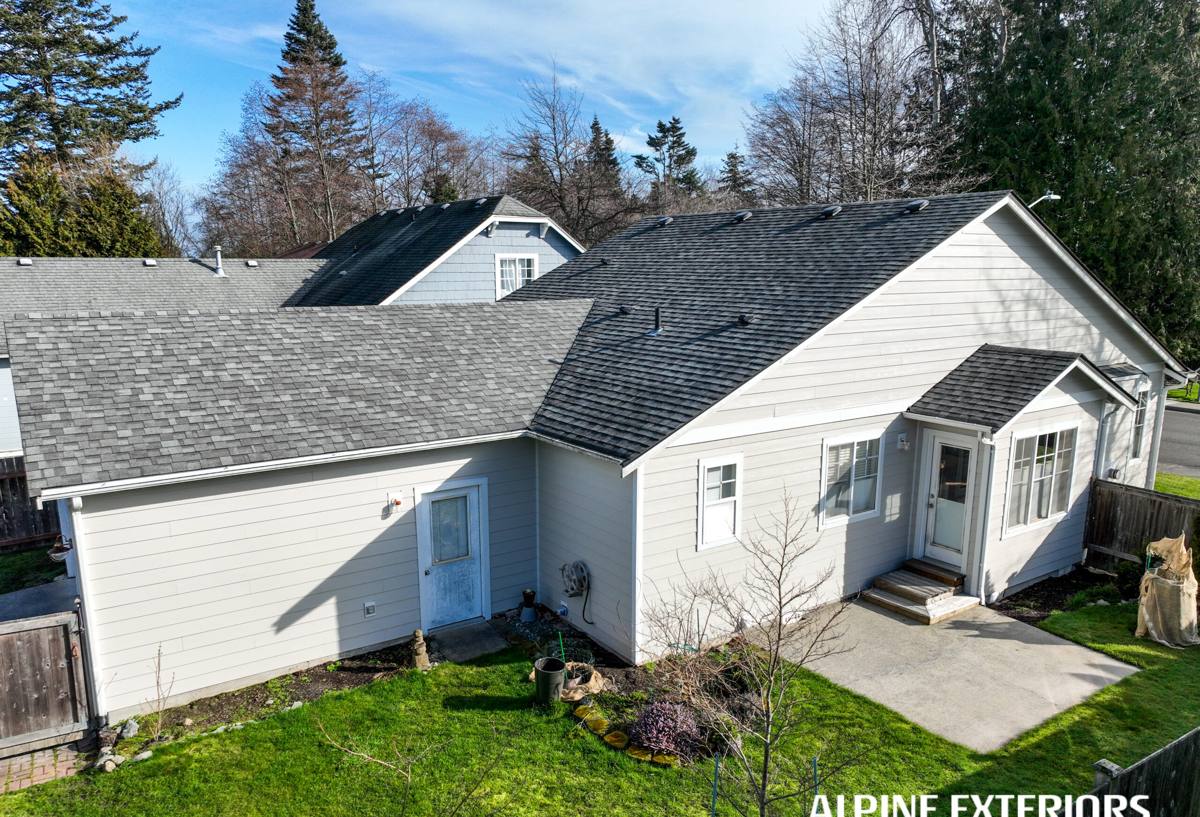
What Semiahmoo's Climate Actually Does to Siding
Semiahmoo sits on a spit facing Semiahmoo Bay and Drayton Harbor, with Boundary Bay and the Strait of Georgia close by. That geography matters more than most homeowners realize when it comes to exterior materials.
Salt Air
Homes here get a steady, low-grade dose of salt-laden air off the water. Salt is hygroscopic — it pulls moisture out of the air and holds it against whatever surface it lands on. For siding, that means more time spent damp, faster breakdown of coatings, and accelerated corrosion of exposed fasteners and trim hardware. Materials and finishes that aren't built to handle this get chalky, faded, or soft years ahead of schedule.
Driving Rain
Whatcom County doesn't just get a lot of rain — it gets a lot of wind-driven rain off the water, which pushes moisture sideways into laps, seams, and butt joints instead of letting it run straight down and off. Siding systems that rely on tight seams and paint film alone to keep water out get tested here far more aggressively than in a drier, calmer inland climate.
A Long Moss Season
Cool, wet, and shaded conditions for much of the year mean moss and algae growth start early and last long. On north-facing walls and anything shaded by trees or neighboring structures, siding stays damp for extended stretches. Any material that absorbs moisture, or that swells and doesn't fully dry between rain events, becomes a long-term host for growth and rot rather than shedding it.
Put those three factors together and you get a climate that is unusually hard on siding compared to most of the country. That's the lens we run every product decision through.
Why We Don't Install the Common Alternatives
None of these are bad products in every context. They just don't hold up to our specific combination of salt air, driving rain, and moss season the way we want a 30-40 year exterior investment to hold up.
Vinyl Siding
Vinyl is inexpensive and low-maintenance in the sense that it never needs painting — but it's a thin plastic panel that expands and contracts significantly with temperature swings, can warp or buckle, and relies entirely on loose-lock installation to move with the house. In driving rain and wind events it's prone to water intrusion behind the panels if the water-resistive barrier and flashing details aren't perfect, and it offers no real fire resistance. Color is baked into the plastic, which sounds durable, but that same plastic fades and chalks under UV and salt exposure over time, and it can't be repainted without special prep.
LP SmartSide
LP SmartSide is an engineered wood product — wood strand substrate with a resin-saturated overlay. It performs reasonably well when kept dry and fully maintained, but it is still wood at its core, meaning it's more moisture-sensitive than fiber cement. Cut edges, fastener penetrations, and any coating failure become entry points for moisture, and once wood-based siding starts absorbing water repeatedly, swelling and eventual delamination follow. In a moss-season climate with sustained dampness, that's a real long-term risk we're not willing to install and stand behind.
Cedar and Primed Spruce
Real wood siding looks great and has genuine character, but it demands ongoing maintenance — restaining or repainting on a strict cycle, caulking, and vigilance about moisture and insects. In a climate with this much sustained rain and shade-driven dampness, wood siding maintenance schedules compress fast, and skipped maintenance shows up as rot, cupping, and moss within a few years rather than a decade.
Other Fiber Cement Brands (Cemplank, Allura, etc.)
These are legitimate fiber cement competitors, and fiber cement as a category is the right call for this climate. Where we draw the line is the specifics: factory finish quality, climate-specific engineering, and warranty structure vary between brands, and we've standardized on the one we trust most to perform and to back its product if something goes wrong. More on that below.
Side-by-Side: How These Materials Handle Our Climate
| Material | Moisture behavior | Salt-air durability | Maintenance | Typical lifespan here |
|---|---|---|---|---|
| Vinyl | Can trap water behind panels if barrier/flashing fails | Fades, chalks, embrittles over time | Low, but not repairable/repaintable easily | 15-25 years |
| LP SmartSide | Wood-based; vulnerable at cuts, fasteners, coating failure | Moderate; depends on coating integrity | Regular caulk/paint upkeep required | 15-25 years |
| Cedar / primed spruce | Absorbs moisture; needs to dry fully between rain events | Weathers and grays without upkeep | High; strict refinishing cycle | 15-25 years with upkeep |
| James Hardie fiber cement | Non-combustible, engineered to resist moisture-driven damage | Factory finish formulated for harsh exposure | Low; occasional wash, no refinishing cycle | 30-40+ years to spec |
These are general ranges based on typical performance and upkeep, not guarantees — actual lifespan always depends on installation quality, sun/shade exposure, and maintenance.
What James Hardie Actually Is
James Hardie fiber cement siding is made from cellulose fiber, sand, cement, and water, cured into a dense, stable board. It is non-combustible, doesn't expand and contract the way vinyl or wood does, resists pests, and doesn't provide the food source that moss and algae feed on the way wood-based products can.
Climate-Engineered Product Lines
James Hardie makes different formulations for different climate zones — their HZ5 line is engineered for regions like ours with high moisture exposure, freeze-thaw cycling, and demanding weather. That's a meaningful difference from a one-size-fits-all product: the board itself is formulated with our climate in mind, not just painted to look good in a showroom.
ColorPlus Factory Finish
Rather than field-painting siding after installation — which is where a lot of coating failures start, from uneven application to poor weather timing — James Hardie's ColorPlus finish is baked on in a controlled factory environment through multiple coats. It's more UV- and fade-resistant than standard field-applied paint, and it holds up better against the salt exposure common in Semiahmoo and along the bay.
The Product Lines We Install
- HardiePlank lap siding — the most common horizontal siding profile, available in multiple widths and textures (smooth, cedarmill)
- HardieShingle siding — for staggered or straight-edge shingle-style accents and full elevations
- HardiePanel vertical siding — for board-and-batten and modern vertical looks
- HardieTrim boards — matched trim for corners, window and door surrounds, and fascia
- HardieSoffit panels — vented and non-vented options for eaves
All of these come through the same climate-engineered HZ5 formulation and ColorPlus finish system, so the trim, siding, and soffit on a home age consistently instead of weathering at different rates.
Why Installation Method Matters As Much As the Product
Even the best siding product fails early if it's installed wrong. Most of the fiber cement problems we get called to fix on other contractors' work trace back to installation shortcuts, not the material itself. Correct installation in our climate should include:
- Minimum required clearance between siding and grade, decks, and roof lines to keep splash-back and standing water away from the bottom edge
- A properly lapped water-resistive barrier and flashing at every window, door, and penetration — installed before siding, not patched afterward
- Correct fastener type, spacing, and placement per Hardie's published installation specs, avoiding over-driven or under-driven nails that crack the board or leave gaps
- Proper gapping at butt joints and trim intersections to allow for minor movement without stressing the caulk joint
- Factory-cut edges kept factory-finished wherever possible, and field-cut edges properly sealed per Hardie's specification
- Compatible, high-quality caulk and touch-up paint matched to the ColorPlus color at seams and fastener heads
Skipping any one of these doesn't usually cause a visible problem on day one — it shows up two, five, or ten years later as a water stain, a soft spot, or a warranty claim that gets denied because the installation didn't follow spec. That's a major reason correct, by-the-book installation matters as much as brand selection.
The Warranty, and What It Actually Covers
James Hardie backs its siding products with a manufacturer's limited warranty that is transferable to a subsequent homeowner if the home sells — which matters for resale value, since a buyer isn't starting from zero on exterior protection. ColorPlus finished products also carry a separate finish warranty covering the factory coating itself.
What's important for homeowners to understand: manufacturer warranties on any siding product typically require installation according to the manufacturer's published instructions. That's a second reason we're strict about installation method — a warranty is only as good as the installation behind it, and we don't want to hand a homeowner a product warranty that installation shortcuts have already quietly voided.
What Affects the Cost
| Cost factor | Why it matters |
|---|---|
| House size and elevation complexity | More corners, dormers, and roof lines mean more cutting, flashing, and labor time |
| Existing siding removal | Tear-off of old vinyl, wood, or aluminum siding adds labor and disposal cost |
| Sheathing and moisture barrier condition | Rot or barrier failure found underneath existing siding needs repair before new siding goes on |
| Product line and profile chosen | Lap widths, shingle-style siding, and vertical panel work vary in material and labor cost |
| Trim and accessory scope | Full trim replacement, soffit work, and custom details add to the total |
| Color | Standard ColorPlus color palette versus custom color-matching can affect lead time and price |
We won't quote a number without seeing the house — every one of these factors moves the estimate, and giving a rough figure without inspecting the walls, trim, and sheathing underneath does homeowners a disservice.
What to Expect When We Install
A typical project starts with removing existing siding down to the sheathing, inspecting for hidden moisture damage or rot (which is common to find once old siding comes off, especially on north-facing or shaded walls), repairing anything compromised, installing a proper water-resistive barrier and flashing package, then installing the Hardie product per manufacturer spec with the clearances, fastening, and sealing details described above. We walk homeowners through what we find once the old siding is off, before proceeding, so there are no surprises on the invoice.
If you're weighing a siding replacement in Semiahmoo or anywhere in Whatcom County and want to understand your options honestly — including why we'll tell you if fiber cement isn't the right fit for a particular project — we're happy to take a look and walk the property with you. Reach out for a free, no-pressure estimate using the form below.