 Semiahmoo Siding
 Siding in Custer: Built for What Whatcom County Weather Actually Does
Custer sits in that stretch of Whatcom County close enough to the water that homes feel the effects of salt-laden air off the Strait of Georgia and Semiahmoo Bay, while also catching the same relentless Pacific Northwest rain pattern that soaks the rest of the county from fall through spring. It's not one extreme event that wears down a home's exterior here — it's the accumulation. Damp air sits against north- and west-facing walls for days at a time, wind-driven rain finds its way behind poorly lapped siding, and moss and algae get a long, cool, wet season to establish themselves on any surface that holds moisture. Over years, that combination is what separates siding that holds up from siding that doesn't.
We install siding, roofing, windows, and decks for homeowners throughout the Semiahmoo area, and Custer is a community we know well. A lot of homes out here are older ranch-style or farmhouse builds with wood or engineered wood siding that was never really matched to this climate, plus newer construction where cheaper siding products were used to hit a price point. Either way, the pattern of failure we see is consistent: moisture intrusion at seams and butt joints, paint that won't hold past a few years because the substrate underneath is degrading, and soft or delaminating panels near ground level and roof lines where water lingers longest.
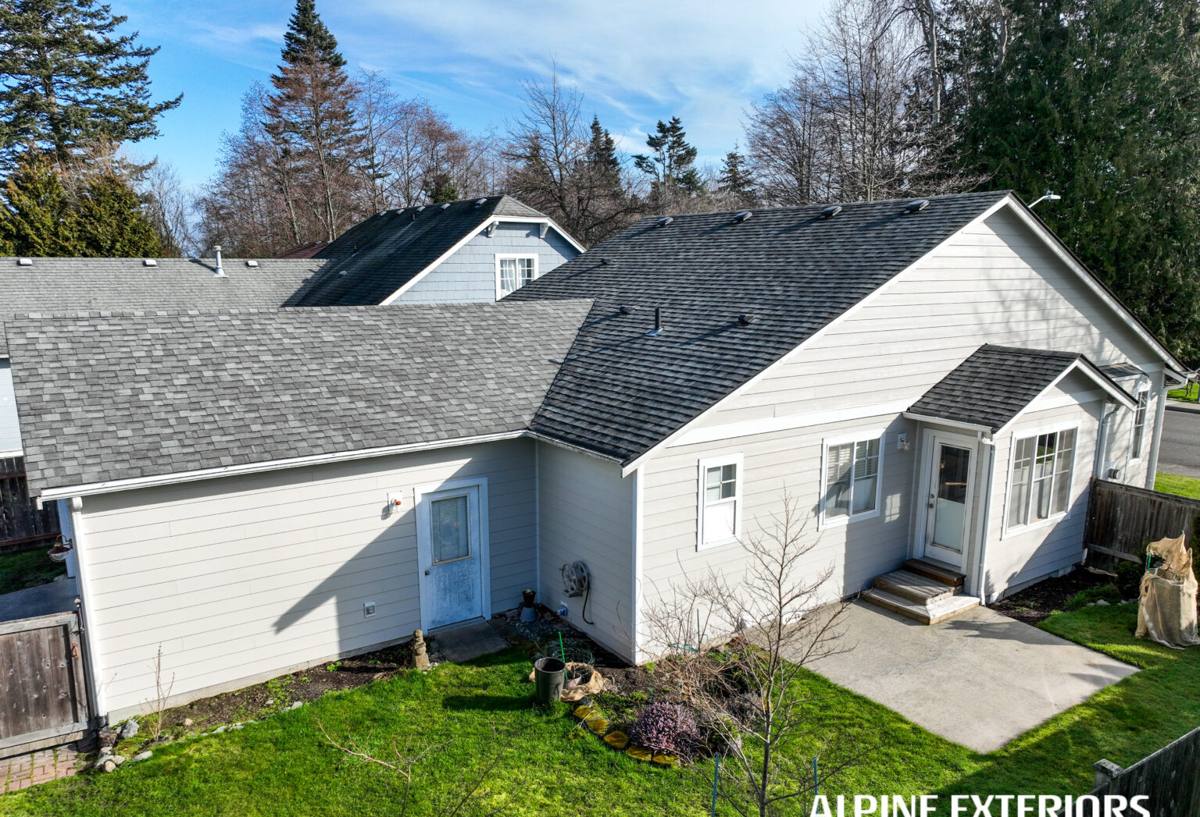
Why We Standardized on James Hardie Fiber Cement
We install James Hardie fiber cement siding exclusively. We don't install vinyl, LP SmartSide, Cemplank, Allura, primed spruce, or cedar — not because those products don't have their place, but because after years of doing exterior work in this climate, we decided we were done gambling on materials that are more sensitive to moisture, more prone to early paint failure, or that put more long-term maintenance burden on the homeowner than we're willing to sign our name to.
James Hardie fiber cement is made from cement, sand, and cellulose fiber, which makes it non-combustible and dimensionally stable — it doesn't expand and contract with humidity swings the way wood-based products do, and it doesn't absorb water the way engineered wood substrates can if a seam opens up. Hardie's ColorPlus factory-applied finish is baked on under controlled conditions and backed by its own finish warranty, which means the paint job isn't dependent on field conditions the day it's installed — a real advantage in a region where you can't always count on a stretch of dry weather during a project.
Hardie also engineers specific product lines for different climate zones (their HZ5 line is built for regions like ours with sustained moisture exposure), so the product itself is formulated with weather like Custer's in mind rather than being a generic siding sold everywhere regardless of climate.
What We Chose Not to Install, and Why
- Vinyl siding: Lightweight and inexpensive up front, but it can warp or crack in temperature swings, fades over time, and doesn't offer the fire resistance or rigidity of fiber cement.
- LP SmartSide and other engineered wood products: Wood-strand substrates rely on treated surfaces and careful sealing at every cut edge and seam. In a climate with this much sustained moisture, any breach in that seal is an opening for water absorption and swelling over time.
- Cemplank and Allura: Both are fiber cement competitors to Hardie, but we've standardized on one manufacturer so our crews install to one spec, warranty claims go through one system, and color-matching for repairs or additions stays consistent.
- Primed spruce and cedar: Natural wood siding can look great, but it demands a maintenance schedule — re-staining or re-painting on a cycle, checking for rot at end grain and fastener points — that most homeowners underestimate until they're a decade in and behind on upkeep.
How We Approach a Siding Project in Custer
Every project starts with an honest look at what's actually going on behind the existing siding, not just what's visible from the driveway. In older Custer homes especially, we're checking for water staining on sheathing, soft spots around window and door flashing, and any evidence that moisture has been getting in longer than the homeowner realized. Replacing siding without addressing what's underneath just means covering up a problem instead of solving it.
Our general process
- On-site inspection of existing siding, trim, flashing, and any visible moisture or rot damage
- Removal of old siding and inspection of the weather-resistive barrier and sheathing underneath
- Repair or replacement of any compromised sheathing before new material goes up
- Installation of house wrap and flashing details at every window, door, and penetration
- James Hardie panel or lap siding installation to manufacturer spec, including proper fastening, clearances, and caulking at seams
- Final walkthrough covering warranty documentation and care
That flashing and moisture-barrier work is where a lot of cheaper siding jobs fall short. Fiber cement is only as good as the installation behind it — a Hardie product installed with gaps at butt joints or without proper clearance off the ground or roofline will eventually let water in no matter how good the material itself is. This is a big part of why we run our own crews rather than subcontracting installation out to whoever's available; the people cutting and hanging the siding on your house are the same people who understand why the details matter in this specific climate.
Comparing Siding Options for a Custer Home
| Material | Moisture Resistance | Fire Resistance | Typical Maintenance | Factory Finish |
|---|---|---|---|---|
| James Hardie Fiber Cement | High — cement-based, dimensionally stable | Non-combustible | Occasional wash; repaint only if not ColorPlus | ColorPlus baked-on finish with its own warranty |
| Vinyl | Moderate — can warp, seams can allow water behind panels | Combustible, can melt/deform near heat | Low, but replacement needed if cracked or faded | Color molded through, but fades over time |
| Engineered Wood (LP SmartSide) | Moderate — depends on sealed edges and coatings | Combustible | Regular inspection of seams and cut edges | Factory primed or coated; repaint on a cycle |
| Cedar / Primed Spruce | Lower — absorbs moisture, prone to rot without upkeep | Combustible | Re-stain or repaint on a regular cycle | None; field-applied finish |
Signs a Custer Home Needs Siding Attention
Because the damage from moisture and moss buildup happens gradually, a lot of homeowners don't notice until it's fairly advanced. A few things worth checking, especially on north-facing and shaded walls where things stay damp longest:
- Persistent green or black staining that comes back quickly after cleaning
- Soft or spongy spots when you press on the siding, particularly near the bottom edge or under windows
- Paint that's peeling, bubbling, or chalking well ahead of schedule
- Visible gaps or separation at seams, corners, or where siding meets trim
- Warping, cupping, or panels that no longer sit flat against the wall
- A musty smell or visible staining on interior walls that share an exterior wall
If you're seeing more than one of these, it's worth having someone take a real look rather than just pressure-washing and hoping it holds another season.
Roofing, Windows, and Decks: The Rest of the Building Envelope
Siding doesn't work in isolation. A roof that's shedding water improperly, windows that aren't flashed correctly, or a deck ledger board that's trapping moisture against the house can all undermine even a well-installed siding job. We handle roofing, window replacement, and deck construction alongside siding because in a climate like this, the exterior envelope really does need to be looked at as one system. A common scenario in Custer is a roof nearing the end of its service life at the same time siding is showing wear — addressing both together means proper flashing integration between roof and wall, rather than two separate contractors each assuming the other handled the transition detail.
Why a Local Crew Matters
Whatcom County's weather isn't uniform — a home a few miles from the water deals with different exposure than one further inland, and Custer's mix of open farmland and tree-sheltered lots means moss and shade patterns vary block to block. A crew that works this area regularly knows to size up which walls need the most attention, how far to keep siding off grade given local drainage patterns, and which detailing holds up against driving rain versus which cuts corners that show up as callbacks two winters later. It also means when you need a warranty question answered or a repair years down the road, you're calling a company that's still local and still standing behind the work — not chasing down an outfit that worked the region for one season and left.
What Affects the Cost of a Siding Project
| Factor | Why It Matters |
|---|---|
| Home size and complexity | More corners, gables, and trim details mean more cutting, fitting, and labor time |
| Condition of existing sheathing | Rot or water damage found during tear-off may need repair before new siding goes up |
| Siding profile chosen | Lap siding, panel siding, and shingle-style Hardie products vary in material and labor cost |
| Trim and accessory work | Window trim, corner boards, and fascia detailing add to scope |
| Access and site conditions | Tree cover, slope, and staging space can affect labor time |
We don't quote a job until we've actually looked at it — broad averages don't mean much when one Custer home might need significant sheathing repair and another just needs a straightforward re-side.
Get an Estimate for Your Custer Home
If your siding is showing its age, or you're planning ahead for a project this year, we're happy to come take a look and give you a straight, no-pressure estimate. We'll walk the exterior with you, point out anything we see — good or bad — and explain exactly what a James Hardie installation would involve for your home specifically. Use the form below to get started.