 Semiahmoo Siding
 Two Very Different Materials, One Coastal Climate to Answer To
Homeowners in Semiahmoo shopping for new siding almost always end up comparing the same two materials: vinyl and James Hardie fiber cement. On paper they can look similar — both come in a wide range of colors and profiles, both are marketed as low-maintenance, and both show up on contractor bids across Whatcom County. In practice, they behave very differently once they're actually on a house that sits a few blocks from Semiahmoo Bay, catching salt-laden wind off the water and months of low-angle, moss-friendly rain.
This page isn't about which product is "better" in the abstract. It's about which one holds up to the specific conditions this stretch of coastline throws at a house, year after year, and why we made the decision to install only James Hardie fiber cement rather than offer vinyl as an option.
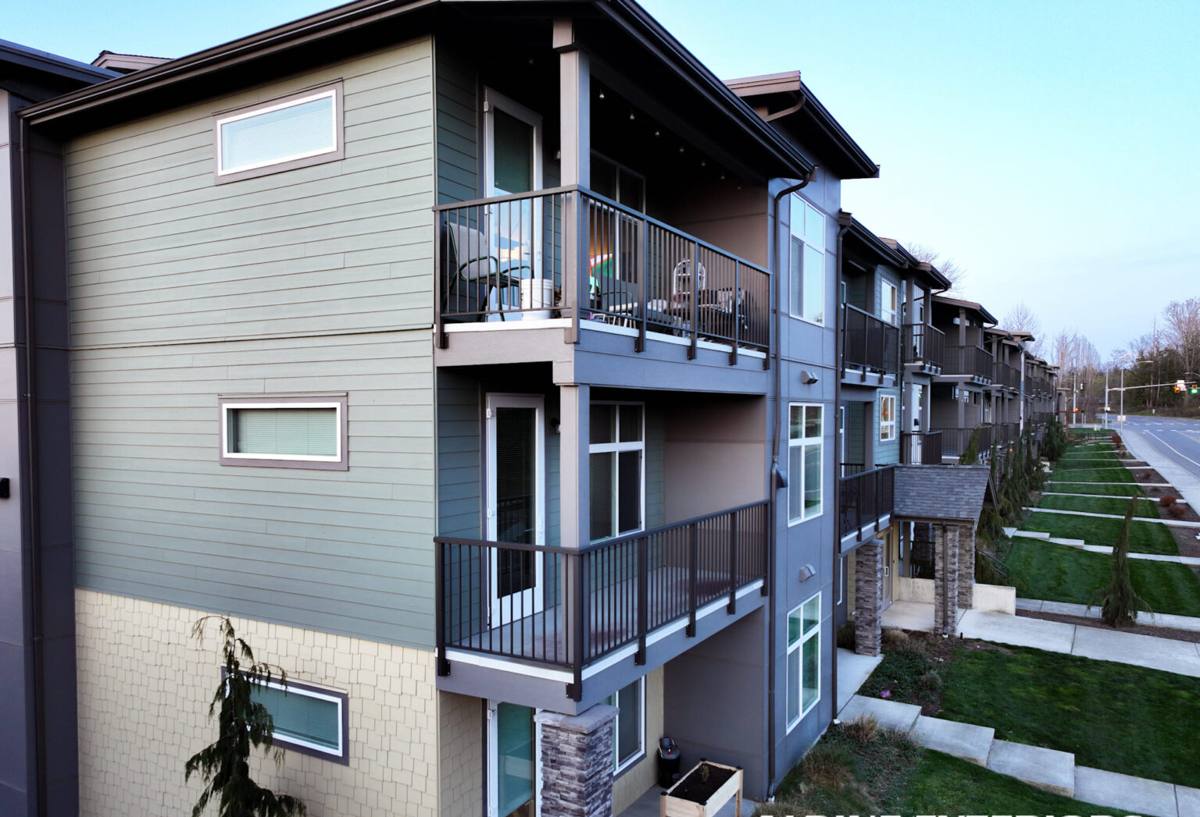
How Vinyl Siding Performs in a Marine Climate
Vinyl siding is PVC plastic, formed into panels and hung on the wall in overlapping courses. It's popular nationally because it's inexpensive, comes pre-colored so there's no painting, and installs quickly. Those aren't small advantages, and we're not going to pretend otherwise.
Where it runs into trouble here is the combination of salt air and temperature swings. PVC expands and contracts with heat more than fiber cement does, which is why vinyl panels are hung with slotted nail holes that allow the panel to move. Over years of expansion and contraction, especially with the freeze-thaw cycles Whatcom County gets in winter, panels can warp, buckle, or pop loose from their nailing strip. Salt air accelerates UV breakdown of the plastic and the color pigment, so vinyl on a Semiahmoo home facing the water tends to chalk and fade faster than the same product would inland.
Moisture is the other issue. Vinyl siding isn't a sealed skin — it's designed to shed the bulk of the water while allowing drainage behind it through a weather-resistant barrier. That system works fine when it's installed correctly and the barrier stays intact. But vinyl doesn't stop moss and mildew from colonizing its surface, especially on north-facing walls and under eaves where things stay damp for weeks at a stretch during our wet season. Cleaning it helps, but the growth comes back.
Where Vinyl Still Makes Sense
We're not saying vinyl is a bad product everywhere. On a budget-driven rental property, a detached shop, or a drier inland climate, it can be a reasonable, affordable choice. It's specifically the combination of coastal salt exposure, sustained damp shade, and Whatcom County's freeze-thaw winters that makes it a poor long-term fit for the homes we work on.
How James Hardie Fiber Cement Performs Here
James Hardie siding is a mix of cement, sand, and cellulose fiber pressed and cured into planks and panels. It's not plastic and it's not wood — it's an engineered masonry-like product that doesn't expand and contract with temperature the way vinyl does, and it doesn't feed mold or rot the way wood-based siding can.
For a Semiahmoo home, three things matter most:
- Salt air resistance — fiber cement doesn't corrode or pit the way some metal trims can, and it doesn't chalk out the way PVC does under UV and salt exposure.
- Moisture stability — Hardie panels are dimensionally stable when wet, so they don't cup, warp, or buckle the way wood or vinyl can after a wet Pacific Northwest winter.
- Moss and mildew resistance — the factory-baked ColorPlus finish is far less hospitable to biological growth than raw wood or chalking vinyl, which matters on the shaded, north-facing walls that stay damp longest here.
James Hardie also engineers its products by climate zone. The HZ5 formulation used in our region is built specifically for wetter, cooler climates like Whatcom County, rather than being a one-size-fits-all product shipped everywhere in the country.
Fire, Wind, and Moisture: The Whatcom County Considerations
Semiahmoo sits in an area that sees genuine coastal weather — sustained wind off the water, driving horizontal rain during winter storms, and a moss season that can run from fall through spring. A few specific factors are worth calling out:
Wind-Driven Rain
Rain that comes in at an angle finds every gap in a siding system. Fiber cement's rigidity and the way Hardie panels lap and seal reduce the paths water has to get behind the cladding, compared to a flexible plastic panel that can lift slightly in sustained wind.
Fire Exposure
James Hardie fiber cement is non-combustible. Vinyl siding is a petroleum-based plastic that will soften and melt at much lower temperatures, and can contribute fuel in a fire event — a real consideration during dry summer stretches and for homes near vegetation.
Moss and Biological Growth
Whatcom County's damp, shaded microclimates are ideal for moss and algae. No siding is moss-proof, but a factory-cured cement surface resists staining and growth longer than PVC or bare wood, and cleans up without stripping a factory finish the way pressure-washing can dull vinyl's surface color.
Cost Comparison: Upfront vs. Lifecycle
Vinyl's biggest selling point is upfront price. It's a fair advantage to acknowledge — but it's only half the cost picture. The table below reflects general, honest ranges based on typical material and lifecycle differences; every project varies by home size, prep work, and design details.
| Factor | Vinyl Siding | James Hardie Fiber Cement |
|---|---|---|
| Upfront material + install cost | Lower | Moderate to higher |
| Typical service life in coastal climate | 15-25 years before fading/warping issues | 30-50+ years with proper install and care |
| Repainting needed | Not paintable in the traditional sense; fades in place | ColorPlus finish holds color 15+ years; can be repainted if desired |
| Impact resistance | Can crack or shatter in cold weather impacts | Resists impact, hail, and debris well |
| Fire rating | Combustible plastic | Non-combustible |
| Resale perception | Viewed as a standard/economy upgrade | Widely recognized as a premium, durable upgrade |
When you divide total cost by years of good performance, fiber cement usually comes out even or ahead — and that's before factoring in the resale bump Hardie siding tends to carry.
Appearance and Resale Value
Vinyl siding has come a long way in profile and texture options, but it still reads as vinyl up close — a slight sheen, visible seams, and a flatness that doesn't mimic wood grain convincingly. James Hardie's plank, shingle, and panel lines have deeper embossed wood-grain texture and crisper shadow lines, which is part of why it's become the standard on higher-end new construction and remodels throughout the Pacific Northwest.
For resale, fiber cement siding is consistently recognized by appraisers and buyers as a durability upgrade, not just a cosmetic one — which matters more in a market where buyers are increasingly asking about maintenance history on coastal homes.
Installation Sensitivity: Why the Installer Matters as Much as the Product
Neither material performs to its potential if it's installed poorly, but the failure modes are different. Vinyl is fairly forgiving to hang — it's part of why it's a common DIY and low-bid contractor product — but a loose or over-driven nail, or a skipped step in the drainage plane, shows up as buckling or water intrusion down the line.
James Hardie is less forgiving in a different way: it requires correct fastening patterns, proper clearances at grade and roof lines, factory-specified caulking and flashing details, and manufacturer-approved installation to actually qualify for the warranty. This is exactly why James Hardie maintains a certified installer network — the product's real-world performance depends heavily on getting those details right, especially in a climate that punishes shortcuts.
Questions Worth Asking Any Siding Contractor
- Are you a certified installer for the product you're proposing, and can you show documentation?
- What flashing and moisture-barrier details will you use at windows, doors, and roof lines?
- What does the manufacturer's warranty actually require to stay valid?
- How will fastener spacing and clearances be handled at grade, given our wet winters?
- What's your plan for existing moisture or rot found once old siding comes off?
Warranty Structure Compared
Vinyl siding warranties typically cover manufacturing defects but prorate coverage over time, and fading/color warranties are often limited or excluded near marine environments — the fine print on many vinyl warranties specifically carves out coastal or high-UV exposure. James Hardie backs its ColorPlus products with a 30-year non-prorated limited warranty on the substrate and a separate finish warranty, and the warranty is transferable to a new owner if the home sells, which matters for resale conversations.
Making the Call for Your Home
If budget is the only factor and the siding is going on a low-exposure structure, vinyl remains a legitimate option elsewhere. But for a primary residence in Semiahmoo — facing salt air, driving winter rain, and a long moss season — we've seen enough of how each material actually ages here to standardize on James Hardie fiber cement for every home we side. It costs more upfront. It also tends to be the last siding job a homeowner has to think about for decades, installed correctly.
If you're weighing this decision for your own home, we're happy to walk your specific exposure — which walls face the water, how much shade you get, what your current siding is telling you — and put together a free, no-pressure estimate so you can compare real numbers rather than general ranges.