 Semiahmoo Siding
 Decks in Ferndale Face a Different Climate Than Most of the Country
Ferndale sits close enough to the water and to the marine air moving through Whatcom County that a deck here ages differently than one built inland or in a drier climate. Homeowners who move to this area from places with hot, dry summers are often surprised at how quickly an unprotected deck starts to show wear. It's not one thing doing the damage — it's the combination of salt-tinged air, long stretches of driving rain, and short winter days that never quite dry things out before the next system rolls through.
A deck that's built correctly for this environment can last decades with routine care. One that's built to a generic spec, or by a crew that doesn't build here regularly, tends to show problems in the first two or three years: soft spots at ledger boards, moss creeping into joints, fasteners bleeding rust streaks into the decking, and railings that loosen because the posts were never properly flashed.
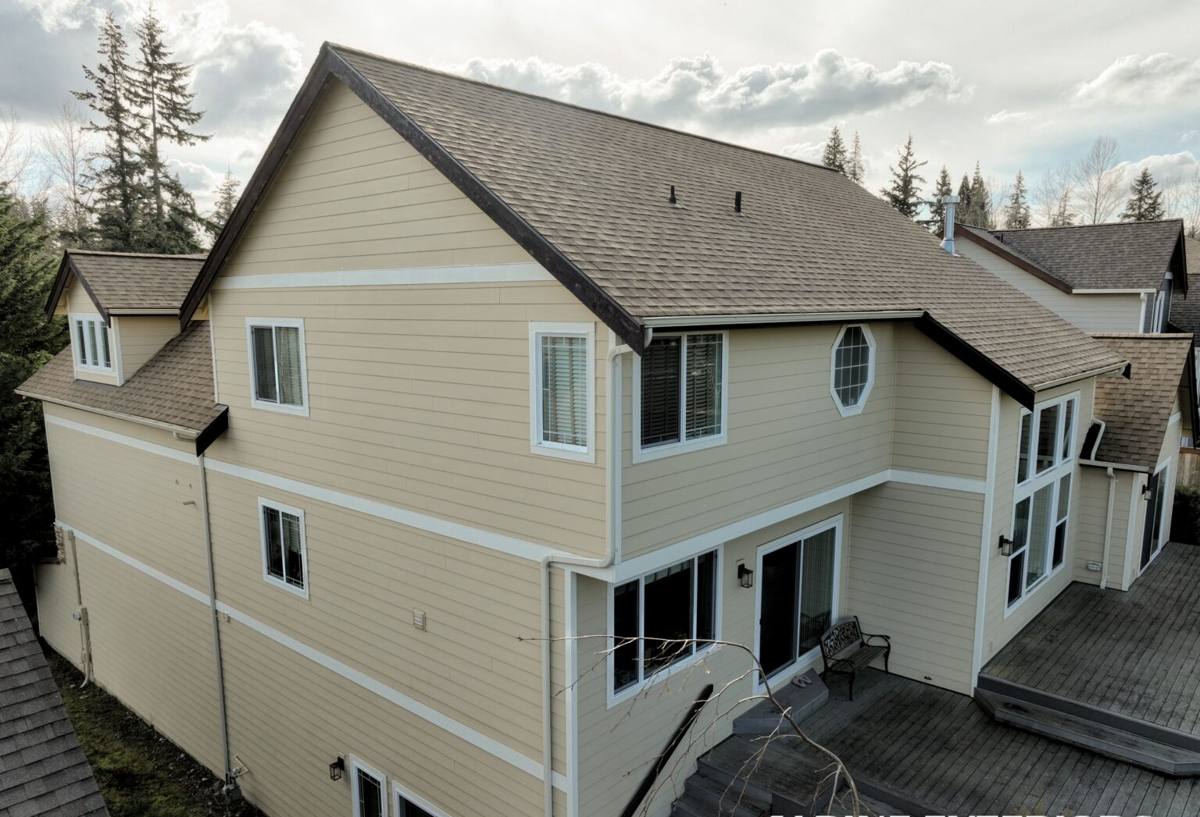
What Ferndale's Climate Does to an Outdoor Deck
Salt Air and Metal Fasteners
Ferndale isn't right on the open coast, but it's close enough to Semiahmoo Bay and the Strait of Georgia that airborne salt is a real factor, especially on decks with any western or northern exposure. Salt-laden moisture accelerates corrosion on fasteners, brackets, and hardware that aren't rated for it. Once a fastener starts to corrode, it weakens the connection it's holding and can stain the wood or composite around it.
Driving Rain and Moisture Intrusion
Whatcom County gets long stretches of sustained, wind-driven rain rather than short heavy downpours. That matters for deck construction because water doesn't just fall straight down — it gets pushed sideways into ledger connections, under poorly lapped flashing, and into end grain that isn't sealed. Over time this is what causes rot at the house connection, which is the single most common structural failure point we see on older decks in this area.
Moss, Algae, and Standing Moisture
The long moss season here is a direct result of shade, moisture, and mild temperatures sticking around for months at a time. Moss and algae aren't just cosmetic — they hold moisture against the decking surface, make boards slippery, and can accelerate wear on both wood and composite surfaces if never cleaned off. Deck boards with poor drainage or tight spacing trap organic debris and moisture longest, which is exactly where moss problems start.
What a Correctly Built Deck Looks Like Here
A deck built for Ferndale's conditions isn't dramatically different in appearance from a deck anywhere else — the difference is almost entirely in the details you don't see once it's finished.
- Ledger board attached with proper flashing that directs water away from the house, not into the rim joist
- Stainless steel or hot-dip galvanized fasteners and structural hardware rated for exterior, coastal-influenced exposure
- Joist tape or a comparable moisture barrier on top of framing members to stop water from wicking into end grain and screw holes
- Deck board spacing and orientation that allows water to shed quickly rather than pool
- Post bases set above grade and away from standing water, with proper drainage beneath the structure
- Railing posts through-bolted and blocked, not just screwed to the rim joist
- Adequate airflow underneath the deck to prevent trapped humidity from feeding rot or moss
None of this is exotic. It's standard good building practice applied consistently — but it's the kind of detail that gets skipped when a crew is used to building in a drier climate or is moving fast to hit a lower bid.
Choosing Decking Material for a Ferndale Property
There's no single "correct" material for every deck in this area — it depends on budget, how much upkeep you want to take on, and how much sun or shade the deck gets. Here's how the common options actually perform under Whatcom County conditions.
| Material | How It Handles This Climate | Maintenance |
|---|---|---|
| Pressure-treated lumber | Solid performer if sealed and re-sealed on schedule; end grain and fastener holes are the weak points for moisture entry | Annual cleaning, re-sealing every 1-2 years |
| Cedar | Naturally rot- and insect-resistant, ages to a silver-gray patina if left unfinished, but softer surface can hold moss if shaded | Periodic cleaning; staining optional but extends life |
| Composite decking | Resists rot and doesn't need sealing, but lower-quality composites can still grow algae film in shaded, damp spots | Occasional wash-down; no staining or sealing |
| PVC/capped composite | Fully moisture-resistant surface, best option for heavily shaded or low-airflow sites prone to moss | Lowest maintenance; wash-down only |
We'll walk through this tradeoff with you honestly rather than pushing whatever has the best margin. A shaded, north-facing deck under a big cedar or fir canopy is a very different decision than an open, sunny deck on a south-facing lot.
Framing Material Matters Too
Whatever decking surface you choose, the framing underneath should be treated lumber rated for ground contact where posts meet grade, with all cut ends field-treated before installation. This is a detail that's easy to skip and impossible to inspect once the deck is finished — it has to be done right the first time.
Our Process for a Ferndale Deck Project
1. On-Site Assessment
We walk the site with you, look at drainage, sun and shade exposure, existing structure if you're replacing a deck, and how the new deck will tie into the house. Ledger connections and grading around the foundation get particular attention here, since that's where most moisture problems originate.
2. Honest Material and Design Conversation
We talk through decking material, railing style, and layout based on your budget and how much maintenance you actually want to do going forward — not a one-size-fits-all recommendation.
3. Permitting
Most new decks and many deck replacements in Whatcom County require a building permit, particularly for structures attached to the house or elevated above a certain height. We handle the permitting process so you're not left guessing what's required.
4. Construction
Framing first, with flashing and moisture barriers installed as the structure goes up — not added as an afterthought. Decking, railings, and stairs follow, with fastener patterns and spacing set for proper drainage.
5. Final Walkthrough
We walk the finished deck with you, point out anything you should know about care and maintenance specific to the material you chose, and make sure everything is solid before we consider the job done.
Deck Maintenance Checklist for Local Conditions
Even a well-built deck needs some seasonal attention in this climate. A few habits go a long way toward avoiding early repairs.
- Sweep debris and standing leaves off the deck surface regularly, especially in fall
- Clean moss and algae off the surface before it builds up, using a deck-safe cleaner rather than a pressure washer on wood at close range
- Check and clear any gaps between boards that have filled with debris, since that's where moisture sits longest
- Inspect fasteners and hardware annually for rust streaking or looseness
- Re-seal wood decking on the schedule appropriate to the product — don't wait until it looks obviously dry and gray
- Confirm downspouts and gutters near the deck are directing water away, not onto the structure
Repair vs. Replacement
Not every aging deck needs to be torn out. If the framing is structurally sound and the problems are limited to surface boards, railings, or fastener corrosion, targeted repair is often the more cost-effective path. But if there's rot at the ledger connection, soft or spongy framing, or posts that have settled or shifted, patch repairs are usually a short-term fix at best. We'll give you a straight answer on which category your deck falls into rather than defaulting to a full rebuild.
Why Hire a Crew That Already Works in This Area
Building a deck that holds up in Ferndale isn't about using exotic materials — it's about applying the right details consistently because you've seen what fails here and why. A contractor who mostly works in a different climate may not think twice about ledger flashing, fastener grade, or airflow underneath the structure, because those details matter less where they usually build. Every deck we build in Whatcom County accounts for the salt air, the rain patterns, and the moss season from the framing stage forward, not as an afterthought once problems show up.
If you're planning a new deck or need an honest look at repairing or replacing an existing one, we'd be glad to take a look and give you a straightforward estimate — no pressure, no upsell. Fill out the form below and we'll follow up to schedule a time.