 Semiahmoo Siding
 Allura Is a Real Fiber Cement Product — We Want to Be Fair About That
Before we explain why we don't install it, we want to be upfront: Allura fiber cement siding is not a bad product. It's manufactured by an established company, it passes the same building code and fire-rating tests as other fiber cement siding, and plenty of homes around the country wear it without issue. If a homeowner in Semiahmoo already has Allura on their house and it was installed correctly, we're not going to tell you it's failing or that you need to rip it off. That's not the point of this page.
The point is narrower: as a company, we made a decision years ago to install one fiber cement product — James Hardie — and to say no to the rest, including Allura, LP SmartSide, vinyl, Cemplank, primed spruce, and cedar. That decision wasn't about chasing a brand name. It came down to warranty structure, regional product engineering, and how easy it is to keep a house looking right on this stretch of coastline for the next 30 years, not just the first five.
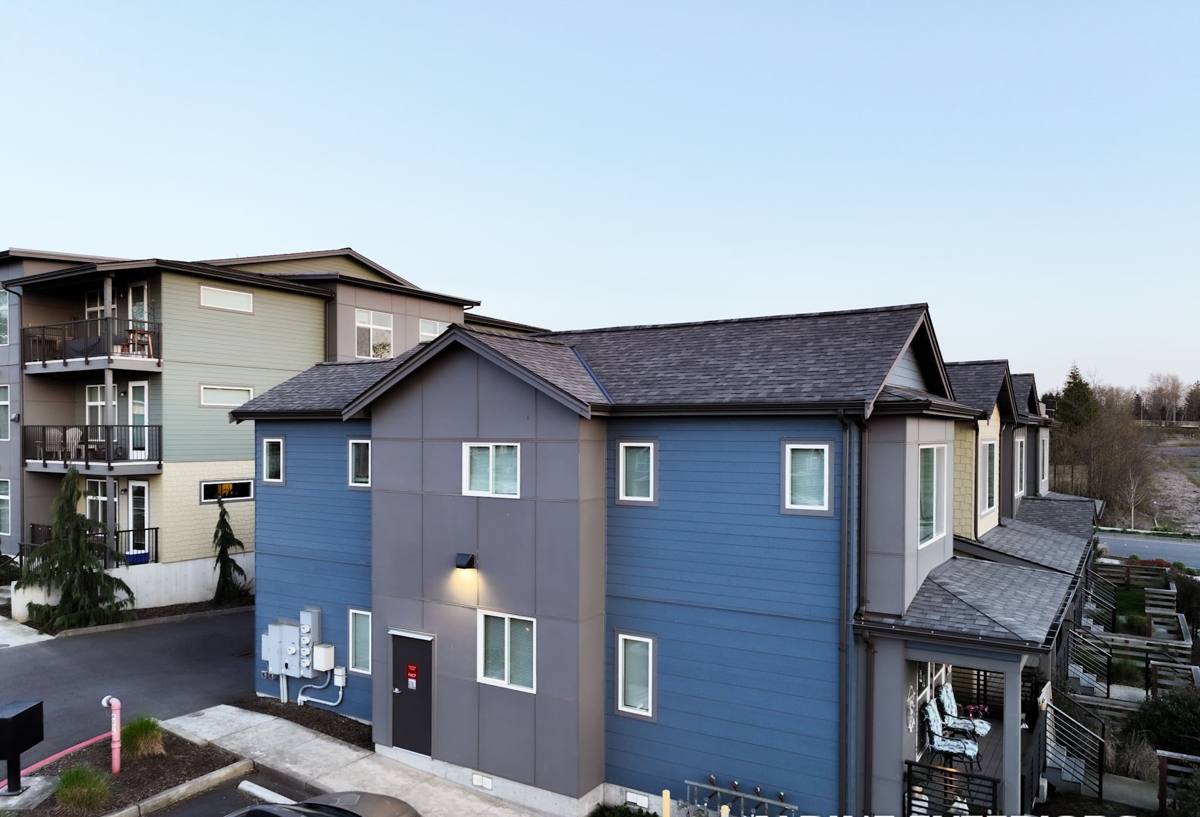
What Allura Gets Right
Allura is a genuine fiber cement product — a mix of Portland cement, sand, and cellulose fiber, pressed and cured the same general way as other fiber cement lines. That means it shares fiber cement's core advantages over vinyl or wood: it's non-combustible, it doesn't warp or rot the way untreated wood does, and it holds paint or factory finish far better than vinyl over the long run. For a homeowner comparing fiber cement to vinyl or raw wood siding, Allura is a legitimate upgrade.
Where things get more specific — and where our concerns start — is in how the product is engineered for a particular climate, how the factory finish is backed by warranty, and how easy it is to source matching replacement boards years down the road in a market like Whatcom County. Those are the details that matter once a product is actually on a house facing salt air off the water and a wet Pacific Northwest winter.
The Coastal Test
Semiahmoo sits right on the water, and homes here take a different beating than siding fifty miles inland. Salt-laden air accelerates corrosion on fasteners and trim, driving rain off the Strait pushes moisture into every seam and joint, and the long moss season — realistically eight or nine months of the year in this part of Whatcom County — keeps north-facing and shaded walls damp for extended stretches. Any siding product can survive one bad winter. What separates products is how they perform after ten or twenty winters of that same cycle.
Warranty Structure Is Where We Pay the Closest Attention
Fiber cement warranties look similar on paper — long time horizons, mentions of "non-prorated" coverage, transferability language — but the fine print varies more than most homeowners realize, and the fine print is what determines whether a warranty claim actually gets paid without a fight fifteen years from now.
James Hardie backs its ColorPlus factory finish with a separate finish warranty against fading, chipping, and cracking, distinct from the product warranty on the board itself, and both are structured to be non-prorated and transferable to a new owner if the home sells. We've found that clarity — two warranties, each spelled out, each honored the same way whether the claim comes in year two or year twenty-five — easier to stand behind when we're the ones putting our name on the installation. Other manufacturers structure their coverage differently, with proration schedules or finish coverage that steps down over time. That's not automatically disqualifying, but it's the kind of detail that only matters when something actually goes wrong, and by then it's too late to renegotiate.
Climate-Engineered Product Lines
One thing that pushed us toward Hardie specifically is the HardieZone system — Hardie engineers different formulations for different climate zones (HZ5 versus HZ10, broadly speaking), rather than selling one national product and hoping it performs everywhere. The Pacific Northwest falls into the wetter, cooler zone, and the board formulation, moisture management, and installation specs are built around that reality rather than adapted after the fact.
We haven't seen the same level of climate-zone-specific engineering documented for Allura's product line. That doesn't mean Allura fails in wet climates — plenty of fiber cement performs adequately in the Pacific Northwest — but when we're specifying a product for a home two blocks from the water in Semiahmoo, we want to install what was engineered for exactly this kind of exposure, not a general-purpose board.
Availability and Color-Matched Repairs
This is the practical issue that homeowners rarely think about until they need it: five or ten years after installation, a board gets cracked by a falling branch, or a section needs replacing after storm damage. Can you get a matching replacement board, in the matching factory finish, without the whole wall looking patched?
James Hardie has a large, well-established distribution network through the Pacific Northwest, and ColorPlus finishes are consistently stocked or reorderable by dealers in this region. Allura's distribution footprint in Whatcom County is thinner — fewer stocking dealers, longer lead times, and more risk that a specific color run has shifted slightly by the time you need a replacement board. That's a small thing on installation day and a real headache five years later when you're trying to match a weathered wall.
Allura vs. James Hardie: The Practical Differences
| Factor | James Hardie | Allura |
|---|---|---|
| Climate-specific engineering | HardieZone system (HZ5/HZ10 formulations) | Not documented to the same degree |
| Factory finish warranty | Separate, non-prorated ColorPlus finish warranty | Factory finish coverage varies by product line |
| Regional distribution (Whatcom County) | Broad dealer network, easier color-matched repairs | Thinner local stocking, longer lead times |
| Certified installer network | Large, established in the PNW | Smaller regional presence |
| Core material | Fiber cement | Fiber cement |
| Fire resistance | Non-combustible | Non-combustible |
Notice that on the fundamentals — material composition and fire performance — the two products are comparable. The gap is in the support system around the product: how it's engineered for this specific climate, how the warranty pays out over decades, and how easy it is to keep a wall looking uniform after a repair.
Installation Sensitivity Cuts Both Ways
Fiber cement siding, regardless of brand, is unforgiving of poor installation. Improper fastener placement, missing flashing, tight-butted joints with no expansion gap, or caulking where a gap should breathe — any of these can shorten the life of the product by years, and a moss-prone, rain-heavy climate like ours punishes those mistakes faster than a dry climate would. This is true of Allura and Hardie alike.
The difference is that Hardie's certified installer training and published installation specs are extensive and widely used across our region, which means when something needs to be serviced or inspected years later, there's a large body of contractors who were trained to the same standard. We'd rather stand fully behind one product system we know inside and out than split our crews' expertise across several brands with different fastening schedules, gap requirements, and finish handling.
Why We Standardized on James Hardie
Put simply: we install what we're willing to warranty our own labor against for decades, on homes that face salt air, driving rain, and a moss season that doesn't really end. James Hardie's climate-specific engineering, its non-prorated and transferable warranty structure, and its dealer and installer network in Whatcom County gave us the fewest weak links. That's not a knock on every other manufacturer — it's a statement about what we, as the contractor putting our name on the job, are comfortable standing behind long after the invoice is paid.
What to Ask Before Choosing a Fiber Cement Product
- Is the product engineered for a specific climate zone, or is it a single national formulation?
- Is the factory finish warranty separate from the product warranty, and is it non-prorated?
- Is the warranty transferable to a future homeowner if you sell?
- Can a local dealer reliably stock or reorder matching color and profile for future repairs?
- Is the installing contractor certified or specifically trained on that manufacturer's fastening and flashing specs?
- How does the product's moisture and mold resistance hold up in a climate with an extended damp season?
What This Means for Your Project
If you're comparing quotes and one contractor is proposing Allura, Cemplank, or another fiber cement brand at a lower price point, that's worth understanding rather than dismissing — ask them the same questions above. We simply made our own call, install one product, and know its behavior on Semiahmoo homes in detail rather than spreading that knowledge across several brands.
If you'd like to talk through what's actually on your walls right now, what a re-side would involve, or just want a straight answer about your options, we're happy to walk your property and give you a free, no-pressure estimate — no obligation, no pressure to sign anything on the spot.