 Semiahmoo Siding
 An Honest Answer to a Question We Get Often
Homeowners in Semiahmoo and across Whatcom County ask us this a lot: "Do you install vinyl siding?" The answer is no, and we think you deserve a real explanation instead of a sales pitch against it. Vinyl siding is not a scam product and it is not junk. It has legitimate strengths. But after years of working on homes along this stretch of coastline, we made a professional decision to install only James Hardie fiber cement siding, and we want to walk through exactly why.
This isn't about badmouthing a manufacturer. It's about being straight with you regarding how a material actually performs once it's on a wall facing Semiahmoo Bay, dealing with salt spray, driving rain off the water, and the long gray moss season that defines a Pacific Northwest winter.
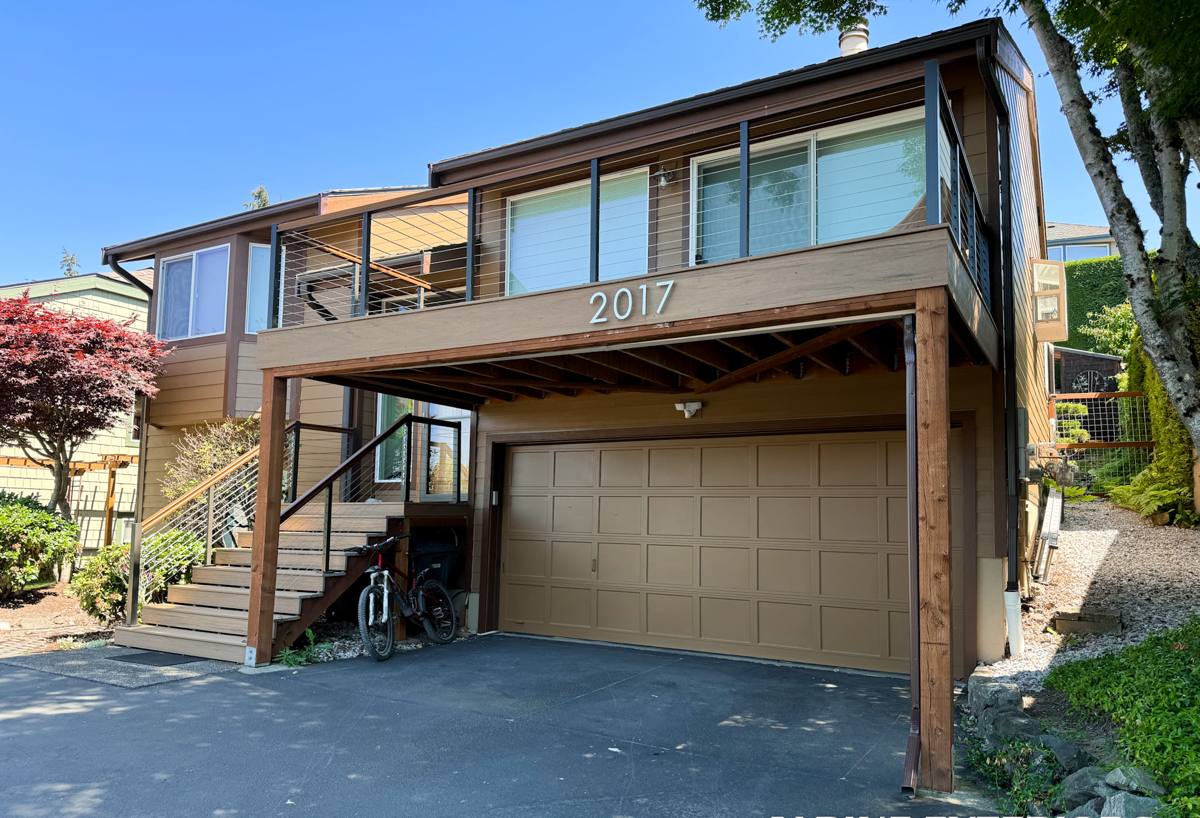
What Vinyl Siding Gets Right
Credit where it's due. Vinyl siding is inexpensive up front, it's lightweight, and installation is fast for crews that know what they're doing. It doesn't need painting. In dry, moderate climates, a well-installed vinyl job can look fine for a long time with minimal upkeep. If budget is the only variable that matters, vinyl will always be part of that conversation somewhere in the market.
The trouble isn't the material in a vacuum. It's what happens when that material meets our specific climate, year after year, decade after decade.
Where Vinyl Struggles in a Marine Climate
Salt Air and Corrosion at the Fasteners
Semiahmoo sits right on the water, and homes here take on salt-laden air more consistently than inland Whatcom County properties. Vinyl siding itself doesn't corrode, but the exposed or lightly-covered fasteners, trim accessories, and channel systems that hold it in place are more vulnerable to that environment than most homeowners expect. Over time this can loosen panels or leave streaking around hardware points.
Driving Rain and Water Behind the Panel
Vinyl siding is designed as a rain screen, not a sealed barrier — it's meant to let water get behind it and drain back out through weep holes at the bottom of each course. That works fine in a light rain climate. It works less well when wind-driven rain off Boundary Bay is hitting a wall sideways for days at a time, which pushes more moisture behind the panel than the drainage path was ever meant to handle regularly. If the water-resistive barrier or flashing details underneath aren't executed perfectly, that moisture has nowhere good to go.
Temperature Swing and Panel Movement
Vinyl expands and contracts more than fiber cement with temperature change, which is why it has to be installed "hung," not fastened tight, so it can slide slightly within its nailing slots. Our shoulder-season swings between cold, damp mornings and warmer afternoons keep that movement active most of the year. Installed loose enough to move correctly, it also has to be installed loose enough to rattle, buckle, or bow if a crew nails it even slightly wrong.
Installation Sensitivity Is the Real Issue
Vinyl siding's biggest weakness isn't the vinyl — it's how unforgiving the installation process is. Every course has to be fastened in the center of the nail slot, not snug against the head, or the panel can't move with temperature and will buckle. Every seam, corner, and channel has to be lapped and flashed correctly, or water finds its way behind the cladding where it can sit against the sheathing. Because vinyl is thin and flexible, small installation errors that would be minor on a rigid product become visible waves, gaps, or leaks on vinyl. We've been called out to enough homes with popped panels and water damage behind poorly hung vinyl to know the margin for error is thin, and that margin gets thinner in a wet, wind-exposed location like Semiahmoo.
Moss, Mildew, and the Long Wet Season
Whatcom County's moss season isn't a few weeks — it stretches from fall through spring most years. Vinyl's textured, slightly porous surface and the horizontal ledges created at each course overlap give moss, algae, and mildew a place to establish, especially on north-facing walls that stay shaded and damp for months. Once established, that growth is difficult to fully remove without abrasive cleaning that can dull or scratch the panel's factory finish, which shortens its usable life further.
Fading, Chalking, and Color Limits
Vinyl's color is mixed into the material itself, not baked on as a separate finish layer, and that color is UV-reactive over time. Darker colors fade faster and more visibly, which is why vinyl manufacturers have historically limited their darker color offerings — the material can't hold them well long-term. On the water, where UV exposure and reflected light off the bay add up, that fade shows up sooner than in shaded inland settings.
Repairability and What Happens After a Storm
Whatcom County gets real windstorms off the water, and vinyl siding is rated for wind resistance the same way shingles are — it has a threshold. When a panel cracks or blows off in a storm, exact color and profile matches get harder to find every year as manufacturers update their product lines, which can leave a repaired section slightly mismatched. Fiber cement isn't immune to impact damage either, but it doesn't tend to fail the same way in wind events, and Hardie's ColorPlus finish has a long, stable manufacturing run behind it for matching.
Vinyl Siding vs. James Hardie Fiber Cement
| Factor | Vinyl Siding | James Hardie Fiber Cement |
|---|---|---|
| Material composition | PVC plastic, color mixed throughout | Cement, sand, and cellulose fiber; ColorPlus factory finish |
| Combustibility | Combustible, can soften/warp near heat sources | Non-combustible |
| Moisture behavior | Rain-screen design; depends on drainage path staying clear | Engineered HZ formulations for wet climates; resists moisture-driven damage |
| Installation tolerance | Low — must float in nail slots, precise flashing required | Moderate — fastened solid, less prone to visible errors from minor mistakes |
| Color stability | Prone to fading/chalking, especially dark colors | Factory-baked finish warrantied against fading and chipping |
| Moss/algae resistance | Textured surface and lap lines collect growth | Denser surface, better long-term resistance with proper upkeep |
| Wind/impact rating | Rated but can crack or blow off in severe gusts | Rated for high-wind regions, holds up well to storm exposure |
| Warranty structure | Often prorated after initial years | Non-prorated, transferable warranty on materials and finish |
Why We Standardized on James Hardie
We don't install LP SmartSide, vinyl, Cemplank, Allura, primed spruce, or cedar. Not because there's no market for them, but because after weighing installation risk, long-term maintenance, and how each product actually performs on a home sitting in salt air with a nine-month wet season, James Hardie fiber cement is the one product line we're willing to put our name behind. It's non-combustible, it holds its factory-applied ColorPlus finish for decades rather than fading and chalking within a few years, and Hardie engineers specific HZ product formulations for high-moisture climates like ours. The warranty is a real, transferable, non-prorated warranty — not a diminishing one. When it's installed to Hardie's spec, which is what we do on every job, it's simply the product we trust to still look right on a Semiahmoo home fifteen and twenty years from now.
What to Ask Before You Choose a Siding Material
- How does this material handle sustained wind-driven rain, not just occasional light rain?
- What's the manufacturer's actual wind rating, and is it tested for coastal exposure?
- Is the color baked into a factory finish, or will it fade and need repainting?
- How forgiving is the installation process if a crew makes a small error?
- Is the warranty prorated, and what voids it?
- How does the surface texture handle moss and algae in a wet climate?
- Can damaged sections be color-matched years down the road?
What This Means for Your Project
If you're planning a siding replacement in Semiahmoo, Blaine, or anywhere else in Whatcom County, we're not going to pretend vinyl is a disaster waiting to happen on every home. Plenty of vinyl-clad houses hold up fine for years, especially in more sheltered inland spots. But on a home exposed to salt air, driving rain, and a long moss season, we've made the call that fiber cement is the more durable, lower-maintenance investment, and it's the only product we stand behind with our own installation work.
If you'd like to talk through your specific home, its exposure, and what a James Hardie installation would actually look like and cost, we're happy to walk the property with you. Reach out for a free, no-pressure estimate — there's no obligation, just a straight answer about what we'd recommend for your house.