 Semiahmoo Siding
 Siding Built for Cherry Point's Shoreline Climate
Cherry Point sits along the Strait of Georgia in northern Whatcom County, and homes out here live with a different set of weather problems than houses ten miles inland in Bellingham or Ferndale. The exposure is more open, the wind comes straight off the water, and the combination of salt air, driving rain, and long stretches of shade under conifers adds up to conditions that wear on exterior materials faster than most homeowners expect. We work throughout this stretch of coastline, and we've seen firsthand which siding choices hold up out here and which ones don't.
This page covers what Cherry Point homes typically face, how our siding, roofing, window, and deck work fits that environment, and why we install only James Hardie fiber cement siding — not vinyl, not LP SmartSide, not primed wood, and not the other fiber cement brands on the market.
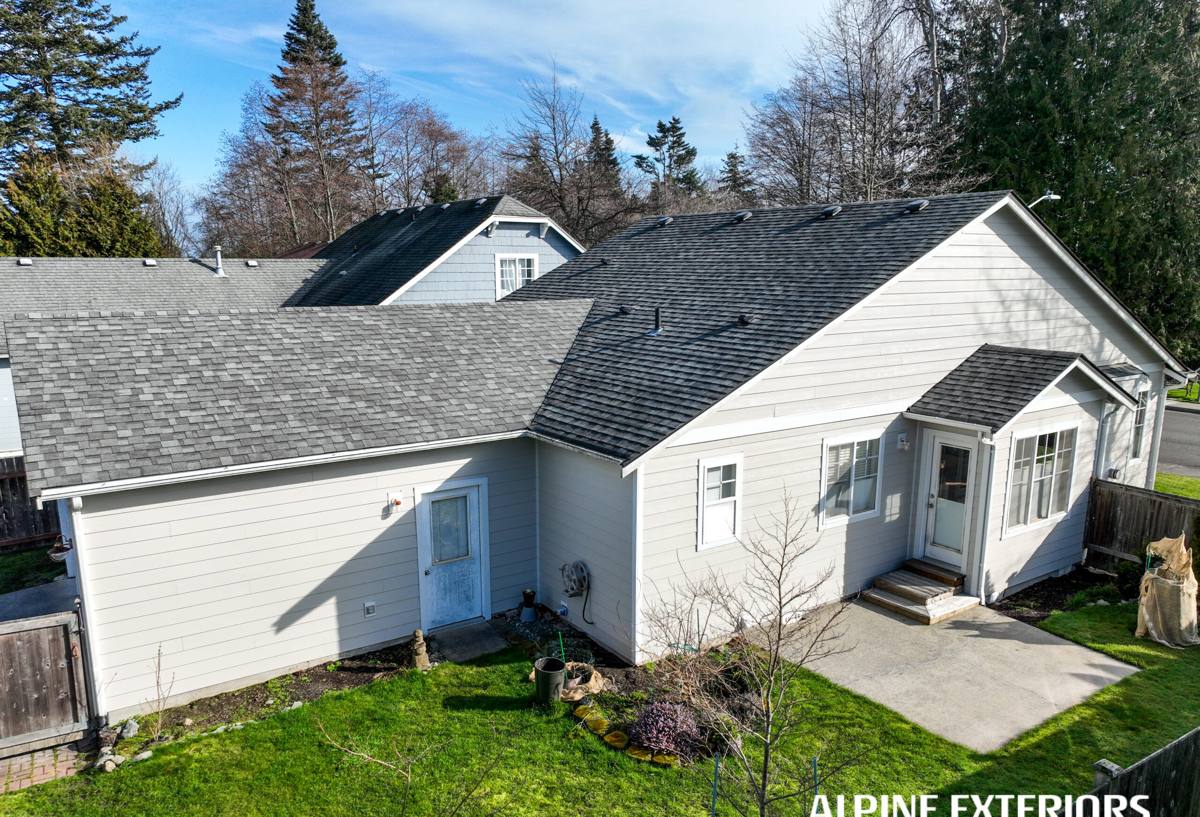
What the Cherry Point Climate Does to a House
Salt Air and Coastal Exposure
Properties close to the water pick up airborne salt that settles on exterior surfaces year-round. Salt is corrosive to fasteners and hardware, and it accelerates the breakdown of coatings and finishes that aren't formulated to resist it. Over years, siding that isn't built for coastal exposure can chalk, fade unevenly, or start failing at the seams well before its expected lifespan.
Driving Rain and Wind-Driven Moisture
Whatcom County gets a lot of rain in general, but Cherry Point's open exposure to the Strait means storms often arrive with real wind behind them. That's driving rain — moisture pushed sideways into siding, trim, and window flashing rather than falling straight down. Driving rain finds every gap in a poorly sealed installation, and it's much harder on materials that swell, warp, or wick water than on materials that don't absorb it in the first place.
The Long Moss and Lichen Season
Between the marine humidity and the shade cast by mature evergreens common to this area, north-facing walls and anything under tree cover stay damp for extended stretches of the year. That's exactly the environment moss, algae, and lichen need to take hold. On some siding products, that growth isn't just cosmetic — it holds moisture against the surface and can contribute to rot underneath if it's never addressed.
Why We Install Only James Hardie Fiber Cement
We made a decision years ago to standardize on one siding system rather than offer a menu of products with very different long-term outcomes. James Hardie fiber cement is what we put on homes, full stop, and here's the reasoning behind it in a coastal setting like Cherry Point:
- Non-combustible material — fiber cement doesn't feed a fire the way wood-based products can, which matters anywhere near dry summer stretches or brush.
- Doesn't absorb water like wood-based siding — it's engineered to resist the swelling, delamination, and rot that wood fiber products are prone to when exposed to sustained moisture.
- Factory-applied ColorPlus finish — baked-on color and a clear coat that's built to resist fading and chalking from UV and salt exposure far better than field-applied paint.
- Climate-engineered HZ5 formulation — Hardie's HZ5 product line is specifically engineered for wetter, harsher climates, which is the right specification for a coastal Whatcom County property.
- A genuinely transferable warranty — one that survives a change of ownership, which matters if you ever sell.
We're upfront that this isn't the cheapest siding option on the market. Vinyl and OSB-based products cost less upfront. But we've built our business on installing one thing well rather than installing several things at varying quality, and for a house that has to stand up to salt air and driving rain for decades, fiber cement engineered for the job is what we're willing to put our name on.
What We Won't Install, and Why
We get asked about other products often enough that it's worth being direct about where we stand.
Vinyl Siding
Vinyl is inexpensive and low-maintenance in mild climates, but it's a thin plastic product that can warp in temperature swings, crack in impacts, and fade over time with no way to repaint it back to a factory-quality finish. In a wind-exposed coastal spot like Cherry Point, we've also seen vinyl panels loosen or blow off in storms when the installation wasn't perfect — and even when it is, vinyl simply isn't built to the same standard as fiber cement.
LP SmartSide and Other Engineered Wood
LP SmartSide is a wood-strand product with a resin-treated surface, and it performs reasonably well when installation and caulking are maintained perfectly. The problem is that "maintained perfectly" is a high bar in a climate with this much sustained moisture — any breach at a seam, fastener, or cut edge gives water a path into the wood substrate, and once that starts, it doesn't reverse itself.
Cemplank, Allura, and Other Fiber Cement Brands
These are genuine fiber cement competitors to Hardie, and the category itself is sound. Our reasoning here is less about the material and more about standardization: we know the Hardie system, its installation specs, and its warranty structure in depth, and we'd rather be specialists in one proven, climate-engineered product line than generalists across several.
Primed Spruce and Cedar
Real wood siding has genuine appeal, and cedar in particular has a long track record in the Pacific Northwest. But both require an ongoing maintenance commitment — recoating, caulking, and moisture monitoring — that most homeowners underestimate when they choose it. In a moss-prone, salt-air environment, that maintenance schedule gets tighter, not looser.
Comparing the Options
| Material | Coastal/salt resistance | Moisture behavior | Maintenance | Fire resistance |
|---|---|---|---|---|
| James Hardie fiber cement (HZ5) | Strong | Does not absorb/swell | Low | Non-combustible |
| Vinyl | Moderate, can fade/warp | Doesn't rot, but can trap moisture behind it | Low, but not repaintable long-term | Combustible, can deform in heat |
| LP SmartSide / engineered wood | Moderate if sealed perfectly | Vulnerable at breached seams | Moderate to high | Combustible |
| Cedar / primed spruce | Weak without upkeep | Absorbs, prone to rot/moss | High, ongoing | Combustible |
How We Approach a Cherry Point Project
Inspection First
Before we talk siding, we look at what's happening underneath it. On coastal homes, we specifically check for moisture damage around window flashing, at wall penetrations, and on north- and west-facing elevations where wind-driven rain and shade combine. Any rot or compromised sheathing gets addressed before new siding goes over it — covering a moisture problem never solves it.
Installation to Spec, Not Shortcuts
Fiber cement performs the way it's supposed to only when it's installed correctly — proper clearances, correct fastening, sealed joints, and flashing details that account for wind-driven rain rather than just vertical rainfall. That's the difference between siding that lasts thirty-plus years and siding that starts showing problems in five.
Full Exterior Scope
Beyond siding, we handle roofing, windows, and decks, which matters on coastal properties because these systems interact. Window flashing has to tie into the siding water management plan correctly, roof edges and gutters have to move water away from wall assemblies, and deck ledger connections are a common point of hidden rot if they're not detailed properly. Treating the exterior as one system rather than a set of unrelated projects is how you avoid the kind of moisture problems we see on older Cherry Point homes.
Signs Your Cherry Point Home May Need Attention
- Persistent moss or algae growth on siding that returns shortly after cleaning
- Soft or spongy spots when you press on siding, especially near the bottom courses or around windows
- Visible paint failure, bubbling, or peeling on wood-based siding
- Gaps, warping, or buckling in vinyl panels, particularly on wind-exposed walls
- Staining or streaking below window and door trim, which often signals a flashing failure
- Rising energy bills that may point to compromised insulation behind failing siding
Why a Local Crew Matters Here
Siding crews unfamiliar with this stretch of Whatcom County coastline sometimes install to a generic spec that doesn't account for the wind exposure and salt air Cherry Point properties actually face. We work this area regularly, which means we know to prioritize the flashing and fastening details that matter most on an open coastal lot, and we're not learning the local climate on your project. If a warranty question or a maintenance question comes up years down the road, you're also dealing with a crew that's still local and still reachable — not a company that came through once and moved on.
Get a Straightforward Estimate
If your Cherry Point home is due for new siding, or you're weighing options after storm damage or a moisture problem, we're glad to take a look and give you a straight answer about what we'd recommend and why. There's no pressure and no cost to have us out — just a walkthrough, an honest assessment of your exterior, and an estimate you can use to make the decision that's right for your home.