 Semiahmoo Siding
 Exterior Conditions Along Drayton Harbor
Drayton Harbor sits right at the edge of Semiahmoo, and homes here take on a different kind of weathering than houses even a few miles inland. The water isn't just a view — it's an active ingredient in how fast your siding, trim, and paint break down. Salt-laden air moves off the harbor and settles on exterior surfaces year-round, driving rain comes in sideways off Georgia Strait during winter storms, and the shaded, damp lots common in this part of Whatcom County stay wet long enough each year to grow a serious moss and algae problem on north- and west-facing walls.
None of this is unusual for a Pacific Northwest waterfront community, but it does mean the siding decisions that work fine in a drier inland town can fall short here. We've built our approach around what actually holds up on Drayton Harbor exteriors, not a generic siding pitch.
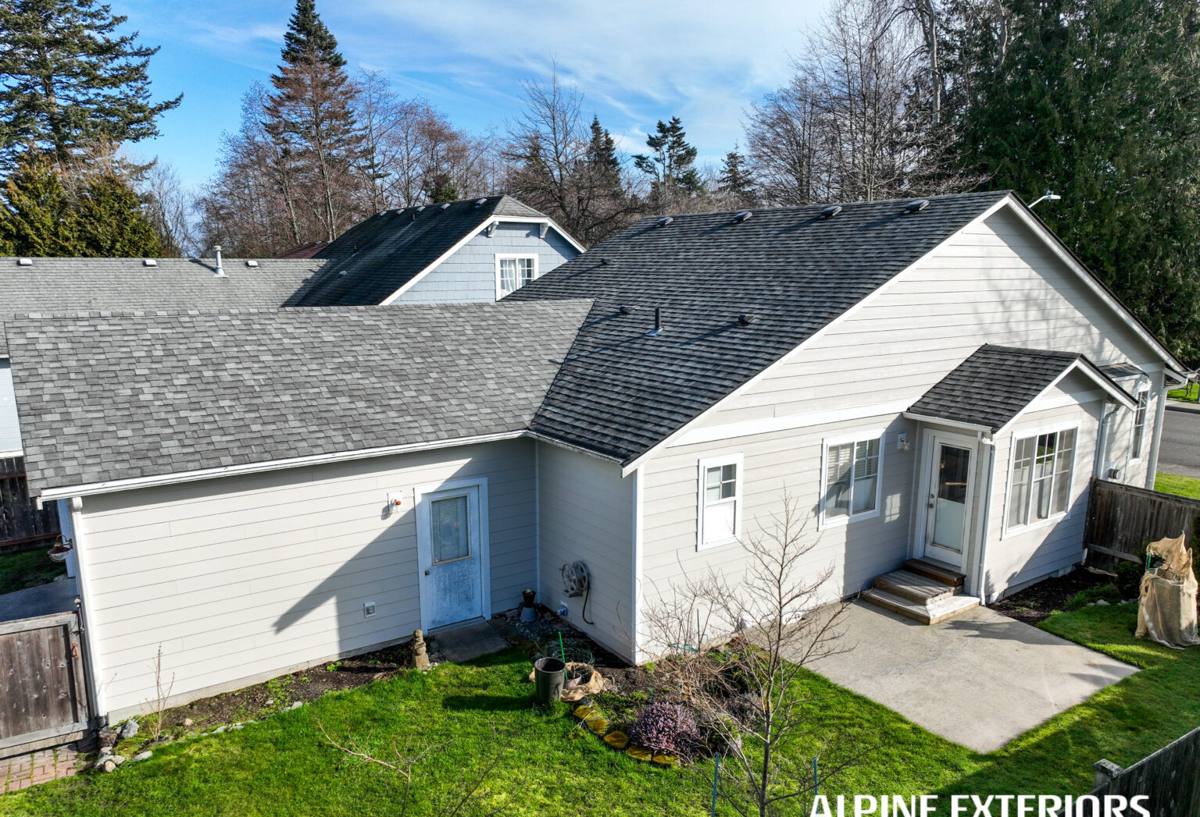
What Salt Air Does to a House
Salt exposure is corrosive to metal fasteners, flashing, and hardware, and it's abrasive to painted or coated wood surfaces over time. On homes close to the water, we see accelerated fading and chalking on lower-grade paint jobs, corrosion bleed at nail heads, and premature failure of caulking and sealant joints. Wood-based siding products are particularly vulnerable because the salt film holds moisture against the surface longer than plain rainwater would, which speeds up rot at seams, corners, and butt joints.
This is one of the practical reasons we standardized on James Hardie fiber cement rather than wood-based or wood-derived siding products. Fiber cement doesn't have organic wood fiber for salt-laden moisture to break down, and it holds a factory finish far longer than field-applied paint in a marine environment.
Fasteners and Flashing Matter as Much as the Siding
A house can have excellent siding and still fail early near the harbor if the fasteners and flashing underneath aren't rated for a corrosive coastal environment. Correct installation here means stainless or hot-dip galvanized fasteners, properly lapped house wrap, and flashing detail at every window, door, and butt joint — not just a good-looking board on the wall.
Moss, Algae, and the Long Wet Season
Whatcom County's wet season runs long, and shaded exposures around Drayton Harbor — under overhangs, behind trees, on the north side of the house — can stay damp for weeks at a stretch. That's exactly the environment moss and algae need to take hold. On porous or textured wood siding, moss doesn't just sit on the surface; it roots into surface fibers and holds moisture against the substrate, which accelerates rot underneath even when the siding still looks intact from the street.
James Hardie's fiber cement panels are far less hospitable to that kind of growth because there's no wood substrate for moss to anchor into and no absorbent surface to hold water. Regular soft-washing still matters — no siding is maintenance-free in this climate — but the failure mode of "moss ate through the board" simply doesn't apply the same way to fiber cement.
Why We Only Install James Hardie
We get asked fairly often why we don't offer vinyl, LP SmartSide, or other engineered wood or lower-cost fiber cement alternatives. The honest answer is that we've chosen to build our business around one product system we trust completely for this climate, rather than carrying five options and letting price alone decide which one goes on a house.
- Non-combustible core: James Hardie panels are fiber cement, not wood or wood-derived material, so they don't carry the same fire risk profile as engineered wood siding.
- ColorPlus factory finish: the color is baked on in a controlled factory process, which holds up better against salt air and UV than field-applied paint and comes with its own finish warranty.
- Climate-engineered HZ5 formulation: Hardie's HZ5 product line is engineered specifically for wetter, harsher climates like ours, rather than a one-size-fits-all national spec.
- Moisture behavior: fiber cement doesn't swell, delaminate, or feed moss growth the way wood-based products can when they take on repeated wetting near the water.
- Transferable warranty: a strong, transferable warranty backing the product matters to resale value on a waterfront-adjacent home.
We're not saying every other product on the market is unusable — plenty of homes around the country wear vinyl or engineered wood without issue. We're saying that for the specific combination of salt air, driving rain, and moss season that Drayton Harbor throws at a house, we only want our name on the installation when it's Hardie.
Comparing Siding Options for a Coastal Whatcom County Home
| Factor | James Hardie Fiber Cement | Vinyl | Engineered Wood (LP-type) |
|---|---|---|---|
| Salt air resistance | Strong, factory finish holds up | Can become brittle and fade over time | Moderate; finish and seams need upkeep |
| Moss/algae susceptibility | Low; no wood substrate for growth to root into | Low surface growth risk, but seams can trap moisture | Higher; wood fiber core vulnerable if moisture gets in |
| Fire performance | Non-combustible | Combustible | Combustible |
| Typical finish lifespan | 15+ years factory finish | Fades, doesn't repaint well | Repaint/recaulk cycle needed |
| Impact/moisture damage risk | Low when correctly installed | Cracks in cold, warps in heat | Edge swelling if water intrudes |
Roofing, Windows, and Decks in the Same Climate
Siding isn't the only exterior surface fighting Drayton Harbor's weather. Roofs here need to shed driving rain without wind-driven water finding its way under shingles, and roof edges and valleys near the water are prone to the same moss buildup as siding. Windows on harbor-facing walls take direct salt spray and wind load, so seal quality and frame material matter more than they might a few miles inland. Decks exposed to the same salt air and near-constant dampness need hardware and fastening details that account for corrosion, not just a nice-looking board.
We handle all four — siding, roofing, windows, and decks — as one exterior package, because on a harbor-exposed home they all have to work together. A new roof with a poorly flashed siding tie-in, or new siding around windows with failing seals, just moves the water problem instead of solving it.
Why a Local Crew Matters Here
Installation quality is what actually determines whether any siding product performs in this climate, and that's especially true near the water. A crew that mostly works inland jobs may not default to the flashing, fastener, and moisture-barrier details a harbor-exposed home needs. A local Whatcom County crew that regularly works Semiahmoo and Drayton Harbor properties already knows which walls take the worst weather, where moss tends to build first, and how to detail around windows and corners so wind-driven rain doesn't find a way in.
Local presence also matters for warranty follow-through — we're not a crew that did one job in the area and moved on. If a caulk line needs a touch-up or a corner needs a look five years down the road, we're still working in this community.
What to Ask Any Contractor Bidding a Harbor-Adjacent Home
- What fastener and flashing spec do you use for homes within a half-mile of saltwater?
- How do you detail window and door openings against wind-driven rain?
- What's your plan for moss and algae prevention on shaded, north-facing walls?
- Is the manufacturer's installation warranty actually valid based on how the crew installs it?
- Do you work siding, roofing, windows, and decks together, or only one trade?
What a Project Typically Involves
Every home is different, but a siding project on a Drayton Harbor home generally starts with an exterior assessment that looks past the siding itself — checking for moisture intrusion at trim, windows, and lower wall sections where rot is most likely to have started unnoticed. From there, we scope the tear-off, any sheathing repair needed, correct house wrap and flashing installation, and the Hardie panel and trim install itself, finished with factory ColorPlus color so there's no field-painting step to fail early in this climate.
Timing around here often works best outside the heaviest winter storm stretch, though exterior work can be scheduled across most of the year with the right weather planning.
Get a Straight Answer for Your Home
If you're dealing with moss buildup, fading paint, soft spots near trim, or you're just planning ahead for a harbor-exposed home in Drayton Harbor or elsewhere in Semiahmoo, we're happy to take a look and give you a straightforward read on what your exterior actually needs. Reach out for a free, no-pressure estimate using the form below.