 Semiahmoo Siding
 Exteriors Built for California Creek's Coastal Climate
California Creek sits close enough to the water that homes there deal with a different set of exterior conditions than houses a few miles inland in Whatcom County. Salt-tinged air off the strait, wind-driven rain that comes in sideways more often than straight down, and a moss season that can stretch from late fall through spring all put steady pressure on siding, roofing, windows, and decks. None of this is dramatic on any given day. It's the accumulation over years that separates exteriors that hold up from ones that need early repairs or full replacement.
We work on homes throughout the Semiahmoo area, and California Creek properties tend to share a common thread: they're exposed to a lot of moisture and organic growth, and whatever's on the outside of the house needs to be able to take that punishment without trapping water or feeding mold and moss underneath the surface.
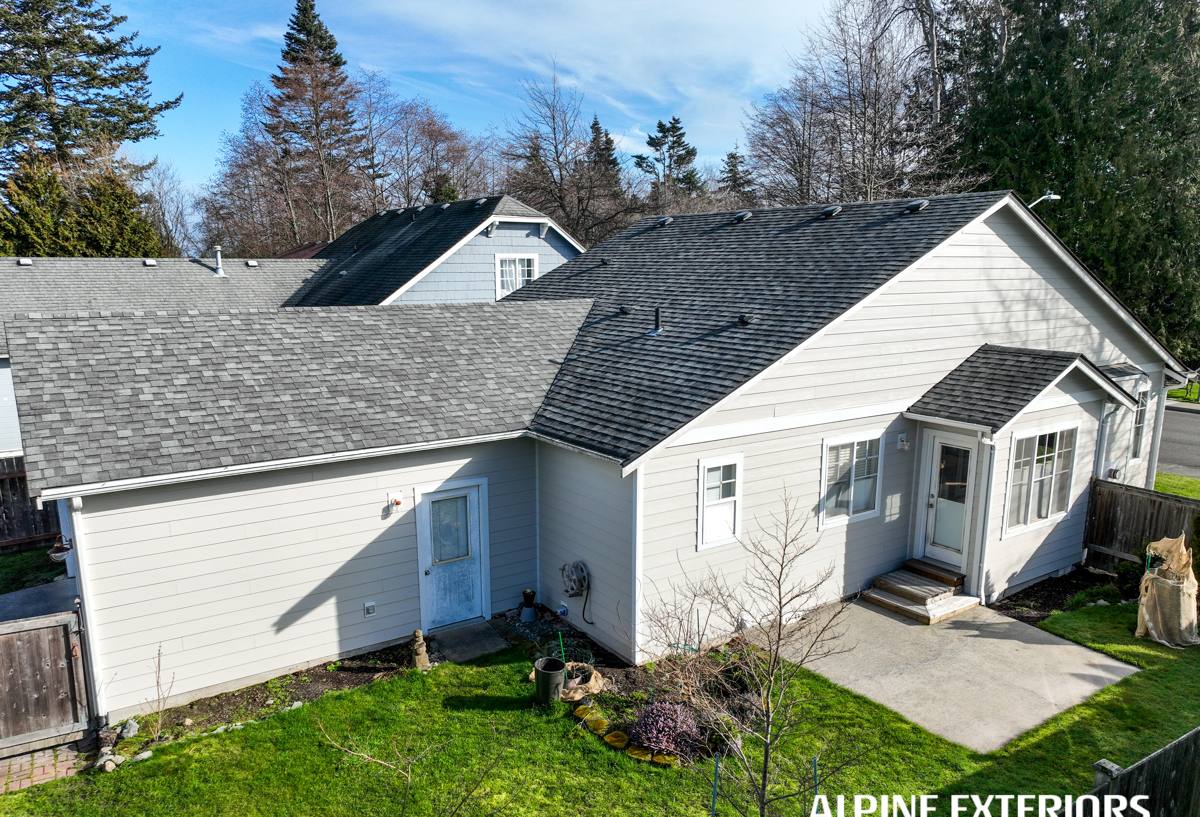
What Salt Air, Rain, and Moss Actually Do to a House
Salt Air
Proximity to saltwater means airborne salt settles on exterior surfaces even when you can't see or smell it. Over time, salt exposure accelerates corrosion on fasteners, flashing, and any exposed metal components, and it can degrade certain paints and coatings faster than they'd wear inland. Products and finishes that aren't built to handle a marine-influenced climate tend to show their age early — chalking, fading, or corroding well before their expected lifespan.
Driving Rain
Whatcom County gets a lot of rain generally, but the wind pattern near the water pushes rain into walls and around openings with more force than a calm, straight-down rain would. That matters because it tests every seam, joint, and penetration in the building envelope — window trim, siding laps, roof-to-wall transitions, deck ledger connections. A material or installation detail that's marginal in a dry climate can fail outright here.
Moss and Organic Growth
Shade, moisture, and cool temperatures are exactly what moss and algae need to thrive, and California Creek's tree cover combined with the damp climate gives them plenty of both. Moss on a roof holds moisture against shingles and decking, which shortens their life. Moss and algae streaking on siding isn't just cosmetic — on porous or absorbent materials, sustained dampness under a layer of growth can lead to rot, delamination, or coating failure over time.
Siding: Why We Only Install James Hardie Fiber Cement
We install James Hardie fiber cement siding exclusively. We don't install vinyl, LP SmartSide, Cemplank, Allura, primed spruce, or cedar, and in a climate like California Creek's, that standard isn't arbitrary — it comes down to how each material actually performs against salt, rain, and moss over the long haul.
The Trade-offs of the Alternatives
- Vinyl siding is affordable and low-maintenance in mild conditions, but it can warp or become brittle with temperature swings, its seams are a weak point against wind-driven rain, and its color is baked into the plastic rather than a factory-applied finish, so it fades over time with no way to refinish it without replacing panels.
- LP SmartSide and other engineered wood products use wood strand technology with a resin binder, which performs reasonably well when installation and caulking are perfect and maintained forever — but it's an engineered wood product at its core, meaning any sustained moisture intrusion at a cut edge, seam, or fastener point can lead to swelling or degradation. In a high-moisture, moss-prone area, that's a maintenance burden we're not willing to put on a homeowner's shoulders.
- Cedar and primed spruce are natural wood. They look great when new, but wood is inherently vulnerable to moisture, rot, and pest activity, and it demands ongoing refinishing to keep that protection intact. In a climate with a long wet season and heavy shade in places, wood siding needs more attention than most homeowners want to give it.
- Other fiber cement brands like Cemplank and Allura are chemically similar to Hardie in that they're cement-based composites, but we've standardized on James Hardie specifically for its manufacturing consistency, its climate-engineered HZ5 product line built for Pacific Northwest conditions, its factory-applied ColorPlus finish, and the strength of its transferable warranty when installation is done to spec.
Why James Hardie Fits This Climate
Fiber cement is non-combustible and dimensionally stable — it doesn't expand and contract with moisture the way wood-based products can, and it doesn't corrode or become brittle the way vinyl can in temperature swings. James Hardie's ColorPlus finish is baked on in a factory-controlled process, which gives it better fade and moisture resistance than field-applied paint, and it holds up well against the kind of salt-air exposure California Creek homes see. It also resists moss and algae staining better than porous wood surfaces, though no siding is completely immune — regular gentle washing still helps keep any siding looking its best in a damp climate.
Roofing in a Wind-Driven, Moss-Heavy Environment
Roofing takes the most direct hit from both driving rain and moss. In our experience, the roofs that hold up longest near the water share a few things: properly lapped and sealed flashing at every penetration and wall transition, ventilation that lets the attic space dry out between rain events, and materials rated for wind exposure rather than just standard residential grade. Moss control matters here too — a roof with heavy moss buildup is holding moisture against the surface far longer than it should, which shortens shingle life regardless of how good the shingles themselves are.
Windows: Sealing Against Wind-Driven Rain
Windows near the water face two separate challenges: keeping wind-driven rain from finding its way past the frame, and standing up to salt air without corroding hardware or degrading seals. Proper flashing integration with the siding is just as important as the window unit itself — a well-built window installed with poor flashing details will still leak. We pay close attention to how window openings tie into the siding system so water is directed out and away rather than finding a path inward.
Decks: Built to Handle Standing Moisture and Shade
Decks in shaded, damp areas like parts of California Creek deal with slower drying times than decks in full sun, which means moss, algae, and mildew have more opportunity to establish. Ledger board attachment and proper flashing at the house connection are critical details — that's one of the most common points of hidden rot on older decks in wet climates. Material choice, board spacing for drainage, and a maintenance routine that includes periodic cleaning all factor into how long a deck lasts in this kind of environment.
How Material Choices Compare in This Climate
| Material | Moisture Behavior | Salt Air Resistance | Maintenance Burden |
|---|---|---|---|
| James Hardie Fiber Cement | Dimensionally stable, non-combustible | Strong, factory-finished | Low — occasional gentle washing |
| Vinyl | Can warp with temperature swings | Moderate; color fades over time | Low, but no refinishing option once faded |
| LP SmartSide / Engineered Wood | Vulnerable at cut edges and seams if moisture gets in | Moderate | Moderate to high — caulking and inspection needed |
| Cedar / Primed Spruce | Prone to moisture absorption and rot | Weak without diligent upkeep | High — regular refinishing required |
Our Process for a California Creek Exterior Project
Every property near the water is a little different depending on tree cover, wind exposure, and how close it sits to the shoreline, so we start with an on-site look at the existing siding, roofing, windows, and deck condition before recommending anything. From there:
- We assess moisture damage, moss buildup, and any failure points in the current exterior envelope.
- We walk through material and system options with straightforward pros and cons — no upselling, no pushing a product that doesn't fit the situation.
- We detail flashing, ventilation, and drainage planning specific to the site, since generic installation details don't hold up as well in a driving-rain environment.
- We provide a clear written scope and timeline before any work begins.
A Simple Maintenance Checklist for This Climate
Regardless of what's currently on your home, a few habits go a long way toward extending the life of siding, roofing, windows, and decks near the water:
- Rinse siding and decking gently once or twice a year to remove salt residue and slow moss/algae growth.
- Keep gutters clear so water isn't overflowing against siding or pooling near the foundation.
- Trim back tree limbs that keep sections of roof or siding in constant shade and dampness.
- Inspect caulking and trim around windows annually, especially before the wet season sets in.
- Address moss on roofing promptly rather than letting it build up over multiple seasons.
- Check deck ledger boards and fastener points periodically for signs of hidden moisture damage.
Why a Local Crew Makes a Difference
A crew that works throughout Whatcom County and the Semiahmoo area regularly sees how homes in this specific microclimate actually age — which flashing details hold up, where moss tends to establish first, which siding transitions are most likely to see wind-driven rain. That kind of pattern recognition, built from working on homes in this exact environment repeatedly, is hard to replace with generic installation instructions. It shows up in the small decisions: how a J-channel is sealed, how a deck ledger is flashed, where extra attention goes on a north-facing wall that never quite dries out.
Let's Take a Look at Your Home
If you're dealing with siding, roofing, window, or deck concerns on a California Creek property, or you just want an honest read on how your exterior is holding up against the salt air and rain, we're happy to take a look. Reach out below for a free, no-pressure estimate.