 Semiahmoo Siding
 Why California Creek Windows Take More Punishment Than Most
Homes along California Creek, tucked in close to Semiahmoo and Drayton Harbor in Whatcom County, sit right where marine weather comes ashore. The creek corridor and the nearby saltwater exposure mean window frames and glazing here deal with three things at once: salt-laden air that accelerates corrosion on metal hardware and fasteners, wind-driven rain that gets pushed sideways into gaps a standard install would never notice inland, and a moss and algae season that runs long because the humidity rarely lets surfaces fully dry out. A window that would hold up fine in a drier part of the county can start showing problems here in a fraction of the time.
None of that means custom windows are a luxury item for this area — it means the details of materials, glazing, and installation matter more here than almost anywhere else in the region. Get those details right and a window can last decades. Get them wrong and you're looking at fogged glass, soft trim, and drafts within a few winters.
What "Custom" Actually Means for This Neighborhood
Custom windows aren't about fancy shapes for their own sake. On California Creek homes, "custom" usually means matching openings that were built to older or nonstandard framing dimensions, correcting for settling or slightly out-of-square rough openings, and choosing a configuration that actually performs in this microclimate rather than whatever is cheapest to stock.
Sizing and Fit
Older homes in this part of Whatcom County were often framed before standardized window sizing was common, and decades of settling can throw a rough opening out of square by more than most off-the-shelf units can tolerate. A custom-built window is measured and manufactured to the actual opening, not the other way around, which matters because gaps packed with extra shim and sealant are exactly where wind-driven rain finds its way in.
Shape and Sightlines
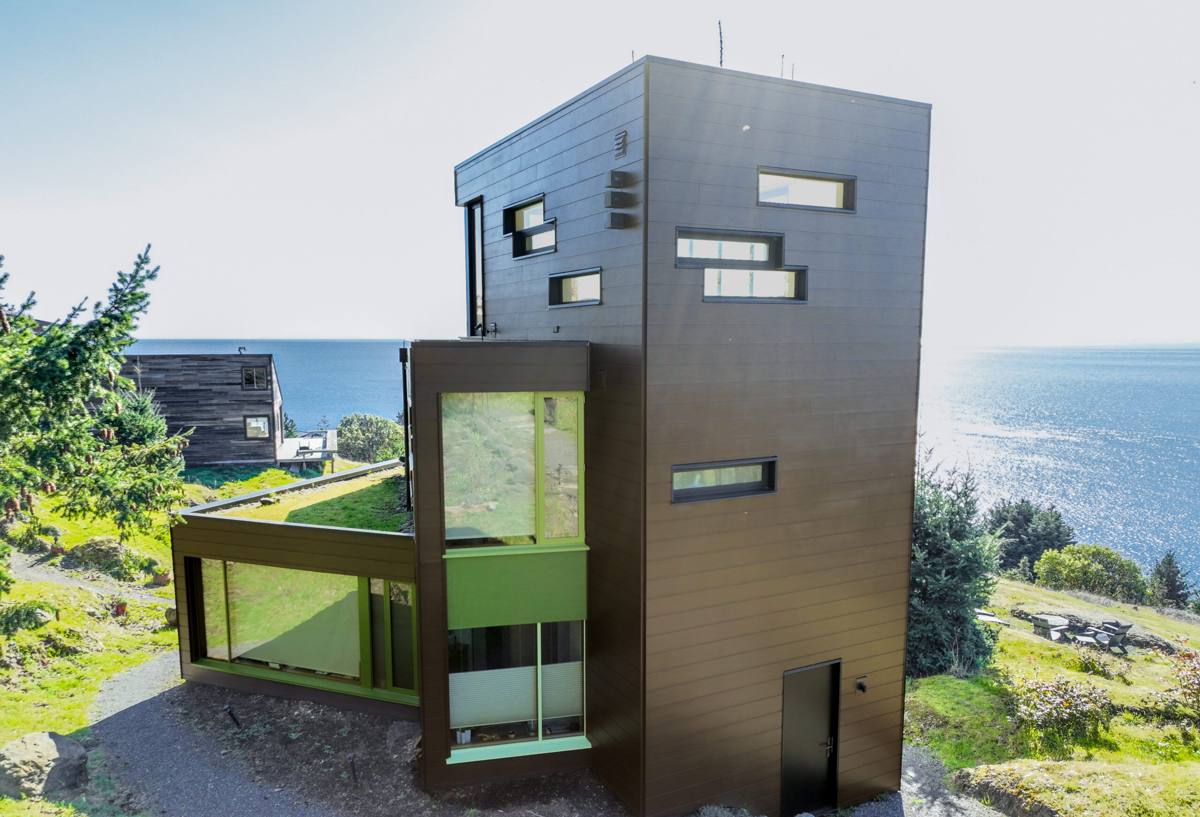
Bay windows, arched transoms, and taller-than-standard openings are common on homes with a water-facing orientation, since owners want the view. Custom units let you keep that sightline without cutting corners on the seal around an oddly shaped frame — a spot that's easy to get wrong and expensive to fix later.
Frame Material: What Holds Up Near Salt Air
Material choice is the single biggest factor in how a window ages here. Every option has trade-offs, and the right call depends on the home's exposure, budget, and how much upkeep the owner wants to do.
| Material | Salt Air / Moisture Behavior | Maintenance | Notes |
|---|---|---|---|
| Vinyl | Won't corrode or rot; performs well in salt exposure | Low — occasional cleaning | Good value; limited color/finish options compared to other materials |
| Fiberglass | Very stable in temperature swings and moisture; resists corrosion | Low | Higher upfront cost; strong long-term performer for exposed sites |
| Wood (clad exterior) | Interior wood warmth with a protective exterior clad shell; clad layer must stay intact | Moderate — watch clad seams and any exposed end grain | We're selective about clad wood here; any breach in the cladding lets moisture into end grain fast in this climate |
| Aluminum | Conducts cold and can corrode faster near salt air without proper coatings | Moderate to high | We generally steer clients away from bare aluminum this close to the water — condensation and corrosion risk outweigh the upside |
We're upfront when a material isn't a good fit for a specific home's exposure. That's not a knock on the product line — it's about matching material behavior to how much salt air and rain a given wall actually sees, which varies even within the same street depending on orientation and tree cover.
Glazing and Moisture Management
Glass and seals matter as much as the frame. In a climate where indoor humidity is fighting cold, damp air outside for much of the year, condensation between panes or on interior glass is one of the most common complaints we hear from homeowners near the creek.
- Dual or triple-pane insulated glass with a properly sealed spacer keeps the interior surface warmer, cutting down on interior condensation and fogging.
- Low-E coatings help manage heat loss without darkening the room, which matters on homes that rely on window light during the shorter winter days.
- Argon or krypton gas fill between panes adds insulating value, but only holds up if the seal itself is intact — a failed seal is the actual cause of that cloudy, "fogged forever" look between panes, not the glass itself.
- Weep holes and drainage paths in the sill need to stay clear, or the moisture the system is designed to shed just sits there instead.
Installation Details That Decide Whether It Lasts
Most window failures we get called out to inspect near Semiahmoo aren't a bad window — they're a window that was installed without accounting for wind-driven rain and salt exposure. The unit itself is often fine; the flashing and sealant around it weren't.
Flashing First
Proper flashing integrates with the home's existing weather-resistive barrier so water is directed out and down, never trapped behind the trim. On a site exposed to driving rain off the water, this is not optional trim work — it's the difference between a dry wall cavity and slow, hidden rot behind the casing.
Sealant Selection and Placement
Not every exterior sealant is rated for constant salt and moisture exposure, and even a good sealant fails if it's applied to a dirty or damp substrate. We treat the sealant joint as part of the water management system, not a cosmetic finishing step.
Fastener and Hardware Corrosion
Standard fasteners and hinge hardware can start showing rust streaks within a couple of seasons this close to salt air. Corrosion-resistant fasteners cost a little more and save a callback a few years down the road.
Our Process for California Creek Homes
- On-site assessment — we look at the existing openings, current signs of moisture or rot, sun and wind exposure, and how close the home sits to open water or the creek corridor.
- Measuring and material selection — precise measurement of each opening, and a frank conversation about which material and glazing package fits the home's exposure and budget.
- Custom manufacturing — units are built to the actual openings rather than forcing standard sizes into non-standard framing.
- Removal and flashing correction — old units come out carefully so we can inspect the framing and sill underneath, correcting any flashing or moisture issues we find before the new window goes in.
- Installation and sealing — set, shim, flash, and seal with materials rated for coastal exposure.
- Final check — operation, seal integrity, and cleanup, with a walkthrough so you know what to watch for going forward.
Signs Your Windows Need a Closer Look
Homeowners in this area often live with small problems for years before calling, assuming it's normal wear. In this climate, a few signs are worth acting on sooner rather than later.
- Fogging or a cloudy haze between panes that won't clean off — a sign the seal has failed
- Soft or discolored trim and sill wood, especially on the side of the house facing prevailing wind and rain
- Persistent moss or algae buildup on the sill or frame that returns within weeks of cleaning
- Drafts or a noticeable temperature difference near the window on a windy day
- Difficulty opening, closing, or locking — often a sign the frame has shifted or swelled with moisture
- Visible rust streaks on hardware or fasteners
Why a Crew That Already Works This Area Matters
Window installation isn't the same job everywhere in Whatcom County. A crew that works California Creek and the broader Semiahmoo area regularly already knows which orientations take the worst of the driving rain, which older homes tend to have out-of-square openings, and which materials and flashing details actually hold up here versus what looks fine on paper. That local pattern recognition shows up in fewer surprises during removal and a install that's sealed correctly the first time, rather than a callback in year two.
It also means we're not guessing about maintenance recommendations afterward — we can tell you honestly what to expect from moss season on your specific exposure, because we've seen it on homes very much like yours.
Maintenance That Actually Extends the Life of the Investment
Custom windows built and installed correctly still benefit from a little seasonal attention in this climate. A quick rinse of sills and frames a couple of times a year keeps salt residue and moss spores from taking hold, and clearing weep holes prevents standing water from sitting against the frame. Checking exterior sealant for cracking once a year, especially after a hard winter, catches small gaps before they become a moisture problem behind the trim.
If you're weighing custom windows for a home near California Creek, we're happy to take a look and give you a straightforward, no-pressure estimate — just fill out the form below and we'll get in touch.