 Semiahmoo Siding
 Exterior Work Built for Blaine Harbor's Marine Climate
Blaine Harbor sits right where Semiahmoo Bay meets the open water of the Strait of Georgia, and that location shapes everything about how a house ages here. Homes along the harbor and up into the surrounding neighborhoods take a steady diet of salt-laden air, wind-driven rain coming off the water, and long stretches of gray, damp weather that keep exterior surfaces wet far more often than homeowners further inland ever deal with. We've worked on siding, roofing, windows, and decks throughout this part of Whatcom County long enough to know that generic advice from a national contractor doesn't hold up here. What protects a house in Bellingham's more sheltered pockets isn't always enough for a home exposed to Semiahmoo's open water and wind.
This page walks through what Blaine Harbor homes typically face, how we approach siding and the rest of the exterior envelope for this specific location, and why we've standardized on one siding product rather than offering a menu of options.
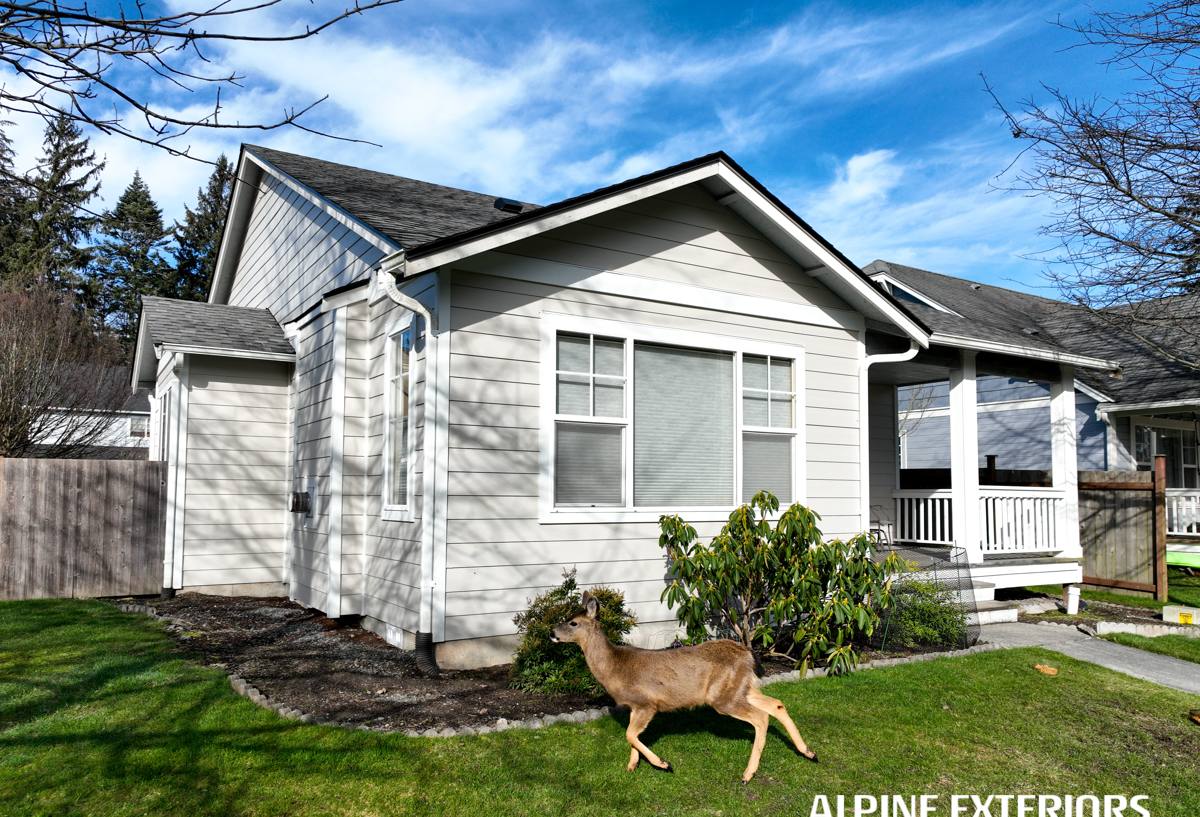
What the Local Climate Does to a House
Salt Air and Corrosion
Proximity to saltwater means airborne salt settles on every exterior surface — siding, trim, fasteners, flashing, and hardware. Over years, that salt exposure accelerates corrosion on anything metallic that isn't properly rated for a marine environment, and it can degrade certain siding materials faster than the same product would wear a few miles inland. Fasteners, flashing metal, and even paint chemistry all need to be chosen with that in mind.
Driving Rain
Wind off the water doesn't just bring rain straight down — it pushes it sideways, into laps, seams, and any gap in the exterior envelope. A siding system that performs fine in calm, vertical rainfall can still let water in when it's being driven horizontally into a wall. That's a durability issue, not a cosmetic one: water that gets behind siding and can't dry out is what leads to rot, mold, and structural damage over time.
Moss and Persistent Moisture
Whatcom County's long, wet season means north-facing walls, shaded areas, and anything under tree cover stay damp for extended stretches. Moss and algae take hold on surfaces that don't shed water well or that trap moisture against the substrate. Left unaddressed, that constant dampness accelerates decay in wood-based products and can stain or degrade finishes that aren't built to handle sustained exposure.
Siding: Why We Only Install James Hardie Fiber Cement
We get asked regularly why we don't offer vinyl, LP SmartSide, or other fiber cement brands like Cemplank or Allura. It's a fair question, and the honest answer is that after years of working on homes in this exact climate, we decided we'd rather stand behind one product we trust completely than offer a lineup of options with different weak points.
The Case Against the Alternatives — Fairly Stated
Vinyl siding is inexpensive and easy to install, and for a lot of climates it does a reasonable job. But it's a thin plastic product that can warp or become brittle over time, and in coastal wind it's more prone to flexing and popping loose at the edges than a rigid fiber cement panel. It also isn't fire-resistant, which matters more each year as wildfire smoke and ember exposure become a broader regional concern even in wetter parts of the state.
LP SmartSide is an engineered wood product — strand board with a resin-saturated overlay. It performs well in many parts of the country, but wood-based siding depends heavily on unbroken factory sealing and correct field caulking at every cut edge to keep moisture out. In a marine climate with this much sustained dampness and driving rain, any gap in that seal is an opening for water to get into the substrate, and wood-based products don't recover from that the way cement-based products do.
Other fiber cement brands, like Cemplank or Allura, are chemically similar to James Hardie — cement, sand, and cellulose fiber. The differences that matter to us come down to manufacturing consistency, factory finish quality, and warranty structure. We've found Hardie's ColorPlus finish and engineered product lines to be the most consistent and best backed of the fiber cement options available to us, and standardizing on one system lets our crews install it correctly every time rather than switching techniques between brands.
What James Hardie Gets Right for This Location
- Non-combustible core: fiber cement doesn't burn, which matters for insurance and long-term peace of mind.
- Engineered for climate: Hardie's HZ5 product line is formulated for wetter, colder regions like the Pacific Northwest, with moisture and freeze-thaw performance built into the formulation.
- Factory-applied ColorPlus finish: baked-on color resists fading and chipping better than field-applied paint, and it holds up to salt air exposure without the touch-up cycle that painted wood or vinyl often needs.
- Dimensional stability: fiber cement doesn't expand and contract with moisture the way wood products do, so it holds its seams and caulk lines longer.
- Transferable warranty: a real backing that matters if the home changes hands, which is common in a desirable waterfront-adjacent community like this one.
Installation Matters as Much as the Product
Fiber cement siding is only as good as the flashing, water-resistive barrier, and fastening behind it. In a driving-rain environment like Blaine Harbor, we pay particular attention to:
- Proper drainage plane and rainscreen gap behind the siding so any incidental moisture can dry out instead of sitting against the wall
- Correctly lapped and sealed window and door flashing, since these are the most common points where wind-driven rain finds its way in
- Corrosion-resistant fastener selection appropriate for a coastal environment
- Manufacturer-specified nailing patterns and clearances, which affect both warranty coverage and long-term performance
A correctly installed lower-tier product will often outlast a premium product installed poorly. We treat installation quality as inseparable from the material decision.
Roofing, Windows, and Decks in the Same Climate
Roofing
Roofs here deal with the same driving rain and moss pressure as siding, plus direct sun and wind exposure at the highest point of the house. Proper underlayment, ventilation, and flashing at valleys and penetrations are what actually keep water out over time — the roofing material itself is only part of the equation.
Windows
Window failures in this climate are usually about the flashing and sealant integration with the surrounding wall assembly, not just the window unit itself. We integrate window replacement with the siding plane so water management is continuous across the whole wall, not patched together after the fact.
Decks
Decks facing the water or open to wind take a harder beating from both rain and salt spray. Fastener corrosion, ledger board flashing, and material selection all need to account for that exposure, especially on structures that see standing moisture after storms.
Cost Factors to Expect
| Factor | Why It Matters Here |
|---|---|
| Home exposure (open water vs. sheltered) | Direct wind and rain exposure increases flashing and rainscreen detailing needs |
| Existing siding removal | Tear-off and disposal of old material, especially if moisture damage is found underneath |
| Trim and detail work | Corner boards, window trim, and fascia detailing affect both labor and material cost |
| Home size and wall complexity | More corners, gables, and stories increase both material waste and labor time |
| Repair work uncovered during tear-off | Rot or sheathing damage found once old siding comes off, common in older coastal homes |
We won't quote a number without seeing the house, but these are the variables that actually move a bid up or down, and we walk homeowners through each one during the estimate.
Why a Local Crew Matters
Crews who don't work this stretch of Whatcom County regularly can miss what's specific to it — the wind exposure difference between a lot facing open water and one set back a few blocks, how much moss pressure a shaded north wall actually sees, or which flashing details hold up against this particular combination of salt and rain. We've built our process around what this specific climate does to a house, not a generic Pacific Northwest playbook. That's the value of hiring a crew that works Semiahmoo and the surrounding Blaine and Whatcom County area consistently rather than passing through once.
What Homeowners Should Watch For
- Caulk cracking or gaps opening up around trim and window edges
- Moss or algae buildup on north-facing or shaded siding sections
- Soft spots or discoloration near the base of walls or around deck ledgers
- Rust streaking from fasteners or flashing, a sign of corrosion in coastal conditions
- Paint or finish that's chalking, peeling, or fading unevenly
- Any soft or spongy decking boards, especially near ground contact or fasteners
Catching these early is almost always cheaper than waiting until they become structural issues.
If you're seeing any of these signs on a Blaine Harbor home, or you're just planning ahead for a siding, roofing, window, or deck project, we're happy to take a look and put together a straightforward, no-pressure estimate — use the form below to get started.