 Semiahmoo Siding
 Siding for the Wiser Lake Area
Wiser Lake sits inland from the Semiahmoo waterfront, but it isn't spared from what Whatcom County weather does to a house. Homes here deal with the same soaking wet winters, the same low, filtered sun for months at a time, and the same year-round dampness that keeps everything from decks to rooflines under constant moisture pressure. The lake itself adds a wrinkle: houses close to the water carry extra humidity in the air almost every morning, and that moisture doesn't evaporate off quickly under the tree cover common to this part of the county.
We work throughout Semiahmoo and the surrounding Whatcom County communities, and Wiser Lake is a regular stop for us. This page covers what we actually see on homes in this area, how we approach siding, roofing, window, and deck work here, and why we install one siding product and one only.
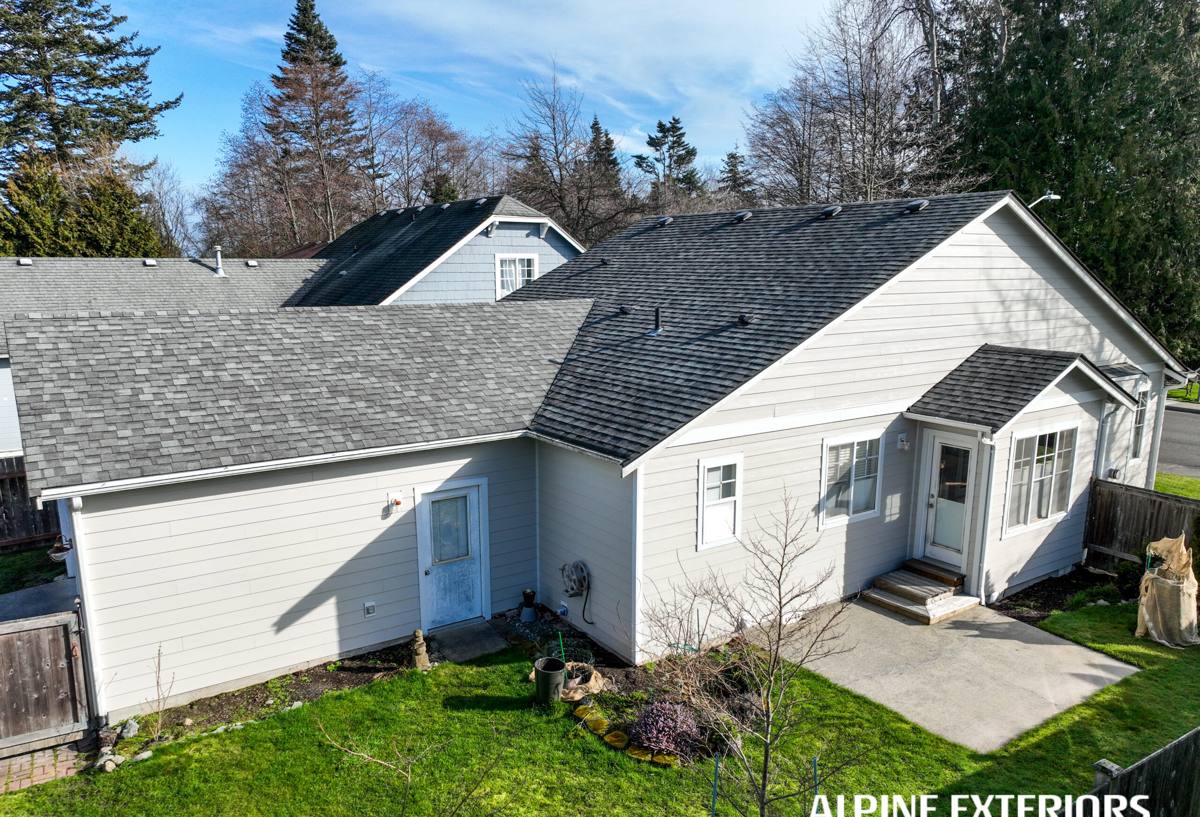
What the Climate Does to a Wiser Lake Home
Moisture That Doesn't Let Up
Northwest Washington gets a long, low-intensity rain season rather than short, hard storms. That's actually harder on siding and trim than a quick downpour, because materials stay wet for extended stretches instead of getting a chance to dry between rain events. Around Wiser Lake, tree cover and the lake's own humidity add to that — siding on the shaded or lake-facing side of a house can stay damp well after the rest of the property has dried out.
Moss, Algae, and Constant Green Growth
Wherever shade and moisture combine — and that's much of the Wiser Lake area — moss and algae take hold on roofs, decking, and siding surfaces that don't dry out or aren't finished with a durable, factory-cured coating. This isn't a cosmetic issue only; sustained organic growth holds moisture against the surface underneath it, which accelerates whatever material is under there.
Salt Air's Reach Inland
Semiahmoo's coastal position means salt-laden air moves inland with weather systems, and homes even a few miles from the water pick up some of that exposure. Salt air is hard on fasteners, flashing, and any siding material with a coating that isn't built to resist it — over years, it accelerates corrosion and finish breakdown on materials not engineered for a marine-influenced climate.
Freeze-Thaw Cycling
Whatcom County doesn't get brutal winters, but it does get repeated cycles of near-freezing nights and wet days. For any siding material that absorbs water, that cycle of swelling and contracting at the edges and cut ends is where premature failure usually starts — at seams, corners, and butt joints, not in the middle of a flat panel.
Why We Only Install James Hardie Fiber Cement
We get asked, especially by homeowners comparing quotes, why we don't offer vinyl, LP SmartSide, or other fiber cement brands like Cemplank or Allura. The honest answer is that after years of installing and repairing siding in this climate, we standardized on one product because it performs consistently in the conditions Wiser Lake actually has — not the conditions a spec sheet assumes.
Non-Combustible Material
James Hardie siding is fiber cement — it doesn't burn. Wildfire risk in Washington isn't limited to the dry side of the state anymore, and a non-combustible exterior is a real, material difference in a home's risk profile, not a marketing point.
Engineered for Wet Climates
Hardie's HZ5 product line is specifically engineered for climates like ours — cold, wet, and humid for much of the year. That's a meaningful distinction from siding lines designed as one-size-fits-all for the whole country.
A Factory Finish That Resists What This Area Throws at It
ColorPlus, Hardie's factory-applied finish, is baked on under controlled conditions rather than sprayed and dried on-site. That finish holds up better against UV, moisture cycling, and the kind of grime and algae staining Wiser Lake homes see, and it comes with its own finish warranty separate from the product warranty.
Dimensionally Stable
Because fiber cement doesn't expand and contract with moisture the way wood-based products do, it holds paint lines and caulk joints far longer — which matters directly in a climate where those joints are wet more often than they're dry.
Comparing Siding Options for This Climate
| Material | Moisture Behavior | Salt Air Resistance | Finish Durability | Fire Rating |
|---|---|---|---|---|
| James Hardie Fiber Cement | Dimensionally stable, engineered HZ5 line for wet climates | Strong; factory finish holds up well | ColorPlus factory-cured finish, long warranty | Non-combustible |
| Vinyl | Doesn't rot, but can warp/crack in freeze-thaw and UV over time | Moderate; can fade and become brittle | Color molded through, but fades; not repaintable easily | Combustible |
| LP SmartSide (engineered wood) | Wood-based; vulnerable at cut edges and seams if moisture intrudes | Moderate; coating dependent | Factory finish, but wood substrate | Combustible |
| Primed Spruce / Cedar | Absorbs moisture readily; needs consistent maintenance | Weak without diligent upkeep | Field-applied paint fails faster; frequent repainting | Combustible |
This table reflects general material behavior, not a claim that every competing product fails on every home. Plenty of these materials perform adequately when installed and maintained well. Our position is simply that for the specific mix of rain, humidity, moss, and salt air common around Wiser Lake, fiber cement — and specifically Hardie's climate-engineered line — gives homeowners the least maintenance burden and the longest realistic service life.
How We Approach a Siding Project in This Area
Assessment First
Before we talk product, we look at the house — how exposed it is to prevailing weather, how much shade it gets, where moisture has historically collected, and what condition the sheathing and trim are in underneath the existing siding. That assessment shapes flashing details and water management planning as much as it shapes the siding choice itself.
Water Management Details
Most siding failures we see aren't failures of the siding material itself — they're failures of flashing, kick-out details, and window/door transitions that let water behind the cladding. In a climate that stays wet as long as this one does, those details matter more than the brand of siding on the wall. We build proper drainage planes and flashing into every installation, not as an upsell but as the baseline.
Local Crew, Local Accountability
A crew that works Whatcom County regularly understands how a Wiser Lake property drains, how much shade a given lot gets through the winter, and what the moss and algae pattern typically looks like on homes nearby. That's not something you get from a crew rotating through unfamiliar territory — and it means we're here, easily, if a question comes up after the job is done.
Beyond Siding: Roofing, Windows, and Decks
Siding doesn't work in isolation — the roof, windows, and deck on a house all interact with the same moisture load, and a weak point in any of them undermines the rest of the exterior.
- Roofing: A roof that's shedding water properly, with clean flashing at valleys and penetrations, keeps water from running down behind siding at the eaves — a common failure point on lake-adjacent, tree-shaded homes.
- Windows: Poorly flashed window openings are one of the most common sources of hidden water intrusion behind siding, regardless of what siding material is installed.
- Decks: Decks in this climate take the same moss and moisture exposure as siding, and a deck ledger board tied into the house wall is a common point where water tracks into the structure if it isn't detailed correctly.
Because we handle all four, we can look at a Wiser Lake property as one connected system rather than four separate trades that don't talk to each other.
A Practical Checklist for Wiser Lake Homeowners
- Check north- and lake-facing siding for persistent green or black staining — a sign that area isn't drying between rains.
- Look at caulk joints and butt seams for gaps, cracking, or soft spots.
- Check trim boards and corner boards for swelling or paint that's bubbling rather than just fading.
- Inspect where the deck ledger meets the house wall for staining or soft wood.
- Walk the roofline and note any moss buildup, especially in shaded valleys.
- Check window flashing and caulking at the top and sides of each window for gaps.
What a Project Timeline Generally Looks Like
Every home is different, but most full siding replacements in this area follow a similar arc: an on-site assessment and measurement, a written scope covering tear-off, water management details, and the specific Hardie product and color, then scheduling that accounts for our wet-season workload. We're upfront if weather is going to push a start date — installing fiber cement over damp sheathing or during heavy, sustained rain isn't something we'll rush just to hit a calendar date.
Get a Straight Answer for Your Property
If you're weighing siding, roofing, window, or deck work on a Wiser Lake home, we're glad to come take a look and give you a straightforward assessment — no pressure, no inflated scope. Fill out the form below and we'll set up a time to walk the property with you.