 Semiahmoo Siding
 What Peace Arch Homes Are Up Against
Peace Arch sits close to the water in Whatcom County, right up against the marine air that rolls in off the Salish Sea and the international border. That location is part of what makes the area a nice place to live, but it's also exactly the kind of setting that wears down exterior building materials faster than a typical inland neighborhood. Salt-laden air, near-constant winter rain, and long stretches of shade and dampness all work on a home's siding, trim, and roofing at the same time, year after year.
Most homeowners don't think about their siding until something goes wrong with it. Around here, "something wrong" usually isn't sudden — it's slow. Paint that won't hold. Boards that swell and shrink with every wet-dry cycle. A green film creeping up from the bottom of the wall. None of that happens overnight, but it happens reliably if the material isn't suited to the climate or the install wasn't done with this environment in mind.
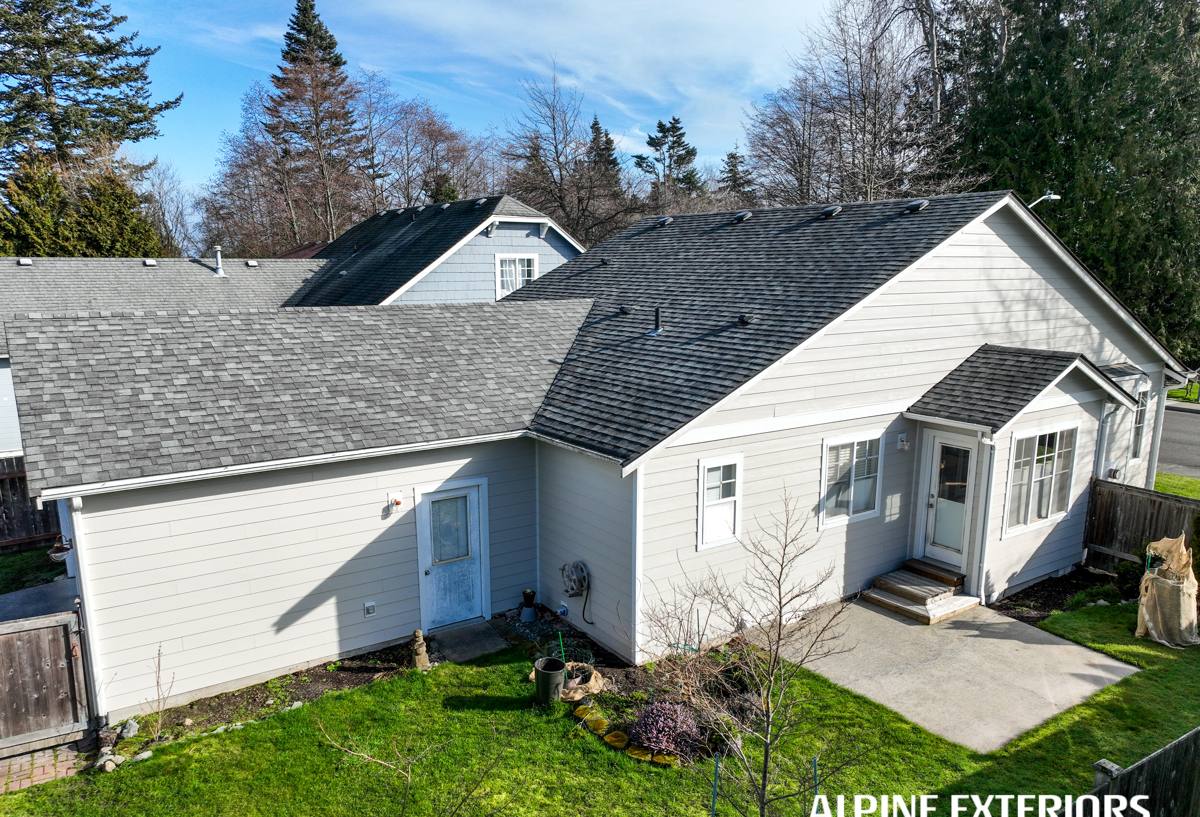
The Three Things That Do the Most Damage
Salt Air
Homes closer to the water pick up airborne salt that settles on siding, fasteners, and trim. Over time it accelerates corrosion on unprotected metal fasteners and flashing, and it can degrade paint films and coatings that weren't formulated to handle it. It's a slow, cumulative effect — you won't see it in year one, but you'll see it by year ten if the materials and finish weren't built for coastal exposure.
Driving Rain
Whatcom County gets a lot of rain, and a fair amount of it comes in sideways during winter storms off the water. Wind-driven rain finds every gap in flashing, every underlapped seam, and every spot where caulking has started to crack. Siding that's even slightly porous, or installed with the wrong clearances and laps, ends up holding moisture against the wall instead of shedding it.
Moss and Algae Season
Pacific Northwest moss season isn't a myth — shaded north and west-facing walls, tree cover, and near-constant damp conditions from fall through spring give moss and algae plenty of time to take hold. On porous or wood-based siding, that growth doesn't just look bad. It holds moisture against the surface long after the rain stops, which is exactly the condition that leads to rot underneath.
Signs a Peace Arch Home's Siding Is Losing the Fight
We see the same handful of warning signs repeatedly on homes in this area. If you're noticing any of these, it's worth having someone take a closer look before it turns into a bigger repair:
- Paint that's peeling, bubbling, or needs repainting far sooner than it should
- Boards that are cupping, buckling, or visibly swollen at the edges
- Soft or spongy spots near the bottom of walls, especially near grade or downspouts
- Persistent green or black staining that comes back within a season of cleaning
- Cracked or gapped caulking at trim, corners, and window edges
- Visible rust streaks running from fasteners or flashing
Why We Only Install James Hardie Fiber Cement
Homeowners in this area sometimes come to us already set on a specific product — vinyl because it's cheap, LP SmartSide or another engineered wood product because a neighbor has it, or plain primed wood because it's traditional. We're upfront that we don't install any of those, and it's worth explaining why rather than just saying no.
Vinyl is inexpensive and low-maintenance in the sense that it doesn't need painting, but it's a thin plastic product that can warp in heat, crack in cold, and fade over time — and it's not doing anything to protect the wall assembly the way a rigid, non-combustible material does. Wood-based products, including engineered wood siding, perform fine when everything about the install and long-term maintenance is done perfectly, but they're genuinely more sensitive to sustained moisture exposure than fiber cement, and sustained moisture is exactly what this climate delivers for months at a stretch. Primed spruce and cedar look great on day one but ask for repainting and caulk maintenance on a schedule most homeowners don't keep up with once the novelty wears off.
| Material | Strength | Trade-off in this climate |
|---|---|---|
| Vinyl siding | Low upfront cost, no painting | Can warp/crack with temperature swings; thin material offers little structural durability |
| LP SmartSide / engineered wood | Good appearance, easier install than real wood | Wood-based core is more sensitive to sustained moisture than fiber cement |
| Primed wood / cedar | Classic look, natural material | Needs regular repainting and caulk maintenance; more prone to rot without upkeep |
| James Hardie fiber cement | Non-combustible, factory-cured finish, engineered for climate | Higher upfront cost than vinyl; requires proper installation to perform as designed |
James Hardie fiber cement is cement, sand, and cellulose fiber — it doesn't warp in the sun, it doesn't feed moss the way organic materials do, and it isn't a fuel source the way vinyl or wood is. It's not immune to a bad installation, but the material itself is built to hold up in exactly the conditions Peace Arch deals with: sustained damp, salt air, and temperature swings.
Hardie Products Engineered for This Climate
James Hardie makes region-specific product lines, and for the Pacific Northwest that generally means their HZ5 formulation, engineered for wetter, more variable climates rather than the hot, dry conditions their HZ10 line is built for. That distinction matters — it's the difference between a product formulated for this weather and one that just happens to be available here.
The ColorPlus factory finish is another piece of this. Instead of field-painted siding that depends on weather conditions and technique on the day of installation, ColorPlus color is baked on at the factory under controlled conditions, which gives more consistent, longer-lasting color and better resistance to fading and chipping than most site-applied paint jobs. Combined with Hardie's transferable warranty, you end up with a siding system that's designed to be a long-term answer rather than something you're revisiting in five or eight years.
Options Homeowners Typically Choose Between
- Lap siding — the traditional horizontal look, available in multiple exposures
- Board and batten — a vertical profile popular on modern and farmhouse-style homes
- Shingle siding — for accent areas or a more textured, traditional look
- Trim and soffit products — matched fiber cement trim for a consistent system, not mismatched materials
Siding Doesn't Work in Isolation
Siding is one piece of a home's exterior envelope, and in a climate like this, the pieces around it matter just as much. A roof that's shedding water properly, flashing that's correctly integrated at every penetration, windows that are sealed and installed to spec, and decks that drain instead of holding water all work together to keep moisture out of the wall assembly. We handle siding, roofing, windows, and decks for that reason — treating them as one connected system catches problems that get missed when they're handled by separate crews who never talk to each other. A siding job with a leaking window flashing behind it, or a deck ledger board that's rotting into the wall it's attached to, isn't really solved until that connection is addressed too.
What Local Experience Actually Adds
Any contractor can install siding. What's harder to fake is knowing how a specific area behaves — which walls in this neighborhood take the worst of the winter storms, where moss shows up first because of tree cover and shade, how much clearance to leave at grade given the drainage in this part of the county, and which flashing details matter most given how the rain actually comes in here. That kind of judgment comes from working on homes in this specific area repeatedly, not from a general install manual. It also means someone local to call if a question comes up five years after the job is done, not a crew that's moved on to the next region.
What Drives Cost
Every home is different, so we don't quote numbers without seeing the job, but these are the factors that move a bid up or down:
| Factor | Why it matters |
|---|---|
| Tear-off vs. new construction | Removing old siding and repairing any hidden damage underneath adds labor |
| Existing moisture or rot damage | Sheathing repair before new siding goes on affects both cost and timeline |
| Home size and wall complexity | More corners, dormers, and trim detail mean more cutting and labor |
| Siding profile chosen | Lap, board and batten, and shingle styles vary in material and labor |
| Accessibility | Multi-story sections, tight lot lines, or difficult staging affect labor time |
How We Approach a Peace Arch Job
We start with an in-person look at the home, not just the siding but what's around it — trim, flashing, roofline, and anywhere moisture has clearly been a problem. If there's any sign of hidden damage, we flag it before quoting rather than after the walls are open. From there we walk through product and profile options, give a written estimate, and if the job moves forward, plan the install around proper flashing and moisture management details specific to this climate — not just nailing panels to the wall.
If you're noticing any of the warning signs above, or you're just planning ahead for a home in Peace Arch or elsewhere around Semiahmoo, we're happy to take a look and walk you through what we're seeing, no pressure and no obligation. There's a form below to request a free estimate.