 Semiahmoo Siding
 Marietta's Exterior Climate: What Homes Are Really Up Against
Marietta sits right where Whatcom County meets Semiahmoo Bay and the broader Salish Sea shoreline, and that location shapes everything about how a house ages here. Homes in this pocket of the Pacific Northwest deal with a combination that few inland communities ever have to think about: airborne salt off the water, long stretches of driving, wind-pushed rain, and a damp shoulder season that runs longer than most homeowners expect. Add in the mild, wet winters typical of this part of Washington, and you get conditions that are quietly hard on exterior materials year after year, even when nothing looks obviously wrong from the curb.
Salt air doesn't just affect boats and metal fixtures — it accelerates the breakdown of paint films, promotes corrosion on fasteners and flashing, and works its way into any seam or crack in a wall assembly. Combine that with rain that rarely comes straight down and instead gets driven sideways against west- and south-facing walls, and you have a recipe for moisture intrusion at trim joints, window returns, and butt seams that weren't detailed correctly the first time.
The Moss Season Nobody Talks About
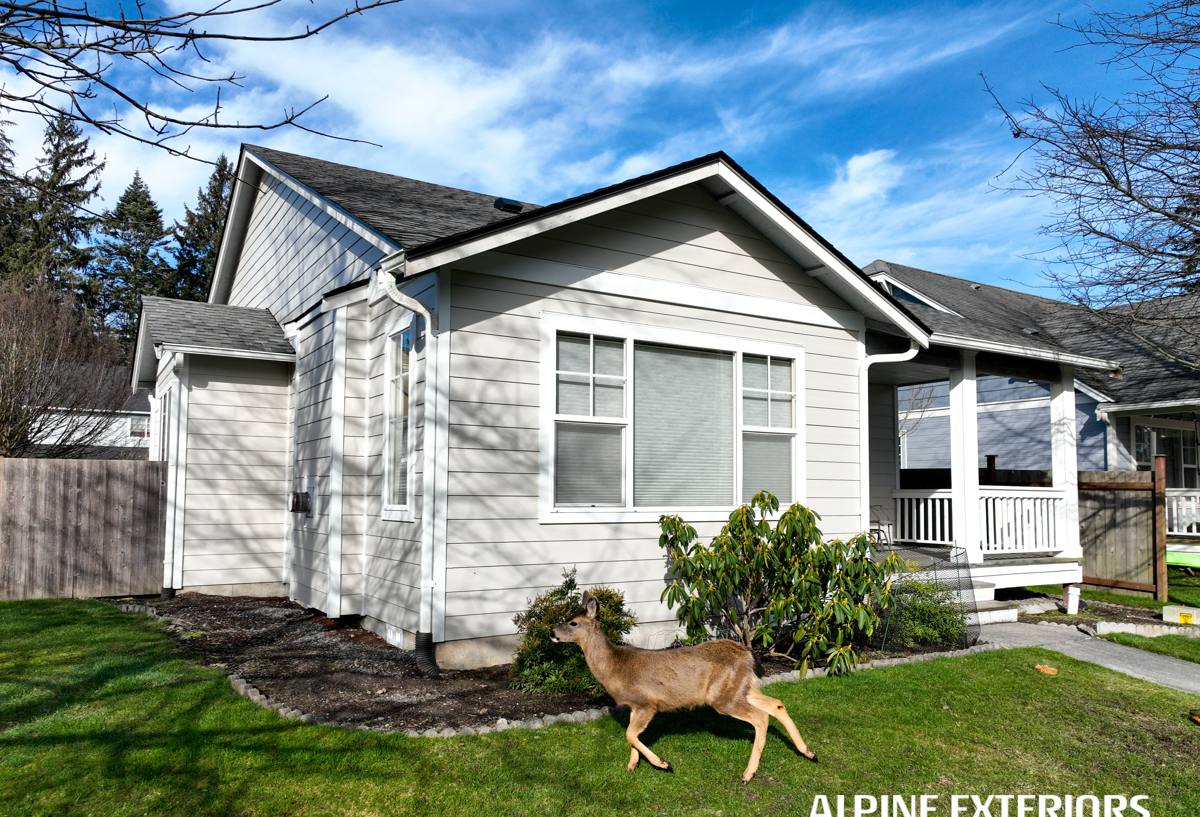
Whatcom County's long moss season is another factor that's easy to underestimate. Shaded siding, north-facing walls, and anything near overhanging trees can stay damp for weeks at a stretch during the fall and winter months. Moss and algae don't just look bad — they hold moisture against the siding surface far longer than open air would, which matters a great deal depending on what the siding is actually made of.
Why This Matters More in Marietta Than It Would Elsewhere
A siding product that performs fine in a dry inland climate can struggle here. Materials that absorb moisture, swell, or rely on field-applied caulk and paint to stay sealed are working against the exact conditions Marietta throws at them daily: salt-laden air, sideways rain, and prolonged damp exposure from moss and shade. This is the core reason we made a deliberate decision about what we put on homes in this area.
Why We Install Only James Hardie Fiber Cement Siding
We are a James Hardie-exclusive contractor. We do not install vinyl siding, LP SmartSide, Cemplank, Allura, primed spruce, or cedar. That's not a marketing angle — it's a standard we hold to because of what we've seen in coastal Whatcom County conditions specifically.
Vinyl siding is affordable and low-maintenance in a lot of climates, but it's a thin plastic product that can warp, fade, and become brittle with age, and it relies entirely on lap joints and trim to keep wind-driven rain out — there's no real substance to the material itself resisting moisture. Wood-based siding products, including primed spruce, cedar, and engineered wood options like LP SmartSide, are organic materials at their core. Engineered wood siding has improved significantly over the years and can perform well when installed and maintained correctly, but it still depends on an intact factory coating and diligent caulking to keep moisture from reaching the wood fiber inside — a maintenance burden that's harder to stay ahead of in a salt-air, high-moisture environment like this one. Other fiber cement brands, like Cemplank and Allura, are legitimate products in the same general category as James Hardie, but we've standardized on one manufacturer so we can guarantee consistent quality control, installation detailing, and warranty backing across every job we do.
James Hardie fiber cement is non-combustible, doesn't swell or rot the way wood-based products can, and comes with a factory-applied ColorPlus finish that's baked on rather than field-painted — which matters directly in an area where UV, salt, and moisture all work together to break down paint films over time. Hardie also engineers specific product lines (their HZ5 line, for example) for regions with more demanding moisture and temperature swings, which is a more climate-aware approach than a one-size-fits-all siding product.
What Correct Installation Actually Involves
Fiber cement siding is only as good as its installation. The material itself resists moisture well, but the details — flashing above windows and doors, proper gapping at butt joints, correct nailing patterns, and keeping siding off horizontal surfaces like decks and roofs — are what actually keep water out of the wall assembly over the long run. A rushed or under-detailed install can undercut even the best material, which is why we treat flashing and joint work as the most important part of the job, not an afterthought.
How a Siding Project Works for a Marietta Home
Every property is different, but the general process looks similar across most jobs in this area:
- An on-site inspection of the existing siding, trim, and any visible moisture damage, rot, or moss buildup
- A check of the underlying wall condition once old siding is removed — this is where hidden problems from years of coastal exposure often show up
- Repair of any damaged sheathing or framing before new siding goes on — never cover over a problem
- Installation of a proper weather-resistive barrier and flashing details at every penetration
- Installation of James Hardie panels or lap siding per manufacturer specifications, including correct fastener spacing and joint treatment
- A final walkthrough covering caulking, trim, and paint touch-up where needed
That second and third step — what's actually happening behind the old siding — is often the most important part of the whole project for homes in this area. Years of salt air and driven rain can cause slow, hidden damage that isn't visible until the old siding comes off.
Roofing, Windows, and Decks: Same Exposure, Same Standards
Siding isn't the only part of a Marietta home dealing with this climate. Roofs take the brunt of driving rain and wind, and a compromised roof will eventually show up as a moisture problem somewhere in the wall system below it. Windows are a common leak point when flashing and sealant weren't detailed correctly at install, and older window units in coastal areas tend to show seal failure and frame deterioration earlier than they would inland. Decks, especially those exposed to the salt-laden air and shaded, moss-prone corners of a property, need materials and fastening that account for the same moisture exposure as the siding itself.
We handle all four — siding, roofing, windows, and decks — because they're not really separate systems on a house. Water that gets past a bad roof detail or a poorly flashed window can end up damaging siding and framing that has nothing to do with the original leak point. Treating the exterior as one connected system, rather than four unrelated trades, is part of why a local crew that understands this specific climate matters.
Comparing Siding Options for This Climate
| Factor | Vinyl | Engineered Wood (e.g. LP SmartSide) | James Hardie Fiber Cement |
|---|---|---|---|
| Moisture behavior | Doesn't absorb water, but joints rely on trim/caulk to stay sealed | Organic wood fiber core; needs intact coating to resist moisture | Cement-based; doesn't swell, rot, or support moisture-driven decay |
| Salt air / coastal exposure | Can fade and become brittle with prolonged UV and salt exposure | Coating and caulked joints need closer monitoring in salt air | Factory ColorPlus finish holds up well against UV and salt-driven fading |
| Fire resistance | Combustible plastic material | Combustible wood-based material | Non-combustible |
| Maintenance | Low, but limited repair options once damaged | Requires periodic recaulking and coating upkeep | Minimal; factory finish reduces repainting frequency |
| Typical lifespan when installed to spec | Moderate | Moderate, dependent on coating maintenance | Long, with strong manufacturer warranty backing |
What to Look for When Hiring an Exterior Contractor Here
Marietta homeowners should be cautious of any contractor who treats siding, roofing, windows, and decks as generic, one-size-fits-all installs without accounting for coastal exposure. A few things worth checking before signing a contract:
- Ask how they detail flashing at windows, doors, and butt joints — this is where most water intrusion problems actually start
- Confirm they check and repair underlying sheathing or framing damage before covering it with new siding
- Ask which siding manufacturer they install and why — a contractor who installs everything is rarely specializing in the details that matter for your specific climate
- Check that they carry manufacturer certification for the products they install, which affects warranty coverage
- Get a clear, written scope of work rather than a vague verbal estimate
- Ask how they handle moss, algae, and shaded-wall areas specifically, since this is a known local issue
Why a Local Crew Matters
A crew that works regularly in Whatcom County's coastal communities has already seen how salt air, driving rain, and moss exposure play out on real homes over years, not just at the time of installation. That experience shows up in the small decisions — how much gap to leave at a joint, where extra flashing is worth the added labor, which walls need closer attention to moisture — that a generic, one-size-fits-all install often misses.
Ongoing Maintenance in a Salt-Air, Moss-Prone Climate
Even the right materials installed correctly benefit from basic upkeep in this environment. A periodic rinse to remove salt residue and organic buildup, prompt attention to any caulk lines that start to crack or pull away, and keeping vegetation trimmed back from shaded walls all go a long way toward protecting the investment. Fiber cement siding needs far less of this than wood-based alternatives, but no exterior material is entirely maintenance-free in a coastal Pacific Northwest climate.
Gutters and downspouts deserve attention too — clogged gutters during a heavy driving rain event can send water sheeting down a wall in ways the siding and flashing weren't designed to handle continuously, which speeds up wear regardless of what material is installed.
Get a Free, No-Pressure Estimate
If you're noticing moss buildup, fading, soft spots, or just want an honest read on how your Marietta home's siding, roof, windows, or deck are holding up against the local climate, we're happy to take a look. The estimate is free, there's no pressure to move forward, and you'll get a straight answer about what your home actually needs.