 Semiahmoo Siding
 Siding Replacement in Blaine, Handled by a Crew Already Working This Area
Full siding replacement is a different job than a patch repair or a partial recover, and in Blaine the stakes on getting it right are higher than in most inland Whatcom County towns. Homes here sit close to Semiahmoo Bay and Drayton Harbor, in a stretch of coastline that takes salt air, driving rain, and a moss season that barely lets up in exchange for the water view. When a house needs its siding replaced rather than repaired, every decision in that project — tear-off, substrate repair, weather barrier, fastener choice, final finish — either accounts for that climate or gets outpaced by it within a few winters.
We're a crew that works Semiahmoo and Blaine as core territory, not an occasional stop. That matters for a replacement project specifically, because the difference between a siding job that lasts thirty years here and one that starts failing in five usually comes down to details that only show up once a home's old siding actually comes off — details a crew unfamiliar with this coastline is more likely to miss or rush past.
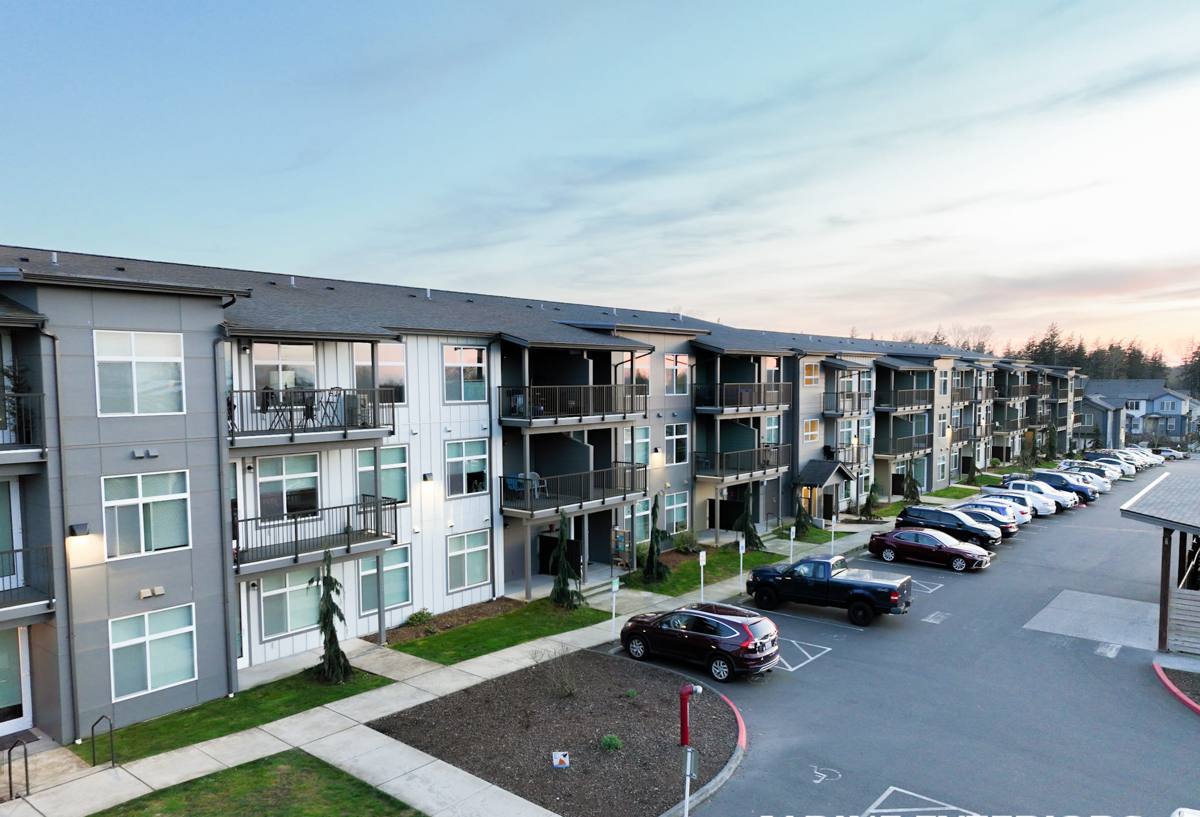
Repair, Recover, or Full Replacement: Knowing Which One a Blaine Home Needs
Not every siding problem calls for tearing the whole wall down to the studs. Part of an honest assessment is telling a homeowner when a repair or partial section replacement will genuinely hold up, and when it's a short-term patch on a problem that's already spread further than it looks.
When Repair Still Makes Sense
Isolated damage — a cracked panel from impact, a small area of fastener failure, one section that took storm damage — can often be repaired or replaced in place if the surrounding siding and the sheathing behind it are still sound. This is the right call when the problem is contained and recent.
When Full Replacement Is the Honest Answer
Widespread moisture intrusion, siding that's approaching or past its expected service life, soft or spongy sections in multiple areas, or a pattern of recurring problems across the house usually point to full replacement. In Blaine specifically, we see this most on older wood-based or engineered wood siding that's had two or three decades of direct salt air and wind-driven rain working on it — by the time damage shows in several places at once, the sheathing underneath has often absorbed more moisture than a spot repair can address.
What Correct Siding Replacement Involves
A siding replacement is only as good as what happens underneath the new material, and in a coastal town like Blaine, the steps that aren't visible once the job is finished are the ones that determine whether the house holds up.
Tear-Off and Substrate Inspection
Removing the old siding is also the only real chance to see what's happened to the wall assembly underneath — rot, soft sheathing, compromised framing, or moisture trapped by a prior installation that didn't account for drainage. Covering that kind of damage with new siding just moves the problem behind a fresh wall instead of fixing it.
Repairing What the Tear-Off Finds
Any soft or rotted sheathing gets replaced before new siding goes up, not patched around. This is the step that's easiest for a corner-cutting crew to shortcut, because it adds time and material cost that doesn't show in a walkthrough — but it's also the step most likely to determine whether the new siding actually performs for its full expected lifespan.
Weather-Resistant Barrier and Flashing
A properly lapped house wrap, correctly integrated window and door flashing, and attention to every wall penetration are what keep wind-driven rain off the water from finding its way behind the new siding. This detail work matters more on a Blaine wall facing open water than it does on a sheltered, inland property, and it's largely invisible once the siding goes back on — which is exactly why it deserves the most attention, not the least.
Installation to Manufacturer Specification
Fastener type and spacing, clearance above grade and rooflines, and correct field-cutting and sealing practices all come from the manufacturer's published installation spec. Following that spec is what keeps the product warranty valid and, more practically, what keeps the siding performing the way it's designed to in sustained coastal exposure.
Why We Replace Siding With James Hardie Fiber Cement, and Nothing Else
We install one siding system: James Hardie fiber cement. That standard came from watching what actually holds up on replacement jobs in this specific climate, not from a supplier relationship.
- Non-combustible core: Fiber cement doesn't feed a fire the way wood-based siding products can, a real factor for both safety and insurance underwriting.
- Factory-applied ColorPlus finish: Baked on under controlled conditions rather than brushed on at the job site, so it holds color and adhesion far longer against salt air, UV, and constant moisture.
- Climate-engineered HZ product lines: The HZ5 formulation is built for regions with sustained moisture exposure and freeze-thaw cycling, which fits Blaine and the rest of coastal Whatcom County.
- Dimensional stability: Fiber cement doesn't swell, cup, or warp the way engineered wood siding can after repeated wetting cycles through a long wet season.
- A strong transferable warranty: Backed with one of the more substantial warranty structures in the industry, provided the installation follows Hardie's spec — which is exactly what our process is built around.
We don't install LP SmartSide, vinyl siding, Cemplank, Allura, primed spruce, or cedar. Each has a legitimate place in the market, and plenty of homeowners elsewhere are satisfied with them. Our decision is a professional one specific to a climate like this: we'd rather stand fully behind one system on every replacement job than offer a cheaper alternative that quietly shifts maintenance risk onto the homeowner a few winters down the road.
Comparing Replacement Materials for a Blaine Home
| Material | Behavior During a Full Replacement | Longer-Term Consideration Near the Water |
|---|---|---|
| James Hardie fiber cement | Installs to a documented spec with predictable, repeatable results | Resists swelling and finish breakdown under salt air and driving rain |
| Vinyl siding | Fast to install but panel seams and expansion gaps depend heavily on installer care | Can warp or become brittle under sustained UV and salt-air exposure |
| LP SmartSide / engineered wood | Wood-strand core is sensitive to moisture at cut edges during install | Edge sealing and caulk maintenance become an ongoing task in coastal humidity |
| Cedar / primed wood | Requires careful, consistent priming and sealing at every cut during install | Ongoing repainting needed to avoid rot in salt-laden, wet conditions |
Our Replacement Process, Start to Finish
- On-site assessment: We walk the exterior, check for signs of trapped moisture or sheathing damage, and evaluate how exposure varies across different walls of the house — especially any facing open water.
- Written scope and estimate: A clear, itemized scope before any work begins, so there's no ambiguity about what's included.
- Tear-off: Old siding comes off and the sheathing gets inspected before anything new goes up.
- Substrate repair: Any rot or soft sheathing found during tear-off gets replaced, not patched around.
- Weather barrier and flashing: House wrap, window and door flashing, and penetration details get installed with the same care whether or not they'll ever be seen again.
- Hardie installation to spec: Fastener spacing, clearances, and joint treatment follow the manufacturer's published requirements as the baseline, not an upgrade.
- Final walkthrough: We review the completed work with the homeowner and go over maintenance expectations specific to a coastal property.
Signs a Blaine Home Needs Full Siding Replacement
- Soft or spongy siding in more than one area of the house, not just a single isolated spot
- Musty odors or staining on interior walls that back up to exterior siding
- Siding older than 20-25 years with no documented replacement history
- Persistent moss or dark staining that returns quickly after cleaning on several walls
- Warping, cupping, or visible separation at multiple panel joints
- Repeated repair calls to the same general area of the house over a short span of time
- Visible daylight, drafts, or moisture intrusion at multiple points along the wall
Cost Factors on a Blaine Replacement Project
Every estimate is specific to the house, but a handful of factors consistently drive the number on a full replacement: total square footage and number of stories, how much trim and detail work wraps windows and rooflines, how much sheathing repair the tear-off turns up, proximity and orientation to open water, and which Hardie product line and color fits the home. We walk through each of these directly during the estimate instead of handing over a flat number with no explanation behind it. Two houses of similar size on the same street can still land at different scopes once tear-off reveals what's actually happening behind the old siding.
Timing a Replacement Around Blaine's Weather
Whatcom County's wettest, windiest stretch generally runs from late fall through winter, and Blaine's exposed coastal position makes that period harder on both the crew and an open wall assembly than it is further inland. Spring and summer offer the more stable, drier conditions that a tear-off-and-replace project benefits from, since sheathing repairs and weather barrier installation both perform better without active rain in the mix. That said, a home already showing widespread moisture damage is worth addressing on its own timeline rather than waiting out the calendar for the ideal season.
Why a Semiahmoo-Based Crew Matters for a Blaine Replacement
Working out of Semiahmoo means being on this coastline year-round, seeing how salt air and wind-driven rain actually behave on real houses through every season rather than reading about it on a spec sheet. That familiarity shapes practical calls on a replacement job: which walls need the most flashing attention, where drainage detailing earns its keep, and which fastener and joint choices are worth the extra time so a homeowner isn't back on the phone about a callback after the next big storm off the water. It also means that if a warranty question comes up years later, it's a call to a crew still working the same stretch of coast, not one that's moved on.
If your Blaine home's siding is showing widespread wear, or you're just not sure whether it needs a repair or a full replacement, we're happy to take a look and give you a straightforward answer either way. Reach out using the form below for a free, no-pressure estimate.