 Semiahmoo Siding
 Windows in Laurel Take a Different Kind of Beating
Laurel sits close enough to the water that salt air is just part of daily life, and that changes what a window has to survive. Salt-laden moisture works into aluminum hardware, degrades weatherstripping faster than it would inland, and accelerates corrosion on anything that isn't built or finished to handle it. Add in Whatcom County's driving rain, which tends to come in sideways off Semiahmoo Bay during winter storms, and a window's weather-sealing and flashing details matter as much as the glass itself. Then there's the long moss and mildew season that stretches through much of the fall, winter, and spring here — anywhere moisture sits against wood trim or gets trapped behind poor flashing, organic growth follows.
None of this is exotic. It's just the normal cost of being a coastal Whatcom County home. But it means a window that would be perfectly fine in a drier, more sheltered part of the state can start failing here years ahead of schedule if it wasn't installed with this climate in mind.
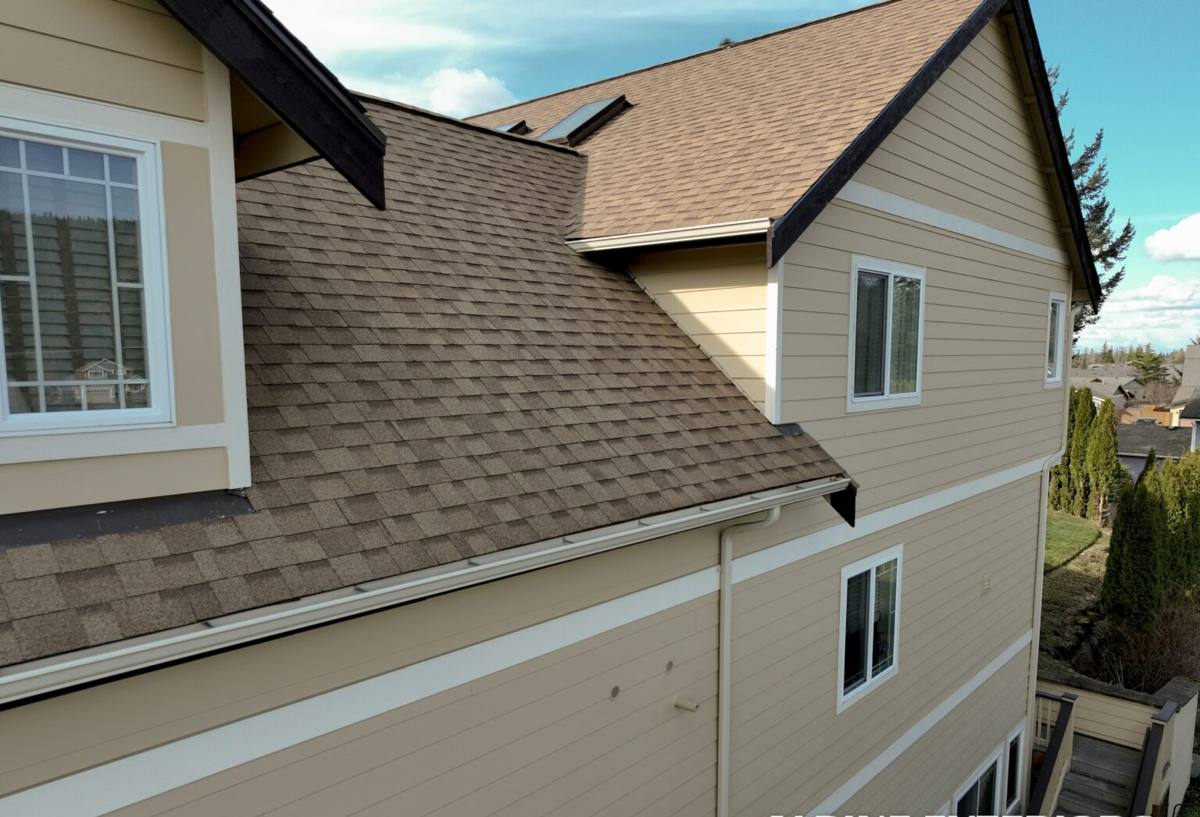
Signs a Laurel Home Needs Window Replacement, Not Just a Repair
Not every window problem calls for full replacement. But there's a point where patching stops making sense and a new, properly flashed window is the more honest answer. Common signs we see on service calls in this area:
- Fogging or a visible haze between panes — the seal on the insulated glass unit has failed and moisture is trapped inside
- Soft, discolored, or spongy trim around the window frame, especially at the bottom corners where water collects
- Windows that are hard to open, close, or lock, which often points to a frame that has swollen, warped, or shifted
- A persistent draft you can feel with your hand along the sash or frame, even with the window latched
- Visible moss, algae, or black staining on the sill or exterior casing that keeps coming back after cleaning
- Condensation forming on the inside of the glass regularly, which can signal both an aging window and a ventilation issue worth discussing
If you're only seeing one of these and the frame itself is sound, a repair or resealing may be enough. Once you're seeing two or three together, the window and its surrounding flashing are usually past the point where repair buys you much time.
What a Correct Window Replacement Job Actually Involves
The window unit itself is only part of the job. In a climate that pushes wind-driven rain against the building envelope, how the window is integrated into the wall is what determines whether it lasts. A correct installation includes:
Removal Without Collateral Damage
Old windows come out carefully, with attention to what's underneath — old flashing, sheathing condition, and any rot that's been hiding behind the trim. This is often where problems get discovered that weren't visible from inside the house.
Flashing and Water Management
Every opening gets properly flashed so that any water that does reach the wall is directed back out, not into the framing. This includes sill pans, side flashing, and head flashing integrated with the house wrap in the correct shingle-lap order — a detail that's easy to shortcut and expensive to fix later.
Air Sealing and Insulation
The gap between the window frame and the rough opening gets sealed and insulated correctly, not just stuffed with fiberglass or foam sprayed without regard for drainage. Over-sealing a window so it can't drain is its own kind of mistake.
Level, Plumb, and Square Setting
A window that's out of square will bind, leak, or wear its hardware out early. Shimming and fastening it correctly takes more time than eyeballing it, but it's the difference between a window that operates smoothly for decades and one that starts sticking within a year or two.
Window Material and Glass Choices for This Climate
There's no single "best" window for every home, but some choices hold up better than others against salt air and constant moisture exposure. Here's how the common options compare for Laurel conditions:
| Material | Salt Air / Moisture Performance | Maintenance | Notes |
|---|---|---|---|
| Vinyl | Good — won't rust or rot, handles humidity well | Low | Most common choice for coastal Whatcom County homes; good value |
| Fiberglass | Very good — dimensionally stable, resists warping | Low | Higher upfront cost, holds paint well if a custom color is wanted |
| Aluminum | Poor without marine-grade coatings — prone to corrosion near salt air | Moderate to high | We generally steer clients away from standard aluminum this close to the water |
| Wood / Wood-Clad | Fair — needs a well-maintained exterior clad or finish to keep moisture out of the wood core | High | Best suited for homeowners committed to regular upkeep or interior-only wood exposure |
On glass, dual-pane with a low-E coating is the practical standard here, and argon-filled units are worth the modest upcharge for the added insulating performance during Whatcom County's damp winters. For rooms that catch direct wind off the bay, we'll sometimes talk through upgraded weatherstripping or a heavier-duty sash lock, since sustained wind pressure is more of a factor here than in more sheltered inland neighborhoods.
How We Approach a Window Replacement Job in Laurel
1. On-Site Assessment
We look at more than the windows you called about. Trim condition, existing flashing, and signs of past water intrusion all factor into an honest recommendation — sometimes that means additional trim or sheathing repair alongside the window itself.
2. Measuring and Ordering
Windows are measured for the specific opening, not assumed to match standard sizes. This matters more on older Laurel homes where openings may have settled or been modified over the years.
3. Installation
Old units come out, flashing and water management go in correctly, and the new window is set level, plumb, and square before final fastening and sealing.
4. Finish and Cleanup
Interior and exterior trim is finished to match the surrounding siding and casing, and the job site is cleaned up — old windows and debris hauled off, not left for you to deal with.
5. Walkthrough
We walk through the finished work with you, operate each window, and answer questions before we consider the job done.
What Affects the Cost of Window Replacement
Every home is different, but these are the main factors that move a project's price up or down:
| Factor | Why It Matters |
|---|---|
| Number and size of windows | More openings and larger units mean more material and labor |
| Material choice | Vinyl, fiberglass, and wood-clad carry different unit costs |
| Extent of trim or sheathing repair needed | Hidden rot or old flashing failures add labor once discovered |
| Glass package | Low-E coatings, argon fill, and impact considerations affect per-unit pricing |
| Access and story height | Second-story or hard-to-reach windows take more time and equipment |
Most straightforward single-window replacements run in the low thousands per window once material and labor are accounted for, with whole-house projects scaling from there. We'll always give you a specific number in writing before any work starts — broad ranges aren't a substitute for a real quote once we've seen the openings.
Why a Crew That Already Works in Laurel Matters
Window installation isn't just about the product — it's about knowing how this specific stretch of Whatcom County behaves. A crew that's worked openings in Laurel and the surrounding Semiahmoo area already knows what wind-driven rain does to a poorly flashed sill, how quickly moss establishes on a north-facing trim board here, and which details are worth the extra time given what the salt air will do to shortcuts over the next few winters. That's not something you get from a crew that mostly works drier, inland jobs and treats every coastal install the same as any other.
It also means straightforward logistics — knowing the neighborhood, showing up on schedule, and being reachable afterward if a question comes up once the weather starts testing the new windows.
Maintaining New Windows Through a Salt Air, Moss-Season Climate
A correctly installed window still benefits from basic upkeep in this environment:
- Rinse exterior frames periodically to clear salt residue, especially on sides facing open water or prevailing wind
- Keep gutters and nearby drainage clear so water isn't sheeting down across the window during heavy rain
- Check and clean weep holes on vinyl and fiberglass frames so trapped water can drain as designed
- Inspect caulking and exterior sealant annually and touch up before small gaps become entry points
- Trim back vegetation that shades trim and keeps it damp, since shaded areas are where moss takes hold first
None of this is heavy maintenance, but skipping it in a climate like this shortens the life of even a well-installed window.
Get a Free, No-Pressure Estimate
If your windows in Laurel are showing signs of wear, fogging, or drafts, we're glad to take a look and give you a straightforward assessment of what's actually going on — no pressure, no inflated urgency. Use the form below to request a free estimate, and we'll walk you through your options based on what your home actually needs.