 Semiahmoo Siding
 Cherry Point Homes Face a Tougher Climate Than Most Window Installers Plan For
Cherry Point sits on an exposed stretch of Whatcom County shoreline, and that location shapes everything about how windows perform here. Homes facing open water take a steady dose of salt-laden air, wind-driven rain that hits glass and trim at an angle instead of straight down, and a wet season that stretches long enough to grow moss on anything that stays damp too long. Windows are one of the first places that exposure shows up — in failed seals, soft trim, corroded hardware, and frames that look fine from the street but are quietly rotting underneath.
A window that's rated for a dry inland climate is not automatically the right choice for a home a short walk from the water. Installing windows correctly in Cherry Point means treating salt air, sideways rain, and moss growth as design constraints from the start, not problems to deal with after the fact.
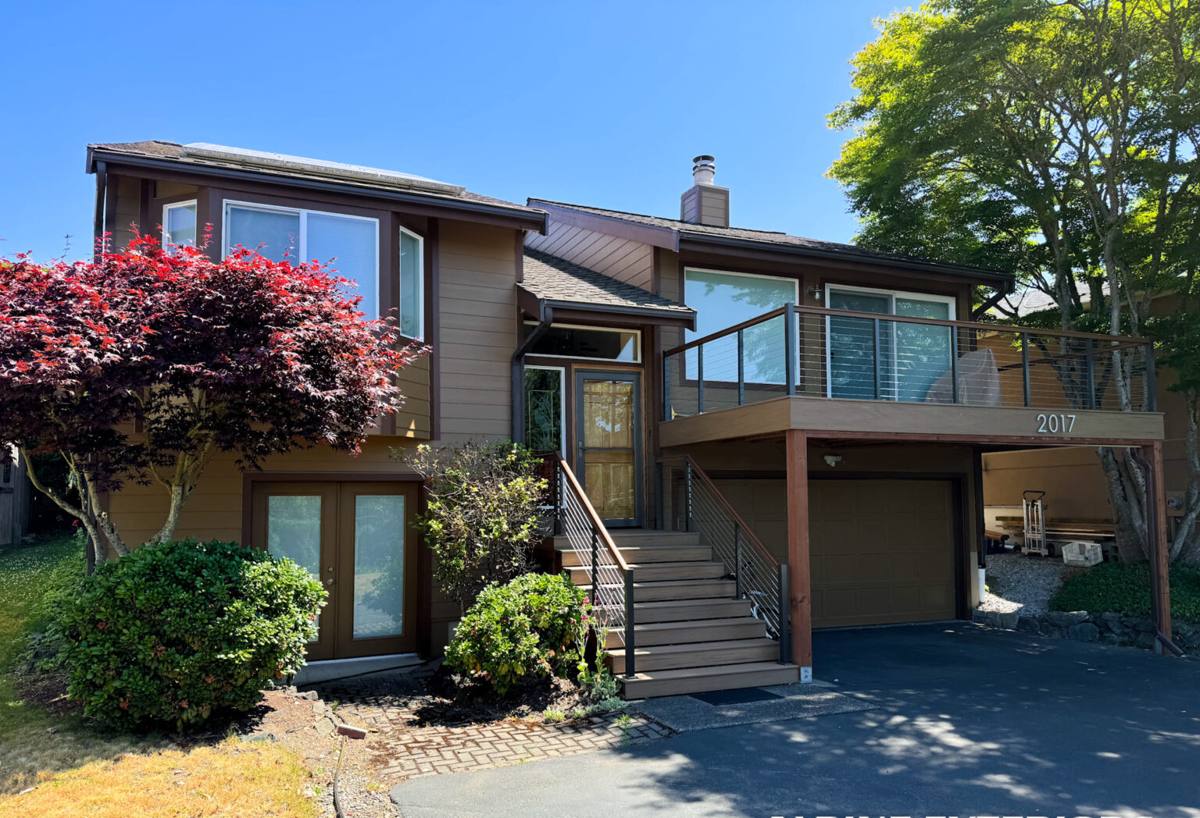
What Salt Air, Driving Rain, and Moss Season Actually Do to Windows
Salt Air
Airborne salt is corrosive to metal hardware, aluminum components, and some window fasteners. Over time it can pit or discolor lower-grade hardware, stiffen locking mechanisms, and accelerate wear on anything not built with marine-grade or well-protected components. Salt also settles into porous caulk and trim surfaces, which shortens the working life of lower-quality sealants.
Driving Rain
Wind off the water pushes rain sideways and upward under eaves, so water reaches parts of a window assembly that would stay dry in a calmer climate. This is why flashing details and sill pan design matter more here than in a typical inland install — water that gets behind the trim needs somewhere to go, or it ends up in the wall cavity.
Moss Season
Long stretches of damp, shaded conditions let moss and algae take hold on wood trim, sills, and anywhere water sits instead of draining. Moss holds moisture against the surface underneath it, which speeds up rot in wood components and keeps painted or coated surfaces perpetually damp.
Signs a Cherry Point Home Needs Window Attention
- Soft or spongy wood at the sill or bottom corners of the frame
- Fogging or condensation between panes on double- or triple-glazed units
- Visible moss, dark streaking, or green growth on trim and sills
- Hardware that's stiff, corroded, or won't latch cleanly
- Drafts or a noticeable temperature difference near the window in winter
- Paint or finish that's peeling, bubbling, or chalky around the frame
- Water stains on interior drywall or trim below or beside a window
Any one of these can be minor on its own. Several appearing together, especially on a window facing the water, usually means moisture has already gotten past the exterior finish.
Choosing a Frame Material for This Climate
There's no single "best" window material for every home — the right choice depends on exposure, budget, and how much upkeep the homeowner wants to take on. Here's how the common options hold up against salt air and constant moisture:
| Frame Material | Salt Air / Moisture Behavior | Maintenance | Typical Trade-Off |
|---|---|---|---|
| Vinyl | Won't corrode or rot; performs well in coastal exposure | Low — occasional cleaning | Fewer color options; frames can't be repainted easily |
| Fiberglass | Very stable in temperature swings and moisture; strong coastal track record | Low | Higher upfront cost than vinyl |
| Wood (clad or unclad) | Attractive but vulnerable at exposed joints if finish fails | High — regular inspection and refinishing | Best appearance for period homes; requires ongoing care in this climate |
| Aluminum | Can corrode or pit over time without marine-grade coatings | Moderate | Conducts heat/cold; less common as a primary residential choice here |
For most Cherry Point homes with real water exposure, we steer people toward vinyl or fiberglass for the actual window unit, reserving wood for interior-facing applications or homes where the owner is committed to the maintenance schedule it requires. This isn't a knock on wood windows — it's an honest read on what a marine climate does to a material that needs a perfect, unbroken finish to perform well.
What Correct Installation Involves
The window unit itself is only part of the job. In a climate like this, the installation details around the window matter as much as the window's rating.
Sill Pan and Drainage Plane
A sloped sill pan under the window directs any water that gets past the frame back outside instead of letting it pool against the sheathing. This is a basic requirement everywhere, but it's non-negotiable on a home taking direct wind-driven rain.
Flashing Sequence
Flashing tape and building paper or house wrap need to be layered in the correct order — typically shingled from the bottom up — so water always sheds outward and down, never into a seam. Skipping or reversing this sequence is one of the most common causes of hidden rot behind a window that looks fine on the surface.
Sealant Selection and Placement
Not every exterior sealant is built for constant salt exposure and UV. We use sealants rated for exterior, weather-exposed use, and we're deliberate about where sealant is used versus where the assembly should be left to drain — sealing every gap "just in case" can trap water instead of keeping it out.
Shimming and Level
A window that isn't shimmed level and square will operate poorly and stress its seals over time, which shortens its service life regardless of how good the unit itself is.
Our Process for a Cherry Point Window Job
- On-site assessment — we look at each window's exposure, existing framing condition, and any signs of past water intrusion before recommending anything
- Product recommendation — matched to the home's exposure, the homeowner's budget, and realistic maintenance expectations
- Removal and inspection — old windows come out carefully so we can check the framing and sheathing underneath for hidden rot before it's covered back up
- Repair of any damaged framing or sheathing — found before the new window goes in, not after
- Sill pan, flashing, and drainage installation — done in the correct sequence for this climate
- Window installation, leveling, and insulation — set square, shimmed correctly, and insulated around the frame without over-packing
- Exterior trim and sealant finish — sealed where it should be sealed, left to drain where it should drain
- Final walkthrough — operation, locks, and finish checked with the homeowner before we call it done
Cost Factors for Window Installation
Every home is different, but these are the main things that move the price on a Cherry Point window job:
| Factor | Why It Matters |
|---|---|
| Number and size of windows | Larger units and full-home replacements scale cost accordingly |
| Frame material | Vinyl is typically the most affordable; fiberglass and clad wood cost more upfront |
| Condition of existing framing | Hidden rot found during removal adds repair scope before the new window can go in |
| Glazing package | Double- vs. triple-pane and low-E coatings affect both cost and long-term performance |
| Access and home height | Second-story or hard-to-reach windows take more time and equipment |
| New construction vs. retrofit | Retrofit work into existing openings has different labor and flashing requirements than new framing |
We give straightforward estimates after seeing the actual windows and framing condition in person — a phone quote on window work is a guess, and it's usually wrong once removal starts.
Why Local Experience in Cherry Point Matters
A crew that regularly works Whatcom County's water-facing communities has already seen how these conditions play out over years, not just on install day. That means knowing which sides of a house tend to take the worst of the driving rain, recognizing early signs of moss-related rot before they become structural, and not being surprised by how quickly hardware can corrode this close to salt water. It also means having a real sense of what actually holds up here versus what looks good on a spec sheet but struggles in this specific climate.
Window installation isn't a one-size-fits-all trade. A contractor used to dry, inland conditions can do technically correct work and still leave a home under-prepared for what a Semiahmoo winter throws at it. Local experience is what closes that gap.
Before You Hire: A Quick Checklist
- Do they inspect the framing before quoting, or just the window count?
- Can they explain their flashing and sill pan approach, specifically for water-facing walls?
- Do they offer a frame material recommendation based on your home's exposure, not just the cheapest option?
- Are they licensed and insured to do the work in Washington State?
- Will they show you what they find once the old windows come out, before covering it back up?
- Do they stand behind both the product warranty and their own installation work?
If you're noticing drafts, moss buildup, or soft trim around your windows, or you're just planning ahead for a home that faces the water in Cherry Point, we're happy to take a look and give you a straightforward, no-pressure estimate. Use the form below to get started.