 Semiahmoo Siding
 Why Lynden Decks Take a Different Kind of Beating
A deck in Lynden lives outside almost every day of the year, and Whatcom County doesn't make that easy. The combination of salt-laden air drifting in off Semiahmoo Bay, long stretches of driving rain, and a moss season that can run from fall clear through spring puts more stress on a deck here than in drier parts of the state. Fasteners corrode faster. Wood surfaces stay damp longer between dry spells. Moss and algae take hold on any board that doesn't get enough sun or airflow, and once established they hold moisture against the wood and turn walking surfaces slick and dangerous.
None of that means a deck can't last. It means the deck has to be built with this specific climate in mind from the footings up, not assembled from a generic plan and hoped for the best. That's the difference between a deck that needs real repair work in five years and one that's still solid in twenty.
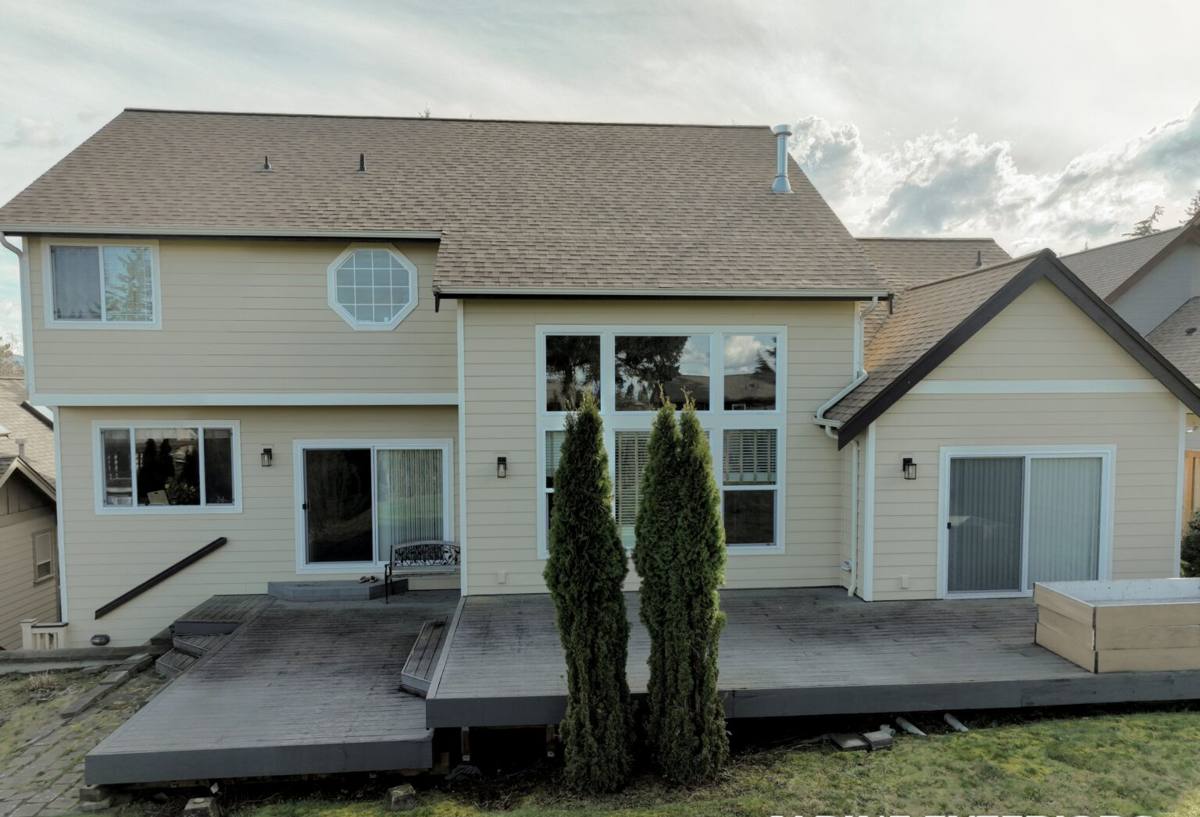
What a Deck Built for This Climate Actually Needs
Every deck we build for Lynden homeowners starts with the same question: where is the water going to go, and how long will anything stay wet? Whatcom County's rainfall totals aren't the extreme part — it's the duration. Long, low-intensity rain events soak into end grain, pool in poorly sloped surfaces, and sit in shaded corners for days. A deck built for this needs:
- Positive drainage so water sheds off the surface instead of collecting against the house or around posts
- Corrosion-resistant fasteners and hardware rated for coastal exposure, not standard interior-grade hardware
- Ledger flashing that actually keeps water out from behind the board where it attaches to the house
- Enough gap and airflow between boards and around the perimeter to let the structure dry between storms
- Footings set below frost depth and sized for our clay-heavy Whatcom County soils, which hold water and shift more than sandy soil
Skip any one of these and the deck will still look fine on installation day. The problems show up eighteen months to three years later, usually as soft spots near the ledger, rust streaks around fastener heads, or a slick green film that never fully goes away.
Salt Air's Slow, Quiet Damage
Being close to the bay means airborne salt settles on everything outside, including deck hardware, railings, and any exposed metal. It's a slower process than rain damage, but it's steady. Standard zinc-coated screws and brackets that would be fine forty miles inland can start showing surface corrosion here within a couple of seasons. We spec hardware rated for coastal or marine-grade exposure on every Lynden project for exactly this reason — it costs a little more up front and saves a re-fastening job down the road.
Choosing the Right Decking Material for Lynden
There's no single "best" decking material — there's the right material for how a homeowner wants to use the deck and how much upkeep they're willing to do. Given our climate, here's how the common options actually compare in practice:
| Material | How It Handles Our Climate | Maintenance |
|---|---|---|
| Pressure-treated wood | Affordable, needs consistent sealing to resist moss and moisture intrusion | Annual cleaning and re-sealing recommended |
| Cedar | Naturally moisture- and insect-resistant, but still grays and can host moss without upkeep | Periodic cleaning, occasional oil or stain |
| Composite decking | Resists rot and doesn't need sealing; some early-generation composites held moisture and grew mold in shaded, damp spots | Occasional washing to prevent surface algae |
| Capped composite / PVC | Best moisture and moss resistance of the group; solid-cap boards shed water and don't wick like older composites | Low — periodic rinsing is usually enough |
We steer most Lynden homeowners toward capped composite for anything shaded, low to the ground, or without much sun exposure, since those are exactly the conditions where moss and mildew take hold fastest. For a sunnier, well-ventilated deck, quality cedar or a properly maintained composite both hold up well. We'll walk through the actual trade-offs for your specific site rather than push one product line — the right call depends on sun exposure, how the deck is used, and your appetite for maintenance.
Framing and Substructure: Where Decks Actually Fail
Almost every deck failure we get called out to inspect started below the decking boards, not on top of them. The visible surface can look fine for years while the substructure quietly deteriorates underneath. The parts that matter most:
Footings and Posts
Posts set directly in soil, or footings poured too shallow for our frost line, are one of the most common shortcuts we see in older decks. Proper footings go below frost depth, bear on undisturbed soil, and use post bases that hold the post above grade so it isn't sitting in standing water after every rain.
Ledger Attachment and Flashing
Where a deck attaches to the house is the single highest-risk point for hidden rot. Correct flashing, installed in the right order relative to the house's water-resistive barrier, keeps water from tracking behind the ledger board and into the rim joist. We've opened up older decks in this area where the decking and joists looked fine but the ledger and rim joist behind them were compromised — a problem invisible from the top.
Joist Protection
Joist tape or another moisture barrier on top of the joists prevents water from sitting in the fastener holes where deck boards attach — one of the most common points of hidden rot in a wet climate like ours.
Moss, Mildew, and Long-Term Upkeep
Even a well-built deck needs some seasonal attention here. The goal isn't a maintenance-free deck — that doesn't exist outdoors in Whatcom County — it's a deck where maintenance is simple and infrequent instead of constant. A basic seasonal routine:
- Sweep debris and fallen leaves off the surface regularly, especially in shaded corners where moisture lingers
- Wash the deck surface at least once a year with a deck-safe cleaner to remove early moss and algae growth before it spreads
- Check fasteners and hardware annually for rust or corrosion, particularly on decks close to the water
- Keep gutters and downspouts clear so runoff isn't draining directly onto or under the deck
- Trim back overhanging branches and vegetation to let sun and air reach shaded sections
- Re-seal wood decking on the schedule recommended for the specific product — waiting too long lets moisture in before the next coat goes on
A deck built with proper drainage, airflow, and materials suited to the site needs far less of this than one that was built without those details in mind.
Our Deck Building Process
We approach every Lynden deck project the same structured way:
- Site evaluation. We look at sun exposure, drainage patterns, soil conditions, and how the deck ties into the house before recommending anything.
- Design and material selection. We walk through decking, railing, and structural options honestly, including maintenance and cost trade-offs for each.
- Permitting. We handle the permit application and coordinate required inspections so the project meets local code requirements.
- Framing and structure. Footings, posts, beams, and joists are built first and inspected before decking goes down.
- Flashing and moisture protection. Ledger flashing and joist protection go in before a single deck board is installed.
- Decking, railing, and finish work. Boards, railings, stairs, and any built-in features are completed and checked for level, spacing, and drainage.
- Final walkthrough. We go over the finished deck with the homeowner, including a straightforward maintenance plan for the material chosen.
Permits and Local Code Considerations
Deck construction in Whatcom County generally requires a building permit once the deck exceeds a certain height or size, and there are specific requirements around guardrail height, stair railings, and structural attachment to the house. Setback requirements from property lines can also apply depending on the lot. We handle the permit process as part of every project so homeowners don't have to navigate it themselves, and so the finished deck passes inspection without rework.
What Affects the Cost of a Lynden Deck
Deck pricing varies a lot based on size, material, and site conditions, so we avoid quoting numbers that don't reflect your actual project. What we can walk through are the factors that move the price up or down:
| Factor | Why It Matters |
|---|---|
| Decking material | Pressure-treated wood costs less upfront than cedar or composite; capped composite carries the highest material cost but the lowest long-term upkeep |
| Height and access | A deck well above grade needs more substantial framing, stairs, and guardrails than a low ground-level deck |
| Ground and soil conditions | Clay-heavy or poorly draining soil can require deeper or more numerous footings |
| Attachment to the house | Ledger-attached decks require careful flashing work; freestanding decks avoid that step but need their own independent support structure |
| Railing and stair complexity | Custom railing designs, multiple stair sections, or built-in features add labor and material cost |
| Site access | Difficult equipment or material access can add labor time to any project |
Why Hire a Crew That Already Works in Lynden
A deck builder who already works regularly around Semiahmoo and greater Whatcom County understands this climate without having to learn it on your project. We know which hardware holds up against salt air, which decking materials actually resist moss in a shaded Northwest yard, and where the local building department wants to see specific details handled. That familiarity shows up in fewer surprises during permitting, fewer callbacks after the first rainy season, and a deck that's built to hold up to conditions we deal with every day, not conditions from a manufacturer's spec sheet written for a drier climate.
If you're planning a new deck or need to replace one that's showing its age, we're happy to walk your property, talk through the options honestly, and put together a free, no-pressure estimate. There's a form below to get that conversation started.