 Semiahmoo Siding
 Roofing in Ferndale Isn't the Same Job as Roofing Inland
Ferndale sits in Whatcom County, close enough to the water that salt-laden air, driving rain off the Strait, and a moss season that can run eight or nine months a year all show up in the condition of local roofs. A roof that would last two decades in a dry inland climate can start showing real problems in half that time here if it wasn't installed, flashed, or maintained with this environment in mind. Roof repair in Ferndale isn't just patching a leak — it's understanding why that leak happened in a place where the roof rarely gets a real chance to fully dry out between weather systems.
We've spent years working roofs across this stretch of Whatcom County, and the failure patterns repeat: moss lifting shingle edges, nail heads corroding faster than they should, flashing that was never properly sealed against wind-driven rain, and valleys that pond because debris and moss slowed the water down just enough to let it find a way in. A correct repair addresses the actual cause, not just the spot where water is currently showing up inside the house.
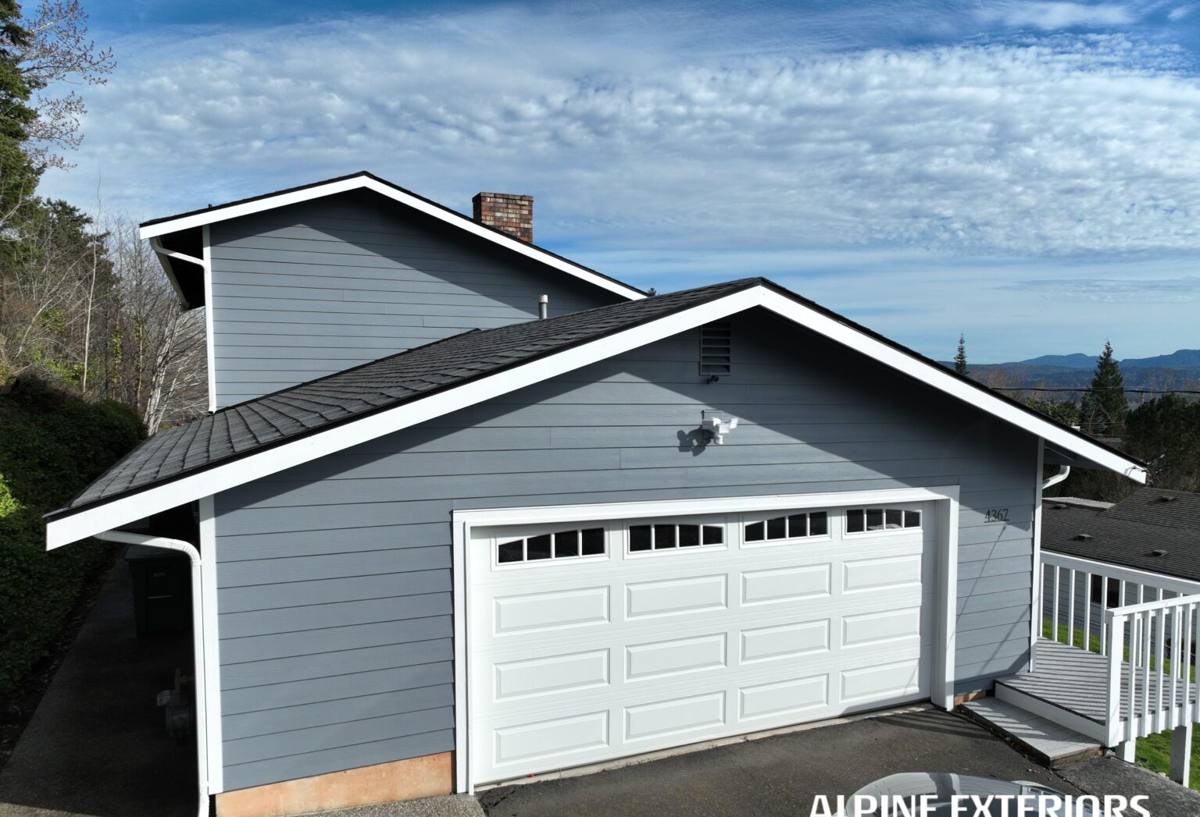
Why the Climate Here Is Hard on Roofs
Salt Air and Corrosion
Proximity to Semiahmoo Bay and the Strait of Georgia means airborne salt settles on roofing metal — flashing, nail heads, gutter hardware, vent caps — and accelerates corrosion compared to roofs further inland. Corroded flashing is one of the most common hidden causes of a "mystery leak," because the shingles above it can look perfectly fine while the metal underneath has already failed.
Driving Rain
Storms coming off the water don't just fall straight down — wind pushes rain sideways and up under laps, edges, and flashing that would shed a vertical rain just fine. Roofs here need details (proper overlap, sealed fasteners, correctly lapped flashing) that are more forgiving to skip in drier, calmer climates but matter a great deal in Ferndale.
Moss Season
Whatcom County's combination of shade, moisture, and mild temperatures gives moss and algae a long growing window. Moss doesn't just look bad — it holds moisture against the roofing material, works its way under shingle tabs as it grows, and can physically lift shingles enough to break the seal that keeps water out. Left unaddressed, a moss problem turns a maintenance issue into a repair issue, and eventually a repair issue into a replacement issue.
Signs a Ferndale Roof Needs Repair
Most roof problems give warning signs well before there's an active leak inside the house. Worth checking for, especially after a windy or heavy-rain stretch:
- Granules collecting in gutters or at downspout outlets (a sign of shingle wear)
- Moss or dark streaking concentrated on north-facing or shaded slopes
- Curling, cupping, or lifted shingle edges, especially near valleys and eaves
- Rust staining or visible corrosion around flashing, vents, or chimneys
- Soft or discolored ceiling patches, especially after storms
- Daylight visible through the roof deck from inside the attic
- Sagging in the roofline or along a valley
- Gutters pulling away from the fascia or overflowing during normal rain
Any one of these on its own might be minor. Several together, or any sign paired with an actual interior leak, means it's worth having someone look at it before the next storm system rolls through.
What a Correct Repair Actually Involves
Diagnosis Before Patching
Water rarely enters a roof exactly where it shows up inside. It can travel along the underlayment or framing before dripping somewhere visible, so a repair that just seals the spot over the stain often misses the real entry point. A proper diagnosis traces the path — checking flashing, valleys, penetrations (vents, chimneys, skylights), and shingle condition uphill from where the damage appeared.
Addressing Moss and Organic Growth
If moss or algae contributed to the failure, treating and removing it is part of the repair, not an optional add-on. That means careful removal (not aggressive scraping that damages the shingle surface underneath) and addressing the conditions that let moss take hold in the first place, such as overhanging branches or poor airflow.
Flashing and Metal Work
Given how hard salt air and driving rain are on flashing here, a repair that reuses corroded or poorly-sealed flashing is a repair that's likely to fail again. We replace flashing where it's compromised rather than resealing over a failing piece, particularly around chimneys, skylights, and roof-to-wall transitions.
Underlayment and Deck Condition
If water has been getting past the shingles for a while, the underlayment and even the roof deck underneath may be compromised. A repair that only replaces surface shingles without checking what's underneath can leave a soft or rotting deck in place, which shows up as a bigger problem later.
Material Matching
Where we're doing a partial repair rather than a full re-roof, matching the existing shingle profile, color, and, where possible, age-weathered appearance matters — both for water-shedding performance at the seams and so the repair doesn't stand out as an obvious patch.
Common Ferndale Roof Repairs We Handle
| Repair Type | Typical Local Cause | What the Fix Involves |
|---|---|---|
| Flashing replacement | Salt-air corrosion, poor original sealing | Remove and replace failed metal, correctly lap and seal against wind-driven rain |
| Moss remediation | Long shaded, damp season | Careful removal, treatment, and correction of the conditions causing regrowth |
| Valley repair | Debris buildup slowing water flow, worn valley material | Clear debris, inspect and replace valley flashing or membrane as needed |
| Shingle replacement (localized) | Wind lift, moss-lifted tabs, granule loss | Remove and replace damaged shingles, reseal adjacent courses |
| Vent and penetration resealing | Aged sealant, corroded boots | Replace pipe boots and reseal around vents, chimneys, and skylights |
| Deck repair | Prolonged hidden leak | Replace soft or rotted sheathing before re-covering the area |
Repair or Replace? Honest Cost Factors
Not every roof problem needs a full replacement, and not every leak can be fixed with a patch. A few honest factors that shape the decision:
| Factor | Leans Toward Repair | Leans Toward Replacement |
|---|---|---|
| Age of roof | Under roughly half its expected lifespan | Near or past its expected lifespan |
| Extent of damage | Localized to one area or slope | Widespread across multiple slopes |
| Deck condition | Solid, no rot found | Soft, rotted, or repeatedly wet decking |
| History of repairs | First or infrequent issue | Repeated repairs in the same areas |
| Moss/algae extent | Manageable, surface-level | Deep growth that's lifted shingles broadly |
We'll give you a straight answer on which side of that line your roof falls on, and why — including when a repair is genuinely the right call and a full replacement would be spending more than the situation calls for.
How Our Repair Process Works
- Inspection. We look at the roof itself, not just the spot you're worried about, including attic access where possible to check for hidden moisture or deck damage.
- Straight explanation. We tell you what's actually causing the problem, what it will take to fix it correctly, and what happens if it's left alone.
- Written estimate. A clear scope of work and price before anything starts, no surprise add-ons partway through.
- The repair. Work done with attention to the details that matter most in this climate — flashing, sealing, and material matching — not just the fastest patch.
- Cleanup and walkthrough. Debris and old material hauled off, and a walkthrough so you understand what was done and why.
Materials We Use and Why
For repairs, we generally match the existing roofing material rather than mixing product types, since inconsistent materials on the same roof can shed water and age differently, creating new weak points. Where flashing needs replacing, we use metals suited to this environment's salt exposure rather than the lightest-gauge option available, because the labor to install flashing correctly is the same either way — the material itself is what determines whether it corrodes again in a few years or holds up for the long run. Our standard is to use materials and installation methods that hold up specifically to Whatcom County's combination of salt air, sustained rain, and moss pressure, not just whatever meets a minimum code requirement.
Simple Maintenance That Extends a Repair's Life
A good repair lasts longer with a small amount of upkeep. Worth doing on a regular schedule, especially heading into fall and winter storm season:
- Clear gutters and downspouts so water isn't backing up under the roof edge
- Trim back branches that keep a section of roof shaded and damp
- Have moss and algae growth addressed before it spreads, not after
- Check attic ventilation — poor airflow traps moisture against the underside of the deck
- Walk the roofline visually after major storms for lifted or missing shingles
Why Local Experience in Ferndale Matters
A crew that mostly works dry-climate roofs will size up a Ferndale roof differently than a crew that's out here regularly, because the failure patterns are different. Knowing that flashing corrodes faster near the water, that moss needs to be treated as a structural issue and not just an appearance issue, and that driving rain off the Strait finds gaps that vertical rain never would — that's the kind of judgment that comes from working Whatcom County roofs specifically, not roofing in general. It affects what gets flagged during an inspection, what gets replaced versus resealed, and whether a repair actually holds through the next wet season.
If you're seeing signs of a roof problem in Ferndale — or just want an honest read on whether that stain, that moss patch, or that curling shingle is something to worry about — we're glad to come take a look. Reach out for a free, no-pressure estimate using the form below.