 Semiahmoo Siding
 Why Lynden's Climate Is Hard on Ordinary Siding
Homes in the Lynden area sit in one of the more demanding exterior climates in Washington. You're close enough to the water to pick up salt-laden air, you get long stretches of driving rain off the Pacific systems that roll through Whatcom County, and the combination of shade, moisture, and mild temperatures gives moss and algae a season that runs most of the year instead of just a few wet months. Any siding product installed here has to handle all three of those stresses at once, year after year, not just look good on installation day.
Salt Air
Proximity to Semiahmoo Bay and the Strait of Georgia means airborne salt settles on exterior surfaces even miles inland. Salt is corrosive to exposed metal fasteners and trim, and it accelerates the breakdown of paint films and lower-grade composite materials. Siding that isn't formulated to resist this exposure tends to chalk, fade, or corrode at the fastener points faster than the manufacturer's own literature would suggest.
Driving Rain
Wind-driven rain doesn't just fall straight down — it gets pushed sideways into laps, seams, and butt joints. On a wall assembly, that means water is actively looking for the smallest gap in flashing, caulking, or panel overlap. A siding material that swells, wicks moisture, or delaminates when saturated is a poor match for this kind of weather pattern, no matter how well it performs in a dry climate.
A Long Moss Season
Cool, damp, and often shaded conditions in Whatcom County let moss and algae establish on exterior surfaces almost year-round. Siding that stays saturated longer, or that has a porous surface, gives moss more to grab onto. The practical result for homeowners is siding that needs more frequent washing, or in the case of some products, siding that traps moisture underneath the growth where it can quietly do damage.
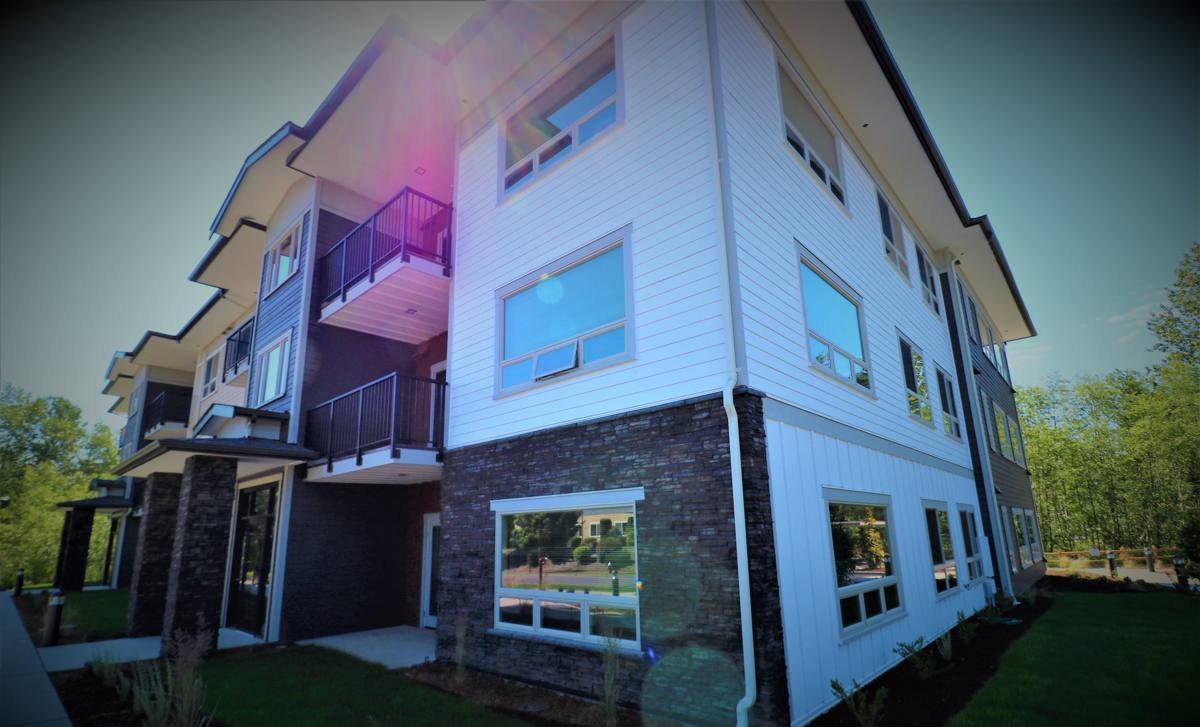
Why We Standardized on James Hardie for This Area
We install James Hardie fiber cement siding exclusively — we don't offer vinyl, LP SmartSide, Cemplank, Allura, or wood siding. That's not a marketing position, it's a decision based on watching how different siding materials actually hold up in this specific climate. Fiber cement is non-combustible, dimensionally stable when wet, and doesn't rely on a surface coating alone to resist moisture the way engineered wood products do. James Hardie's HardieZone system also lets us specify products engineered for the Pacific Northwest's wet-side conditions rather than a generic national product.
For a property near Semiahmoo, that means a siding system that isn't fighting its own construction against the salt air and rain load — it's built to shed water, resist the freeze-thaw and moisture cycling common to this region, and hold its factory finish through years of overcast, damp weather.
What Correct James Hardie Installation Involves
James Hardie siding performs the way it's engineered to only when it's installed to the manufacturer's specifications — and in a high-moisture region like this one, the installation details matter more than they would somewhere drier.
Water Management Behind the Siding
Correct installation starts before the first plank goes up: a weather-resistive barrier, properly lapped and taped, with flashing at every window, door, and horizontal transition. Behind-the-siding drainage is what actually keeps driving rain from becoming a rot problem, regardless of how good the surface material is.
Clearances and Fastening
James Hardie specifies minimum clearances from grade, roof lines, and decks, along with specific fastener patterns and gap requirements at butt joints. Skipping these details is the single most common cause of siding failure we see on homes that had fiber cement installed by a crew unfamiliar with the product — the material itself isn't at fault, the installation was.
Caulking and Sealant Choices
Not every caulk is compatible with ColorPlus factory finishes or with the movement fiber cement panels go through seasonally. Using the wrong sealant, or over-caulking joints that are supposed to allow for drainage, traps moisture instead of shedding it.
Installation Checklist We Follow on Every Lynden-Area Project
- Weather-resistive barrier installed and lapped per code, with all penetrations sealed
- Flashing installed at every window, door, and horizontal siding transition before panels go on
- Correct HardieZone product (HZ5) specified for this climate zone
- Manufacturer-specified clearances maintained from grade, roofline, and decking
- Fasteners set to Hardie's specified pattern and depth — not overdriven or underdriven
- Butt joints gapped and treated per manufacturer instructions, not caulked solid
- Factory ColorPlus finish protected from job-site damage during handling and cutting
- Final walk-through comparing the finished wall assembly against Hardie's installation manual
How Our Process Works
Assessment and Product Selection
We start with a walk-around of the home to look at existing siding condition, moisture damage, trim, and how much sun and wind exposure each elevation gets. Wall orientation matters a lot in this climate — a north-facing wall that stays shaded most of the day is going to hold moisture and grow moss longer than a wall that gets afternoon sun, and that affects both product choice and detailing.
Removal and Sheathing Check
Once old siding comes off, we check the sheathing and framing underneath for existing moisture damage before anything new goes up. Covering a hidden problem with new siding doesn't fix it — it just hides it for a few more years.
Installation
Panels, trim, and flashing go in following James Hardie's published installation guidelines, with attention to the clearances and fastening details outlined above. We don't shortcut butt joint treatment or clearance requirements to save time, because those are exactly the details that determine whether the siding performs for its full service life in this climate.
Final Inspection and Cleanup
We walk the finished job against the installation manual, address any punch-list items, and clean up the site before calling the job complete.
James Hardie Product Lines Suited to This Area
James Hardie makes several siding profiles, and the right one depends on the home's style and exposure as much as personal preference.
| Product | Best Suited For | Why It Fits This Climate |
|---|---|---|
| HardiePlank Lap Siding | Most single-family homes | Traditional profile, HZ5 formulation for wet climates, wide ColorPlus palette |
| HardieShingle | Accent areas, gables | Staggered or straight-edge look without the moisture uptake of real wood shingle |
| HardiePanel Vertical Siding | Modern or mixed-material facades | Clean vertical lines, pairs well with board-and-batten detailing |
| HardieTrim | Corners, window and door surrounds | Matches siding durability so trim doesn't become the weak point |
All of these are available with James Hardie's ColorPlus factory finish, which is baked on and backed by a separate finish warranty from the product warranty — an important distinction when you're evaluating long-term maintenance in a climate that's tough on paint.
Why a Crew That Already Works This Area Matters
Fiber cement siding is not a forgiving material for a crew learning as they go. It requires specific blades and cutting methods to control silica dust, specific fastener schedules, and an understanding of how the panels expand and contract. On top of that, a crew that regularly works in Whatcom County already knows how local wall assemblies typically perform against wind-driven rain and moss growth, which shapes decisions on flashing details and clearance that a crew unfamiliar with the region might treat as optional.
Hiring locally also means faster response if a warranty question or a follow-up item comes up after the job is done — you're not waiting on a crew that has moved on to a different region.
Comparing Long-Term Maintenance
Homeowners often ask how Hardie compares to other siding materials once you factor in the maintenance this climate demands, not just the upfront installation cost.
| Factor | James Hardie Fiber Cement | Vinyl | Engineered Wood (e.g. LP SmartSide) |
|---|---|---|---|
| Moisture behavior | Dimensionally stable, won't swell or delaminate | Doesn't absorb water, but can warp under heat/cold cycling | Wood-based core can swell or degrade if moisture reaches it |
| Salt air resistance | Non-porous cement composition resists corrosion | Generally resistant, but seams and fasteners can degrade | Edge sealing is critical; failure points allow moisture entry |
| Fire resistance | Non-combustible | Combustible, can melt/deform near heat sources | Combustible |
| Finish longevity | Factory ColorPlus finish, separate finish warranty | Color molded through material, can fade/chalk over time | Field or factory paint, repaint cycle needed sooner |
| Moss/algae resistance | Smooth, dense surface sheds growth more easily | Can host growth in seams and textured panels | Wood-grain texture gives moss more surface to grip |
None of these materials are without trade-offs, and we're not going to claim otherwise. But when we weigh moisture behavior, salt exposure, and long-term finish performance against what this specific climate does to a home over ten or twenty years, fiber cement is what we're willing to put our name behind.
What This Means for Your Estimate
Every home is a little different — sun exposure, wall height, existing damage, and trim complexity all affect scope and cost. Rather than quoting a blanket number, we look at the actual condition of your siding and walls, the elevations most exposed to wind-driven rain, and the product line that fits the home's style before putting together a quote.
If your current siding is showing moss buildup, cracking, or moisture staining, or if you're planning ahead for a replacement, we're happy to take a look and walk you through what a correct James Hardie installation would involve on your specific home. Reach out for a free, no-pressure estimate — the form below gets you started.