 Semiahmoo Siding
 Ferndale Sits at the Edge of a Tough Climate for Siding
Ferndale doesn't get the harshest weather in Washington, but it gets a steady combination that wears siding down faster than most homeowners expect. Whatcom County sits right where Puget Sound marine air, near-constant winter rain, and heavy shade from mature trees all overlap. Add proximity to salt water near Semiahmoo and the Strait of Georgia, and you have a climate that's mild in temperature but relentless in moisture exposure. Siding here isn't fighting extreme cold or blistering heat. It's fighting water, salt, and organic growth, day after day, for most of the year.
That distinction matters when you're choosing a siding product and a contractor. A siding system that performs fine in a dry inland climate can fail quietly here — not with a dramatic crack, but with slow moisture intrusion behind the wall that nobody notices until there's rot in the sheathing. This page is about one thing specifically: what it takes to do James Hardie fiber cement siding right on a Ferndale home, given what this climate actually does to a house.
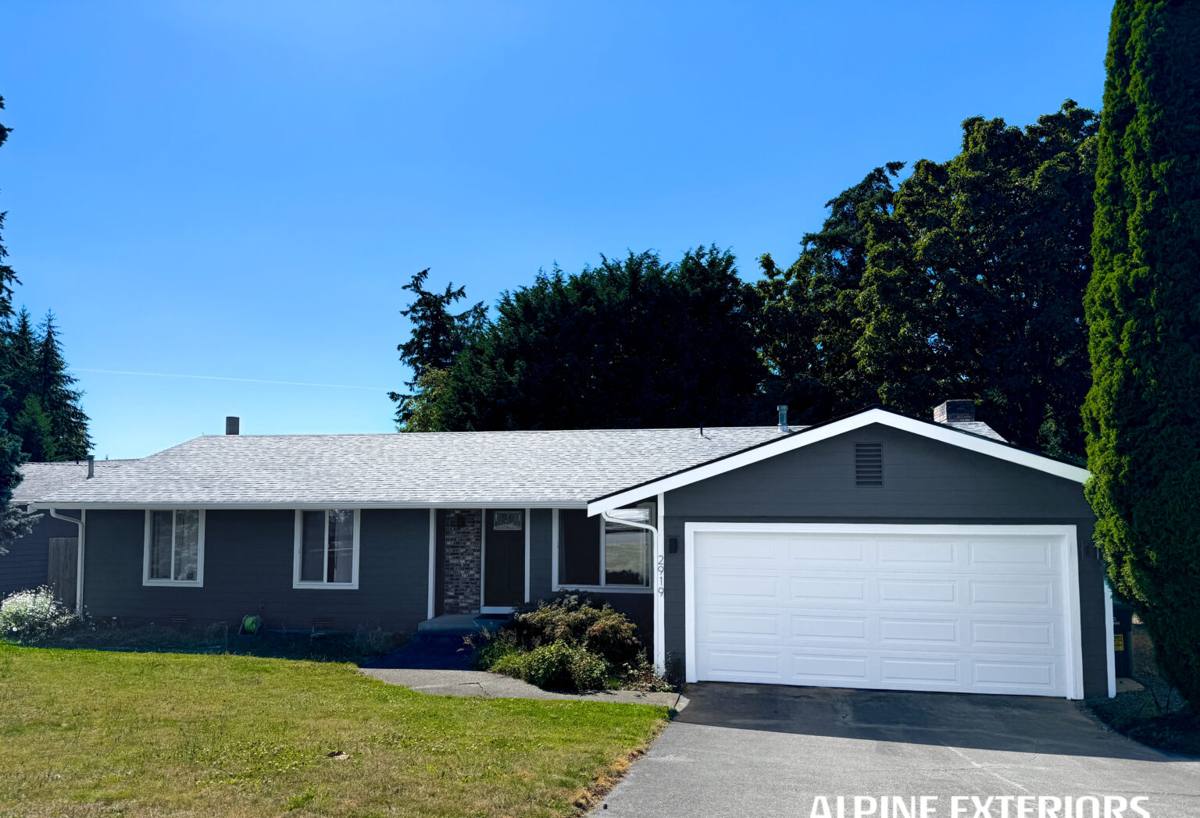
What Ferndale's Climate Actually Does to Exterior Walls
Salt Air and Slow Corrosion
Homes closer to the water pick up airborne salt that settles on every exterior surface. Salt doesn't damage fiber cement siding itself, but it accelerates corrosion on anything metal — fasteners, flashing, trim caps, and hardware. A siding job that uses the wrong fastener material or skips proper flashing detail will show rust streaks and failure points years before the siding itself is due for any attention.
Driving Rain, Not Just Rain
Whatcom County doesn't just get a lot of rain — it gets wind-driven rain that hits walls at an angle instead of falling straight down. That matters because it pushes water sideways and upward under laps, trim, and penetrations that would stay dry in a calmer climate. Siding systems need real drainage behind them, not just a decent-looking face, to handle that kind of exposure over the long run.
A Long, Real Moss and Algae Season
Shade, moisture, and mild temperatures give moss and algae a long growing window on this side of the state — often most of the year on north-facing or tree-shaded walls. Porous or absorbent siding materials hold onto that moisture and give organic growth something to root into. Siding that resists moisture absorption at the surface has a real advantage here, not a cosmetic one.
Why James Hardie Fiber Cement Fits This Climate
James Hardie siding is fiber cement — a mix of cement, sand, and cellulose fibers, factory-cured into planks and panels. It doesn't absorb water the way wood-based or foam-core products can, it doesn't provide the food source that organic growth needs the way untreated wood does, and it holds up to sustained moisture exposure without swelling, warping, or delaminating. Hardie also engineers its formulations by climate zone — HZ10 for regions like ours that see far more sustained moisture than hard freezes — rather than selling one generic product everywhere. That's a meaningful difference from siding built to a single national spec regardless of what a specific region actually throws at it.
The factory-applied ColorPlus finish matters here too. It's baked on under controlled conditions rather than field-painted, which means better adhesion and more consistent coverage than a coat of paint applied on-site in Ferndale's damp working conditions. That translates into a finish that holds its color and sheds water better through repeated wet-dry cycles, which is exactly the stress this climate applies year after year.
What a Correct Installation Actually Involves
Fiber cement siding is only as good as the installation behind it. The material can be excellent and still fail early if the details underneath are wrong — and in a wet climate, those mistakes show up faster and cause more damage than they would somewhere drier. A correct job on a Ferndale home includes:
- A drainage plane (weather-resistant barrier) installed continuously and lapped correctly, with no gaps at seams, corners, or penetrations
- A rainscreen gap or drainable house wrap that lets any moisture that does get behind the siding drain and dry out instead of sitting against the sheathing
- Corrosion-resistant fasteners and flashing — stainless steel or hot-dip galvanized, not standard-grade hardware that will streak and weaken faster in salt-influenced air
- Proper flashing at every window, door, and roofline intersection, since these are the points where driving rain finds its way in
- Correct lap exposure and fastener placement per Hardie's published specifications — not "close enough," since under-lapping is invisible until it leaks
- Factory-cut edges kept intact where possible, with any field-cut edges sealed per manufacturer instructions before installation
- Caulking only at the joints Hardie specifies — not as a substitute for correct flashing, which is a common shortcut that fails within a few wet seasons
Skipping any one of these doesn't usually cause an immediate, visible problem. It causes a slow one — moisture finding a path behind the siding, sitting there because there's nowhere for it to drain, and doing damage to the wall assembly long before the siding itself shows any sign of trouble.
Where Installation Shortcuts Show Up First in This Climate
| Installation Detail | Why It Matters Here | What Happens If It's Skipped |
|---|---|---|
| Rainscreen / drainage gap | Handles the sideways push of driving rain and lets trapped moisture escape | Water sits against the sheathing, leading to slow rot behind the siding |
| Stainless or galvanized fasteners | Salt-influenced air corrodes standard fasteners faster | Rust streaking, weakened fastening, premature repairs |
| Window and door flashing | These are the highest-risk points for wind-driven rain intrusion | Hidden leaks around openings, often not found until interior damage appears |
| Correct lap exposure | Under-lapped courses let water track upward under wind pressure | Water intrusion at lap lines that looks like a material failure but isn't |
| Sealed field-cut edges | Cut edges are more absorbent than factory-finished faces | Localized moisture uptake and finish failure at cut points |
Our Process for a Ferndale James Hardie Project
We approach every Ferndale project the same deliberate way, because the climate doesn't reward cutting corners:
- On-site assessment — we look at sun exposure, tree cover, drainage patterns around the foundation, and the condition of the existing wall assembly, not just the visible siding
- Tear-off and inspection — removing old siding lets us check the sheathing and framing underneath for moisture damage before it's covered up again
- Weather barrier and rainscreen installation — this is the layer that does the real long-term work, and it's the layer that's invisible once the job is finished
- Flashing at every penetration — windows, doors, hose bibs, light fixtures, and roof intersections all get properly integrated flashing before siding goes on
- Hardie installation to manufacturer spec — correct fasteners, correct exposure, correct clearances from grade, decks, and roof lines
- Final walkthrough — we go over caulking points, trim details, and touch-up needs so you know exactly what maintenance, if any, to expect going forward
Why a Crew That Already Works in Ferndale Matters
Siding installation isn't identical everywhere, and a crew that's used to a drier or milder climate can bring habits that don't hold up here. A crew that already works Whatcom County homes knows which walls take the worst of the wind-driven rain, understands local permitting expectations, and has already seen what happens when a rainscreen gap gets skipped on a shaded, moss-prone wall. That experience shows up in the details — where extra flashing gets added even when it's not strictly required, and where a slightly more conservative lap exposure gets used on the exposed sides of a house.
It also matters for accountability. A local crew is still around next year, and the year after, if a question comes up about how a detail was handled. That's worth more than a slightly lower bid from a crew passing through.
Living With James Hardie Siding in a Marine Climate
One advantage of fiber cement over wood-based or vinyl siding in this climate is how little ongoing maintenance it actually needs when it's installed correctly. It won't rot, it won't feed moss the way bare wood can, and the factory finish resists fading and chalking far longer than field-applied paint. That doesn't mean zero maintenance — it means the maintenance that matters is straightforward and infrequent.
- Rinse siding periodically, especially on walls closer to the water, to clear accumulated salt residue
- Inspect caulking at trim joints and penetrations once a year and have any cracked or shrunken beads redone before the wet season
- Keep gutters clear and functioning so overflow doesn't run down the siding face and feed moss growth
- Trim back vegetation and tree cover where practical to reduce shade and airflow restriction on the worst-affected walls
- Address any impact damage (a ladder, a thrown object, equipment) promptly rather than letting a small chip become an entry point for moisture
What Drives the Cost of a Ferndale Siding Project
Every Ferndale home is a little different, and the honest answer is that cost depends on the specifics of your house rather than a flat number. A few factors that consistently move the estimate:
| Factor | Why It Affects Cost |
|---|---|
| Condition of the existing wall assembly | Hidden moisture damage found during tear-off may need repair before new siding goes on |
| Home size and wall complexity | More corners, dormers, and penetrations mean more flashing and cutting labor |
| Siding profile and trim selection | Lap width, panel style, and trim detailing all affect material and labor cost |
| Access and site conditions | Slopes, tight setbacks, or limited equipment access add labor time |
| Existing rainscreen or drainage plane | Homes without one need this layer added, which is additional but worthwhile work |
We walk through all of this on-site before giving you a number, so you know exactly what you're paying for and why.
Ready for a Straight Answer About Your Home
If your Ferndale home's siding is showing moss buildup, chalky or fading paint, soft spots near the base, or you're just planning ahead before the next wet season sets in, we're happy to take a look. We'll give you an honest read on what your walls need — no pressure, no upsell — and a clear estimate for correct James Hardie installation built for this exact climate. Fill out the form below to get started.