 Semiahmoo Siding
 Why Semiahmoo Resort Windows Wear Out Faster Than Inland Homes
Semiahmoo Resort sits right on the water, and that location is exactly what makes window replacement here different from a typical Whatcom County job. Homes on or near the spit take on airborne salt from Semiahmoo Bay and Drayton Harbor almost daily, along with wind-driven rain that comes in sideways during winter storms rather than falling straight down. Add a long, damp shoulder season where moss and algae get a foothold on anything that stays wet, and you have three separate forces working against a window's frame, seals, and hardware at the same time.
None of this means windows fail overnight. It means the slow stuff — seal degradation, frame corrosion, wood rot at the sill, hardware that seizes up — happens years ahead of schedule compared to a home fifteen miles inland in Bellingham or Ferndale. A window rated for a 20-year service life in a typical climate might show real problems at year 12 or 13 on a waterfront lot here if it wasn't installed with that exposure in mind.
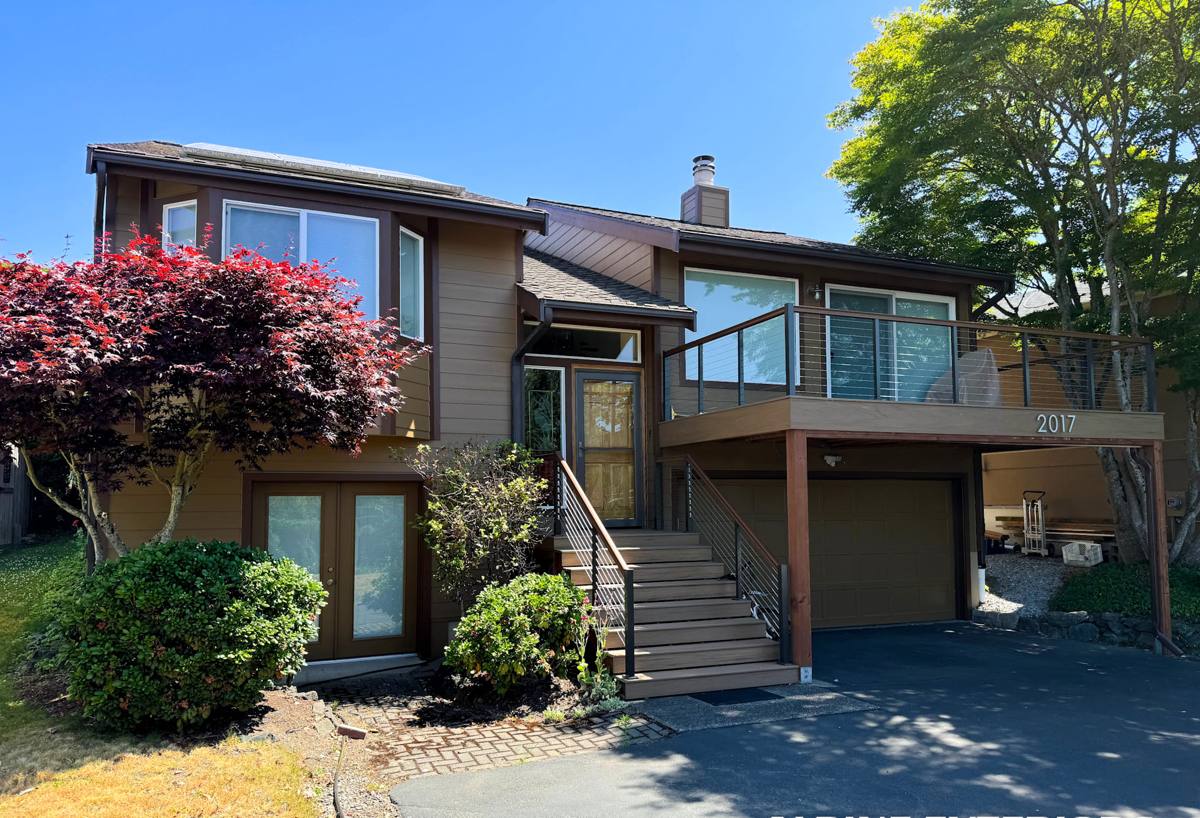
Signs Your Windows Are Ready for Replacement
Most homeowners don't notice window failure as a single event — it shows up as a handful of small annoyances that add up. Here's what we look for, and what you can check yourself before calling anyone out.
- Fogging or a permanent haze between panes on double-pane windows — the seal has failed and the gas fill is gone
- Visible pitting, chalking, or corrosion on aluminum or older vinyl frames facing the water
- Soft or discolored wood at the sill or bottom corners of the frame, especially on the weather side of the house
- Windows that are hard to open, won't stay latched, or rattle in wind
- Cold drafts near the frame even when the sash is fully closed and locked
- Visible moss or dark streaking building up in the frame corners or weep holes
- A noticeable jump in heating costs without any other explanation
Any one of these on its own might just need a repair or a reseal. Two or three together, especially on windows over 15 years old, usually means replacement is the more honest recommendation — patching a frame that's already corroding underneath just delays the real fix.
What a Correct Window Replacement Job Actually Involves
It Starts Below the Surface
The window unit itself is the easy part. What separates a window replacement that lasts from one that fails again in five years is everything happening around the opening: flashing, sealant, and how water is directed away from the wall assembly. In a marine climate like Semiahmoo's, we treat every opening as if wind-driven rain will eventually find a way to test it, because it will.
That means proper sill pan flashing under every new window, correctly lapped house wrap or building paper integrated with the flashing (not just caulked over it), and sealant details that account for the fact that caulk alone is never a long-term water barrier — it's a backup to good flashing, not a substitute for it.
Removing the Old Window Without Hiding Problems
Old windows on waterfront homes often reveal rot or moisture damage in the rough opening once removed — something you can't see from outside. We treat this as expected, not a surprise fee sprung on you later. If we find soft sheathing or a stud that's been wicking moisture, we'll show you what we're looking at, explain the repair, and price it plainly before moving forward.
Fit and Sealing Matter More Here Than Most Places
A window that's slightly out of square, or shimmed unevenly, will develop a gap that salt-laden wind will exploit over time. We check for level, plumb, and square at every opening, then insulate the gap around the frame properly — not overpacked with spray foam, which can bow the frame, and not left with gaps that let moist air condense inside the wall.
Choosing Window Materials for Salt Air and Marine Exposure
Material choice matters more in Semiahmoo Resort than it does a few miles inland. Here's how the common options actually hold up under regular salt air and driving rain, based on how they behave in the field rather than how they're marketed.
| Material | Salt Air Performance | Maintenance | Our Take |
|---|---|---|---|
| Vinyl | Good — won't corrode; UV-stable formulas hold color | Low; occasional rinse to clear salt film | Solid value option for most Semiahmoo Resort homes |
| Fiberglass | Very good — dimensionally stable, resists pitting | Low | Worth the upgrade cost on directly exposed, water-facing walls |
| Aluminum-clad wood | Fair to good — cladding protects wood, but seams need attention | Moderate; watch cladding seams and interior wood finish | Best when the look of real wood indoors matters to you |
| Bare aluminum frame | Poor near the water — prone to pitting and corrosion over time | High — needs regular inspection and refinishing | We generally steer clients away from this on exposed elevations |
| Bare wood | Poor without diligent upkeep — rot risk in constant damp/salt | High — repainting and sealing on a strict schedule | Only recommended with a real maintenance commitment |
We're not against wood or aluminum on principle — both have a place. But we'll tell you plainly when a material choice is going to create a maintenance burden on a home that catches direct wind off the water, because that's the honest answer, not the easiest sale.
Glass Packages Worth Considering
Beyond frame material, the glass package affects comfort and moisture control. Double-pane low-E glass is the practical baseline for this climate. On the coldest, wettest west- and north-facing walls, an upgraded low-E coating or argon fill can noticeably cut condensation on the interior glass surface during Whatcom County's damp winters — something worth discussing if a specific room has always felt drafty or fogs up.
Our Window Replacement Process
We keep the process straightforward and try to remove surprises, since a home this close to the water can throw a curveball once the old window comes out.
- On-site assessment — we measure every opening, check for existing rot or flashing problems, and look at sun/wind exposure on each elevation
- Material and glass recommendation — based on which walls take direct weather, not a one-size answer for the whole house
- Written estimate — itemized by opening, so you know what you're paying for and where
- Removal and inspection — old units come out carefully, and we flag any hidden moisture damage before closing anything up
- Flashing and sill pan installation — done to shed water outward, every time, no shortcuts
- Window setting and sealing — leveled, shimmed, insulated, and sealed with materials rated for continuous marine exposure
- Interior and exterior trim finish — matched to your home's existing look
- Final walkthrough — we test operation on every window before we consider the job done
Cost Factors for Semiahmoo Resort Window Replacement
Every home is different, and we won't quote a number without seeing the openings, but these are the factors that actually move the price up or down.
| Factor | Why It Matters |
|---|---|
| Frame material | Fiberglass and clad-wood cost more upfront than vinyl but may cost less over time in maintenance |
| Window size and configuration | Large picture windows or custom shapes cost more than standard sliders or double-hungs |
| Number of openings replaced at once | Doing multiple windows in one visit is more efficient than one-off replacements |
| Hidden repairs | Rot or damaged sheathing found during removal adds cost, but catching it now is cheaper than later |
| Glass package | Upgraded low-E coatings or argon fill add cost but improve comfort on exposed walls |
| Elevation and access | Second-story or hard-to-reach openings take more labor time |
Broadly, homeowners in this area should expect a wide range depending on how many of these factors apply — we'll walk through where your project lands after the assessment, not before.
Why Hiring a Crew That Already Works Semiahmoo Resort Matters
A window replacement crew that mostly works inland doesn't think about salt exposure or wind-driven rain the same way a crew that regularly works this stretch of Whatcom County does. It shows up in small decisions — which sealant is actually rated for continuous marine air, how tight the flashing lap needs to be on a wall that takes direct wind off Semiahmoo Bay, whether a given frame material is worth the extra cost on this specific elevation. Those aren't things you learn from a manufacturer's spec sheet; they're things you learn from doing the work here, season after season, and seeing what holds up and what doesn't.
We also know that homes in a resort community often have HOA guidelines around exterior appearance, and we're used to working within those without it becoming a hassle for you.
Keeping New Windows Performing in This Climate
A properly installed window still benefits from some basic upkeep in a salt-air environment. Rinsing frames and glass periodically with fresh water helps clear salt film before it has a chance to etch glass or dull finishes. Keeping weep holes clear of moss, debris, and dirt lets the window drain the way it's designed to. And an annual look at exterior caulking — not the flashing itself, which shouldn't need attention, but the visible sealant lines — catches small cracks before they become leaks. None of this is heavy maintenance, but skipping it entirely is how a good installation gets a shorter life than it should.
If your windows are fogging, drafty, hard to operate, or just original to a home that's been through a lot of Semiahmoo winters, we're happy to take a look. Reach out for a free, no-pressure estimate using the form below — we'll walk your home's openings with you and give you a straight answer on what's needed and what isn't.