 Semiahmoo Siding
 Windows at Blaine Harbor: Built for Life Near the Water
Blaine Harbor sits right at the edge of Semiahmoo Bay, close enough to the moorage and open water that salt air and wind off the bay are part of daily life for the homes around it, not an occasional weather event. It's a mixed community — older homes that have been through decades of Whatcom County winters alongside newer construction built to take advantage of the water views — and windows are one of the first parts of a house to show what that exposure has done over time.
Window installation here isn't a different product than what goes into a house twenty miles inland, but it is a different job. The flashing sequence, the sealants, the fastener choices, and the attention paid to every joint around the opening all matter more when a window is going to spend years facing salt-laden air and rain coming straight off the water. We treat that as the baseline expectation for any window job around the harbor, not an upgrade someone has to ask for.
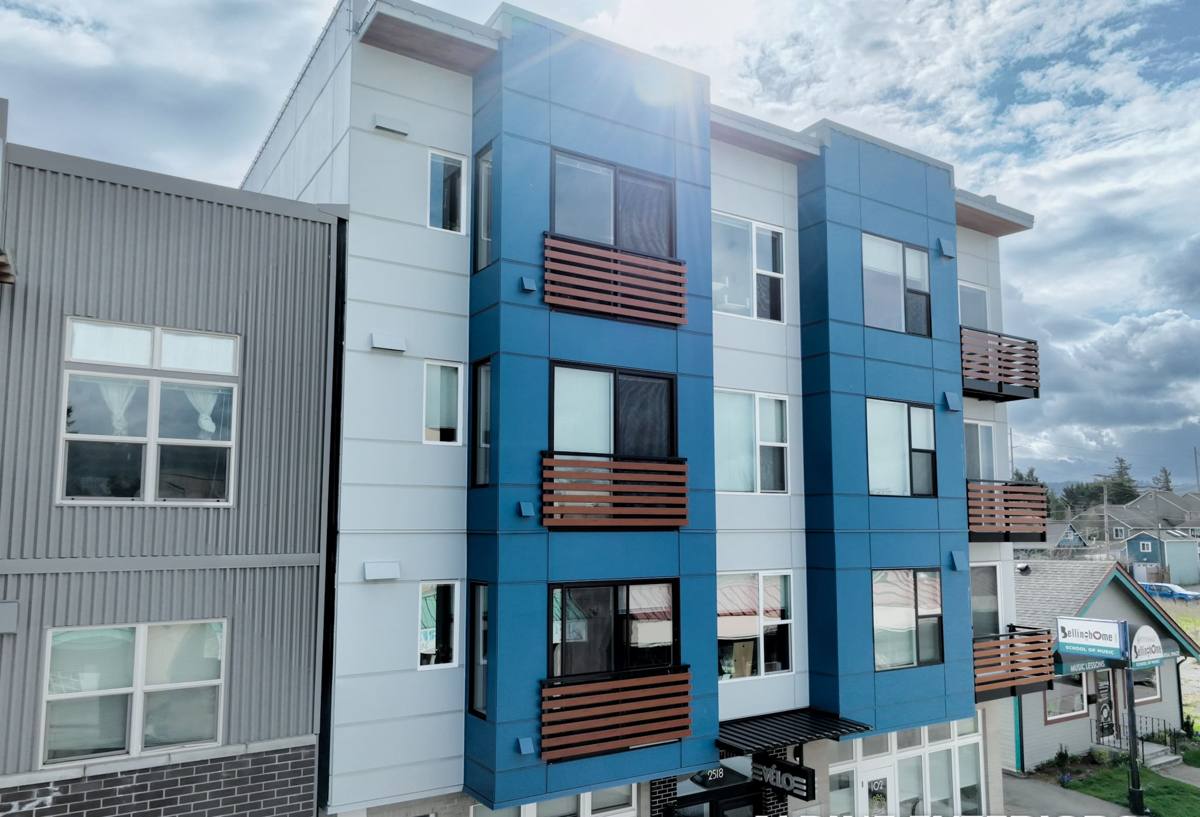
What This Climate Does to Windows Here
Salt Air, Close and Constant
Being this close to Semiahmoo Bay means salt-laden air reaches windows here more directly and more often than it does at a property set back even a short distance from the water. Salt speeds up corrosion on hardware, fasteners, and lower-grade metal components in a window assembly, and it breaks down cheaper finishes faster than a drier, more sheltered location ever would. A window that would perform fine for decades a few miles inland can start showing corroded hardware or a failing finish years sooner right at the harbor.
Wind-Driven Rain Off the Water
With open water right there and little to break the wind, rain at Blaine Harbor doesn't just fall — it gets driven sideways into window flashing and wall assemblies with real force during storms. That's a heavier moisture load than the region's total rainfall numbers suggest on their own. A window installation that would hold up fine somewhere calmer can fail specifically because water is finding its way in sideways, through a joint or lap that was never built to handle wind-driven rain pushing against it from an angle.
A Long Moss and Mildew Season
Mild temperatures and near-constant humidity give Whatcom County a moss and mildew season that runs most of the year, and the shaded, damp conditions common around the harbor don't shorten it. Wood sills, trim, and any porous material around a window opening are usually where it shows up first. Homes with mature trees or landscaping nearby, or with north-facing windows that don't get much direct sun, tend to see it worst.
Signs a Blaine Harbor Home Needs New Windows
Not every window problem means a full replacement, but these are the signs worth taking seriously in this climate:
- Fogging or a permanent haze between panes, which means the seal on a double-pane unit has failed
- Soft, discolored, or spongy wood on the sill or trim, especially on window walls that face the water or don't get afternoon sun
- Visible corrosion or pitting on hardware, hinges, or locks
- Persistent drafts you can feel even with the window fully latched
- Difficulty opening, closing, or locking a window that used to operate smoothly
- Paint or finish that's bubbling, peeling, or chalking noticeably faster than it should
- Rising heating bills without another clear explanation
Any one of these on its own might just need a repair. Several showing up together, especially on the side of the house that faces the harbor or open water, usually means the window assembly itself is past the point where patching makes sense.
What a Correct Window Installation Involves
Removing the Old Window Without Damaging the Opening
The first place a window job can go wrong is removal. Pulling an old unit out carelessly can damage the surrounding framing, siding, or existing flashing, and any of that damage becomes a hidden problem behind the new window if it isn't caught and repaired before installation continues. We check the condition of the framing and sheathing at every opening as the old window comes out, since that's often the only chance to find rot or water damage that's been building quietly for years.
Flashing and Weatherproofing
This is the step that matters most given the exposure at Blaine Harbor. Flashing has to be layered correctly — sill pan first, then side flashing, then head flashing — so that any water reaching the opening drains back out and away from the wall assembly instead of finding a path inward. On a harbor-facing wall taking wind-driven rain, a shortcut here is the single most common reason a window leaks within a few years instead of lasting decades.
Insulation and Air Sealing
The gap between a new window frame and the rough opening needs to be insulated and sealed correctly, not just stuffed with whatever's on hand. Overfilling with the wrong material can bow a frame out of square; underfilling leaves gaps that draft and let moisture-laden air condense inside the wall. We size and place insulation to the specific gap at each opening rather than treating every window the same.
Frame Material for This Climate
Frame material is a real trade-off decision, not a default. Vinyl and fiberglass frames generally hold up to sustained salt air and moisture with less upkeep than a painted wood exterior, which is why we lead with them on harbor-facing installs. Wood-clad windows with a durable exterior cladding can still make sense when the interior look matters and the exposed side is properly protected — it's a decision worth making based on your specific walls and budget, not a one-size answer we apply to every house.
Full-Frame Replacement vs. Insert Replacement
One of the first decisions on a window project is whether the job calls for a full-frame replacement or an insert (pocket) replacement into the existing frame. Both have a place, and the right call depends on the condition of what's already there.
| Factor | Insert Replacement | Full-Frame Replacement |
|---|---|---|
| What it involves | New window unit fits inside the existing frame, which stays in place | Existing frame is removed down to the rough opening; everything is new |
| Best suited for | Existing frame is sound, square, and free of rot or water damage | Existing frame shows rot, damage, or has failed flashing behind it |
| Access to hidden damage | Limited — problems behind the old frame stay hidden | Full access to check and repair framing, sheathing, and flashing |
| Speed and disturbance | Faster, less disruption to interior trim and exterior siding | Takes longer and involves more work on trim and siding around the opening |
| Cost | Generally lower | Generally higher, reflecting the added labor and materials |
| Fit for Blaine Harbor exposure | Fine when the existing frame and flashing are genuinely sound | Often the better call on older, harbor-facing walls where flashing may have failed unnoticed |
We won't default to the cheaper option just because it's cheaper. If an insert replacement is genuinely the right call for your window, we'll say so. If the framing behind an old window shows signs of past water intrusion, an insert would just seal a problem behind the new unit — and on a harbor-facing wall, that's a problem worth finding now rather than in five years.
Our Process, Start to Finish
- On-site assessment — we look at each window opening, check for existing water damage or failed flashing, and get a sense of overall condition before recommending anything
- Honest recommendation — insert or full-frame replacement, with the reasoning explained plainly, not just the higher-margin option
- Written scope and timeline — what's being done, what materials are being used, and a realistic schedule before any work starts
- Careful removal — old windows come out without unnecessary damage to surrounding framing or siding, and any hidden issues get flagged
- Installation and flashing — the new unit is set, shimmed level and square, insulated, and flashed in the correct sequence for the wall
- Trim and finish — interior and exterior trim is completed to match the rest of the house
Why a Crew That Already Works Blaine Harbor Matters
Manufacturer installation instructions are written for average conditions in a moderate climate — they're not written with a harbor-facing wall taking wind-driven rain in mind. A crew that regularly works Blaine Harbor has already seen which shortcuts fail here and which extra steps are worth the time even when a generic instruction sheet doesn't call for them. That shows up in decisions that never come up in a sales pitch: how much lap a flashing course needs on a wall that takes rain at an angle, which fastener grade actually holds up against salt air over years instead of months, when a sill needs extra attention because the framing behind it already shows early signs of moisture.
Those are the details that decide whether a window installation is still performing cleanly in twenty years or showing drafts, fogged glass, and soft trim in five. Experience specific to this stretch of coastline isn't a marketing point — it's what keeps a straightforward window job from turning into a hidden water problem a few years down the road.
What to Ask Before Hiring for Window Work at Blaine Harbor
- Ask how they sequence flashing on a window facing open water or prevailing wind, not just their general process
- Ask whether they'd recommend insert or full-frame replacement for your specific window, and why
- Confirm current Washington contractor licensing and active liability insurance
- Get a written scope of work, including materials and fastener grade, before signing anything
- Ask how the window unit and the installation labor are each covered under warranty
If you're noticing drafts, fogged glass, or soft trim on a Blaine Harbor home, or you're planning ahead for windows on a remodel or addition, it's worth having someone look at the actual openings before you start pricing units. We offer free, no-pressure estimates for window installation around Blaine Harbor and the surrounding Semiahmoo area — use the form below to get a time on the schedule.