 Semiahmoo Siding
 Roofing in Ferndale Means Building for the Coast
Ferndale sits close enough to Semiahmoo Bay and the Salish Sea that its roofs face the same coastal conditions as homes right on the water: salt-laden air, wind-driven rain off Puget Sound, and long stretches of grey, damp weather that never quite let a roof dry out. Whatcom County's climate is mild compared to a lot of the country, but mild and easy are not the same thing. The steady moisture and marine air here work on a roof slowly, over years, in ways that a homeowner who moved from a drier climate often doesn't expect. Many homes in the area were roofed years ago with whatever product was standard at the time, without much thought given to how a long wet season and salt-tinged air would treat that specific roof over the decades that followed.
An asphalt shingle roof installed the way it's built for a hot, dry inland climate will not hold up the same way in Ferndale. The materials, the flashing details, the ventilation, and the maintenance schedule all need to account for what this specific stretch of Whatcom County throws at a roof year after year. That's the difference between a roof that looks fine for five years and one that actually performs for its full expected life.
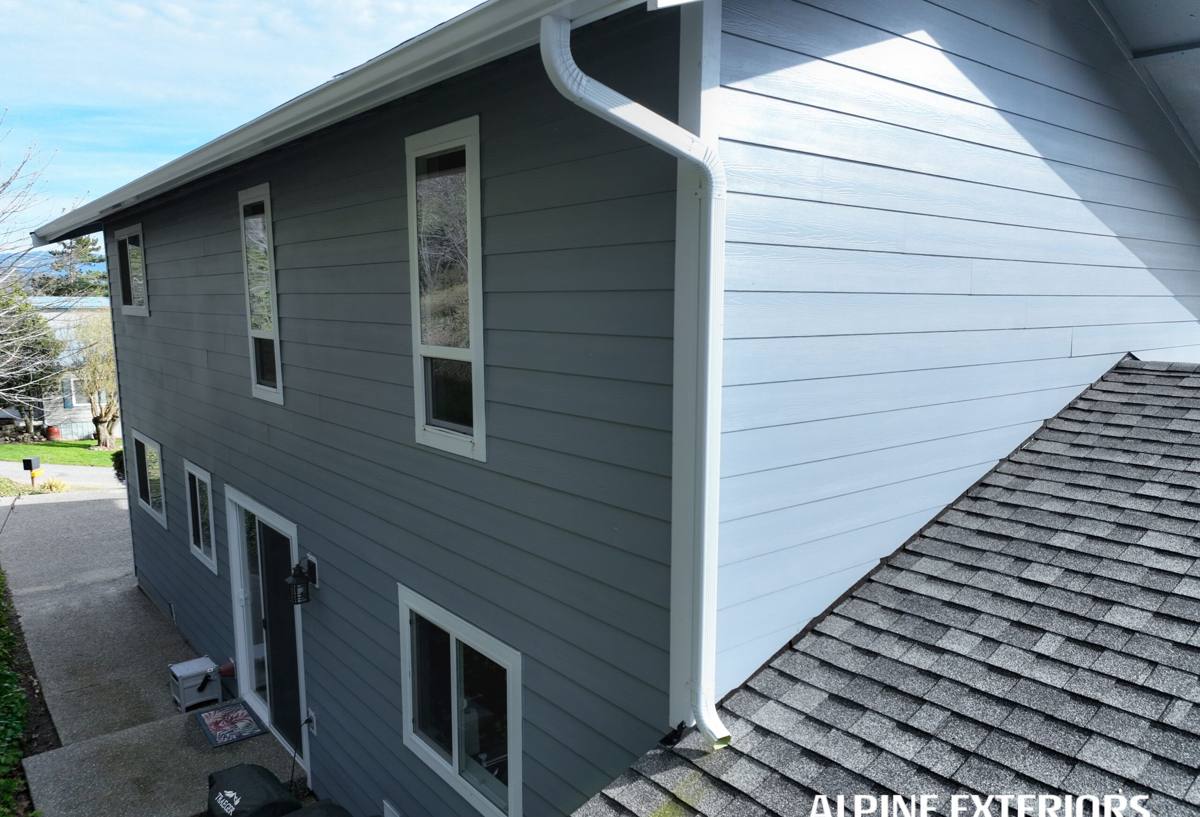
What Salt Air, Rain, and Moss Actually Do to a Roof
Salt Air and Metal Components
Salt air doesn't just affect boats and cars. It accelerates corrosion on every exposed metal component on a roof — nail heads, flashing, drip edge, vent caps, and fasteners. Once corrosion starts on a small flashing seam or a nail head, it opens a path for water to work its way underneath the shingles, and that's usually invisible from the ground until the damage has already spread into the decking below.
Moss, Shade, and Trapped Moisture
Whatcom County's long wet season and plenty of tree cover create ideal conditions for moss and algae growth on north-facing and shaded roof slopes. Moss isn't just a cosmetic issue. As it grows, it lifts shingle edges, holds water against the roof surface long after a storm has passed, and creates a foothold for wood rot in the decking underneath. A roof that looks mossy but otherwise intact from the street can already have soft, saturated decking beneath the growth. Homes tucked under fir or cedar cover tend to see this show up faster than roofs out in the open, simply because those slopes get less sun and stay damp longer between storms.
Wind-Driven Rain and Wind Exposure
Rain in this part of Washington rarely falls straight down. Wind off the water pushes it sideways and underneath shingle edges, valleys, and anywhere flashing isn't properly lapped. A roof that would shed water fine in a calm rain can still leak in a Whatcom County storm if the underlayment, valley flashing, and shingle overlap weren't installed with that wind-driven pattern in mind. We take slope orientation into account for exactly this reason — a roof facing the prevailing weather needs more conservative flashing and overlap details than a sheltered slope on the same house.
Choosing the Right Asphalt Shingle for This Climate
Not every asphalt shingle product is a good match for a coastal, moss-prone environment. We look at wind rating, algae resistance, and how forgiving the product is to install correctly on a roof that will spend a lot of its life wet, rather than just picking based on looks or price alone.
| Shingle Type | Wind Rating | Algae / Moss Resistance | Typical Lifespan Here | Best Suited For |
|---|---|---|---|---|
| Standard 3-Tab | Lower | None unless treated | Shorter end of range | Budget-driven reroofs, secondary structures |
| Architectural / Laminate | Higher | Varies by product | Mid to upper range | Most Ferndale homes; good balance of cost and durability |
| Algae-Resistant Architectural | Higher | Built-in copper-content granules | Mid to upper range | Shaded lots, north-facing slopes, homes near trees |
| Impact-Rated (Class 4) | Highest | Varies by product | Upper range | Homes wanting maximum durability and possible insurance credit |
For most Ferndale homes, an architectural shingle with algae-resistant granules is the sensible middle ground — it costs more up front than a basic 3-tab but resists the streaking and moss colonization that this climate encourages, which protects the investment over the life of the roof. We assess exposure slope by slope rather than treating a house as one uniform surface, since a shaded north-facing plane and a sun-exposed south-facing plane on the very same roof can age at noticeably different rates. We'll walk through the real trade-offs for your specific roof, sun exposure, and budget rather than defaulting to one product for every job.
What a Correct Installation Actually Involves
Tear-Off and Deck Inspection
We remove the old roofing down to the deck rather than layering over it. That's the only way to actually see the condition of the sheathing underneath — and in a climate where hidden moisture damage is common, that inspection step matters as much as the new shingles themselves. Any soft, delaminated, or rotted decking gets replaced before anything new goes down; covering damaged decking with new shingles just hides a problem that will resurface.
Underlayment and Water Barrier Details
Given how much wind-driven rain this area sees, the underlayment layer is doing real work, not just serving as a formality between deck and shingle. Self-adhered ice-and-water barrier at eaves, valleys, and around penetrations gives a second line of defense in the spots most likely to take on water, which matters more here than in a drier inland climate.
Flashing and Fastening
Step flashing at walls, proper valley flashing, and corrosion-resistant materials at chimneys and vents are where most long-term leaks actually originate — not in the field of the shingles themselves. Given the corrosive effect of salt air discussed above, we pay particular attention to flashing material choice and installation sequence so water is directed off the roof at every transition point, not trapped behind it. Wind exposure also affects how shingles should be fastened; correct nail placement, nail count per shingle, and using the fastening pattern the manufacturer specifies for higher-wind zones all matter more here than they would on a calm inland lot. Skipping this detail is one of the more common reasons a roof loses shingles in a windstorm well before it should.
Ventilation
Balanced intake and exhaust ventilation keeps the attic from trapping the moisture that this region's air already carries plenty of. Poor ventilation shortens shingle life from underneath, causes condensation issues in the attic, and can void manufacturer warranties — it's an easy thing to overlook but a costly one to fix after the fact.
Repair or Replace? How We Evaluate a Ferndale Roof
Not every roofing problem calls for a full replacement, and we don't default to recommending one. When we inspect a roof, we're looking at the age of the existing shingles, the extent of granule loss, whether moss has already caused decking damage, how many roof planes are affected, and how the flashing has held up. Signs it may be time to call someone out include granule buildup collecting in gutters, shingles that look cupped or curled at the edges, moss established across a full slope rather than just a few spots, or daylight visible through the roof deck from inside the attic. A roof with isolated flashing failures or a single storm-damaged section can often be repaired properly rather than replaced. A roof with widespread granule loss, multiple leak points, or soft decking in several areas is usually past the point where repair makes financial sense. We'll give you a straight answer either way, along with the reasoning behind it, so you can make the call with real information instead of guessing.
Our Process, Start to Finish
We start with an on-site inspection and a written estimate that spells out the shingle product, underlayment, flashing approach, and ventilation plan for your specific roof — not a vague allowance. Once scheduled, we protect landscaping and the areas around the home before tear-off begins, complete the tear-off and deck inspection, address any decking issues we find, install the new system per the details above, and finish with a full cleanup, including a magnetic sweep for stray nails. We also keep an eye on the weather window for your install, since scheduling around the wetter stretches of the year matters as much for a clean installation as any material choice does. We walk the finished roof with you before we consider the job done, and we stand behind the workmanship.
Maintenance That Actually Extends Roof Life Here
A well-installed roof still needs periodic attention in this climate to reach its full lifespan. The habits that make the biggest difference in Whatcom County's wet, wooded, coastal conditions are straightforward:
- Keep gutters and downspouts clear so water isn't backing up under the eaves during heavy rain
- Have moss and algae growth treated and removed before it lifts shingle edges, rather than after
- Trim back overhanging branches that keep roof sections shaded and slow to dry
- Check that attic ventilation isn't blocked by insulation, especially after any attic work
- Have flashing at chimneys, vents, and wall intersections inspected after major windstorms
- Walk the roofline visually after big storms for lifted, cracked, or missing shingles
- Schedule a professional inspection every couple of years rather than waiting for a visible leak
Why Local Experience in Ferndale Matters
A roofing crew that already works in Ferndale and the surrounding Whatcom County area knows what this climate does to a roof because they've opened up enough of them to see it firsthand — where moss tends to build up fastest, which flashing details fail first under wind-driven rain, and how salt air affects material choices over time. That's different from generic roofing knowledge applied to a coastal town for the first time. It shows up in the product choices we recommend, the flashing and ventilation details we don't skip, and the honest read we give you on repair versus replacement. It also means fewer surprises during the job itself, since a crew familiar with local conditions knows what to expect once the old roofing comes off.
If you're dealing with an aging shingle roof, active moss growth, or you just want an honest assessment of what your roof actually needs, we're happy to take a look. Reach out using the form below for a free, no-pressure estimate on your Ferndale home.