 Semiahmoo Siding
 Why Birch Bay Roofs Wear Differently Than Roofs Inland
A roof in Birch Bay does not age the same way a roof twenty miles inland does. Sitting right on the water means the air carries salt, and that salt settles on every exposed surface of a roof, including fasteners, flashing, and the granules on asphalt shingles. Add in Whatcom County's driving rain, which comes in sideways during winter storms off the Strait of Georgia, and you have wind-driven moisture testing every seam, lap, and nail line on the roof deck. Then there's the shade. Birch Bay's tree cover and marine humidity create a moss season that runs longer here than it does in drier parts of the state, and moss does more damage to a roof than most homeowners realize.
None of this means a roof in Birch Bay is doomed to fail early. It means the installation has to account for these conditions from the start, rather than treating this like a generic Western Washington roofing job. The details that get skipped on a rushed install are exactly the details that matter most here.
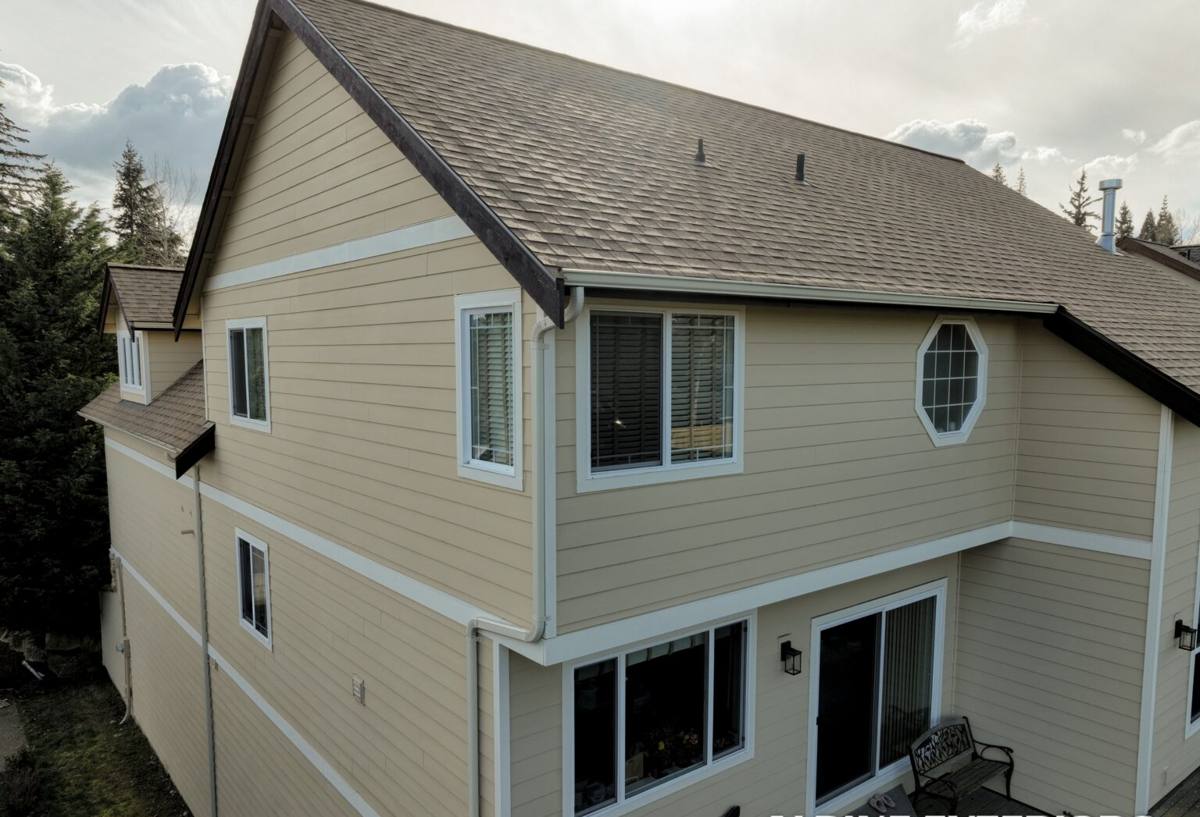
What Salt Air, Rain, and Moss Actually Do to a Roof
Salt Air and Corrosion
Salt is corrosive to metal. On a roof, that means exposed fasteners, flashing, and any metal roofing components are working harder here than they would a few miles away from the water. Fasteners that aren't rated for coastal exposure can start to corrode years before they would inland, and once a fastener weakens, it stops doing its job of holding shingles or panels tight through wind events.
Driving Rain and Wind-Driven Moisture
Most roof leaks don't start with a hole. They start with water finding a gap — a lap that wasn't sealed correctly, a flashing detail around a chimney or vent that was installed to code but not to the realities of sideways rain, or an underlayment that wasn't built for wind-driven water working its way uphill under a shingle. Birch Bay gets this kind of weather regularly enough that "good enough for a calm day" installation practices don't hold up over time.
Moss and Organic Growth
Moss doesn't just look bad. It holds moisture against the roofing material, works its root structure under shingle edges, and can lift shingles enough to let water underneath. A roof with a long moss season needs a design that limits where moss can get a foothold in the first place — proper slope, ventilation, and material choice all play a role, and it needs a homeowner who understands that some seasonal maintenance is part of owning a roof out here, not a sign something went wrong.
Signs a Birch Bay Roof Needs Replacement, Not Just Repair
Not every roof problem calls for a full tear-off. But there's a point where patching stops making sense and a new roof is the more honest recommendation. Some signs to watch for:
- Shingles that are curling, cupping, or losing significant granule coverage across large sections rather than one isolated spot
- Soft or spongy areas on the roof deck when walked, which usually means water has reached the sheathing
- Repeated leaks in different locations after previous repairs, suggesting the underlayment or deck is failing broadly
- Heavy, persistent moss or moss stains returning within a season or two of cleaning
- Visible daylight through the roof deck from the attic, or consistent moisture staining on attic sheathing
- A roof approaching or past the manufacturer's expected service life for its material, especially with coastal exposure factored in
If a roof is showing one or two of these signs, a repair might still be the right call. If it's showing several at once, a new roof installation is usually the more cost-effective path over the next decade rather than continuing to chase leaks.
What a Correct New Roof Installation Involves
A new roof is more than laying new shingles over what's there. Done correctly, especially in a coastal environment like Birch Bay, the work happens in a specific order and none of the steps are optional.
Tear-Off and Deck Inspection
The old roofing comes off completely so the deck underneath can actually be inspected. This is the step that reveals whether there's hidden rot, soft sheathing, or damage from long-term moisture intrusion — problems that a roof-over installation would simply bury and let continue.
Deck Repair
Any damaged or deteriorated sheathing gets replaced before anything new goes down. Installing new roofing over a compromised deck is one of the most common ways a "new roof" fails early, and it's not something that should be shortcut to save time.
Underlayment Built for Wind-Driven Rain
This is the layer that does the real work when wind pushes rain uphill under the shingles. In a location like Birch Bay, the underlayment specification matters more than it would in a drier, more sheltered part of the county, and ice-and-water shield style protection at eaves, valleys, and penetrations is not a place to cut corners.
Flashing Details
Chimneys, vent pipes, skylights, and roof-to-wall transitions are where the majority of leaks originate over time. Correct flashing — properly lapped, sealed, and integrated with the underlayment — is what keeps water out at these transition points for the life of the roof.
Ventilation
A roof system needs balanced intake and exhaust ventilation to manage heat and moisture in the attic. Poor ventilation shortens shingle life, contributes to moss growth by keeping the roof surface cooler and damper longer, and can lead to condensation issues inside the attic itself.
Material Installation to Manufacturer Spec
Nail placement, exposure, fastener type, and starter course details all affect wind resistance and warranty coverage. Coastal exposure means we pay particular attention to fastener corrosion resistance and wind ratings appropriate for the site.
Roofing Material Options for a Birch Bay Home
There isn't one universally "best" roofing material — the right choice depends on the home's roof pitch, budget, architectural style, and how much long-term maintenance the homeowner wants to take on. Here's how the common options compare for a coastal Whatcom County property:
| Material | Coastal/Moisture Performance | Moss Resistance | Typical Lifespan |
|---|---|---|---|
| Architectural asphalt shingle | Good, with proper underlayment and flashing | Moderate — benefits from zinc/copper strips and clean gutters | 25–30 years |
| Standing seam metal | Very good when fasteners and coatings are rated for salt exposure | High — sheds moisture quickly, little for moss to grip | 40–50+ years |
| Synthetic composite (shake-look) | Good, engineered to resist moisture absorption | Moderate to high depending on product | 30–50 years |
| Wood shake | Requires diligent maintenance in this climate | Low without regular treatment — holds moisture longest | Varies widely with upkeep |
We'll walk through what fits your roof and budget honestly, including the maintenance trade-offs, rather than steering every homeowner toward the same product.
Our Installation Process
- On-site assessment — We inspect the current roof, deck condition, ventilation, and any problem areas specific to your home's exposure to wind and rain.
- Written estimate — A clear scope of work and pricing, with material options explained so you understand what you're paying for and why.
- Scheduling around weather — Roofing in this climate means planning tear-off around forecast windows so your home isn't left exposed to a rain system mid-project.
- Tear-off and deck inspection — Old roofing removed, deck checked and repaired as needed before anything new is installed.
- Underlayment, flashing, and ventilation installed — The parts that determine whether the roof actually performs in Birch Bay conditions, not just how it looks.
- Material installation — Installed to manufacturer specification for proper warranty coverage and wind performance.
- Final walkthrough — We review the completed roof with you, including gutters, flashing, and any maintenance recommendations specific to your property.
What Affects the Cost of a New Roof in Birch Bay
| Factor | Why It Matters Here |
|---|---|
| Roof size and complexity | More valleys, penetrations, and roof planes mean more flashing work and labor time |
| Deck condition | Hidden rot from long-term moisture exposure adds repair costs discovered during tear-off |
| Material choice | Metal and synthetic products cost more upfront but reduce long-term maintenance in this climate |
| Fastener and flashing spec | Coastal-rated materials cost somewhat more than standard-grade components but resist corrosion far longer |
| Access and site conditions | Steep pitch, tree cover, or limited staging space can affect labor and equipment needs |
We don't quote a number without seeing the roof. Broad ranges you'll hear for a full tear-off and replacement on an average home can run anywhere from the high four figures for a straightforward asphalt job to well into five figures for metal or a complex roofline — the only way to know your actual number is a site visit.
Why It Matters That We Already Work in Birch Bay
A crew that works Birch Bay regularly already knows which streets sit closest to the water, which areas hold moss longest under tree cover, and which roof orientations catch the worst of the wind-driven rain. That's not a marketing point — it changes real decisions on the job, like where to add extra underlayment protection or which flashing details need extra attention on a given roofline.
It also matters for permitting and inspection. Working within Whatcom County and the local jurisdiction consistently means we know the permitting process for roof replacements and aren't learning it for the first time on your project. And practically, a local crew can respond faster if a weather event causes an unexpected issue during the project window, rather than a company that has to travel in from outside the area.
Before You Hire: A Quick Checklist
- Ask for proof of current WA contractor licensing and insurance, and verify it independently
- Get the scope of work in writing, including underlayment type, flashing details, and ventilation plan — not just "new shingles"
- Ask how they handle deck repair if rot is found, and whether that's a change order or included in the estimate
- Ask about fastener and flashing material specific to coastal exposure, not just standard-grade components
- Confirm what the manufacturer's warranty actually requires for installation, and whether the crew is certified to honor it
- Ask how weather delays are handled during the project
If you're weighing a repair against a full replacement, or just want an honest look at where your roof stands, we're happy to come take a look. The estimate is free, there's no pressure attached to it, and you'll get a straight answer about what your roof actually needs — use the form below to get started.