 Semiahmoo Siding
 Custom Decks Built for Wiser Lake's Conditions
A deck in Wiser Lake works harder than it looks like it should. It sits outside year-round through a wet Pacific Northwest winter, catches the same salt-carrying air that moves through the broader Semiahmoo and Whatcom County corridor, and spends months at a time shaded and damp enough to grow moss on any surface that doesn't shed water fast. None of that is unusual for this part of Washington, but it does mean a deck built with a generic, one-size-fits-all approach tends to show problems early — soft boards near the house, rusted fasteners, slick spots that never fully dry out. A deck built for this specific climate, on the other hand, can go a decade or more with nothing but routine cleaning and the occasional board swap.
This page covers what we build differently for Wiser Lake properties, what actually goes into a correct deck in this climate, and how our process works from the first phone call to the final walkthrough.
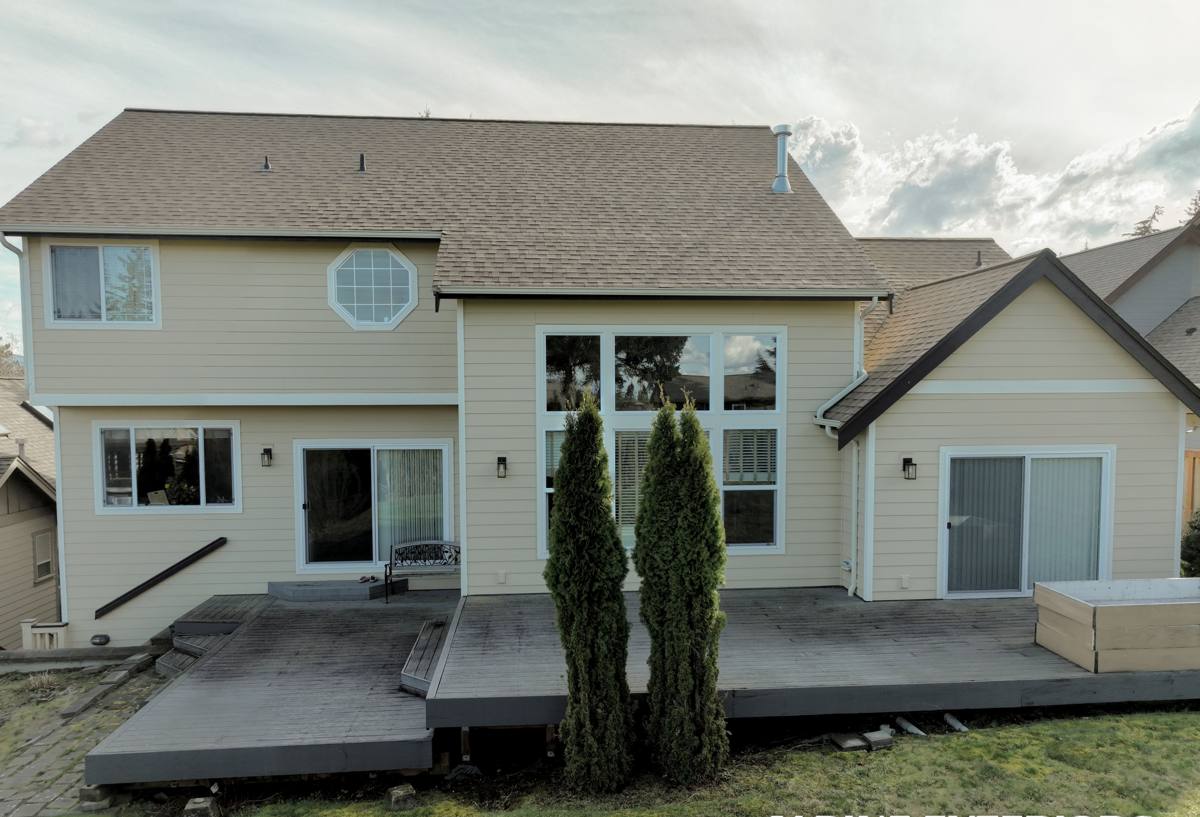
What Driving Rain, Salt Air, and Moss Actually Do to a Deck
It helps to understand the specific ways this climate attacks a structure, because it explains almost every decision we make on a build.
Moisture at the ledger and framing
Most deck failures don't start in the visible decking boards — they start where the deck attaches to the house, at the ledger board, and in the framing underneath. Driving rain doesn't fall straight down here; wind pushes it sideways and up under railings, over ledger flashing, and into any gap that wasn't sealed correctly the first time. Once water gets behind a ledger or into end-grain cuts on joists, it stays there, because airflow underneath most decks is limited. That's how you get rot in framing that looks fine from the top.
Salt air and metal hardware
Homes closer to Semiahmoo Bay and the broader Whatcom County waterfront deal with airborne salt that accelerates corrosion on anything metal — fasteners, joist hangers, railing brackets, and hinges. Wiser Lake sits back from the open water, but the same marine air mass moves through this whole region, just with a bit more tree cover and lake humidity mixed in. Standard zinc-coated screws and hangers that might last elsewhere start showing rust streaks and weakening well ahead of schedule out here.
Moss, algae, and lost traction
Shade, moisture, and mild temperatures are exactly what moss and algae need, and a long moss season means months of surfaces that stay damp instead of drying between rains. Beyond the cosmetic issue, moss and algae make decking genuinely slippery, and moss roots can hold moisture against a board's surface long enough to accelerate wear, especially on wood.
Choosing the Right Decking Material for This Area
There's no single "best" decking material — the right choice depends on how much maintenance you're willing to do, your budget, and how much sun or shade the deck actually gets. Here's how the common options hold up specifically against Wiser Lake's rain, salt air, and moss:
| Material | Moisture & Moss Behavior | Maintenance | Typical Lifespan Here |
|---|---|---|---|
| Pressure-treated wood | Absorbs moisture readily; needs sealing to resist moss growth and swelling | Annual cleaning, re-sealing every 1-3 years | 10-15 years with upkeep |
| Cedar | Naturally moisture- and insect-resistant, but still needs sealing to keep moss and graying at bay | Cleaning plus periodic oil or sealant | 15-20 years with upkeep |
| Composite decking | Doesn't absorb water or rot, but surface texture can still hold algae film if never cleaned | Periodic washing, no sealing or staining | 20-25+ years |
| PVC/capped polymer decking | Fully moisture-resistant surface and core; sheds water and resists moss the best of any option | Occasional washing only | 25+ years |
We're upfront about the trade-offs: composite and PVC cost more up front and the color/texture options are more limited than wood, but they remove the two biggest maintenance burdens in this climate — moisture absorption and moss adhesion. Wood costs less initially and has a warmer, traditional look, but it asks for real annual attention, and if that attention lapses for a year or two, moss and moisture damage compound quickly. Neither choice is wrong; it's about matching the material to how much deck maintenance you actually want to do.
What a Correctly Built Deck Involves
A deck that holds up here isn't about premium materials alone — the build details underneath matter as much or more. Here's what we treat as non-negotiable on every project:
- Ledger flashing done right: proper metal flashing integrated with the house's existing water-resistive barrier, not just caulked over — this is the single most common point of failure we find on older decks.
- Joist tape on framing: a self-adhering membrane over the tops of joists and beams so fastener holes don't become entry points for water into the wood.
- Corrosion-resistant fasteners and hardware: stainless steel or heavy-duty coated hardware rated for the moisture and salt exposure this region sees, rather than standard-grade screws and hangers.
- Footings sized and set for local soil and frost conditions: undersized or shallow footings are a common shortcut that shows up years later as a deck that shifts or settles unevenly.
- Airflow underneath: proper joist spacing and skirting design that doesn't trap moisture against the framing.
- Surface material and fastening pattern that account for expansion and contraction through wet winters and drier summers.
Skipping any one of these doesn't usually cause a visible problem in year one. It shows up in year five or six, as soft spots, rust stains, or a railing post that's gone spongy — the kind of damage that's expensive to fix because it means opening the deck back up.
Our Process for a Wiser Lake Deck Project
1. On-site visit and honest assessment
We walk the site, look at drainage, sun and shade exposure, existing structure if it's a rebuild, and how the deck will tie into the house. If you're replacing an old deck, we'll tell you plainly whether the substructure is salvageable or whether it makes more sense to rebuild from the footings up.
2. Design and material selection
We talk through decking material, railing style, and layout based on how you'll actually use the space, then put together a clear scope and price — no vague allowances that turn into surprise add-ons later.
3. Permitting
Most new decks and many deck rebuilds in Whatcom County require a permit, particularly once you're above a certain height off grade or attaching structurally to the house. We handle that process rather than leaving it for you to sort out.
4. Build
Footings, framing, ledger flashing and joist tape, decking, and railings, in that order, with each stage built to be inspected rather than covered up and hoped for.
5. Final walkthrough
We walk the finished deck with you, cover basic care for whatever material you chose, and make sure you know what routine maintenance looks like going forward.
Maintenance That Actually Matters in This Climate
Whatever material you choose, a few habits make the biggest difference in a climate with this much rain and moss pressure:
- Clean the surface at least once a year, and twice if the deck sits mostly in shade — a stiff broom and a deck-safe cleaner handles most moss and algae before it takes hold.
- Keep gutters and downspouts near the deck clear so runoff isn't dumping extra water onto or under the structure.
- Trim back overhanging branches and vegetation to let more light and airflow reach the surface.
- Check ledger flashing and any visible fasteners once a year for rust streaks or gaps in sealant.
- For wood decks, re-seal on the schedule the product calls for — don't wait until the wood looks gray and dry.
- Clear standing debris (leaves, needles) from between boards, especially before winter, since trapped organic matter holds moisture longest.
Repair, Rebuild, or Replace — What Actually Drives the Decision
Not every aging deck needs a full teardown. The right call usually comes down to what's happening at the structural level versus the surface level.
| Factor | Repair Likely Enough | Rebuild Usually Needed |
|---|---|---|
| Decking boards | A few cupped, cracked, or splintering boards | Widespread softness or rot across most boards |
| Framing/joists | Isolated surface staining, no soft spots | Soft or spongy joists, especially near the ledger |
| Ledger board | Flashing intact, no signs of water tracking down the house | Water staining on siding below the ledger, or a ledger that flexes |
| Footings | Deck is level and doesn't shift underfoot | Noticeable settling, tilting, or bounce |
| Railings/posts | Cosmetic wear only | Loose posts or rot at the base connection |
We'll always tell you when a repair is genuinely enough — there's no reason to pay for a full rebuild if the structure underneath is sound. But if the framing or ledger has been compromised, patching the surface just delays a bigger, more expensive repair later.
Why Hire a Crew That Already Works Wiser Lake
Deck building itself isn't unique to this area — the difference is knowing how a deck needs to be detailed to hold up against this specific combination of driving rain, salt-laden air, and a moss season that runs long. A crew that mostly builds in drier inland climates may not default to flashing details, hardware grades, or airflow considerations that matter here, simply because they haven't had to. We work in Semiahmoo and the surrounding Whatcom County communities regularly enough that these details aren't an upsell — they're just how we build every deck, because we've seen what happens to the ones that skip them.
Local experience also means a straighter conversation about permitting, realistic timelines around our wetter months, and material choices that are proven out in decks we've already built and maintained nearby, not just in a manufacturer's spec sheet.
Get a Straight Answer for Your Wiser Lake Deck
Whether you're planning a new deck, replacing one that's showing its age, or just want an honest read on whether a repair will hold, we're happy to take a look. Reach out for a free, no-pressure estimate using the form below — we'll walk the site, answer your questions plainly, and give you a clear picture of what the project actually involves.