 Semiahmoo Siding
 Why Window Installation in Ferndale Is Different From a Catalog Job
Any crew can pull an old window out of an opening and drop a new one in. Doing it right in Ferndale means accounting for what this stretch of Whatcom County actually throws at a house: salt-laden air drifting in off the water, wind-driven rain that doesn't just fall but pushes sideways into wall assemblies, and a long stretch of the year when moss, algae, and general dampness sit against every exterior surface that isn't shedding water well. A window that's correctly installed in a dry inland climate can still fail here in a few years if the flashing detail, sealant choice, or sill pan was an afterthought. We treat window installation in Ferndale as a water-management project first and a product-swap second.
That distinction matters because most window failures we get called out to inspect aren't glass failures — they're installation failures. Fogged insulated glass units, soft trim, staining below the sill, or a draft that wasn't there five years ago almost always trace back to how the window was flashed and sealed into the wall, not a defect in the window itself.
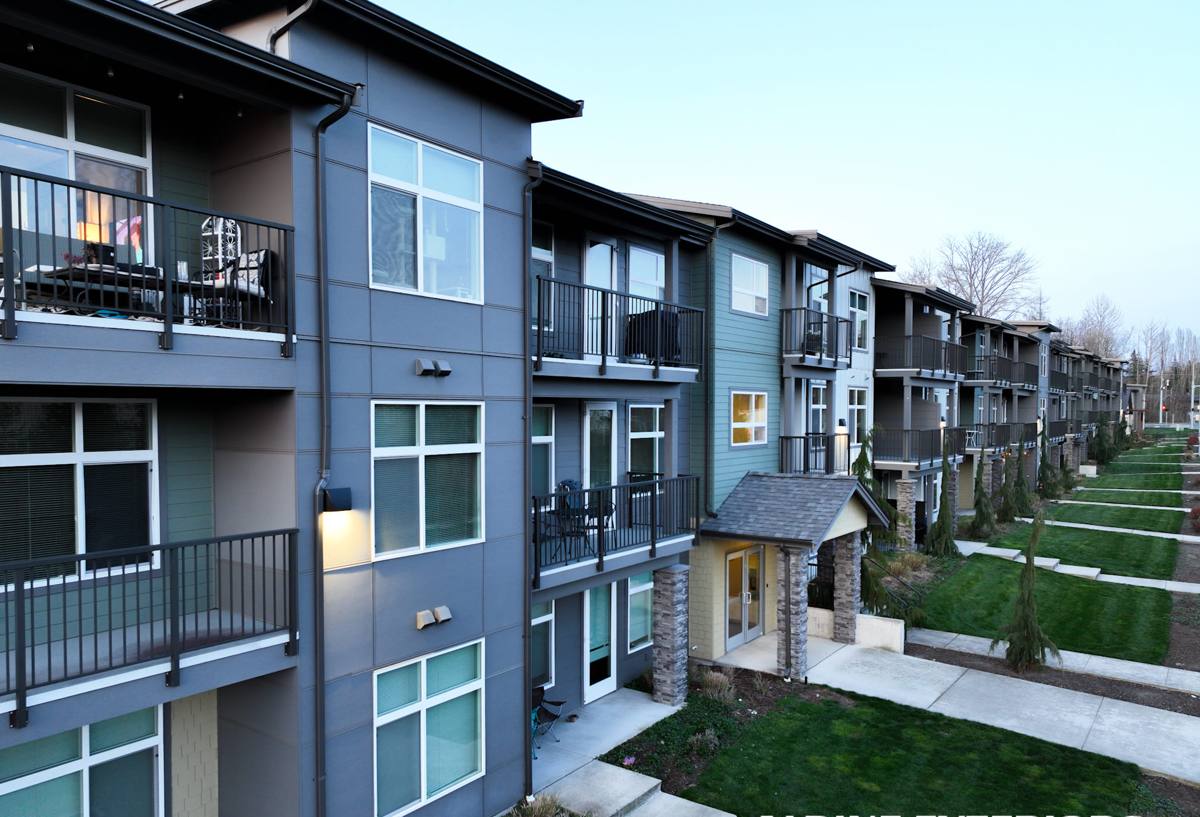
What Ferndale's Marine Climate Does to Windows Over Time
Ferndale sits close enough to the Salish Sea and Semiahmoo Bay that homes here deal with a genuinely different set of stresses than a house forty miles inland:
- Salt air corrosion — hardware, screen frames, and lower-grade fasteners can pit and corrode faster near the water, which is why fastener and hardware selection matters more here than in a dry inland install.
- Driving rain — wind off the water pushes rain horizontally against west- and southwest-facing walls, which means gravity alone won't keep water out of a poorly lapped flashing detail.
- Extended moss and algae season — Whatcom County's mild, wet stretch from fall through spring keeps siding, trim, and sills damp for long periods, which accelerates rot in any wood component that isn't properly primed, sealed, or protected by flashing.
- Condensation swings — cooler, humid air combined with temperature differences between indoor and outdoor surfaces can show up as condensation on interior glass or frames if a window's thermal performance doesn't match the home's conditions.
None of this means Ferndale is a hostile place to own a house — it just means the installation details that are optional in a drier climate are not optional here.
Full-Frame Replacement vs. Insert Replacement
One of the first decisions on any project is whether the existing window frame stays or goes. Both approaches are legitimate; the right call depends on the condition of what's already in the wall.
| Factor | Insert (Pocket) Replacement | Full-Frame Replacement |
|---|---|---|
| What's replaced | New window unit fits inside the existing frame | Old frame is removed down to the rough opening |
| Best used when | Existing frame is dry, square, and structurally sound | Frame shows rot, water staining, or the opening needs to change size |
| Access to flashing | Limited — relies on the original flashing still being sound | Full — flashing and sill pan can be rebuilt from scratch |
| Labor and cost | Generally lower | Generally higher, more disruption to interior/exterior finishes |
| Long-term risk in wet climates | Hides existing problems if the frame isn't actually sound | Lowest risk — every water-management layer is verified or rebuilt |
We'll tell you honestly which category a given window falls into. In a climate that sees as much driving rain as Ferndale does, we lean toward recommending full-frame work whenever there's any sign of past moisture intrusion — patching a new window into a compromised opening just delays the same problem.
Getting the Installation Right: Flashing and Water Management
This is the part of the job that doesn't show up in a finished photo but determines whether the window lasts fifteen years or fails in five. A correct installation, whether insert or full-frame, follows a shingle-lap sequence so every layer sheds water onto the layer below it, never up and behind it.
Sill Pans
The sill is the single most important detail on the window. We install a sloped, sealed sill pan under every full-frame replacement so that any water that does get past the exterior sealant has a way to drain back out instead of soaking into the framing below. This one detail prevents the majority of the rot damage we find when we open up an old window opening.
House Wrap and Flashing Tape Integration
The window's flange has to be integrated into the existing weather-resistive barrier in the correct order — side flanges, then head flashing lapped over the top, tied into the house wrap above so water is always directed outward and down, never trapped behind the siding. This sequencing matters more in Whatcom County's wet season than almost anywhere in the region.
Sealant Selection and Placement
Not every exterior sealant is rated for the temperature swings and UV exposure this climate produces. We use sealants suited to the specific substrate and location on the window, and we never rely on caulk alone to do a flashing detail's job — caulk is a backup layer, not the primary water barrier.
Choosing the Right Window for a Ferndale Home
Frame material, glass package, and hardware all affect how a window holds up here.
Frame Materials
Vinyl windows are a solid, cost-effective choice for most Ferndale homes and perform well in this climate when properly installed. Fiberglass frames cost more but resist expansion and contraction across temperature swings slightly better and hold paint well if you want a custom color. Wood-clad windows offer a traditional look but require more long-term maintenance attention on any exposed wood, which is a real consideration given how much of the year this area stays damp — we'll walk through that maintenance honestly rather than oversell a look that adds upkeep.
Glass Packages
Washington's energy code sets minimum performance standards for replacement windows, and homes near the water often benefit from upgraded glass packages beyond the minimum — better U-factor for heat retention and, in some cases, tempered or laminated glass where code requires it for safety glazing locations like near doors or low sills.
Hardware and Screens
Given the salt content in the air this close to the coast, we favor corrosion-resistant hardware and fasteners over standard-grade options. It costs a little more up front and saves you from stiff locks and pitted hinges a few years down the road.
Our Process From Estimate to Final Walkthrough
Every project follows the same sequence, whether it's one window or a whole-house replacement:
- On-site assessment — we inspect the existing openings, check for rot or past water intrusion, and take accurate measurements.
- Honest scope and quote — we tell you which openings are candidates for insert replacement and which need full-frame work, with reasoning, not upselling.
- Product selection — we walk through frame material, glass package, and hardware options that fit your home and budget.
- Installation — removal, any needed framing repair, sill pan and flashing installation, window setting, insulation, interior and exterior trim.
- Final walkthrough — we check operation, seals, and finish work with you before calling the job complete.
Permits, Codes, and Egress in Whatcom County
Window replacement projects in Whatcom County can require a permit depending on the scope of work, particularly if the rough opening size is changing or the work involves structural framing. Bedrooms also have egress requirements — minimum opening size and sill height — that matter if you're replacing a bedroom window, especially in older Ferndale homes where the original opening may predate current code. We handle the permit question directly with you at the estimate stage rather than leaving it as a surprise mid-project.
Checklist: What to Ask Before Hiring for a Window Project
- Will you use a full-frame replacement or insert, and why for this specific window?
- What does the sill pan and flashing detail look like on this job?
- What frame material and glass package do you recommend for a home near the water, and why?
- Is a permit required for this scope of work in Whatcom County?
- What's covered under warranty — the window manufacturer's warranty and your installation warranty?
- How do you handle any rot or damage found once the old window is removed?
Why a Crew That Already Works Ferndale Matters
A contractor who works this area regularly has already seen how the driving rain hits west-facing walls on Ferndale homes, how long moss season really runs, and what condition thirty- and forty-year-old window openings tend to be in by the time homeowners call. That's not a marketing point — it changes what we look for during the assessment and what we flag before the quote, instead of finding it mid-installation and turning it into a change order. It also means we're not guessing at what Whatcom County's permitting office expects.
If you're weighing whether it's time to replace aging windows or want a second opinion on a quote you've already received, we're happy to take a look and give you a straight answer. Reach out for a free, no-pressure estimate using the form below.