 Semiahmoo Siding
 Why Blaine Harbor Siding Has to Work Harder Than Most
Blaine Harbor sits right where Semiahmoo Bay meets the open water, and that location shapes everything about how a home's exterior ages here. Salt-laden air moves off the water and settles on siding, trim, and fasteners year-round. Winter storms push driving rain sideways into wall assemblies that were never designed to shed water horizontally. And because this corner of Whatcom County stays cool, damp, and shaded for long stretches of the year, moss and algae get a head start on siding that would stay cleaner a few hundred miles inland.
None of that is unusual for coastal Pacific Northwest construction — but it does mean the siding material and the installation details matter more here than they would on a dry-side home. A product that's marginal in a moderate climate becomes a real maintenance headache on a harbor-facing wall. That's the lens we use on every Blaine Harbor job: what does this specific wall face, and does the siding system actually hold up to it.
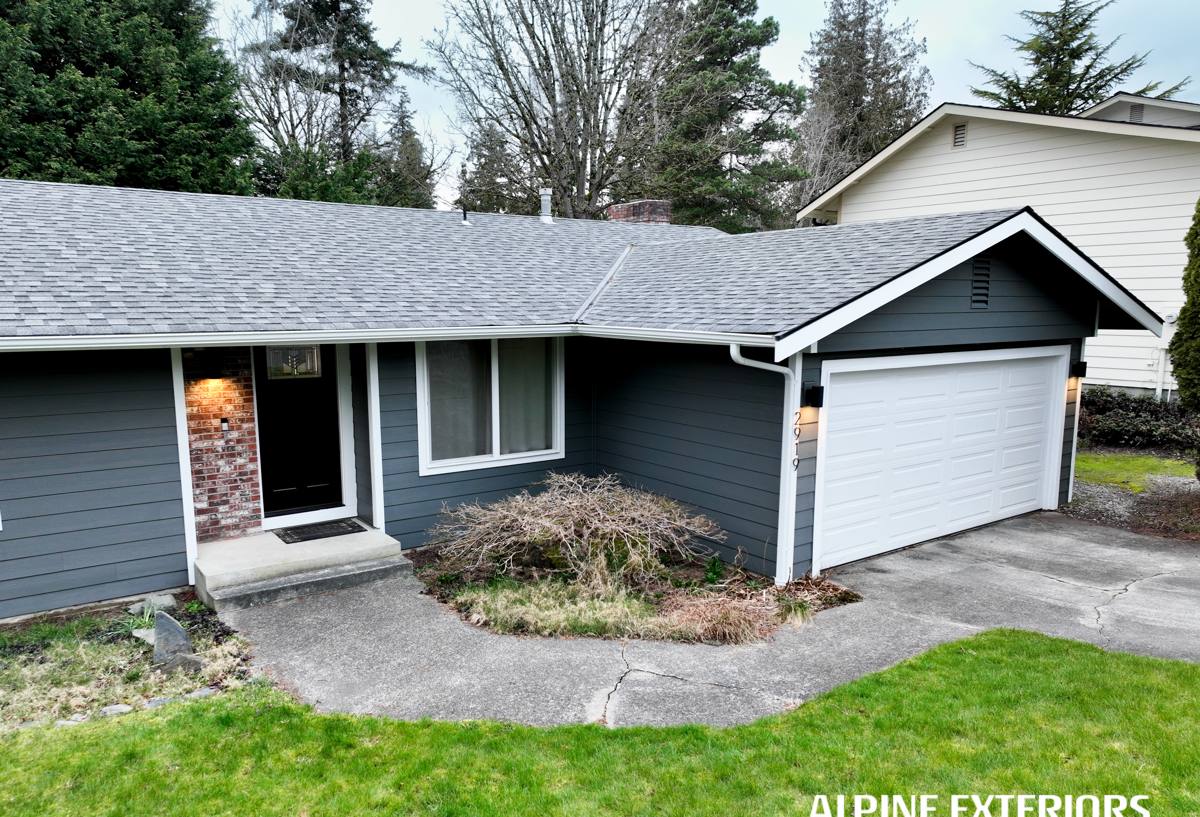
What Blaine Harbor Homes Are Up Against
Salt Air and Metal Fasteners
Airborne salt accelerates corrosion on anything ferrous — nail heads, flashing, trim fasteners. Siding systems that rely on exposed or under-protected fasteners tend to show rust streaks and loosening trim well before the field material itself fails. Correct fastener selection and placement matters as much as the siding panel itself in a harbor environment.
Driving Rain and Wall Assembly
Wind off the water doesn't just wet a wall — it drives moisture up under laps, around trim, and into any gap in the water-resistive barrier. A siding job that looks fine on a calm day can still be letting water behind the cladding during a January storm if the flashing details, house wrap laps, and joint sealing weren't done to spec.
Moss, Algae, and a Long Wet Season
Whatcom County's wet season runs long, and shaded or north-facing walls near Blaine Harbor can stay damp for weeks at a stretch. Materials that absorb moisture or have porous, uncoated surfaces give moss and algae something to grip. Over years, that turns into discoloration, surface breakdown, and — on wood-based products — rot at the points where moisture sits longest.
What Correct Fiber Cement Installation Involves
Fiber cement is only as good as the installation behind it. On Blaine Harbor homes, the details that separate a siding job that lasts from one that doesn't are almost all invisible once the project is done:
- A continuous, properly lapped water-resistive barrier behind the siding, with all penetrations flashed before panels go up
- Correct fastener type, length, and placement for the specific Hardie product and substrate — not a generic nail schedule
- Rain screen or drainage gap detailing where the wall assembly and exposure call for it, so any moisture that does get behind the cladding has somewhere to go
- Factory-cut and factory-primed edges kept intact, with field cuts back-primed or sealed per manufacturer spec
- Proper clearance from grade, roof lines, and hardscape so the bottom edge of the siding isn't sitting in standing water or splash-back
- Caulking and sealant only where the manufacturer specifies it — over-caulking traps moisture just as often as under-caulking lets it in
Every one of those steps is more consequential on a harbor-exposed wall than on a sheltered inland home. Skipping any of them doesn't usually cause a visible problem the first year — it shows up three, five, or ten years later as trim rot, streaking, or a section of siding that has to come off and get redone.
Why We Install James Hardie and Nothing Else
We standardized on James Hardie fiber cement for every job we do, including here in Blaine Harbor, and we don't install vinyl, LP SmartSide, or other fiber cement brands. That's a deliberate call, not a default. Hardie's fiber cement is non-combustible and dimensionally stable in a way that holds up to sustained damp exposure without the swelling or edge-softening that wood-based siding can develop over time. The ColorPlus factory finish is baked on under controlled conditions, which gives it better fade and moisture resistance at the surface than field-applied paint — a real advantage on a wall that spends a lot of the year wet.
Hardie also builds climate-specific HZ product lines engineered for different exposure zones, which lets us match the product to what a given wall in Blaine Harbor actually faces rather than installing the same panel everywhere. Combined with a strong transferable warranty when installed to spec, it's the system we're willing to put our name behind on a harbor-facing home.
| Factor | James Hardie Fiber Cement | Vinyl Siding | Wood-Based Siding (e.g. LP SmartSide) |
|---|---|---|---|
| Moisture behavior over time | Dimensionally stable, engineered HZ lines for wet climates | Doesn't absorb moisture, but can warp or gap with temperature swings | Engineered wood core can swell or degrade at cut edges and joints if exposure isn't managed |
| Salt air / coastal exposure | Non-combustible material, factory finish resists fading and staining | Can chalk and discolor faster in salt air | More sensitive to sustained moisture and salt exposure at unsealed edges |
| Moss/algae resistance | Dense, factory-finished surface is harder for growth to grip | Smooth surface, but seams and J-channels collect grime | More porous surface gives moss and algae more to hold onto |
| Fire resistance | Non-combustible | Combustible, can melt or deform near heat sources | Combustible |
| Installation sensitivity | High — must follow manufacturer flashing/fastening spec | Moderate — forgiving of minor gaps | High — edge sealing and moisture management critical |
Our Process for Blaine Harbor Projects
We start every Blaine Harbor estimate with a walk of the exterior focused on exposure — which walls take the worst of the weather off the bay, where existing trim or fascia already show early rust or staining, and where moisture is getting trapped behind or under the current siding. That assessment drives the material spec and detailing plan, not the other way around.
From there, the job runs in the same sequence on every home: remove existing siding and inspect the sheathing underneath for hidden rot or moisture damage, repair anything that needs it before covering it up, install a continuous water-resistive barrier with correctly lapped and taped seams, flash every window, door, and penetration, then install the Hardie panels or lap siding to manufacturer spec with the fastening and clearance details this climate calls for. We don't skip the sheathing inspection to save a day on the schedule — on a harbor home, what's happening behind the old siding is often more important than what the new siding looks like.
Maintenance Through a Long Moss Season
Fiber cement done right is low-maintenance, not no-maintenance. In Blaine Harbor, that means an annual rinse-down of shaded or north-facing walls before moss gets established, a look at caulk lines and trim joints for early separation, and prompt attention to any fastener that starts showing a rust streak. None of that is a big job if it's done on a yearly rhythm — it becomes a bigger job if moss and trapped moisture get a multi-year head start.
Choosing a Contractor for This Kind of Work
A siding crew that mostly works drier, inland jobs can still do a technically correct install and have it underperform on a harbor-facing wall, simply because the failure points are different here. Before hiring anyone for Blaine Harbor siding work, it's worth asking:
- Do they work coastal Whatcom County homes regularly, or is this an occasional job for them?
- Will they inspect and, if needed, repair sheathing before re-siding — not just cover over it?
- Can they explain their flashing and water-resistive barrier detailing in plain terms, not just "we follow code"?
- Are they installing to the manufacturer's written specification, including fastener schedule and clearances?
- Does their warranty cover workmanship separately from the manufacturer's material warranty, and is it actually transferable?
- Will they show you the specific Hardie product line recommended for your wall's exposure, and explain why?
A contractor who can answer those clearly, without hedging, is one who's actually thought about what this climate does to a house.
Get a Straight Answer for Your Home
Every Blaine Harbor property faces the harbor a little differently — sun, shade, wind exposure, and the age and condition of the current siding all factor in. If you'd like an honest look at what your home needs and a clear estimate for James Hardie siding done right, fill out the form below for a free, no-pressure estimate.