 Semiahmoo Siding
 Why Semiahmoo Resort Siding Takes a Different Approach
Semiahmoo Resort sits on a sand spit at the edge of Semiahmoo Bay, which means every home here deals with a combination of exposures that most Whatcom County neighborhoods don't see all at once: salt-laden air coming straight off the water, wind-driven rain that hits walls at an angle instead of just falling straight down, and a wet, shaded off-season that keeps moss and algae active for months at a time. Siding that would hold up fine a few miles inland can wear out early here if it wasn't chosen or installed with those conditions in mind.
We install James Hardie fiber cement siding exclusively, and Semiahmoo Resort is exactly the kind of location that shows why. This page walks through what the local climate actually does to a wall system, what a correct James Hardie install looks like for this specific area, and how our process is built around it.
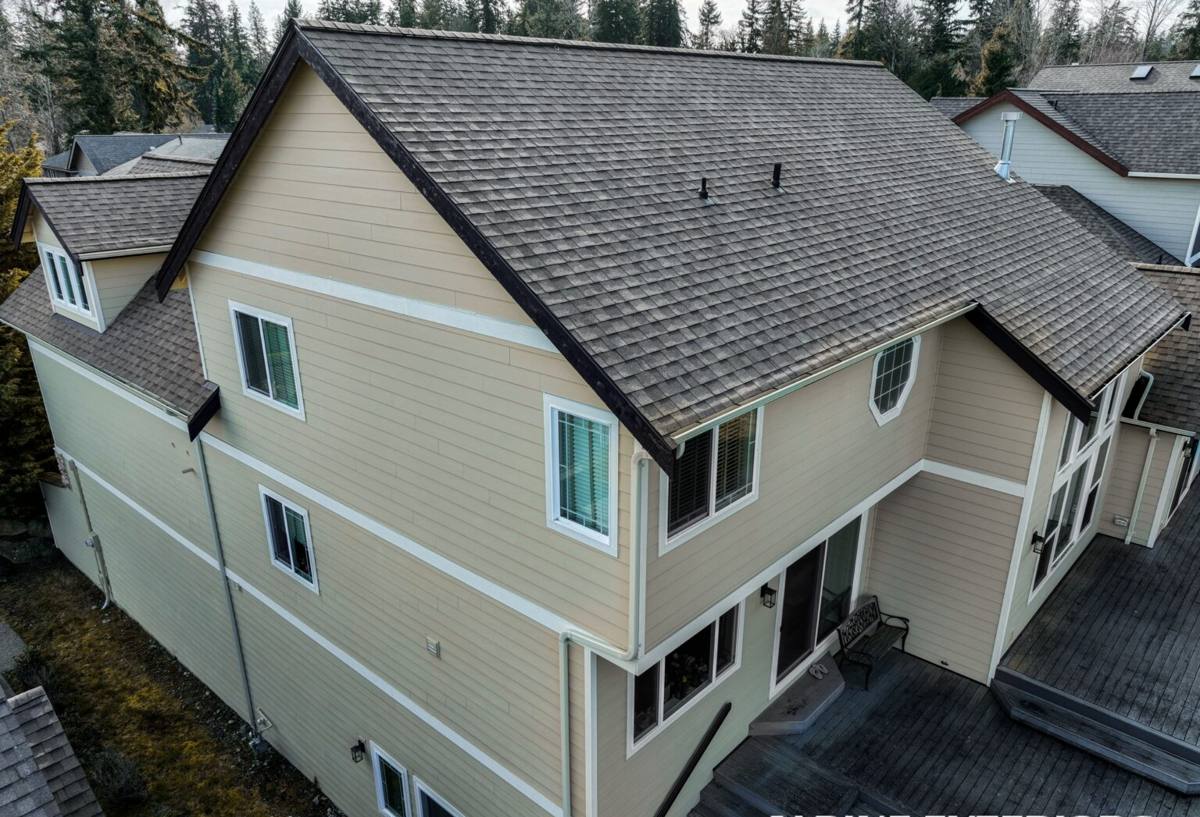
What Salt Air, Rain, and Moss Actually Do to a House
Salt Air and Corrosion
Airborne salt doesn't just sit on the surface of siding — it settles into fasteners, flashing, and any exposed metal trim. Over years, that accelerates corrosion in anything that isn't rated for coastal exposure. This is one reason fastener choice and flashing detail matter more here than in a typical inland Whatcom County install; the siding material itself can be perfect and the job can still fail early if the metal around it wasn't spec'd for salt exposure.
Driving Rain and Wall Assembly
Wind off the bay pushes rain sideways into walls rather than letting it run straight down and off. That means water finds its way into laps, seams, and butt joints that would stay dry in calmer conditions. A wall assembly here needs a water-resistive barrier, correct lap orientation, and properly sealed penetrations doing real work — not just sitting there as a formality.
The Long Moss Season
Semiahmoo Resort's tree cover, marine humidity, and shaded north- and west-facing walls create a moss and algae season that runs longer than it does in drier, sunnier parts of the county. Moss holds moisture against a wall surface, and on the wrong siding material that constant dampness can lead to swelling, softening, or paint failure over time. Siding needs a factory finish and a surface structure that resists organic growth and sheds water rather than holding onto it.
Why We Only Install James Hardie Here
We don't install vinyl, LP SmartSide, primed spruce, cedar, or other fiber cement brands. That's not a marketing position — it's a standard we hold because of what we've seen happen to alternative products in exactly this kind of coastal, wet-shade environment:
- Vinyl can warp and become brittle with UV and temperature swings, and its seams give wind-driven rain more opportunities to get behind the wall.
- Wood-based composite and primed spruce products are organic materials at their core — even with good coatings, sustained moisture exposure from a long moss season is exactly the condition that shortens their life.
- Cedar is a beautiful, legitimate material, but it demands a maintenance commitment (refinishing, moisture monitoring) that most homeowners underestimate, especially on a house that's damp for a large part of the year.
James Hardie fiber cement is non-combustible, dimensionally stable, and engineered to hold its factory-applied ColorPlus finish without the swelling or softening risk that comes with organic materials. It's not immune to bad installation — no product is — but it gives us a material that's built to handle salt, rain, and moss without the material itself being the weak point.
Choosing the Right Hardie Product for This Location
James Hardie makes climate-engineered HZ product lines, and for a bay-front, marine-exposure location like Semiahmoo Resort, product selection isn't a cosmetic choice — it affects how the siding performs over the long term.
| Product | Best Use at Semiahmoo Resort | Why It Fits |
|---|---|---|
| HardiePlank lap siding | Primary wall cladding, most home styles | Widest color and texture range; proven performance in wind-driven rain when installed with correct lap exposure |
| HardiePanel vertical siding | Accent walls, gables, modern or craftsman styling | Fewer horizontal laps means fewer water-entry points on high-exposure walls |
| HardieTrim boards | Corners, window and door surrounds | Resists the swelling and rot that wood trim faces in constant marine humidity |
| ColorPlus factory finish | All exposed surfaces | Baked-on finish resists fading and holds up better against salt air than field-applied paint |
For homes on the bay-facing side of the resort with more direct wind and salt exposure, we lean toward ColorPlus prefinished panels and boards specifically to avoid field-painted cut edges and joints becoming the first point of failure.
What a Correct Install Looks Like Here
Flashing and Water Management First
Before any siding goes up, the flashing details around windows, doors, and roof-to-wall transitions get set. In a driving-rain environment, this is where most long-term failures actually start — not in the siding material itself, but in gaps at penetrations that let water behind the water-resistive barrier.
Fastener and Hardware Selection
Given the salt air, we use fasteners and any exposed metal hardware rated for coastal/corrosive exposure rather than standard-grade materials. It costs a little more up front and avoids streaking, staining, and premature hardware failure down the road.
Clearances and Ventilation
James Hardie specifies minimum clearances between the bottom of the siding and grade, roof lines, and decks. Maintaining those clearances — and making sure the wall assembly behind the siding can dry out — is especially important in a location where the siding is wet more often than it's dry for large stretches of the year.
Caulking and Joint Treatment
Butt joints and terminations get sealed per Hardie's specifications with a quality sealant rated for the exposure. Skipping or shortcutting this step is a common cause of early moisture problems in coastal installs.
Our Process for Semiahmoo Resort Projects
- On-site assessment: We walk the home, note which walls face the water and prevailing wind, check existing moisture or moss patterns, and assess the current wall assembly.
- Product and color selection: We recommend specific Hardie products and ColorPlus colors based on exposure, not just aesthetics.
- Written scope and estimate: Clear breakdown of materials, flashing and water-management work, and labor — no vague allowances.
- Prep and flashing: Removal of old siding, inspection of sheathing for hidden damage, and correct flashing installation before any Hardie product goes up.
- Installation to manufacturer spec: Correct fastener pattern, clearances, lap exposure, and joint treatment for this climate.
- Final walkthrough: We review the finished work with you and go over any maintenance basics specific to your home's exposure.
What to Check Before Hiring Anyone for This Work
A lot of siding problems in coastal and high-moisture areas trace back to installation shortcuts rather than the material itself. Before hiring a contractor for a Semiahmoo Resort project, it's worth confirming:
- Are they James Hardie certified, and do they follow the manufacturer's published installation instructions rather than generic practices?
- Will they detail flashing and water management as part of the written scope, not just "siding replacement"?
- Do they use fasteners and hardware rated for coastal/salt exposure?
- Can they explain why they're recommending a specific Hardie product or line for your walls' exposure?
- Do they carry proper licensing and insurance for exterior work in Washington?
- Will the estimate be in writing, with materials and labor broken out?
Cost Factors for This Area
Every home is different, but a few things tend to move the price on Semiahmoo Resort projects specifically: the amount of existing damage found once old siding comes off (common on bay-facing walls with a history of moisture exposure), the amount of trim and detail work around windows and rooflines, and whether ColorPlus prefinished product or additional coastal-rated hardware is specified. We'll always walk you through what's driving the number before any work starts — no surprise add-ons mid-project.
Maintenance in a Marine Climate
James Hardie siding, installed correctly, is low-maintenance compared to wood or vinyl alternatives, but "low-maintenance" doesn't mean "no maintenance" in a location like this. A periodic rinse to keep salt residue and organic growth from building up, an annual look at caulking around penetrations, and prompt attention to any landscaping that's shading a wall and keeping it damp longer than necessary all go a long way toward getting the full lifespan out of the material.
If you're planning a siding project at Semiahmoo Resort, we're happy to come take a look, walk the exposure on your specific home, and put together a clear, no-pressure estimate. There's a form below — reach out and we'll get you scheduled.