 Semiahmoo Siding
 The Climate Ferndale-Area Siding Has to Survive
Homes around Ferndale sit close enough to Semiahmoo Bay and the Strait of Georgia that the marine air reaches every wall, even on lots that feel tucked away from the water. That air carries salt, and salt is hard on exterior building materials in ways that aren't always obvious until years in: it accelerates corrosion on exposed fasteners, breaks down cheaper paint films faster than inland weathering would, and works its way into any seam or crack that isn't sealed correctly.
Add to that the driving rain that comes through Whatcom County on a west or southwest wind — rain that doesn't just fall, it gets pushed sideways into wall assemblies — and you have two forces working against siding at once: moisture intrusion and surface breakdown. Then there's moss season, which in this part of Washington runs long. Shaded north walls, tree-lined lots, and the region's mild, wet winters give moss and algae months to establish themselves on any siding surface that holds moisture, and once established, they hold even more moisture against the wall behind them.
None of this means siding is doomed here. It means repairs have to be done with this specific combination of stressors in mind, not treated like a generic patch job that would work fine in a drier climate.
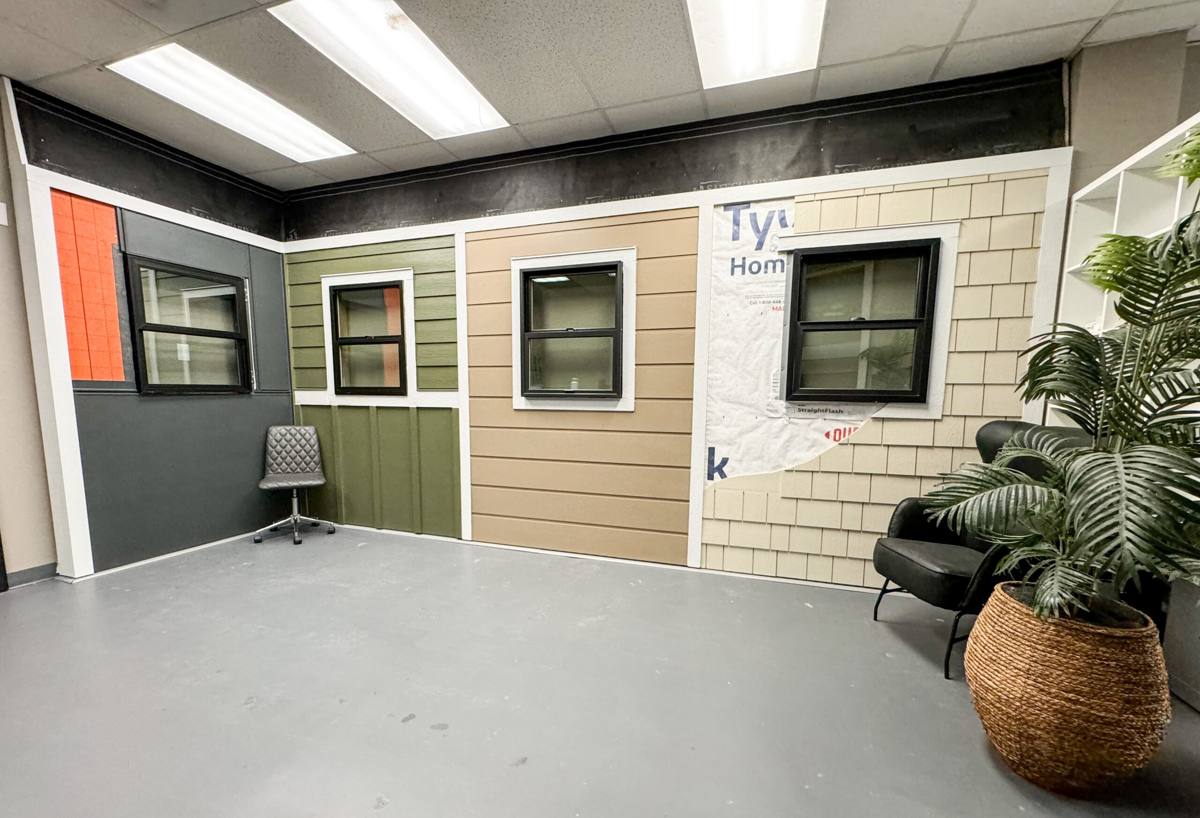
Signs Your Siding Needs Repair
Most siding problems in this area show up gradually, and homeowners often notice the cosmetic symptom — a stain, a discoloration — long before they notice the underlying cause. Here's what we tell Ferndale-area homeowners to watch for between routine looks at the exterior:
- Soft or spongy spots when you press on a section of siding, especially near the bottom courses or around windows and doors
- Visible cracking or splitting at butt joints, where two boards meet end to end
- Paint that's peeling or bubbling in isolated patches rather than uniformly across a wall
- Moss or algae staining concentrated on shaded or north-facing walls that keeps coming back after cleaning
- Gaps opening up at trim boards, corner boards, or window casings
- Water stains or musty smells on interior walls that back up to exterior siding
- Boards that came loose, cracked, or blew off during a windstorm and were never properly reset
Any one of these on its own might be minor. Several appearing in the same area of the house usually means water has been getting behind the siding for a while, and the visible damage is the tail end of a problem that started underneath.
What Goes Wrong When Repairs Are Done Wrong
A lot of siding "repairs" in this climate are really just cosmetic cover-ups, and they tend to fail fast here because the underlying stressors — salt air, wind-driven rain, sustained moss growth — don't let up. The most common shortcuts we see:
Caulk-only patches. Filling a crack or gap with caulk without addressing why it opened up in the first place. Caulk isn't structural, and in a climate with this much moisture cycling, it's a temporary fix at best.
Painting over rot. A fresh coat of paint can make a soft board look fine for a season, but it doesn't stop decay that's already underway — it just hides it until the problem is bigger and more expensive.
Wrong fasteners or fastening pattern. Using the wrong nail type, spacing, or depth can look identical to correct work on day one and fail within a couple of winters, especially with the corrosive push from salt-laden air.
Ignoring the water's actual entry point. Replacing a damaged board without checking the flashing, trim, or house wrap behind it means the same failure comes back in the same spot.
What a Correct Siding Repair Involves
Diagnosing the Real Problem First
Before any board comes off, a correct repair starts with figuring out why that section failed. That usually means checking moisture levels in the sheathing behind the siding, inspecting flashing at windows, doors, and any penetrations, and looking at how water has actually been moving — not just where it ended up. Skipping this step is how the same repair ends up needed again two or three years later.
Matching Materials and Finish
Once the cause is addressed, the repair itself needs to match the existing siding in profile, reveal, and finish as closely as possible. Mismatched board width or a visibly different paint sheen turns a repair into an eyesore even when the underlying work is sound. For factory-finished products, this means sourcing matching color and texture rather than field-painting a patch that will weather differently than the surrounding siding over time.
Proper Sealing and Fastening
Correct flashing details, appropriate sealant at the right joints (and no sealant at joints that are supposed to drain), and fasteners rated for the material and exposure all matter more here than in a milder inland climate. This is where a lot of quick patch jobs fall short — the visible fix looks right, but the water management behind it doesn't.
Repair Considerations by Siding Material
What a repair actually involves — and how well it holds up afterward — depends heavily on what the siding is made of. Here's how the materials we most commonly encounter on Ferndale-area homes compare when it comes to repair work in this climate:
| Material | Common Failure Mode Here | Repair Difficulty |
|---|---|---|
| James Hardie fiber cement | Rare structural failure; issues usually trace to caulking or flashing details, not the board itself | Straightforward — factory ColorPlus finish and consistent board profiles make matching easier |
| Cedar | Moisture absorption, cupping, and rot, especially on shaded or poorly ventilated walls | Moderate to difficult — matching grain and weathered tone takes skill, and rot often extends past the visible damage |
| LP SmartSide (engineered wood) | Edge swelling and delamination where moisture gets into cut ends or seams | Moderate — sound in dry conditions, but repairs need careful sealing of every exposed edge |
| Vinyl | Cracking and brittleness from UV and temperature cycling, plus panels popping loose in wind | Easy to replace a panel, but exact color match gets harder as the rest of the siding fades with age |
This is part of why our crew installs only James Hardie fiber cement going forward — not because other materials can't be repaired, but because the repair burden over a home's life tends to be lower with a product engineered for exactly this kind of coastal, wet climate.
Our Repair Process
- Initial call and estimate. We talk through what you're seeing and schedule an on-site look — no pressure, no obligation.
- On-site diagnosis. We inspect the affected area and check for moisture intrusion, looking beyond just the visibly damaged boards.
- Written scope of work. You get a clear explanation of what's actually wrong, what we're going to do about it, and what it will cost — before any work starts.
- Repair day. We remove damaged material, address the underlying cause, and install matching siding with correct flashing and fastening.
- Walkthrough and cleanup. We review the finished repair with you and leave the site clean.
Repair or Replace? Cost Factors to Weigh
Not every siding problem calls for full replacement, and not every problem is fixable with a targeted repair. These are the factors that usually tip the decision one way or the other:
| Factor | Leans Toward Repair | Leans Toward Replacement |
|---|---|---|
| Extent of damage | Isolated to one or two areas | Spread across multiple walls or elevations |
| Age of existing siding | Relatively new, otherwise sound | Nearing or past its expected service life |
| Underlying material | Material handles moisture well overall | Material is prone to repeat failure in this climate |
| Moisture history | First occurrence, clear single cause | Recurring issues in the same or multiple areas |
| Color and finish match | Replacement material still available and matchable | Original product discontinued or too weathered to match |
We'll always tell you honestly which side of this table your home falls on — our goal is the right fix for the actual problem, not the biggest possible job.
Why a Crew That Already Works Ferndale Matters
Siding repair is one of those jobs where local familiarity actually changes the outcome. A crew that regularly works this stretch of Whatcom County has already seen how the salt air, wind exposure, and moss patterns specific to this area show up on real homes — which walls tend to fail first, what moisture damage typically looks like once it's found, and how the local building styles common here were originally put together. That background means less guesswork during diagnosis and a repair that's built for how this specific climate actually behaves, not a generic approach imported from somewhere drier.
There's also the practical side: a local crew can get to a Ferndale-area home for an estimate and for the repair itself without the overhead of a long-distance mobilization, and stands behind the work because we're still going to be working in this community next year and the year after.
When Repair Isn't the Long-Term Answer
Sometimes a diagnosis makes the honest answer clear: the siding itself is fighting the climate it's in, and repair after repair is just delaying a replacement that's coming either way. That's usually the case with materials that depend on paint film integrity or resist moisture poorly once a seam opens — repeated repairs on the same wall are a signal, not a solution.
When that's the conversation, our recommendation is James Hardie fiber cement, specifically the HZ5 product line engineered for wetter, more marine-influenced climates like this one. It's non-combustible, holds its factory ColorPlus finish far longer than field-applied paint, and comes with a strong transferable warranty — which matters on a coastline where salt air and driving rain don't take a season off. We won't push a full replacement when a repair will genuinely hold; we'll only recommend it when the material history points that direction.
If you're seeing damage, discoloration, or repeated problem spots on your Ferndale-area home's siding, we're happy to take a look and give you a straight answer about what it actually needs. Reach out for a free, no-pressure estimate using the form below.