 Semiahmoo Siding
 Siding Installation for Ferndale Homes
Ferndale sits in the same stretch of Whatcom County we already work regularly out of Semiahmoo, and homes here deal with the same basic weather pattern: salt-laden marine air moving in off Puget Sound, long stretches of driving rain through fall and winter, and a moss and mildew season that barely lets up between wet spells. Siding is the first line of defense against all of that, and it's also the exterior system most likely to get installed with shortcuts that don't show up as a problem until years later.
We install James Hardie fiber cement siding, and only James Hardie fiber cement siding, on every home we work on — including the Ferndale properties on our schedule. This page walks through what Ferndale's climate actually asks of a siding system, what a correct installation involves, and how our process works when we take on a siding project in this area.
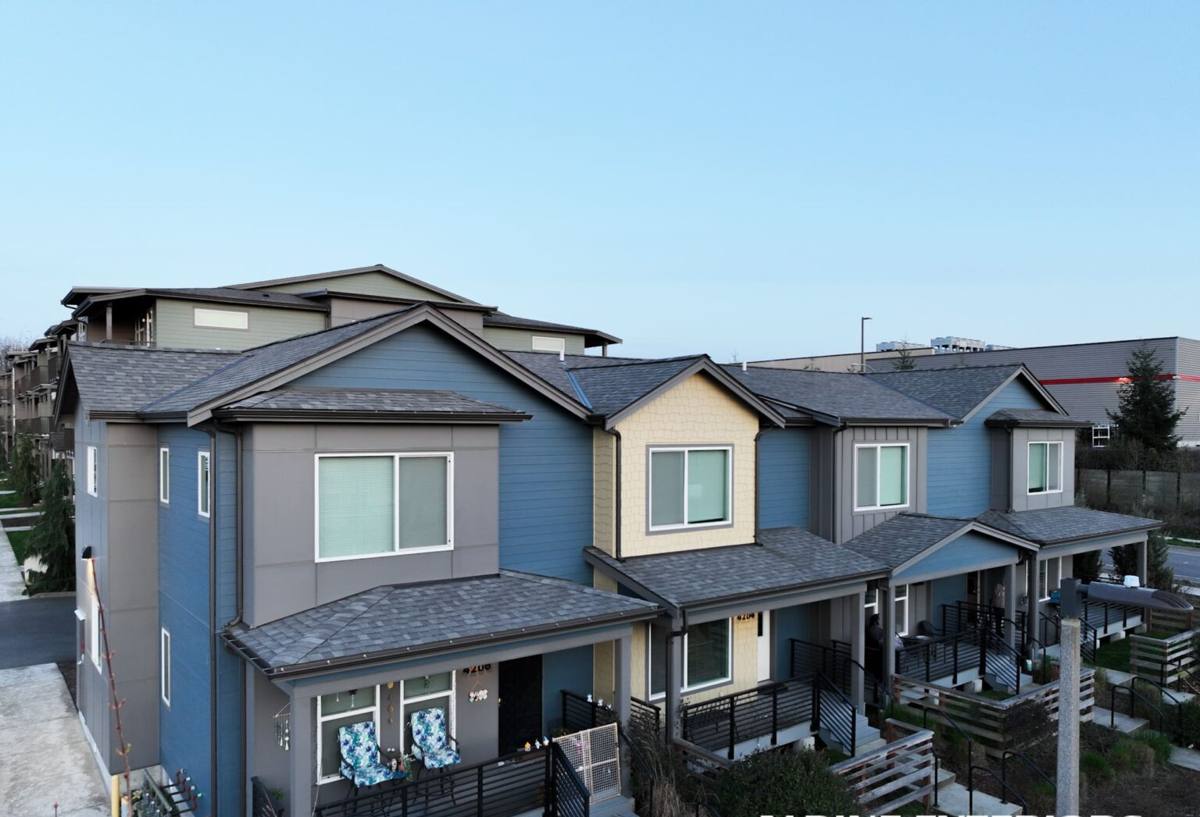
What This Climate Asks of Ferndale Siding
Salt Air and Marine Moisture
Whatcom County's proximity to Puget Sound means homes throughout the region, Ferndale included, deal with salt-carrying marine air more often than homeowners further inland realize. Salt accelerates corrosion in fasteners and trim, and it breaks down lower-grade paints and finishes faster than a drier climate would. A siding system that isn't built and finished to handle that exposure starts showing it in the form of fading, chalking, and rust streaks well before it should.
Driving Rain
Wet-season storms in this part of Washington regularly come with real wind behind them, and wind-driven rain behaves differently than a straight-down shower. It gets pushed into laps, joints, and butt seams with enough force to find gaps that would never leak in calmer weather. That's why the small installation details — how panels are lapped, how joints are sealed, how flashing ties into the siding — matter as much as the siding material itself.
A Long Moss and Mildew Season
Mild, humid weather for most of the year gives moss and mildew a long runway in Whatcom County, and Ferndale's tree cover and shaded lots don't shorten it. North-facing walls and anything tucked under overhangs or mature landscaping tend to show growth first. Porous or moisture-retentive siding materials give moss and mildew something to hold onto; a dense, factory-finished material gives them a lot less to work with.
Why We Install Only James Hardie Fiber Cement
We don't offer a menu of siding brands and let homeowners pick based on price. We install one product system because we've seen, across enough jobs in this climate, which materials actually hold up and which ones create maintenance problems for the homeowner a few years down the road. That's the reasoning behind refusing to install LP SmartSide, vinyl siding, Cemplank, Allura, primed spruce, or cedar, even though each of those products has its place in the broader market.
- Non-combustible fiber cement core: It doesn't feed a fire the way wood-based siding can, which matters for safety and often for insurance underwriting.
- Factory-applied ColorPlus finish: The color is baked on under controlled conditions rather than brushed on in the field, and it resists fading and chalking far longer than site-applied paint in a marine, UV-heavy climate.
- Climate-engineered HZ formulations: Hardie builds its HZ5 product line specifically for regions with heavy moisture exposure and freeze-thaw cycling, which describes western Whatcom County well.
- Dimensional stability: Fiber cement doesn't swell, cup, or warp the way engineered wood siding can after repeated wetting over a long rainy season.
- A strong transferable warranty: Hardie backs the product with a substantial warranty as long as it's installed to their published spec, and that warranty can transfer if the home sells.
None of that means other products are worthless. It means that on Ferndale homes exposed to this specific combination of salt air, driving rain, and a long wet season, we'd rather stand fully behind one system we trust than offer a cheaper alternative and quietly hand the long-term maintenance risk to the homeowner.
What a Correct Siding Installation Actually Involves
Fiber cement only performs the way it's engineered to when it goes on correctly. A quality product installed loosely will still develop moisture problems in this climate — the material is only as good as the crew behind it. A correct James Hardie installation includes:
- Fastener type, size, and spacing that match Hardie's published installation specifications, not generic siding nailing patterns
- Proper clearance between the bottom edge of the siding and grade, roof lines, decks, and patios to keep splash-back and standing moisture away from the material
- A drainage plane or rain-screen detail behind the panels so any moisture that does get past the siding has somewhere to go
- Correctly lapped and sealed joints, with factory-mitered corners where the design calls for them instead of field-cut butt joints
- Flashing at windows, doors, and any wall penetration that ties properly into the siding's drainage plane rather than just being caulked over
Where Shortcuts Show Up First
Skipped rain-screen detailing, wrong fastener spacing, and poorly sealed joints rarely cause a visible problem in year one. They show up two, three, or five years later as moisture staining, soft trim, or a section of siding that's failing while the rest of the wall looks fine. By the time it's visible, the fix usually involves opening up the wall assembly, not just replacing a board.
Comparing Siding Materials in Ferndale's Climate
| Material | Moisture Behavior | Maintenance in This Climate | Typical Longevity Here |
|---|---|---|---|
| James Hardie fiber cement | Dimensionally stable, resists swelling and warping | Low; factory finish resists fading, chalking, and moss | 30+ years with correct installation |
| Vinyl siding | Can distort or warp with temperature swings; seams are exposure points | Low upfront cost, but limited repair options once damaged | Variable; shorter in exposed, wind-driven-rain locations |
| LP SmartSide / engineered wood | Wood-based core is moisture-sensitive at cut edges and joints | Moderate; edge sealing and caulk upkeep matter over time | Depends heavily on installation quality and upkeep |
| Cedar / primed wood | Absorbs and releases moisture readily | High; needs regular refinishing in a wet marine climate | Shorter without consistent, ongoing maintenance |
Our Siding Installation Process for Ferndale Homes
Assessment and Scope
We start with an on-site look at the existing siding and the wall assembly behind it, wherever that's accessible, so we understand what condition the home is actually in before we talk about replacement. From there we put together a clear, written scope covering the Hardie product line, profile, and color, along with the flashing and drainage detailing the job needs.
Prep and Tear-Off
Existing siding comes off in sections rather than all at once where practical, which limits how long the wall assembly is exposed to weather during the project. We check the sheathing and framing underneath for hidden moisture damage before anything new goes up, since covering a problem instead of fixing it just guarantees it resurfaces later.
Installation
We install to Hardie's published specifications: correct fasteners, proper clearances, rain-screen or drainage detailing where the assembly calls for it, and flashing that integrates with the siding rather than sitting on top of it. Joints and corners get the attention that a marine, wind-driven-rain climate demands, not just a quick caulk pass.
Final Walkthrough
Before we call a job finished, we walk the exterior with the homeowner, point out anything worth knowing about the new siding, and go over care and warranty basics. A Hardie installation done to spec shouldn't need much from the homeowner beyond normal exterior upkeep, but it's worth knowing what that upkeep looks like.
Why a Crew That Already Works Ferndale Matters
A contractor who regularly works this stretch of Whatcom County already has a feel for how salt air, wind-driven rain, and a long moss season play out on real homes here, not just in a spec sheet. That shows up in small decisions — how much clearance to leave at grade, where to add extra drainage detailing, which fastener grade to use on a shaded, moisture-prone wall — and those decisions are what separate a siding job that looks fine on day one from one that still performs a decade later. Crews unfamiliar with this specific climate sometimes apply installation habits from drier regions, and the gaps in that approach tend to surface as moisture problems a few wet seasons in.
A Checklist Before Hiring a Siding Contractor in Ferndale
- Ask what siding material they install, why they chose it, and whether they'll stand behind it with a written warranty
- Confirm current Washington contractor licensing and active liability insurance
- Ask specifically how they handle rain-screen or drainage detailing, not just whether the siding is "installed to code"
- Ask about fastener spacing and clearance at grade, roof lines, and other transitions
- Get a written scope of work, including product line, profile, and color, before signing anything
If your Ferndale home needs new siding or you're weighing whether an aging system is worth repairing versus replacing, we're happy to take a look and give you an honest read on what it needs. Reach out below for a free, no-pressure estimate.