 Semiahmoo Siding
 Why Ferndale Decks Wear Out Faster Than Homeowners Expect
Ferndale sits close enough to the water and to the marine weather patterns that move through Whatcom County that decks here take a different kind of beating than decks a hundred miles inland. It isn't one dramatic event that ends a deck's useful life — it's the accumulation of small, ongoing exposure. Salt-laden air off the Strait of Georgia and Semiahmoo Bay corrodes fasteners and metal connectors from the inside out, often long before the visible wood shows serious damage. Driving rain, which this area gets in long stretches rather than short bursts, works its way into every joint, seam, and screw hole that isn't properly flashed or sealed. And the region's mild, damp winters create a moss season that can run from late fall well into spring, holding moisture against deck boards and structural framing for months at a time.
None of these factors are dramatic on their own. Together, over ten or fifteen years, they're why a deck that looks "mostly fine" from a distance can have failing ledger connections, rotted joists, or corroded hardware underneath. A deck replacement done for this climate has to account for all three — salt exposure, sustained rain, and moss — not just replace boards and call it done.
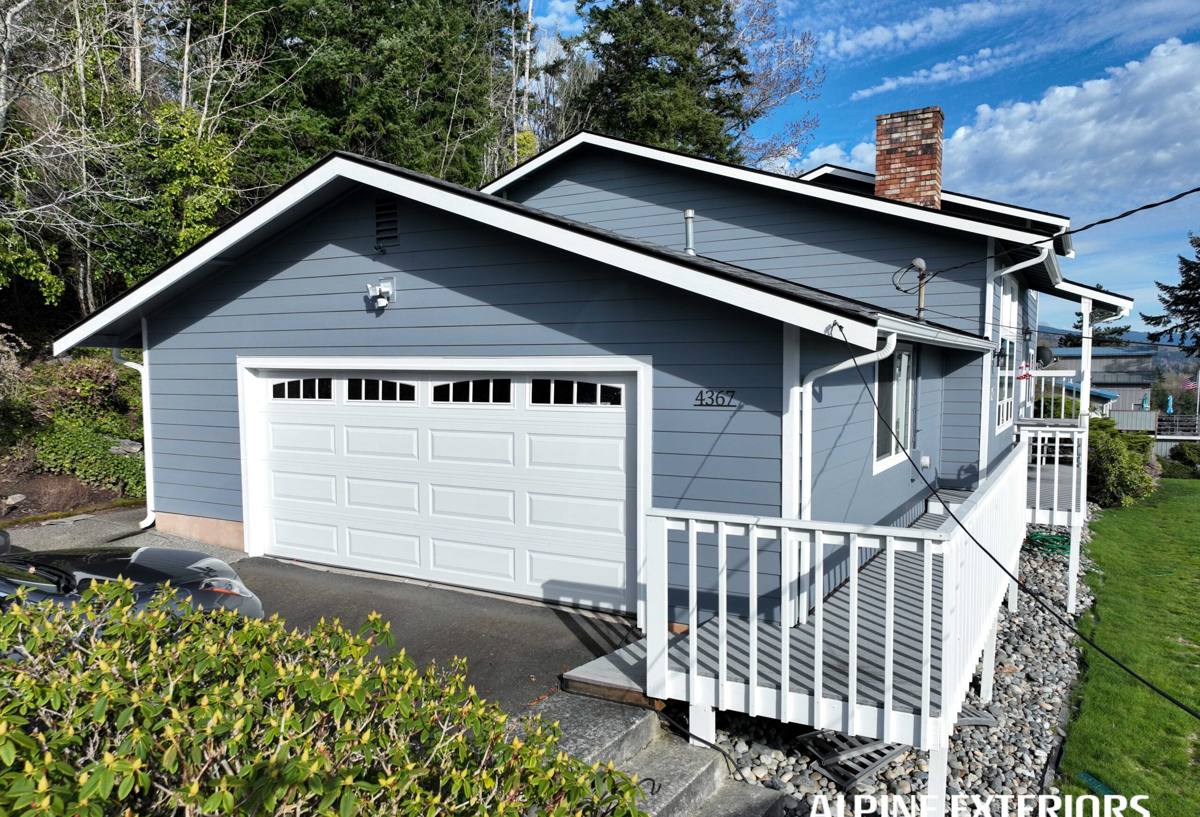
Signs a Ferndale Deck Needs Replacement, Not Just Repair
Not every aging deck needs a full rebuild. But there's a point where patching boards stops being a real fix and starts being a way to delay an inevitable, larger cost. Some signs point clearly toward replacement:
- Soft, spongy, or spalling wood at the ledger board (where the deck attaches to the house) — this is a structural safety issue, not cosmetic
- Visible rust streaking from joist hangers, bolts, or screws, which signals corrosion is already underway inside the connection
- Persistent moss or algae growth that returns within weeks of cleaning, indicating the deck isn't draining or drying properly
- Boards that have cupped, split, or separated from fasteners across a large portion of the deck rather than in a few isolated spots
- A deck built without proper flashing at the house connection, which is common in older Whatcom County homes built before current best practices were standard
- Railings or stairs that flex, wobble, or feel less solid than they did a few years ago
If only one or two of these apply and they're contained to a small area, repair may be reasonable. When several apply, or when the ledger and framing are involved, replacement is almost always the more honest recommendation.
What a Correct Deck Replacement Actually Involves
It starts below the decking, not at it
The decking boards are the part everyone sees, but they're the last thing installed, not the first thing that matters. A proper replacement in this climate starts with the ledger flashing — the metal or membrane detail that keeps water from getting behind the house's siding at the point where the deck attaches. This is one of the most common failure points we see on older Ferndale decks, and it's invisible until something goes wrong with the siding or framing behind it.
Fasteners and hardware matter more here than in drier climates
Given the salt air and near-constant moisture, we use fasteners and structural connectors rated for coastal or wet-climate exposure — not the standard hardware that's fine in a dry inland region but corrodes prematurely here. This is a small line-item cost difference that has an outsized effect on how long the structure underneath the decking actually lasts.
Footings and framing need real inspection, not assumption
Because moisture sits against framing longer in this climate's moss season, we check footings, posts, and joists for rot and movement rather than assuming they're sound just because the decking above them looked fine. Replacing boards over compromised framing is a common shortcut that only pushes the real problem a few years down the road.
Choosing Decking Material for a Marine Climate
There's no single "best" decking material — there's a best material for this climate and this budget. Here's how the common options compare for a Ferndale property:
| Material | Moisture & Moss Resistance | Maintenance | Typical Lifespan |
|---|---|---|---|
| Pressure-treated wood | Fair — needs sealing to perform well | Annual cleaning and periodic sealing | 10–15 years |
| Cedar | Good natural resistance, but softens over time in constant damp | Regular cleaning, staining every few years | 15–20 years |
| Composite | Very good — resists rot and moss growth well | Occasional washing, no sealing or staining | 25–30 years |
| PVC / capped polymer | Excellent — fully resists moisture absorption | Low — washing only | 25–30+ years |
Wood decking isn't a wrong choice — plenty of homeowners prefer the look and cost, and it holds up fine with realistic maintenance expectations. But we're upfront that in a climate with this much sustained moisture and moss pressure, wood asks more of the homeowner over time: more cleaning, more sealing, more attention to which board shows the first sign of trouble. Composite and PVC cost more upfront but shift that maintenance burden down significantly, which is why they've become the more common choice for replacement decks in this area over the last several years.
Our Deck Replacement Process
- On-site assessment — we inspect the existing deck's framing, ledger connection, footings, and hardware, not just the surface boards, so the estimate reflects what's actually there
- Honest scope of work — we tell you plainly whether you need a full structural rebuild or whether the framing is sound enough to keep while replacing decking and railings
- Material selection — we walk through the tradeoffs above based on your budget and how much maintenance you want to take on
- Removal and structural correction — old decking, and any compromised framing or flashing, comes out completely rather than being built around
- Rebuild with climate-appropriate materials — coastal-rated fasteners, correct ledger flashing, proper spacing for drainage and airflow underneath
- Final walkthrough — we go over the finished deck with you, including basic maintenance expectations for the material you chose
Permits and Local Considerations
Deck replacement projects in Whatcom County, including in the Ferndale area, often require a permit — particularly when the project involves structural framing, footings, or a deck attached at a certain height or size. Requirements can vary depending on the specific jurisdiction and the scope of work, so we handle that determination as part of the estimate rather than leaving homeowners to sort it out themselves. Skipping a required permit isn't a shortcut worth taking — it can create real problems at resale and with insurance if something goes wrong later.
What Affects the Cost of a Deck Replacement
| Factor | Why It Matters |
|---|---|
| Deck size and shape | More square footage and complex angles mean more material and labor |
| Decking material chosen | Composite and PVC cost more upfront than wood but reduce long-term maintenance |
| Condition of existing framing | Rotted joists, posts, or footings add cost if they need replacement, not just the visible decking |
| Height and railing requirements | Taller decks or code-required railing changes add labor and material |
| Stairs and multiple levels | Each added element increases both material and installation time |
| Permit and inspection requirements | Structural work typically requires permitting, which adds time but protects the homeowner |
We don't publish a flat price because these factors genuinely change the number from one property to the next — a straightforward flush-to-grade rebuild is a very different project than a raised deck with stairs and new railings. What we can offer is a clear, itemized estimate after we've actually looked at your deck.
Keeping a New Deck Performing in This Climate
Whatever material you choose, a few habits go a long way in a climate with this much moss pressure and rain:
- Sweep leaves and debris off the deck regularly, especially in fall — trapped organic matter is what feeds moss and mildew
- Rinse the surface periodically to prevent algae and moss from getting a foothold, particularly on shaded sections of the deck
- Check that gaps between boards stay clear so water can drain instead of pooling
- If you chose wood, plan on resealing on the schedule appropriate to that product rather than waiting until it visibly needs it
- Have fasteners and railings checked periodically, since corrosion in coastal air can happen before it's visually obvious
Why Local Experience on This Specific Work Matters
A deck replacement done by a crew unfamiliar with this region's conditions often looks fine for the first year or two and then starts showing problems that a Whatcom County-experienced crew would have designed around from the start — the wrong fastener grade, a ledger flashing detail that wasn't sized for this much sustained rain, decking spaced too tight for the moss and drainage realities here. Working regularly in Ferndale and the surrounding Semiahmoo area means we're not guessing at how this climate behaves on a deck over time — we're building to what we've actually seen hold up and what we've seen fail.
If your deck is showing its age, or you're just not sure whether it needs repair or full replacement, we're happy to take a look and give you a straightforward assessment. Reach out for a free, no-pressure estimate using the form below.