 Semiahmoo Siding
 Building New in Ferndale Means Building for Whatcom County Weather
Ferndale sits close enough to Semiahmoo Bay and the Strait of Georgia that new construction here deals with a different set of conditions than a build twenty miles inland. Salt-laden air off the water, long stretches of driving rain, and a moss season that can run eight months out of the year all put stress on a window assembly before the homeowner ever moves in. When we install new-construction windows in Ferndale, we're not just setting glass in a rough opening — we're building a weather barrier that has to perform through decades of Pacific Northwest winters.
New construction is actually the best time to get this right. Unlike a retrofit, where we're working around existing siding and trim, a new-construction window install lets us integrate the window into the wall assembly from the studs out — flashing, house wrap, and weather barrier all working together as one system instead of being patched together after the fact.
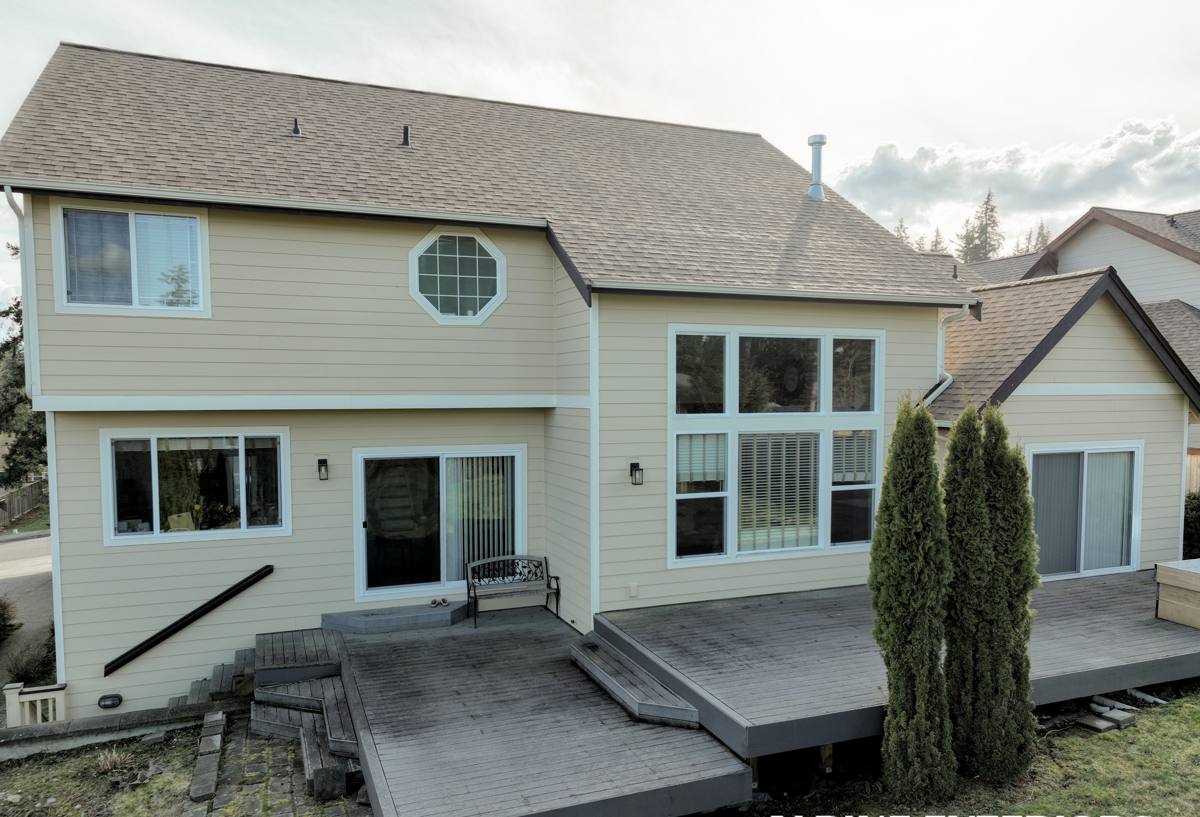
What Ferndale's Climate Actually Does to a Window Installation
Salt Air and Metal Components
Proximity to Semiahmoo Bay means airborne salt settles on everything outdoors, including window hardware, cladding fasteners, and flashing. Cheaper fasteners and unprotected metal trim corrode faster this close to the water. We spec corrosion-resistant fasteners and flashing on every coastal-adjacent job, not as an upsell but because replacing rusted-through hardware in a wall assembly ten years from now is a much bigger job than spending a little more on the right materials today.
Driving Rain and Wind-Driven Water
Whatcom County storms don't just drop rain straight down — wind off the water pushes it sideways into wall assemblies. A window that's caulked in but not properly flashed will hold up fine in a light shower and then leak the first time a real system rolls through with sustained wind. Correct flashing sequencing — sill pan first, then side flashing, then head flashing lapped over the top — is what actually keeps water out, not the bead of sealant around the trim.
Moss and Sustained Moisture
Long wet seasons keep humidity high around window sills, trim, and anywhere organic debris can collect. Moss and algae growth on horizontal trim surfaces isn't just cosmetic — it holds moisture against the substrate longer, which accelerates rot in wood trim and can compromise sealant lines over time. Material choice and drainage detailing around the window opening matter more here than they would in a drier climate.
What a Correct New-Construction Window Install Involves
New-construction windows have a nailing fin that gets integrated into the wall's weather-resistive barrier during framing, as opposed to retrofit windows that install into an existing opening without disturbing the exterior cladding. Doing it correctly, in order:
- Rough opening is checked for square, level, and correct dimensions before the window ever shows up on site
- A sloped sill pan is installed so any water that gets past the window has somewhere to go — out, not into the wall cavity
- House wrap or weather barrier is cut and prepped around the opening following a shingle-lap sequence
- The window is set, shimmed level and plumb, and fastened through the nailing fin per manufacturer spec
- Flashing tape or flexible flashing goes over the fin at the sides and top, lapped correctly so water sheds outward and downward at every layer
- Insulation (typically low-expansion foam) fills the gap between the window frame and rough opening — not so much that it bows the frame
- Exterior trim and cladding are integrated last, once the flashing and drainage plane are confirmed correct
Skipping or reordering any of these steps is how a window that looks fine on install day ends up with rot or leaks behind the wall five to ten years later — often not discovered until the siding comes off.
Choosing Windows for a Ferndale New Build
| Factor | Why It Matters Here |
|---|---|
| Frame material | Vinyl and fiberglass resist salt-air corrosion better than uncoated aluminum; fiberglass holds up well under repeated wet-dry cycling |
| Glass package | Double-pane with a low-E coating is the practical baseline for our climate; argon fill adds a modest efficiency bump |
| Hardware/fasteners | Corrosion-resistant hardware matters more within a few miles of the bay than it does further inland |
| Sill design | A sloped sill with a working weep system sheds wind-driven rain instead of pooling it against the frame |
| Warranty structure | Look at what's covered on seal failure and frame defects specifically — coastal conditions test seals harder than average |
We don't push a single brand as the answer for every build. What we push is correct installation, because even a well-made window will underperform if the flashing and drainage detailing around it are wrong — and a modest window installed correctly will outlast a premium window installed poorly.
Why We Don't Install Certain Products the Way Some Crews Do
There are shortcuts in this trade that save time on install day and cost the homeowner later. We don't caulk-and-pray in place of proper flashing — sealant is a secondary defense, not the primary one, and treating it as the main water barrier is a maintenance liability in a climate this wet. We also don't recommend bare aluminum trim components this close to Semiahmoo Bay; the corrosion trade-off isn't worth the upfront savings once you account for what it costs to fix down the line. These aren't knocks on any particular manufacturer — they're standards we hold on every job because of what this specific climate does to shortcuts over time.
Our Process for New-Construction Window Jobs in Ferndale
1. Plan Review and Coordination
On new construction, we work off the building plans and coordinate directly with the builder or GC on framing dimensions, window schedule, and timing so window install lines up with the rest of the building envelope work.
2. Rough Opening Verification
Before install day, we confirm every rough opening is correctly sized, square, and structurally sound. Catching a framing issue before the window shows up saves everyone time.
3. Flashing and Weather Barrier Integration
This is where most of the long-term performance of the install actually gets decided. We follow manufacturer flashing instructions and standard shingle-lap sequencing every time, no exceptions for schedule pressure.
4. Window Set and Fastening
Level, plumb, square, and fastened to spec — checked, not assumed.
5. Final Inspection Before Cladding Goes On
We walk every opening before siding or trim covers it up, because that's the last point where a flashing mistake is cheap to fix instead of expensive.
Why Hiring a Crew That Already Works Ferndale Matters
A crew that installs windows across Whatcom County regularly already knows how the local weather behaves — which direction storms typically drive rain, how much salt exposure a given site actually gets depending on how close it sits to the water, and how long moss season really runs in a given year. That's not something you get from a general install checklist; it's pattern recognition built from doing this work in this specific climate, on this specific coastline, repeatedly. It also means we're not guessing on code requirements or typical framing practices used by builders in this area — we already know them.
Practical Checklist for New-Construction Window Planning
- Confirm window schedule and rough opening sizes against final architectural plans before framing is locked in
- Choose frame materials rated for coastal/marine-adjacent exposure if the lot is within a few miles of the bay
- Ask your installer to walk you through their specific flashing sequence, not just the window brand
- Verify weep holes and drainage paths are clear and functional at final walkthrough
- Get warranty terms in writing for both the window unit and the installation labor
- Plan trim and cladding material with moss/algae resistance in mind for horizontal surfaces
- Schedule window install to avoid extended exposure of an open weather barrier during peak storm season where possible
Timing New-Construction Window Installs Around Our Weather
Whatcom County's wettest stretch typically runs late fall through early spring, which is also when driving rain and wind events are most frequent. New-construction schedules don't always allow for perfect timing, but where there's flexibility, getting windows set and the weather barrier closed up before the heaviest rain season starts reduces the window (no pun intended) during which an open building envelope is exposed to the elements. We work with builders' schedules year-round, but we'll flag timing risk honestly if a build's schedule is pushing window install into a high-risk stretch.
If you're planning a new build in Ferndale or elsewhere around Semiahmoo, we're glad to walk the plans with you and give you a straight answer on window selection and installation approach — no pressure, no upsell script. Use the form below to request a free estimate.