 Semiahmoo Siding
 Why Semiahmoo Resort Siding Wears Differently
Semiahmoo Resort sits about as close to the water as a Whatcom County property can get, and that location shapes everything about how siding ages here. The spit catches wind straight off Semiahmoo Bay and the Strait of Georgia, which means salt-laden air is a constant companion, not an occasional visitor. Add in Whatcom County's long, wet winters and the shaded, damp pockets that collect around landscaping and north-facing walls, and you've got a siding environment that's tougher on materials than most inland neighborhoods a few miles away.
Homes here don't just get rained on — they sit in a marine microclimate where moisture, salt, and organic growth work together. Salt air accelerates corrosion on fasteners and trim, driving rain finds its way behind poorly flashed joints, and moss doesn't wait for a bare patch of soil to take hold — it colonizes anything shaded and damp, siding included. Repairing siding out here isn't the same job as repairing siding in a dry subdivision inland, and treating it like it is leads to repeat calls.
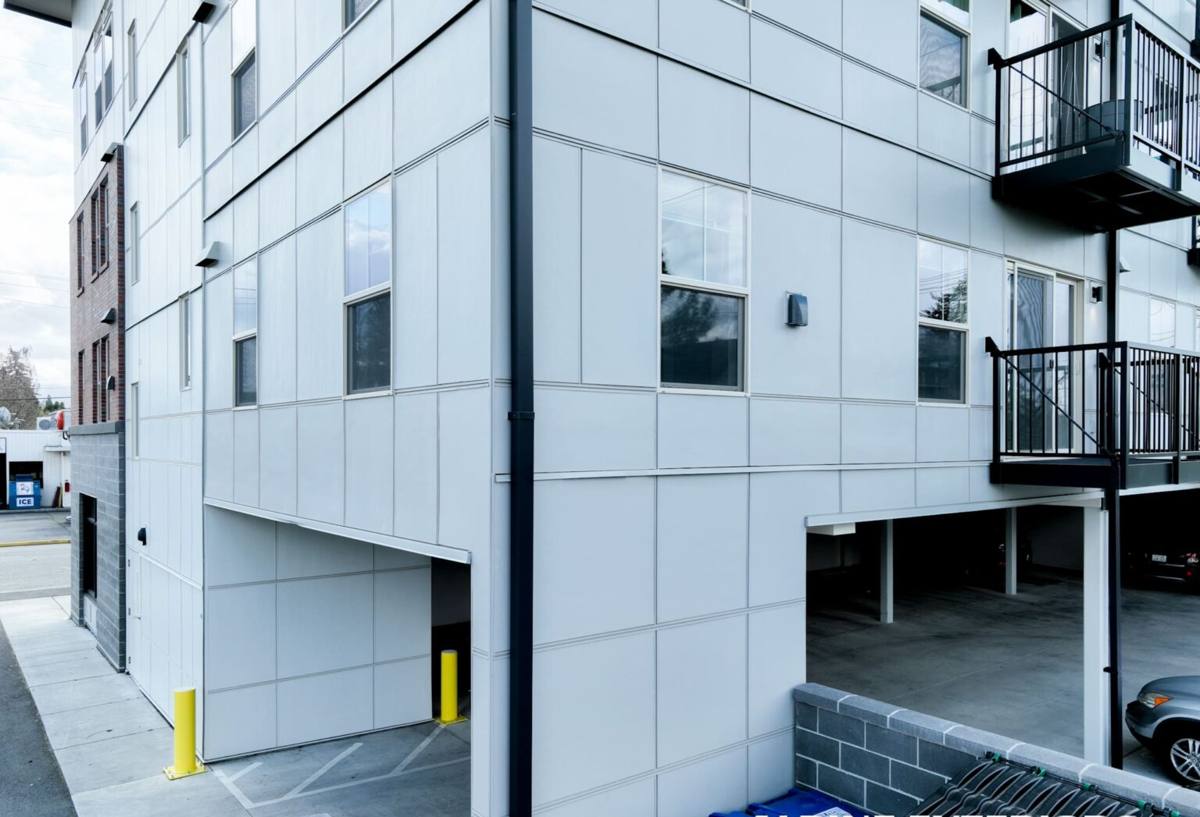
What Actually Causes Siding Damage in This Neighborhood
Salt Air and Fastener Corrosion
Airborne salt accelerates rust on exposed nail heads, staples, and any metal trim components that weren't properly rated for coastal exposure. Once a fastener starts corroding, it can streak the siding face, loosen its grip, and create a small entry point for water. On a resort-proximity property like this, we check fastener condition as a matter of course, not just where damage is already visible.
Driving Rain and Wind-Driven Moisture
Storms coming off the water don't fall straight down — wind pushes rain sideways into wall assemblies, seams, and butt joints. Siding that's caulked or flashed adequately for an average inland home can still let water in in the way it takes here. Damaged siding near Semiahmoo often shows moisture intrusion at horizontal joints and around window and door trim well before the face of the panel looks bad.
Moss, Algae, and Prolonged Dampness
Whatcom County's long moss season means anything shaded, north-facing, or tucked under overhanging trees stays damp for extended stretches. Moss and algae hold moisture against the siding surface, which is a slow but steady problem for materials that aren't dimensionally stable when wet. Over time, this constant damp cycle is what separates siding that lasts decades from siding that needs early repair.
How This Shows Up as Actual Repair Calls
- Soft or swelling siding near ground level, deck ledgers, or downspout discharge points
- Rust streaking below nail heads or metal trim on the weather side of the house
- Green or black staining in shaded corners that won't wash off and keeps coming back
- Gaps or separation at butt joints and corner boards after a windy, wet season
- Paint or finish failure concentrated on the side of the house facing the water
- Soft spots around window trim where caulking has aged out and let moisture behind the siding
Any one of these on its own might be minor. Several showing up together, especially on the water-facing elevation, usually means the underlying moisture management — flashing, caulking, or the siding material itself — has been compromised and needs more than a cosmetic patch.
What a Correct Repair Involves
A repair that actually holds up in this climate starts with figuring out why the damage happened, not just patching what's visible. We pull back damaged siding to check the water-resistive barrier and flashing underneath before we close anything up — patching over a hidden leak just buries the problem until it resurfaces somewhere else on the wall.
Diagnosis Before Repair
We look at the whole assembly: is water getting in at a joint, coming down from a failed gutter or downspout, wicking up from grade, or condensing behind the siding because of poor ventilation? Semiahmoo Resort's exposure means we're also checking whether corroded fasteners or degraded caulk are letting salt-laden moisture work its way in over time, even where the siding face looks fine.
Matching Materials and Finish
Repairs should be close to invisible once finished. That means matching plank width, reveal, and color as closely as the existing siding allows, and using fasteners and flashing details rated for coastal, high-moisture exposure — not whatever happens to be on the truck.
Sealing and Flashing Done Right
Every joint, corner, and penetration gets flashed and sealed to shed wind-driven rain, not just gravity-fed rain. This is the step that gets rushed on budget repairs and is exactly the step that determines whether the repair lasts five years or fifteen in a spot this exposed.
Repair vs. Replacement: How We Make the Call
| Situation | Repair Usually Makes Sense | Replacement Usually Makes Sense |
|---|---|---|
| Damage extent | Isolated to one or two elevations or a small section | Widespread across multiple walls, especially the water-facing side |
| Underlying moisture barrier | Intact once damaged siding is pulled back | Compromised, saturated sheathing, or signs of long-term rot |
| Siding material | Still structurally sound, matching stock available | Original material (LP, cedar, or aging vinyl) is failing systemically |
| Age of existing siding | Under 10–12 years, isolated wear | Approaching or past expected service life for the material |
| Fastener/trim condition | Localized corrosion, easily replaced | Corrosion widespread across trim and fasteners |
We'll tell you honestly which side of that table your house falls on. Plenty of Semiahmoo Resort homes just need targeted repair on one exposed elevation; others have enough underlying moisture history that repair would just be deferring a bigger job.
Why We Only Repair With and Replace Into James Hardie Fiber Cement
When a repair calls for new material — whether it's a patch section or we've recommended moving to full replacement on a damaged elevation — we install James Hardie fiber cement, and only James Hardie. We don't install LP SmartSide, vinyl, Cemplank, Allura, or primed wood siding, and in a marine environment like Semiahmoo Resort, that standard matters more than it does inland.
Fiber cement doesn't feed moss the way wood-based products can, doesn't corrode, and holds its dimension in the wet-dry cycling that's constant here. Hardie's ColorPlus factory finish is baked on and warranted against fading and peeling, which matters on a coastal elevation that gets more UV and salt exposure than a sheltered lot. Hardie's HZ5 product line is engineered specifically for climates like this one — freeze-thaw cycling, sustained moisture, and coastal exposure — rather than being a general-purpose product pressed into service in a tough environment. When we patch a section of siding on a Semiahmoo Resort home, we want that patch to outlast the rest of the wall, not become next season's repair call.
Our Process for Semiahmoo Resort Repairs
- On-site inspection: we assess visible damage and check for signs of hidden moisture intrusion at joints, trim, and grade level
- Diagnosis: we identify the actual cause — flashing failure, fastener corrosion, moss-related moisture, or wind-driven rain intrusion
- Honest scope: we tell you plainly whether this is a repair, a partial section replacement, or something bigger, and why
- Material match: for Hardie repairs, we source matching profile and ColorPlus finish so the patch blends with existing siding
- Correct install: proper flashing, fastener spacing, and sealant rated for coastal wind-driven moisture
- Final walkthrough: we show you what we found, what we fixed, and what to watch going forward
Why Local Experience on This Stretch of Coast Matters
A crew that mostly works drier, inland Whatcom County neighborhoods can still do competent general siding work, but they may not think to check fastener corrosion first, or to flash a joint for wind-driven rain instead of just vertical rainfall. Semiahmoo Resort's exposure to salt air and driving storms off the water rewards a crew that already knows what tends to fail here and checks for it as standard practice, not as an afterthought once a homeowner points it out.
We've done repair work on homes along this part of the Whatcom County coastline and we bring that pattern recognition to every inspection — what moss-related damage looks like before it's obvious, where driving rain typically finds its way in on this style of construction, and which fastener and flashing details actually hold up out here long-term.
Maintaining Your Siding Between Repairs
- Rinse salt residue and grime off siding periodically, especially on the water-facing side
- Keep gutters and downspouts clear so water isn't dumping directly onto siding or foundation areas
- Trim back vegetation that's keeping any wall shaded and damp longer than it needs to be
- Have caulking and trim checked every few years — it's cheaper to recaulk a joint than repair what gets in behind it
- Address small issues — a soft spot, a stain, a loose piece of trim — before the next wet season, not after
If you're noticing early signs of wear on your Semiahmoo Resort home — staining, soft spots, or trim that's starting to loosen — we're happy to take a look and give you a straight answer on what it needs. Reach out for a free, no-pressure estimate using the form below.