 Semiahmoo Siding
 Why Bellingham Windows Wear Out Faster Than the Manual Says They Should
Most window warranties and installation manuals are written for a generic American climate — moderate humidity, occasional rain, mild wind. Bellingham doesn't get that climate. Sitting close to Puget Sound and the Strait of Georgia, homes here deal with salt-laden air, wind-driven rain that hits window assemblies sideways instead of straight down, and a wet season that can stretch from October well into spring. Add in the shade and dampness that keep moss and algae active on north-facing walls and rooflines for months at a time, and you have conditions that push ordinary window installations toward failure years ahead of schedule.
None of this means Bellingham homes need exotic products. It means the installation has to account for moisture in ways a drier-climate job doesn't. A window that's a perfectly good product can still fail in five years if it was set without the right flashing sequence or sealed with the wrong expectations about how much water will actually reach that opening over a Whatcom County winter.
The Three Climate Stresses That Matter Most
- Salt air — corrodes exposed hardware, fasteners, and metal flashing faster than inland installations, especially on west- and south-facing exposures.
- Driving rain — wind pushes water up and sideways under trim and sills, finding any gap in the water-resistive barrier or flashing overlap.
- Extended moss and algae season — constant dampness around window heads and sills feeds growth that holds moisture against wood trim and can work into hairline gaps in caulking.
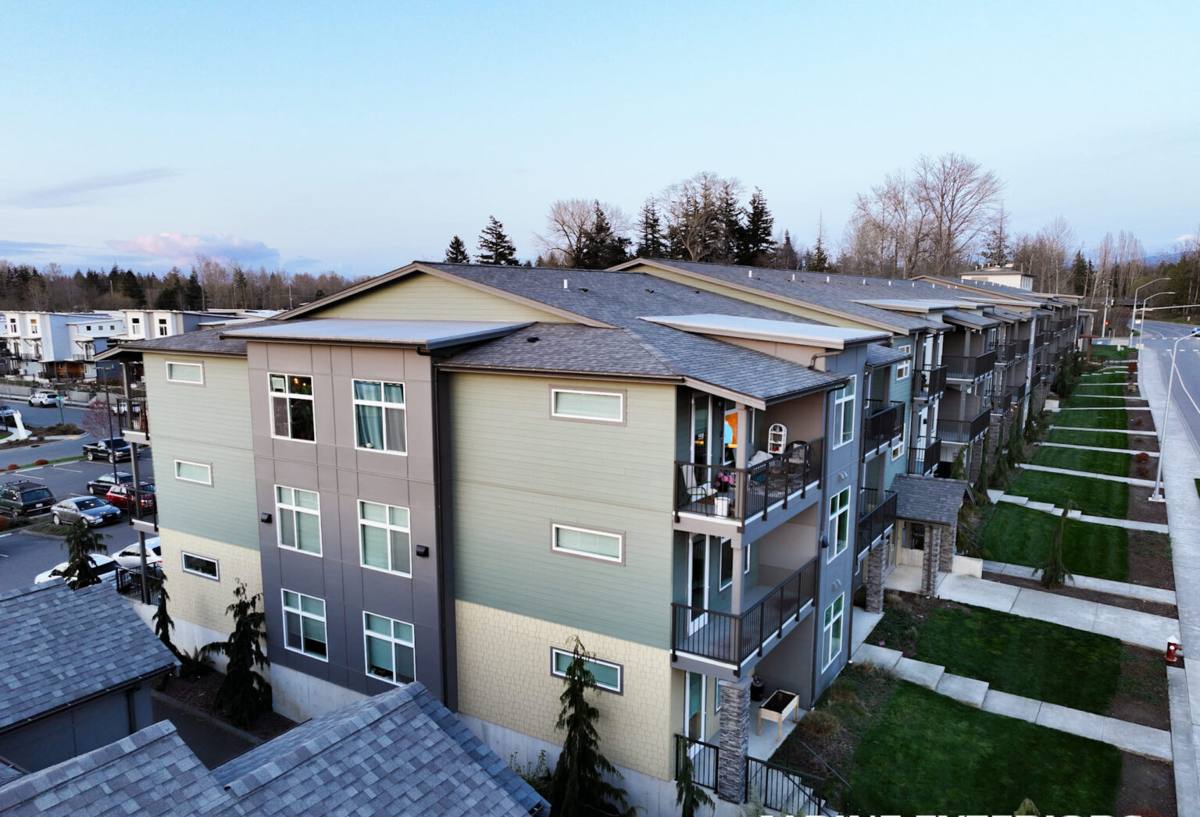
Signs a Bellingham Home Needs Window Replacement
Not every old window needs replacing, and not every drafty window is actually a window problem — sometimes it's the surrounding wall assembly. A proper assessment looks at both. That said, there are patterns we see often enough in this area to call out directly.
- Soft or discolored trim at the sill or corners — usually the first visible sign of water getting behind the frame
- Persistent fogging or a visible haze between panes on double-glazed units (seal failure, not a cleaning issue)
- Visible moss or dark streaking building up at the window head or along the top of the sill
- Difficulty opening, closing, or locking — frames swelling or warping from repeated moisture cycling
- A noticeable draft at the sash or frame during a wind-driven rain event, even with the window fully latched
- Peeling paint or bubbling on interior trim near the window, which usually points to moisture already inside the wall cavity
- Rising energy bills that don't match any other change in the home
If you're seeing more than one of these, it's worth having someone look at the actual opening — not just the glass — before deciding whether replacement, repair, or resealing is the right move.
What a Correct Window Replacement Actually Involves
The window unit itself is only part of the job. In our experience, most premature failures in this area trace back to installation shortcuts, not a bad product. A correct replacement on a Whatcom County home includes:
Proper Removal and Opening Inspection
Before anything new goes in, the old unit comes out and the rough opening gets inspected — sill, jambs, and header — for hidden rot or moisture damage. Skipping this step is how you end up sealing a new window over an already-compromised opening.
Flashing Sequenced for Water Shedding
Flashing tape and pan flashing need to be layered so water is directed outward and downward at every stage — sill pan first, then side flashing lapped over it, then the water-resistive barrier lapped over the top flashing. Done out of order, flashing can actually trap water inside the wall instead of shedding it.
Sill Pans, Not Just Caulk
Caulk is a backup, not a primary defense. A sloped sill pan gives any water that does get past the exterior trim a way out instead of a place to sit and soak into the framing.
Insulation and Air Sealing Around the Frame
The gap between the new frame and the rough opening should be filled with a low-expansion foam or backer rod and sealant — never packed tight with standard expanding foam, which can bow the frame and affect operation.
Exterior Trim and Sealant Rated for Coastal Exposure
Sealants and exterior caulking need to be rated for continuous moisture exposure and UV, not just general-purpose products, since these joints are doing real work here, not just cosmetic finishing.
Comparing Window Materials for a Marine Climate
There's no single "best" window material — the right choice depends on exposure, budget, and how much upkeep you want to take on. Here's how the common options hold up under Bellingham conditions specifically.
| Material | Moisture & Salt Air Resistance | Maintenance | Typical Lifespan |
|---|---|---|---|
| Vinyl | Very good — won't rot or corrode; hardware quality varies by manufacturer | Low — occasional cleaning | 20-30 years |
| Fiberglass | Excellent — dimensionally stable, resists warping in wet-dry cycling | Low | 30-40+ years |
| Aluminum | Fair — prone to corrosion near salt air unless well-coated; conducts cold | Moderate | 20-30 years |
| Wood / Wood-Clad | Requires diligence — exterior clad face helps, but any exposed wood needs upkeep | High | 20-30 years with maintenance |
For most Bellingham replacement projects, we steer homeowners toward vinyl or fiberglass on exposed elevations simply because they hold up with the least ongoing attention. Wood and wood-clad windows can still be the right call for a specific look or a historic home, but we're upfront that they come with a real maintenance commitment in this climate — that's a trade-off we lay out honestly, not a reason to avoid them altogether.
Our Window Replacement Process
- On-site assessment — we look at every window being considered, check for hidden moisture damage, and note exposure differences between elevations
- Straight-talk recommendation — which windows genuinely need replacement now, which can wait, and what material fits your budget and exposure
- Written estimate — clear pricing with no vague allowances
- Scheduling around the weather — we plan installs to minimize how long any opening sits exposed, which matters more here than in drier regions
- Removal and opening inspection — addressing any rot or damage found before the new unit goes in
- Installation with full flashing and sealing sequence — sill pan, flashing, insulation, and rated sealants, done in the correct order
- Interior and exterior trim finish — matched to the home and sealed for weather
- Final walkthrough — operation check on every window, plus a review of how the work was done and what to watch for going forward
What Affects the Cost
| Factor | Why It Matters |
|---|---|
| Window material and glass package | Vinyl runs less than fiberglass or wood-clad; upgraded Low-E or triple-pane glass adds cost but pays back in comfort and energy use |
| Full-frame vs. insert (pocket) replacement | Full-frame replaces down to the rough opening and allows fixing hidden damage; insert replacement is faster and less costly but only works when the existing frame is sound |
| Extent of hidden rot or moisture damage | Framing repair discovered during removal is the most common reason a project's scope changes mid-job |
| Number and size of openings | Larger units and multi-window projects typically bring a better per-window rate |
| Trim and exterior finish work | Matching existing trim profiles or upgrading exterior detailing adds labor and material |
| Access and elevation | Second-story or hard-to-reach windows add setup time and equipment cost |
We don't quote in vague ranges pulled from a national average — every estimate reflects the actual openings on your home, which is the only way to give you a number you can trust.
Why Local Experience with Bellingham Homes Matters
A crew that only occasionally works this stretch of Whatcom County coastline is guessing at how much water exposure a given elevation actually sees. A crew that works here regularly already knows which wall orientations take the brunt of driving rain, how aggressively moss builds up on shaded sills, and how salt air affects hardware and fasteners over time — because we're seeing the results of past installations, good and bad, on homes throughout the area every week. That local pattern recognition is what keeps us from treating your home as a generic install and instead treating it as a Bellingham home, with the specific weather load that comes with it.
After the Install: Keeping New Windows Performing
A correctly installed window still benefits from basic upkeep in this climate:
- Rinse salt residue and organic buildup off frames and glass a couple times a year, especially on exposures facing the water
- Keep gutters and downspouts clear so runoff isn't sheeting directly across window heads
- Check exterior caulking annually, particularly after the first winter, since new sealant can settle slightly
- Trim back vegetation that's shading a window and keeping the sill perpetually damp — a major contributor to moss and slow rot
- Operate every window a few times through the year so hardware doesn't seize from disuse
If your Bellingham home has windows showing any of the wear signs above — or you're just planning ahead before another wet season sets in — we're happy to take a look. Estimates are free, there's no pressure to sign anything on the spot, and you'll get a straight answer about what actually needs doing. Use the form below to get started.