 Semiahmoo Siding
 Storm Damage Roof Repair for Lynden Homes
Lynden sits inland enough to avoid the worst of the wind that hits the water directly, but it still takes a beating every fall and winter. Whatcom County storms roll in off the Pacific loaded with moisture, and by the time they reach Lynden they're usually still carrying enough wind to lift shingles, drive rain sideways under flashing, and snap branches onto roofs. None of that is dramatic enough to make the news, but it's exactly the kind of damage that goes unnoticed until a ceiling stain shows up months later.
Storm damage roof repair here isn't about chasing hurricanes — it's about catching the smaller, cumulative damage from repeated wind-driven rain events before it turns into rot, mold, or a full re-roof. That's the service this page covers: what causes it locally, what a proper repair actually involves, and how we handle it for Lynden homeowners.
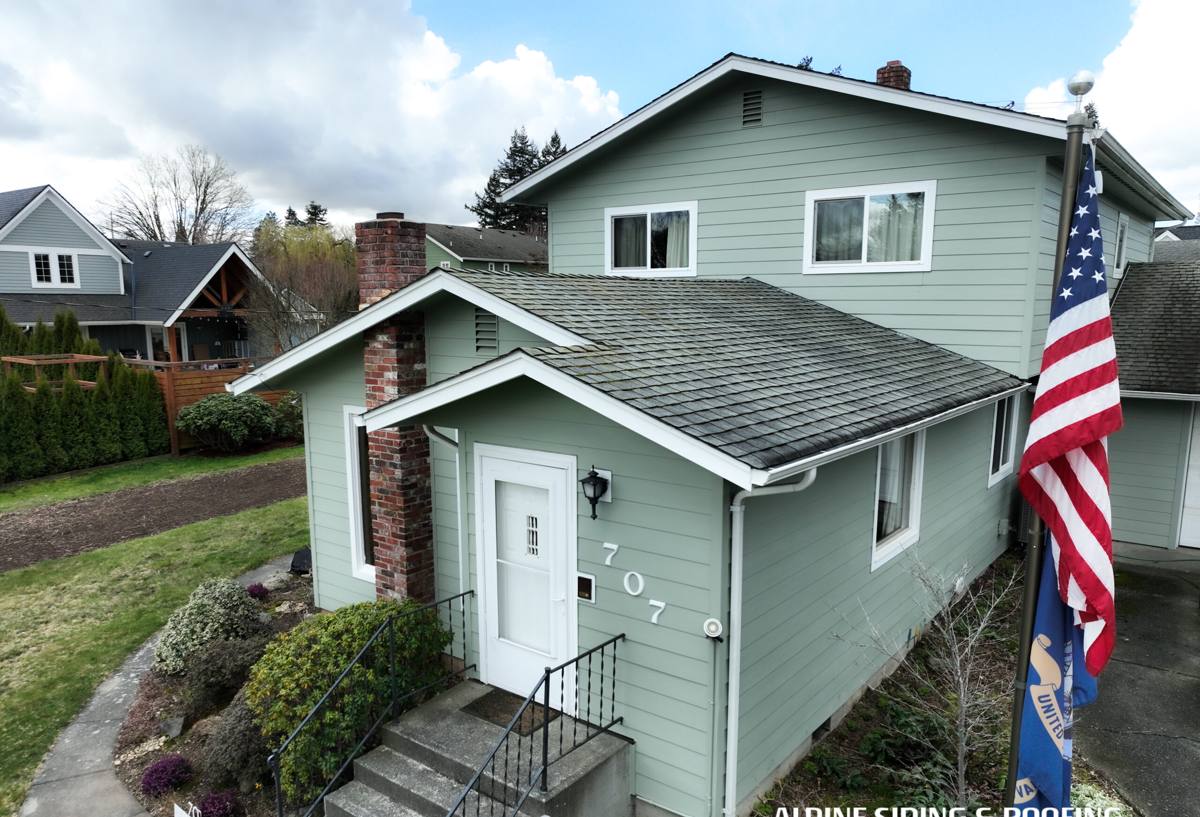
What Whatcom County Weather Actually Does to a Roof
The Pacific storms that move through this part of Washington bring three things that matter for a roof: sustained wind, prolonged rain, and salt-laden air carried inland from Semiahmoo Bay and the Strait. Individually, none of them destroy a roof overnight. Together, over a wet season, they wear down the weak points.
Wind
Lynden doesn't see the extreme gusts that hit exposed coastal points, but 40-50 mph gusts during a fall or winter front are common enough. That's enough to lift the tab edge of an aging asphalt shingle, work loose a ridge cap, or peel back flashing around a chimney or skylight that was never properly sealed.
Driving rain
Wind-driven rain doesn't just sit on a roof and run off — it gets pushed sideways and upward under laps, seams, and fasteners that are designed to shed water falling straight down. This is how water ends up in an attic even when every shingle looks intact from the ground.
Salt air and moisture load
Proximity to the bay means metal fasteners, flashing, and vents corrode faster here than they would further inland. Corrosion around a nail head or flashing seam is a slow leak waiting to happen, and it's easy to miss on a quick visual check.
What Counts as Storm Damage — and What Doesn't
Homeowners often assume storm damage means missing shingles you can see from the driveway. Usually it's less obvious than that. Here's a general breakdown of what we actually find after a wind and rain event:
- Lifted or creased shingle tabs where the sealant strip has broken loose
- Flashing pulled away from chimneys, skylights, or wall-to-roof transitions
- Granule loss on asphalt shingles from wind abrasion and years of accumulated moss
- Gutter and downspout separation from wind load or debris impact
- Soft or discolored decking visible from the attic side after water has been getting in slowly
- Fastener backout where repeated wind flex has worked nails loose over multiple storms
What isn't storm damage: general wear from age, moss buildup that was never cleaned, or a roof that was under-vented from the day it was installed. Those are maintenance and installation issues, not storm damage, and we'll tell you honestly which one you're dealing with rather than labeling everything "storm related" to pad a claim.
Moss: The Slow-Motion Damage Nobody Calls a "Storm"
Whatcom County's moss season runs long — shaded, north-facing slopes can stay damp for months at a stretch. Moss itself doesn't tear a roof apart the way wind does, but it holds moisture against the shingle surface, lifts tabs as it grows under the edges, and traps debris that keeps everything wet even longer. A roof that's fighting moss year-round is also a roof that's more vulnerable when the next windstorm hits, because the shingles are already lifted and weakened. Storm damage and moss damage often show up together on the same roof, and a proper repair addresses both instead of just patching the visible tear.
Our Repair Process
1. Inspection first, always
We start on the roof and in the attic, not just from the ground with binoculars. Wind and rain damage frequently shows up as staining or damp insulation in the attic before it's visible on the exterior. We document what we find with photos so you have a clear record, whether that's for your own file or an insurance claim.
2. Honest scope
We tell you plainly whether this is a spot repair, a partial section replacement, or something bigger. Most storm damage on a well-maintained roof is a localized repair — replacing a run of shingles, resealing flashing, or rebuilding a section of ridge. We don't upsell a full tear-off when a repair will genuinely hold.
3. Repair to match, not just patch
A repair that doesn't match the surrounding shingle course, or that skips proper flashing technique to save time, just creates the next leak point. We tie new material into the existing roof system correctly — proper overlap, correct fastening, sealed flashing — not a surface patch over a structural gap.
4. Follow-up check
After the next significant rain, a quick attic check confirms the repair is holding. This matters more here than in drier climates, because a repair that looks fine on a dry day can still leak under sustained wind-driven rain.
Repair Methods and Materials
Not every storm-damaged roof needs the same fix. The right approach depends on the extent of the damage and how much life is left in the existing roofing.
| Situation | Typical Approach | Trade-offs |
|---|---|---|
| Handful of lifted or missing shingles, roof otherwise sound | Spot shingle replacement, resealing | Fast and cost-effective, but color match may be slightly off on older roofs |
| Flashing failure at chimney, skylight, or wall | Flashing rebuild with new step and counter-flashing | Addresses root cause rather than just caulking over it, which fails again within a season or two |
| Damage concentrated on one slope (usually the storm-facing side) | Section re-roof of that slope | Keeps cost down versus full replacement, but slope needs to be assessed for underlying decking condition first |
| Widespread granule loss plus multiple leak points | Full roof evaluation for replacement | Repair may only buy a year or two if the underlying shingle layer is past its service life |
We don't push manufacturer names as a selling point — what matters more is correct installation. A premium shingle installed with poor flashing detail will leak just as fast as a mid-grade one. We use roofing materials rated for the wind and moisture exposure typical of this area, and we're straightforward about the maintenance trade-offs of any product we recommend, including how it handles moss resistance and how it ages under sustained coastal moisture.
Insurance and Storm Claims
If your damage is significant enough to involve a homeowner's insurance claim, documentation matters more than anything else. We provide a written inspection report and photos that describe what we found and what caused it, in plain terms. We won't inflate a repair scope to help a claim, and we won't tell you something is storm damage if it's actually deferred maintenance — that kind of dishonesty tends to catch up with a claim during adjuster review, and it's not how we want to run our business.
Signs You Should Have a Roof Checked After a Storm
- Visible shingle pieces in the yard or gutters after a windy night
- A new stain on a ceiling or attic rafter that wasn't there before
- Gutters pulling away from the fascia or sagging in one spot
- Daylight visible through the roof deck from inside the attic
- A musty smell in an upstairs room or closet that comes and goes with the weather
- Granules collecting at the bottom of a downspout, especially after the first hard rain of the season
Any one of these on its own isn't necessarily an emergency, but it's worth a look before the next storm front adds to the damage.
Why a Crew That Already Works Lynden Matters
Storm damage repair is time-sensitive by nature — a lifted shingle or open flashing seam gets worse with every rain event until it's fixed. A crew based in the area and already working Whatcom County jobs can get to a Lynden roof faster than one dispatching from further out, and that response time is often the difference between a simple repair and a repair plus interior water damage. Local experience also means we've seen how the specific combination of wind direction, moss exposure, and rain volume in this part of the county tends to hit roofs — which slopes take the worst of it, which flashing details fail first, and where builders in this area have historically cut corners on ventilation or underlayment. That familiarity shortens the inspection and sharpens the diagnosis.
Get a Straight Answer on Your Roof
If a recent storm left you wondering whether your roof needs attention, we'll come take a real look — on the roof and in the attic — and tell you plainly what we find. If it's a simple repair, we'll say so. If it's more, we'll explain why. Reach out for a free, no-pressure estimate using the form below.