 Semiahmoo Siding
 Roof Repair Built for Sumas Conditions
Sumas sits in a part of Whatcom County that puts a roof through a lot over the course of a year. Between coastal moisture pushing inland, long stretches of driving rain, and a moss season that seems to start earlier every year, roofs here age differently than they do in drier climates. A repair that would hold up fine in a dry inland state can fail within a season here if it doesn't account for how much water this region actually sees and how long surfaces stay damp between dry spells.
We repair roofs for homeowners in Sumas and the surrounding area, and we've built our process around what actually causes roofs to fail locally: trapped moisture, moss and organic growth working into shingle layers, and flashing that was never sealed tightly enough to handle repeated saturation. This page walks through what that means for your roof, what a correct repair actually involves, and how we approach the work.
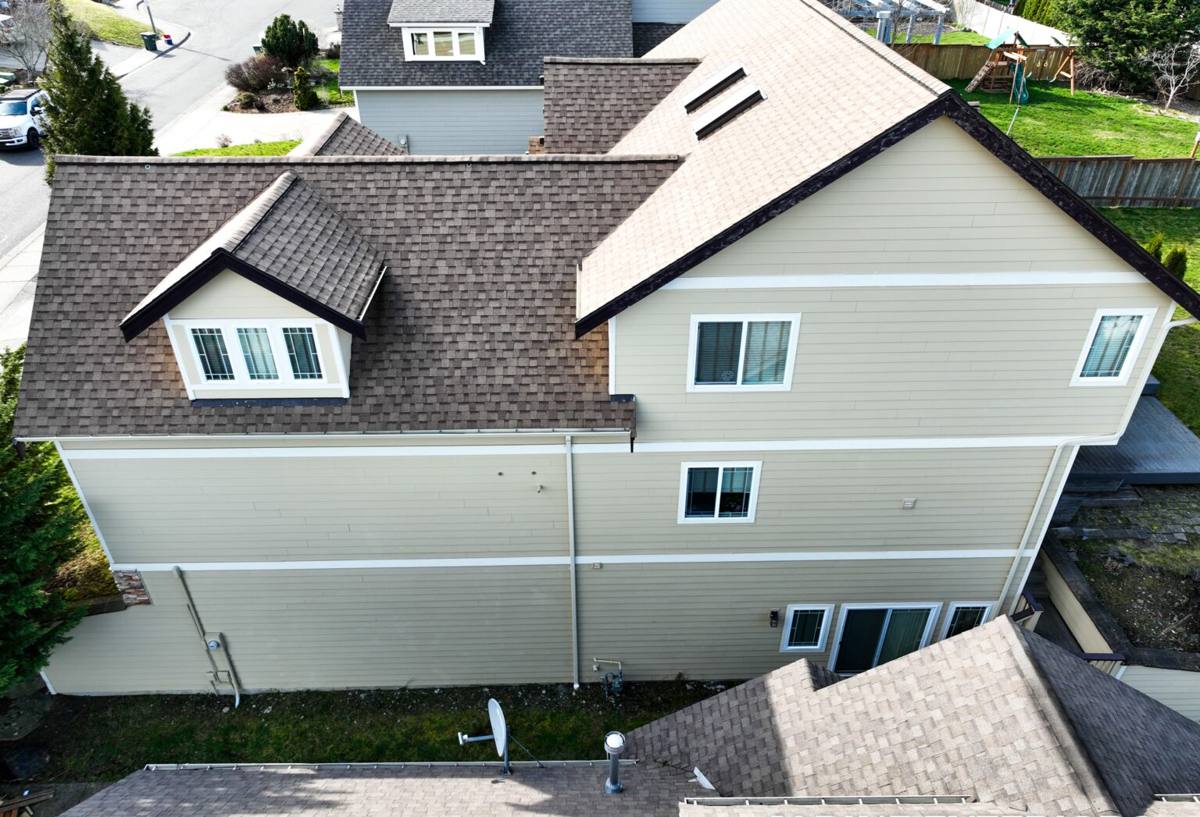
Why Roofs Fail Faster in This Climate
Salt Air and Metal Components
Homes closer to the water deal with airborne salt that accelerates corrosion on exposed metal — flashing, fasteners, vents, and gutter hardware. Corroded flashing is one of the most common root causes of a roof leak we find that homeowners assumed was a shingle problem. The shingles are often fine; the metal underneath or around them has failed and is letting water in at a seam.
Driving Rain and Wind-Driven Moisture
It's not just rainfall totals that matter — it's the angle. Driving rain pushed by wind gets forced sideways and upward under roof edges, around vent boots, and into gaps that would never leak in a straight-down rain. Repairs that only address the visible entry point and ignore wind direction tend to leak again at the next storm.
Moss and Organic Growth
A long moss season means moss has more months to establish itself, especially on north-facing slopes and shaded sections of roof that stay damp longer. Moss doesn't just sit on top of shingles — its root structure lifts shingle edges and holds moisture directly against the roofing material, which speeds up granule loss and can rot the decking underneath if it's left unaddressed for a few seasons.
Signs You Need a Repair, Not Just a Cleaning
- Water stains on interior ceilings or upper walls, especially after a heavy rain event
- Shingles that are cupped, cracked, or missing granules in patches
- Visible moss buildup, particularly on shaded or north-facing sections
- Rusted, lifted, or separated flashing around chimneys, vents, and roof valleys
- Sagging sections of roofline or soft spots you can feel when walking a lower-slope roof
- Gutters consistently overflowing or pulling away from the fascia
- Daylight visible through the attic roof deck
If you're only seeing surface moss with no soft spots or interior staining, a cleaning and moss treatment may be all you need. Once there's evidence of water getting past the shingle layer, that's a repair issue, not a cosmetic one.
What a Correct Roof Repair Actually Involves
A lot of roof repairs fail not because the crew did bad work, but because they stopped at the visible symptom instead of finding the actual entry point. Water travels along the roof deck before it shows up as a stain, so the stain location and the leak location are often several feet apart.
Our Process
- Inspection first. We look at the whole roof plane, not just the spot you're worried about — flashing, valleys, vent boots, and any areas holding moss or debris.
- Trace the water path. We check the attic and decking from the inside where possible to confirm where water is actually entering versus where it's showing up.
- Address the cause, not just the symptom. That might mean replacing corroded flashing, resealing a vent boot, correcting a shingle course that was installed wrong to begin with, or replacing rotted decking before any new material goes down.
- Match materials and technique to the area. Fasteners and flashing exposed to salt air get treated differently than a repair on a fully inland, sheltered section of roof.
- Clean up organic growth in the repair zone. There's no point sealing a leak if moss is still lifting the shingles next to it.
Common Sumas-Area Repair Scenarios
| Issue | Typical Cause | What We Do |
|---|---|---|
| Ceiling stain near a chimney | Corroded or improperly sealed step flashing | Remove and replace flashing, reseal, verify with a water test |
| Leak in a valley after storms | Debris buildup or undersized valley flashing | Clear debris, replace valley metal if undersized or rusted |
| Soft spot on a shaded slope | Long-term moss growth trapping moisture against decking | Remove affected shingles, assess and replace decking if rotted, treat area, reshingle |
| Leak around a bathroom or kitchen vent | Cracked or dried-out vent boot seal | Replace vent boot, check surrounding shingles for damage |
| Granule loss and curling shingles | Age combined with prolonged moisture exposure | Repair or replace the affected section; recommend full replacement if widespread |
Repair vs. Replacement: How We Make the Call
We don't push replacement when a repair will genuinely hold. The honest factors that tip the decision one way or the other:
- Age of the roof. A repair on a roof with several years of life left makes sense. A repair on a roof already near the end of its expected lifespan often just delays a replacement you'll need anyway.
- How widespread the damage is. One or two isolated problem areas are a repair. Damage spread across multiple slopes usually means the underlying material is failing broadly, not just in the spots you can see.
- Decking condition. If the plywood or sheathing underneath is soft or rotted in more than a small localized area, patch repairs won't hold — that's a sign of a larger problem.
- Number of past repairs. A roof that's had several patch repairs in different spots over a short span is usually telling you it's due for a fuller fix.
We'll give you a straight answer on which category your roof falls into, and why, before any work starts.
Flashing, Vents, and the Details That Get Skipped
Most recurring leaks trace back to flashing and penetration points rather than the field of the roof itself. Chimney flashing, skylight flashing, plumbing vent boots, and roof-to-wall transitions are where two different materials meet, and that's exactly where a poor seal or a corroded piece of metal lets water in. Given the salt exposure and rain volume common around Sumas, we pay particular attention to these transition points during every inspection, whether or not that's where you noticed the original problem.
Gutters and Drainage
A repair can fail fast if water isn't being carried away from the roofline afterward. Clogged or undersized gutters back water up under the roof edge, which undermines even a well-done repair. When we're on-site for a repair, we'll flag drainage issues that are contributing to the damage, even if gutters aren't the reason we were called out.
Why a Crew That Knows Sumas Conditions Matters
Roofing techniques that work in a mild, dry climate aren't automatically right for Whatcom County. A crew unfamiliar with how much moisture this region holds onto through the fall and winter can under-seal a repair, use the wrong fastener for salt exposure, or miss moss damage that's already worked its way under shingle tabs. We work on homes throughout this area regularly, so we're not guessing at how local weather patterns affect a roof over time — we're accounting for it in the materials and methods we use on every job.
We also stand behind the work. If a repair we did doesn't hold, that's on us to make right, not something you should have to chase down.
What to Expect When You Call Us
- A straightforward inspection with a clear explanation of what we find, in plain language
- An honest recommendation — repair, more extensive repair, or replacement — with the reasoning behind it
- A written estimate before any work begins, with no pressure to decide on the spot
- Repairs that address the actual cause of the leak, not just a patch over the visible spot
If you're dealing with a leak, staining, or visible moss damage on your roof in Sumas, we're happy to take a look. Fill out the form below for a free, no-pressure estimate, and we'll give you a straight assessment of what your roof actually needs.