 Semiahmoo Siding
 Siding Repair for Lynden Homes
Lynden sees the same weather pattern that shapes exterior work across Whatcom County: salt-tinged marine air drifting in from the Sound, rain that drives sideways into walls more often than it falls straight down, and a moss and mildew season that can run most of the year on shaded siding. Most of the siding repair calls we get in this area aren't from one dramatic event — they're the slow result of that climate working on a wall for years before anything becomes visible from the ground.
We install and repair James Hardie fiber cement siding exclusively. That focus matters as much for repair work as it does for new installs. Repairing fiber cement correctly means understanding how the material handles moisture, how factory-applied color behaves over time, and how to tie a patch into an existing wall so it performs — and looks — like it was never touched. This page covers what siding repair actually involves for a Lynden home, how we approach it, and how to tell whether your siding needs a repair or something more.
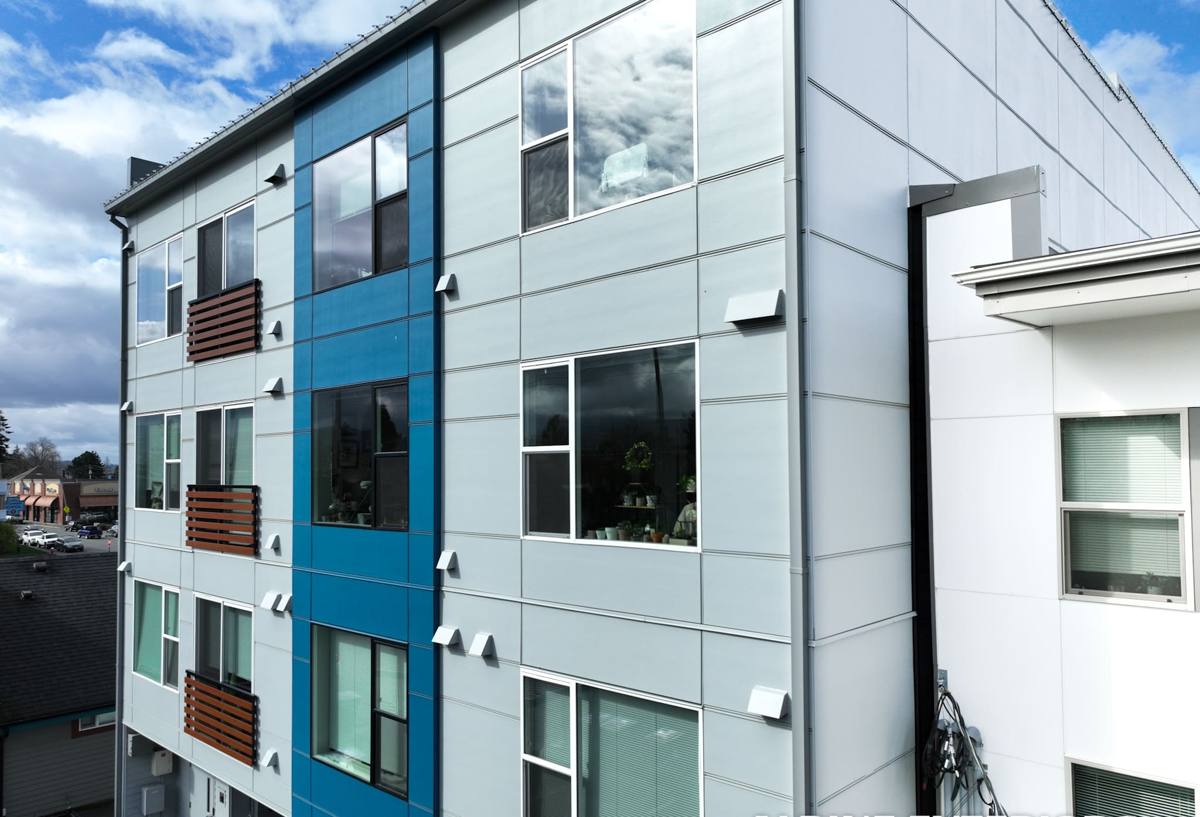
What Lynden's Climate Does to Siding Over Time
Salt Air and Fastener Corrosion
Even a few miles inland from the immediate shoreline, homes in this part of Whatcom County get a steady dose of salt-laden air. Over years, that air works on exposed fasteners, trim hardware, and flashing, sometimes well before the siding panels themselves show any wear. A repair job that only replaces damaged panels without checking the hardware underneath is addressing half the problem.
Driving Rain and Hidden Moisture
Wind-driven rain doesn't just wet the surface of a wall — it pushes moisture sideways into laps, seams, and anywhere a panel edge or trim joint isn't sealed the way it should be. That's often how a small installation flaw or aging caulk joint turns into a soft spot or staining that shows up years after the original siding went up, sometimes far from where the water actually got in.
A Long Moss Season
Mild temperatures and consistent moisture keep moss and mildew active on shaded, north-facing walls for most of the year in this region. Moss itself doesn't damage fiber cement the way it can damage a more porous material, but it holds moisture against the surface longer, and it's often the first visible sign that a wall isn't drying out between storms the way it should.
Common Siding Repair Issues We See in Lynden
- Impact damage — cracked or chipped panels from storm debris, ladders, or yard equipment
- Failed caulking at trim joints and panel seams, letting water track behind the siding
- Soft or damaged sheathing behind siding where water has been getting in unnoticed
- Rust staining or failing fasteners, particularly on older installations
- Panels installed too close to grade or a roofline, drawing in moisture over time
- Color mismatch on older repairs where non-factory paint was used instead of matched ColorPlus product
Why Fiber Cement Repair Is Different From Patching Other Sidings
James Hardie fiber cement doesn't warp, rot, or delaminate the way wood-based or engineered wood siding can, which means a lot of what looks like siding damage is actually damage at the seams, fasteners, or trim rather than the panel material itself. That's good news for repair — it usually means we're fixing a detail, not replacing a whole wall. But it also means a repair has to be done to the same standard as new installation: correct fastener placement, proper clearances, and factory-matched finish, or the fix won't hold up any better than what failed before it.
Repair or Replace: How We Make the Call
| Situation | Usually a Repair | Usually Points to Replacement |
|---|---|---|
| Damage extent | A handful of panels or one wall section | Damage scattered across multiple walls or elevations |
| Sheathing condition | Solid, dry substrate under the damaged area | Widespread rot or soft sheathing found during inspection |
| Age of existing siding | Under 15-20 years, installed to spec | Original installation is older or has known installation flaws |
| Color match | Panels available in matching ColorPlus finish | Discontinued color with no close factory match |
| Root cause | Isolated impact or failed sealant | Systemic flashing or moisture-barrier failure |
We won't recommend a full re-side when a targeted repair will hold up, and we won't patch over a problem that's going to resurface in a wall section that's failing systemically. That call gets made after an actual inspection, not before one.
How a Siding Repair Project Runs
Inspection and Diagnosis
We start by identifying not just the visible damage, but what caused it. A cracked panel from a one-time impact is a different job than staining that traces back to a flashing gap two feet away. We check the sheathing behind any damaged area before quoting a repair, because covering a soft spot with a new panel just hides the problem for a season or two.
Sourcing a Color and Profile Match
James Hardie's ColorPlus finish is applied in a factory process, which is part of why it holds up so well — but it also means an exact color match on an older home sometimes requires checking current product lines against what was originally installed. We handle that matching before starting the repair so the finished wall doesn't have a visibly different panel sitting in the middle of it.
Removing and Replacing Damaged Material
Damaged panels and any compromised trim come off cleanly, without disturbing the surrounding siding more than necessary. If we find soft or damaged sheathing underneath, we address it before anything new goes back up — that step doesn't get skipped to save time.
Sealing and Flashing Detail
Since so much fiber cement damage in this climate traces back to water getting behind the siding rather than through it, we pay close attention to flashing and sealant at every seam and trim joint in the repair area, not just the section that failed.
Final Check
We walk the finished repair with the homeowner, confirm the color and profile match blend into the surrounding wall, and go over what to watch for going forward.
What a Correct Repair Involves
- An inspection of sheathing and framing behind the damaged area, not just the visible panel
- Fasteners and clearances installed to James Hardie's published specifications
- Factory-matched ColorPlus panels rather than field-painted patches wherever possible
- Sealant and flashing detail addressed at every affected seam, not just the failure point
- A clear explanation of root cause, not just a fix for what's visible
Why We Only Repair James Hardie Siding
We install and repair one siding system: James Hardie fiber cement. Fiber cement's non-combustible core, dimensional stability, and climate-engineered HZ formulations are a strong match for Whatcom County's moisture and salt exposure, and Hardie's factory-applied finish gives us a real path to matching color on a repair years after the original install — something that's much harder to do well with field-painted materials. We don't repair or install LP SmartSide, vinyl siding, Cemplank, Allura, primed spruce, or cedar. Each has a place in the market, but our professional focus is on doing one system well rather than stretching a crew's expertise across several products with different repair characteristics.
Signs Your Lynden Home Needs a Siding Repair Inspection
- Cracked, chipped, or dented panels anywhere on the exterior
- Cracked or missing caulk at trim joints and panel seams
- Moss or dark staining that returns quickly after cleaning, especially on shaded walls
- Soft spots when pressed near the base of a wall or around window trim
- Visible color difference from a prior repair or touch-up
- Rust streaking below fasteners or trim hardware
Why a Local Crew Matters for Repair Work
Repair work depends on knowing what's normal wear for this climate versus what's an early warning sign, and that judgment comes from working on Whatcom County homes through every season, not from a one-time visit. A crew based in this area sees how salt air, driving rain, and moss actually play out on real walls over years, which shapes decisions on a repair job — where to check for hidden moisture beyond the obvious damage, and which details are worth the extra time so the same spot isn't failing again in a couple of years. It also means that if a question comes up after the repair is done, it's a call to a crew that's still working in the area, not one that's moved on.
If your Lynden home has damaged, aging, or failing siding, we're glad to take a look and give you a straightforward, no-pressure estimate on what it would take to fix it. Reach out using the form below to schedule a free inspection.