 Semiahmoo Siding
 Why Point Roberts Siding Takes a Different Kind of Beating
Point Roberts sits on a peninsula surrounded almost entirely by water, which means every wall on every home is exposed to a steady diet of wind off the Strait of Georgia and Boundary Bay. That wind carries salt, and salt-laden air is hard on paint film, caulk, fasteners, and any siding material that isn't built to shrug off moisture. Add the driving rain that comes through Whatcom County for much of the year, plus a long, shaded moss season on north-facing and tree-sheltered walls, and you have a climate that finds every weak point in a home's exterior faster than it would inland.
Homes in Semiahmoo and along this stretch of coastline deal with the same combination of salt spray and persistent damp, so we see the same failure patterns repeat: caulk that dries and cracks years before it should, paint that blisters where moisture is getting trapped underneath, and moss that holds water against siding long after a storm has passed. Siding repair here isn't just cosmetic touch-up work. Done right, it's about finding where water is actually getting in and fixing that, not just covering the symptom.
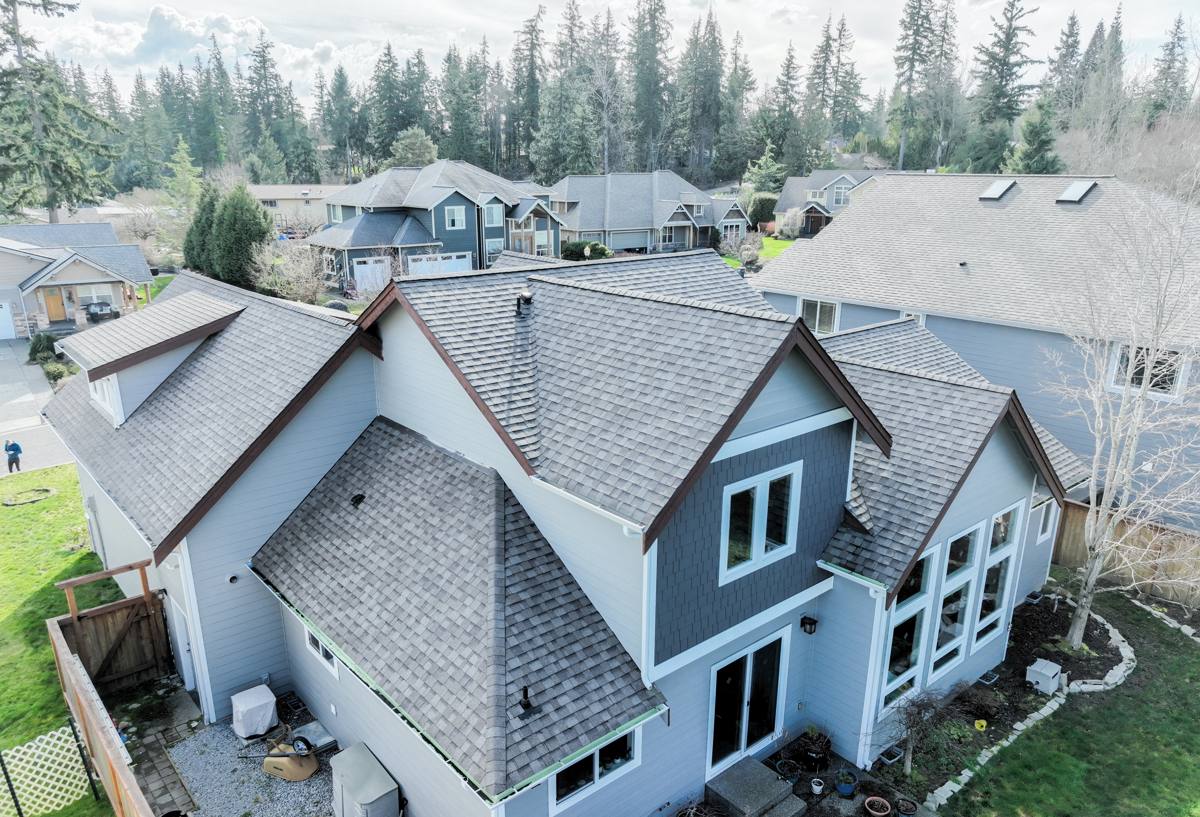
Signs Your Siding Needs Repair, Not Just a Wash
A pressure wash or a fresh coat of paint can make tired siding look better for a season, but it won't fix underlying damage. Here's what usually means an actual repair is overdue:
- Soft or spongy spots when you press on a wall, especially near the bottom courses or below windows
- Paint that's bubbling, peeling, or alligatoring in patches rather than evenly across a wall
- Persistent dark staining or moss growth that comes back within weeks of cleaning
- Cracked, shrunken, or missing caulk at trim, corners, and butt joints
- Visible warping, cupping, or separation between boards or panels
- Gaps opening up around window and door trim
- A musty smell or visible staining on interior walls that back onto exterior siding
Any one of these can be minor on its own. Several showing up together, especially on the same wall, usually points to moisture that's been working behind the siding for a while.
What a Correct Siding Repair Actually Involves
Diagnosing before patching
The most common mistake in siding repair is treating the visible damage as the whole problem. A stained or warped board is often just where water chose to show itself — the actual entry point can be a failed flashing detail, a gap at a penetration, or house wrap that's torn behind the cladding. A proper repair starts by pulling back enough siding to see what's happening underneath: the house wrap or building paper, the sheathing, and the framing at that spot. If the sheathing is soft or discolored, that gets addressed before anything goes back on the wall.
Matching flashing and drainage details
Water needs somewhere to go once it hits a wall. Repairs done without attention to flashing at windows, doors, and horizontal trim just set the same failure up to happen again in a few years. This matters more in a place like Point Roberts, where wind-driven rain hits walls at an angle instead of falling straight down, pushing water into gaps that would stay dry in calmer conditions.
Fastening and sealing to spec
Replacement boards or panels need to be fastened per the manufacturer's requirements — correct nail placement, correct gaps at joints for expansion, and the right sealant at the right locations. Cutting corners here is invisible on installation day and shows up as a callback a year or two later.
Repair, Patch, or Replace: Weighing the Cost Factors
Not every damaged wall needs full replacement, but not every problem is a quick patch either. The table below covers the factors that typically decide which direction makes sense.
| Factor | Favors Targeted Repair | Favors Fuller Replacement |
|---|---|---|
| Extent of damage | Isolated to one wall or a few boards | Spread across multiple walls or elevations |
| Sheathing condition | Dry and sound once opened up | Soft, rotted, or showing long-term water damage |
| Age of existing siding | Relatively young, otherwise performing well | Near or past its expected service life |
| Material match | Same product still available and colors close | Discontinued product or noticeable color mismatch |
| Root cause | Single identifiable failure point | Systemic issue like missing house wrap or bad original install |
An honest contractor should be willing to tell you when a repair is the right call, not push replacement every time. But they should also be honest when a repair is just going to buy a year or two before the same wall fails again.
Repairing Existing Siding vs. Transitioning to James Hardie
We install only James Hardie fiber cement siding, and that shapes how we approach repair work. If a home already has Hardie siding, repairs are usually straightforward: damaged panels or boards get cut out and replaced with matching product, and ColorPlus factory-finished pieces can be matched closely since the finish is applied under controlled conditions rather than mixed on site.
If the existing siding is vinyl, cedar, primed spruce, or another fiber cement product, repair gets more complicated. Discontinued colors and profiles are common, vinyl often can't be matched exactly once it's faded, and wood siding repairs only patch a problem that will keep recurring as the rest of the wall ages at a different rate. In those cases we'll say so directly: a small patch might hold for a while, but if the wall is already showing its age, replacing that section — or eventually the whole elevation — with Hardie is usually the better long-term move, since it stops the cycle of repeat repairs on a material that's already near the end of its useful life.
How We Handle Repair Work in Point Roberts
Point Roberts is a U.S. exclave — the only way to drive there is through Canada, which means every contractor coming to do work has to cross an international border with a crew, tools, and materials, then cross back. That's a real logistical detail, not a minor inconvenience, and it's part of why timelines and scheduling matter more here than for a job a few miles down the road. Crews that already work in Point Roberts regularly have this figured out: what needs to be staged in advance, how to plan around border wait times, and how to avoid a job stretching out because someone forgot a permit document or a tool at the crossing.
Our process for a repair job:
- An on-site inspection where we open up the affected area enough to see the actual cause, not just the visible symptom
- A clear explanation of what we found, including photos of anything hidden behind the siding
- A written scope covering exactly what will be repaired, replaced, and re-flashed
- Material ordered and staged before the crew crosses over, so the job isn't delayed mid-way
- Repair work completed with the same fastening, flashing, and sealing standards we'd use on a full installation
Maintenance That Extends the Life of a Repair
A good repair should last, but ongoing exposure to salt air and moss means a little maintenance goes a long way in this climate. Between service visits, homeowners can help their siding hold up by:
- Rinsing siding periodically to clear salt residue, especially on walls that face open water or prevailing wind
- Keeping gutters clear so overflow doesn't run down the face of the siding
- Trimming back vegetation and tree cover that keeps walls shaded and damp longer after rain
- Checking caulk at trim and penetrations once a year and having any cracked sections redone before winter
- Removing moss promptly rather than letting it establish, since it holds moisture against the surface
- Watching for early paint failure or staining as an early warning sign rather than waiting for visible damage
Why Local Experience Matters for This Kind of Work
Siding repair is diagnostic work as much as it's construction work. A contractor who hasn't seen how wind-driven rain and salt air behave on this specific stretch of coastline is more likely to treat a symptom instead of a cause, and more likely to underestimate how quickly a "small" repair can turn into a bigger scope once the wall is opened up. A crew that already works Point Roberts regularly has already worked out the border logistics, already knows what this climate does to different siding materials over time, and isn't learning those lessons on your home for the first time.
If you're seeing early signs of trouble — cracked caulk, a soft spot, moss that keeps coming back, or a wall that just doesn't look right — it's worth having it looked at before the next storm season rather than after. We're happy to come take a look, explain honestly what we find, and put together a free, no-pressure estimate for whatever repair actually makes sense for your home.