 Semiahmoo Siding
 Roofs Near the Peace Arch Take a Different Kind of Beating
Homes in the Peace Arch area sit close enough to the water that the roof overhead is dealing with more than just rain. Salt-laden air off Semiahmoo Bay and the Strait works into fasteners, flashing, and exposed metal year-round. Add Whatcom County's long wet season, frequent wind events off the water, and a moss season that can run eight months or more, and you've got a roof environment that's tougher on materials than most inland parts of Washington. Storm damage here rarely shows up as one obvious problem. It's usually a combination: wind-lifted shingles, a flashing seam that finally gave up after years of salt exposure, and moss that's been quietly holding moisture against the deck for months before a storm exploits the weak spot.
That's why storm damage repair in this area needs to start with understanding what the roof was already dealing with before the storm hit, not just patching the visible hole.
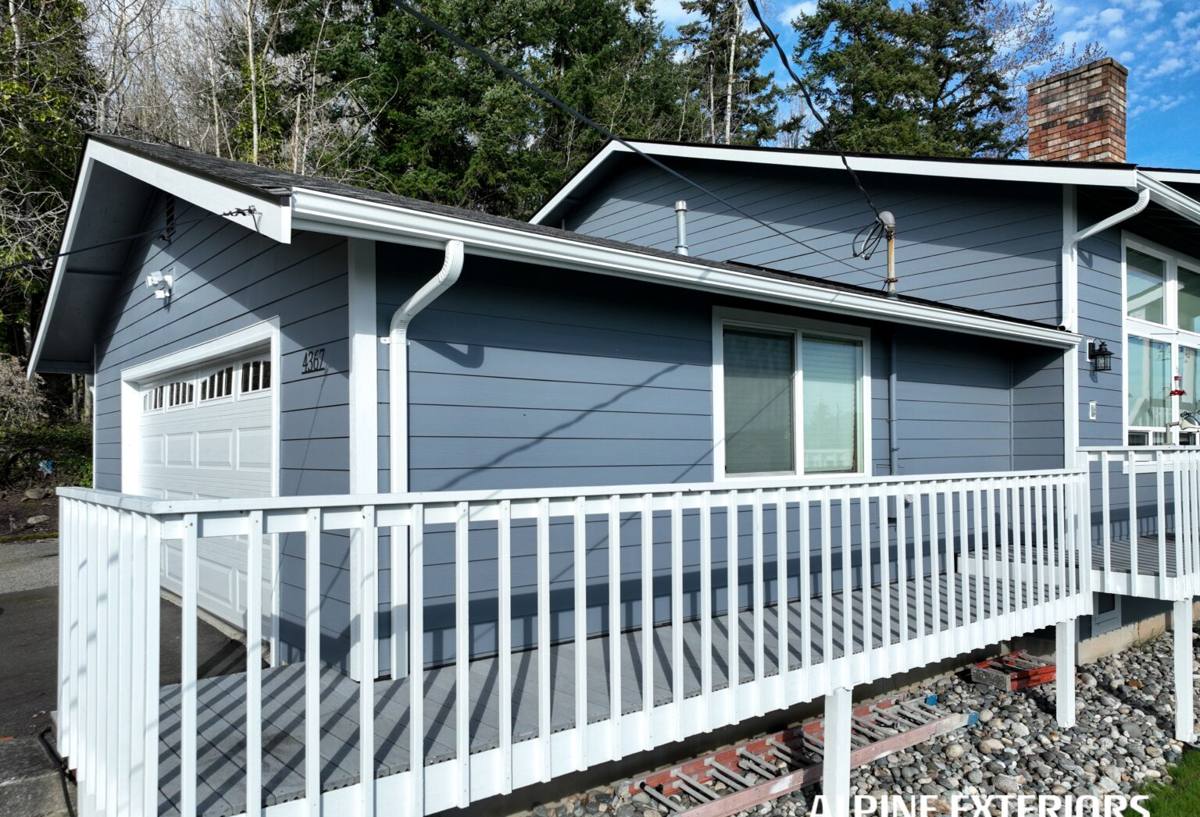
What a Storm Actually Does to a Peace Arch Roof
Wind
Wind coming off the water doesn't hit a roof evenly. It gets funneled and gusts harder at ridgelines, eaves, and corners — which is exactly where shingles and shakes are most likely to lift, crack, or blow off entirely. Once a single course of shingles lifts, the underlayment beneath it is exposed, and every subsequent rain event pushes water further under the roofing system.
Driving rain
Rain that comes in sideways during a storm doesn't behave like normal rainfall. It gets pushed up and under shingle laps, around vent boots, and into flashing joints that would otherwise shed water fine under calm conditions. A roof that's held up for years under ordinary rain can still leak during a wind-driven storm because the water is attacking it from an angle the roofing system wasn't designed to handle at that intensity.
Moss and pre-existing moisture
This is the piece that's easy to miss. A moss mat that's been sitting on a north-facing slope for a season holds water against the shingle surface and the deck below it long after the rest of the roof has dried out. When a storm adds volume on top of that, the already-saturated area is the first to fail — often in a spot that had no visible damage before the storm at all.
What an Honest Storm Damage Inspection Covers
A rushed inspection after a storm usually just looks for the obvious: missing shingles, a visible hole, an active drip inside the house. A proper inspection covers more ground, because storm damage and pre-existing wear are almost always tangled together on a coastal roof.
- Every slope walked or scoped, not just the side facing the street
- Flashing at every penetration — chimneys, vents, skylights — checked for lifted or corroded seams
- Valleys checked for granule loss and debris buildup that traps water
- Fastener condition checked in areas with visible corrosion or salt staining
- Moss and organic buildup noted, including areas that look fine on the surface but are damp underneath
- Attic or interior ceiling check for water staining that hasn't reached the surface yet
- Gutters and downspouts checked for storm debris that's now blocking proper drainage
We document what we find with photos and a plain-language explanation, so if you're filing an insurance claim, you have something a claims adjuster can actually work with instead of a vague verbal description.
Repair, Not Just Patch
A storm repair that only addresses the spot that's actively leaking often misses the surrounding area that's been weakened but hasn't failed yet. If wind lifted three courses of shingles and one of them tore, replacing just the torn shingle without resealing the lifted ones around it is a callback waiting to happen. Our approach is to repair the full affected area — matching shingle or shake type as closely as possible, resealing and re-nailing adjacent courses that were disturbed, and rebuilding flashing rather than just caulking over a gap.
Caulk and roofing cement have their place for small, specific fixes, but they're not a substitute for correct flashing work or proper shingle replacement. Leaning on sealant to cover a flashing problem is exactly the kind of shortcut that turns into a bigger repair the following winter, once salt air and freeze-thaw cycling break the seal down.
When Repair Isn't Enough
Sometimes a storm reveals a roof that was already near the end of its service life — widespread granule loss, a deck with soft spots from long-term moisture, or flashing so corroded from salt exposure that patching one section just means the next section fails within a year. In those cases we'll tell you honestly that repair is a short-term fix and a fuller re-roof conversation is worth having, rather than billing you repeatedly for patches on a roof that's structurally tired.
Repair Cost Factors
| Factor | Why It Matters |
|---|---|
| Extent of wind damage | A handful of lifted shingles costs far less to correct than a full slope that's been compromised |
| Flashing involvement | Rebuilding flashing at chimneys or valleys takes more labor and material than shingle-only repairs |
| Roofing material | Matching cedar shake, architectural shingle, or metal roofing affects material cost and availability |
| Deck condition underneath | Rotted or soft sheathing found during repair adds cost but has to be addressed, not skipped |
| Access and roof pitch | Steeper roofs and difficult access add labor time and safety equipment needs |
| Moss remediation needed | Removing built-up moss and treating the area properly adds a step but prevents repeat damage |
Most straightforward storm repairs on homes in this area run from several hundred dollars for isolated shingle and flashing work up to a few thousand for more extensive wind damage with deck repair involved. We'll always give you a specific number after inspection rather than a guess over the phone.
Why It Matters That We Already Work in the Peace Arch Area
A crew that only sees a roof once knows what's in front of them and not much else. A crew that works regularly in the Peace Arch and broader Semiahmoo area has a working sense of which slopes in this microclimate take the worst of the wind, how fast moss builds back after a treatment given the local shade and moisture patterns, and how salt exposure tends to age flashing and fasteners differently than it does even a few miles further inland. That context shapes how we inspect and what we flag as worth watching versus what needs attention now.
It also means we're not guessing at material availability or lead times for this area — we know what's realistic to schedule and source without stringing a homeowner along.
Our Process
- Inspection. Full roof walk or scope, interior check, and photo documentation, usually scheduled within a few days of your call.
- Written findings. A clear explanation of what's storm damage, what's pre-existing wear, and what needs to happen — no upselling a full re-roof if a targeted repair will genuinely hold.
- Insurance support. If you're filing a claim, we provide documentation formatted so your adjuster has what they need without back-and-forth delays.
- Repair. Matched materials, correct flashing rebuild where needed, and a cleanup that leaves your property the way we found it.
- Follow-up. We tell you what to watch for going into the next wet season, including moss and drainage maintenance specific to your roof's exposure.
Simple Maintenance That Reduces Storm Vulnerability
You can't stop a windstorm off the water, but a roof that's already in good shape going into one takes far less damage than a roof carrying moss buildup, clogged gutters, or loose flashing.
- Clear moss before it becomes a thick mat, not after
- Keep gutters and downspouts clear so storm runoff drains instead of backing up under the roof edge
- Have flashing checked every couple of years, since salt air ages it faster than the shingles around it
- Trim back overhanging branches that can drop debris or scrape shingles during high wind
- Address small leaks immediately — a stain the size of a dinner plate today can mean rotted sheathing by next storm season
Let's Take a Look
If a recent storm left you with a leak, missing shingles, or just a nagging feeling that something's not right up there, we're glad to come take an honest look. We'll tell you plainly what we find, what it'll take to fix it, and what can reasonably wait. Reach out for a free, no-pressure estimate using the form below.