 Semiahmoo Siding
 Windows in Laurel Face a Different Set of Conditions
Laurel sits close enough to the water that homes here take on a different kind of weather load than houses further inland in Whatcom County. Salt-laden air moves through window hardware and fastener systems faster than most manufacturers' warranty language accounts for. Driving rain off the Strait pushes water sideways into gaps that would stay dry in a calmer climate. And the long, damp moss season here keeps north-facing walls and window trim wet for weeks at a stretch, which is exactly the environment mold and slow rot prefer. A window that's a fine fit for a dry-side house doesn't automatically hold up the same way in Laurel.
None of that means Laurel homes need exotic products. It means the installation details that get skipped on an easy job can't get skipped here. Flashing sequence, sill pan design, sealant selection, and hardware material all matter more when the window is going to spend years absorbing salt spray and wind-driven rain.
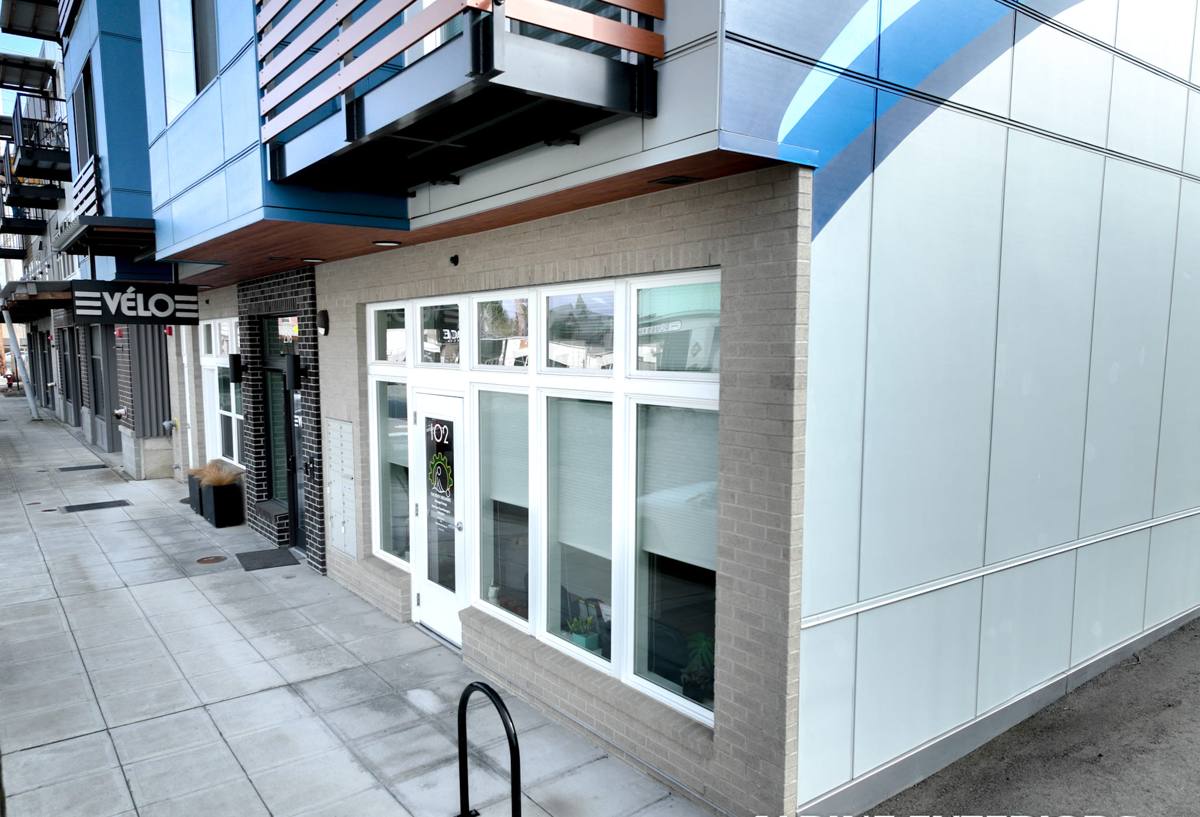
What Salt Air and Driving Rain Actually Do to a Window
Salt Air and Hardware
Salt in the air settles on everything, including the small metal parts inside a window frame that homeowners never see — screws, cam locks, balance systems, weep hole covers. Lower-grade fasteners and hardware corrode faster in this environment, and once a lock or balance starts to bind, homeowners often force it, which speeds up the failure. We use hardware and fasteners rated for coastal exposure and avoid mixing incompatible metals at contact points, since that's what accelerates galvanic corrosion near saltwater.
Driving Rain and Water Path
Wind-driven rain doesn't fall straight down — it gets pushed sideways and upward against the wall, which means water finds its way to spots a standard installation wasn't built to handle. The sill pan, the flashing laps, and the sealant joint at the head and jambs all have to work together as a system so water that reaches the window gets directed back out, not into the wall cavity. A window can be a good product and still leak if that water path isn't built correctly during installation.
Moss Season and Moisture Dwell Time
Whatcom County's long wet season means some parts of a house — especially shaded, north-facing walls — stay damp far longer than others. Moss doesn't just grow on roofs; it takes hold on window sills, trim, and any low spot where water sits instead of draining. Extended moisture dwell time around a window opening is one of the more common causes of slow, hidden rot in the framing behind the trim, which is a much bigger repair than the window itself.
What a Correct Installation Looks Like
Whether we're replacing one window or doing a whole-house project in Laurel, the installation follows the same core sequence. Skipping any one of these steps is usually where problems start, even with a high-quality window.
- Remove the old window carefully and inspect the framing and sheathing underneath for hidden rot before anything new goes in
- Repair or replace any compromised framing — installing a new window over damaged wood just hides the problem
- Install a sloped sill pan so any water that gets past the window sheds outward instead of pooling
- Flash the opening in the correct shingle-lap order so water is always directed down and out, never trapped behind a layer
- Set the window level, plumb, and square, then fasten per manufacturer spec — not just "tight enough"
- Seal and insulate the gap between window and framing with the right materials, avoiding over-sealing that traps moisture inside the frame
- Finish exterior trim and caulking with products suited to marine and high-UV exposure
- Test operation and hardware function before calling the job done
Sill Pans and Flashing Aren't Optional Here
On a drier inland job, some installers skip a sill pan and rely on caulk alone. In Laurel, with driving rain hitting the wall regularly, that shortcut catches up with a house within a few seasons. A proper sill pan and correctly lapped flashing cost very little extra time during installation compared to the cost of opening up a wall to fix rot later.
Choosing Materials That Match This Climate
Window frame material matters more here than in a mild, dry climate. The table below covers the honest trade-offs for the common options, based on how they hold up under salt exposure, sustained moisture, and UV.
| Frame Material | Salt/Coastal Performance | Maintenance | Notes |
|---|---|---|---|
| Vinyl (quality, welded corners) | Good — doesn't corrode or rot | Low | Widely used for coastal replacement; check for UV-stable formulation |
| Fiberglass | Very good — stable, low expansion/contraction | Low | Higher upfront cost, holds paint well if color changes are wanted later |
| Aluminum | Fair — can corrode over time near salt air unless coated well | Moderate | Thermally less efficient unless thermally broken |
| Wood (clad or unclad) | Weakest in this specific climate unless meticulously maintained | High | We'll install it if a homeowner wants the look, but we're upfront about the maintenance commitment near the water |
We're not going to tell you a certain product is "bad" — every material has a place. But we do set our own standard for what we'll stand behind on a Laurel job, and that standard leans toward materials that don't ask a homeowner to fight moisture and salt exposure every year just to keep the window looking and working right.
Glass Package Considerations
Double-pane, low-E glass is the practical baseline for this area — it helps with both energy performance and condensation control, which matters when humidity stays high for months. Argon-filled units perform well as long as the seal quality is good; a failed seal shows up as fogging between the panes, which is one of the more common warranty issues we see on older installations regardless of brand.
Our Process for a Laurel Window Project
1. On-Site Assessment
We start by looking at the existing windows and the wall condition around them — not just the glass and frame, but trim, sill condition, and any signs of past water intrusion. This tells us what the job actually needs before we quote anything.
2. Straightforward Quote
We walk through window options, frame material trade-offs, and a realistic cost range based on what your home actually needs, not a one-size-fits-all package.
3. Scheduling Around Weather
Window replacement means the wall is open to the outside for a period of time. We plan installation days around forecasted dry windows where possible and take precautions to protect the opening if weather turns during a multi-window project.
4. Installation and Walkthrough
We follow the sill pan, flashing, and sealing sequence described above on every unit, then walk the homeowner through the finished work, including how the hardware operates and what routine maintenance looks like in this climate.
Maintenance That Actually Extends Window Life Here
- Rinse accumulated salt residue off exterior frames and glass periodically, especially after storms
- Keep weep holes clear of debris, pollen, and moss so water can drain out as designed
- Check and lightly lubricate hardware (locks, cranks, balances) that operates less smoothly than it used to
- Inspect exterior caulk lines yearly and touch up before cracks let water behind the trim
- Watch shaded, north-facing sills for moss or persistent dampness — address early rather than after trim damage shows
Signs a Window Needs Attention Sooner Rather Than Later
Fogging between panes, hardware that's started to bind or corrode, soft or discolored trim, drafts you can feel on a windy day, or visible moss/algae growth right at the sill are all worth a look before they become bigger repairs. In this climate, small issues tend to progress faster than homeowners expect because the moisture exposure is nearly constant for months at a time.
Why Local Experience Matters for This Job
A window installer who mostly works drier, inland jobs isn't wrong about window installation in general — they're just working from a different set of default assumptions. A crew that regularly works in Laurel and the broader Semiahmoo area already knows which details can't be shortcut: the sill pan, the flashing order, the hardware grade, the caulk formulation that actually holds up against salt and UV together. That familiarity shows up less in any single visible feature and more in how the house performs three, five, and ten years after installation, which is really the only metric that matters for a window job.
If you're weighing window replacement or new installation for a Laurel home, we're happy to come take a look and give you a straightforward, no-pressure estimate — just fill out the form below and we'll get in touch.