 Semiahmoo Siding
 Decks in Laurel Face a Different Kind of Wear
A deck in Laurel doesn't fail the same way a deck inland does. The combination of salt-laden air off the water, long stretches of driving rain, and a moss season that can run from October well into spring puts a different kind of stress on outdoor structures here than what you'd see on the east side of Whatcom County. Metal fasteners corrode faster near the shoreline. Wood stays damp longer because the drying windows between storms are short. And moss doesn't just sit on the surface — it holds moisture against the decking and framing underneath, which is where the real damage starts.
We repair decks in Laurel and the surrounding Semiahmoo area regularly, and the pattern is consistent: the problems that show up first are cosmetic — a soft board, a stain, a patch of green — but the problems that actually matter are usually one layer down, in the framing, the ledger connection, or the fasteners nobody sees until they fail.
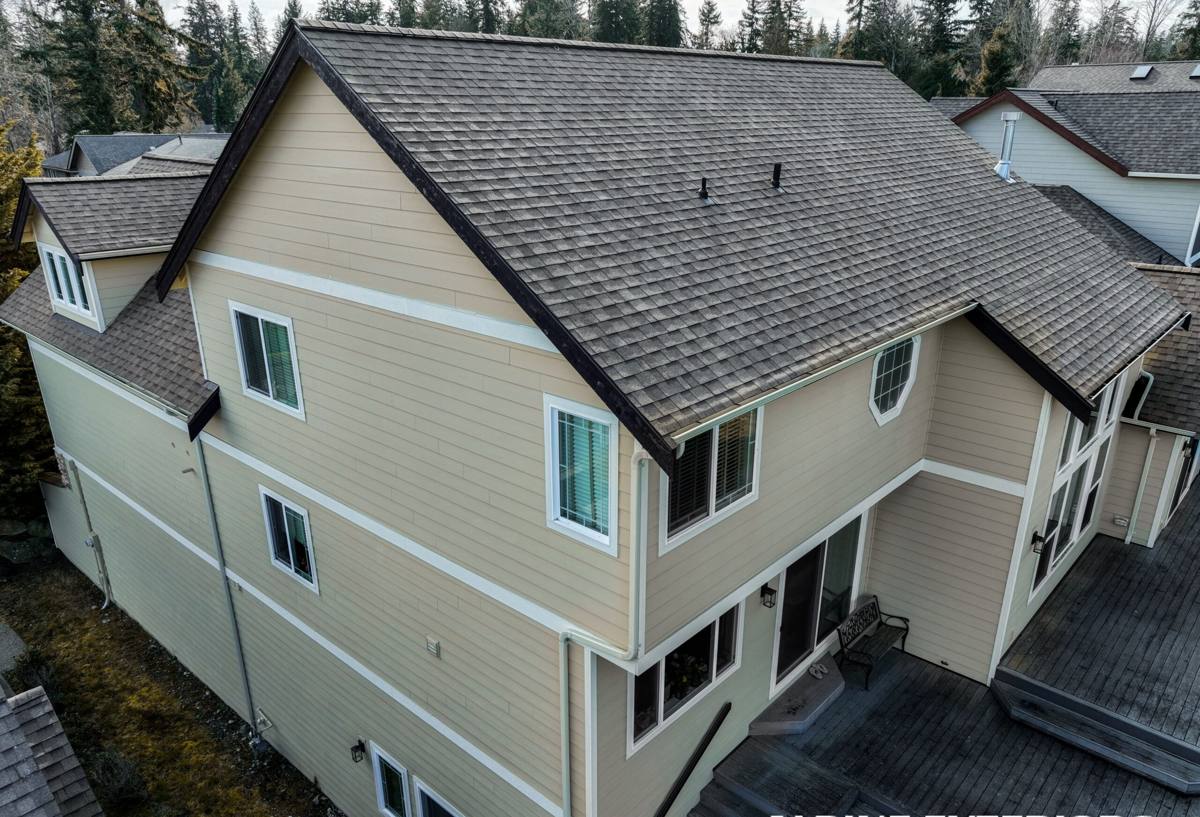
Signs Your Deck Needs Repair Now, Not Later
Deck damage in a wet, coastal climate rarely announces itself loudly. It shows up as small changes that are easy to write off as normal aging. Here's what we tell Laurel homeowners to actually check for:
- Boards that feel spongy or flex more than neighboring boards when you walk on them
- Rust streaking below fastener heads or around joist hangers
- Gaps or dark staining where the deck ledger meets the house
- Moss or algae holding a constant damp sheen even a day or two after rain stops
- Railing posts that wiggle at the base, even slightly
- Stair stringers that feel uneven or have visible splitting near the ground
- A musty smell coming from underneath the deck
Any one of these on its own might be minor. Two or three together usually means moisture has been getting into the structure for a while, and it's worth having it looked at before the next wet season rather than after.
The Repairs We See Most Often in Laurel
Ledger Board and Rim Joist Rot
The ledger board — where the deck attaches to the house — is the single most important connection on the whole structure, and it's also the most common failure point we find in this area. Driving rain gets pushed sideways by wind coming off the water, and if the original flashing wasn't installed correctly (or wasn't installed at all, which was common on older decks), water tracks behind the ledger and rots it from the inside. By the time you can see damage from outside, the rot is often already well established.
Fastener and Hardware Corrosion
Salt air accelerates corrosion on anything that isn't rated for it. We regularly find decks where the original nails, screws, or joist hangers were standard galvanized hardware that was fine for a few years but is now rusting through. Corroded fasteners don't just look bad — they lose holding strength, which is a structural issue, not a cosmetic one.
Decking Board Failure
Whether it's wood or composite, decking boards take the most direct weather exposure. Wood boards cup, split, or soften from repeated wet-dry cycles. Older composite boards (especially first-generation products from the late 1990s and early 2000s) can flake or swell at cut edges where moisture gets in. Either way, individual board replacement is usually straightforward as long as the framing underneath is sound.
Moss and Surface Buildup
Moss itself isn't structural damage, but it's a warning sign. It grows where moisture sits, and moisture that sits long enough to grow moss is also soaking into the wood underneath. A deck with heavy moss coverage almost always has softer boards or framing in the same area once we get underneath it.
Railing and Stair Stability
Railings and stairs get more repeated stress (leaning, gripping, foot traffic) than the deck surface itself, and their connection points are smaller, which means less margin before a loose post or a cracked stringer becomes a safety issue.
Repair or Replace? How We Help You Decide
Not every deck problem means starting over, and not every deck is worth patching. The honest answer depends on how much of the structure is affected versus the surface.
| Factor | Repair Usually Makes Sense | Replacement Usually Makes Sense |
|---|---|---|
| Framing condition | Joists and ledger are solid; damage is isolated to a few boards or connections | Rot has spread through multiple joists or the ledger connection is compromised |
| Age of structure | Deck is under 15-20 years old with good bones | Deck is original to an older home and has never been re-flashed or upgraded |
| Extent of moss/moisture damage | Limited to shaded corners or specific low spots | Widespread across the whole surface, suggesting a drainage or slope problem |
| Fastener condition | Corrosion is limited and hardware can be swapped board by board | Most hardware throughout is rusted and failing |
| Budget priority | Want to extend the life of a structurally sound deck cost-effectively | Want a long-term fix with updated materials and full code compliance |
Most of the time, a Laurel deck falls somewhere in the middle — solid overall with a few specific problem areas. That's exactly the kind of job repair is built for, and it's usually the more cost-effective path as long as the framing checks out.
How Our Deck Repair Process Works
- On-site inspection. We walk the deck surface, get underneath it when access allows, and check the ledger connection, joists, posts, and fastener condition — not just what's visible from the top.
- Honest scope discussion. We tell you what we found, what's driving the damage (usually moisture intrusion or corrosion in this climate), and what your realistic options are, including if repair isn't the right call.
- Removal of compromised material. Rotted boards, failed hardware, and any damaged framing get pulled out completely — we don't cover over soft wood or leave corroded connectors in place.
- Moisture management first. Before anything gets rebuilt, we address the actual water path: proper flashing at the ledger, corrected slope or gapping between boards, and drainage where standing water has been an issue.
- Rebuild with upgraded materials. New framing, hardware, and decking go in matched to the existing structure where possible, using materials rated for coastal exposure rather than a straight like-for-like swap of what failed.
- Final check for movement and level. Railings get tested for rigidity, stairs get checked for even rise, and the whole repaired section gets walked before we call it done.
Materials We Use and Why
In a salt-air, high-rainfall environment, the materials matter as much as the workmanship. We don't rebuild a Laurel deck with the same grade of hardware that failed the first time.
- Stainless steel or high-corrosion-rated fasteners in place of standard galvanized hardware anywhere near the shoreline exposure zone
- Self-adhering flashing membrane at the ledger board connection, not just building paper or caulk
- Pressure-treated lumber rated for ground contact on any framing near grade or with limited airflow underneath
- Composite or capped decking as an option where homeowners want to reduce future moss and moisture maintenance, weighed honestly against the higher upfront cost versus wood
We'll walk through the trade-offs on decking material directly with you — wood costs less upfront but needs more maintenance in this climate, while composite costs more initially but handles the wet-dry cycle and moss exposure with less upkeep over time. Neither is wrong; it depends on your budget and how much maintenance you want to take on.
Living With Moss Season Between Repairs
Even a freshly repaired deck will face the same moss pressure every fall and winter that caused problems in the first place. A few habits go a long way toward protecting the work:
- Sweep leaves and organic debris off the surface regularly during fall, since trapped debris holds moisture directly against the boards
- Keep gaps between decking boards clear so water drains through instead of pooling
- Address moss with a deck-safe treatment early in the season rather than letting it establish through a full wet winter
- Check the ledger flashing and any visible fasteners once a year for early rust or gaps
None of this replaces a proper inspection, but it buys time between them and helps a repair actually last.
Why a Crew That Already Works in Laurel Matters
Deck repair done by someone unfamiliar with this specific coastal exposure often misses the actual cause of failure — they'll replace a rotted board without addressing the flashing gap that rotted it, and the same problem shows up again in a year or two. Working regularly in Laurel and across the Semiahmoo area means we know which connections take the worst of the wind-driven rain, which fastener grades hold up and which don't, and how aggressive moss season really gets here compared to more sheltered parts of Whatcom County. That local pattern recognition is often the difference between a repair that lasts and one that's a temporary patch.
Get a Straight Answer on Your Deck
If your deck has soft spots, rust stains, persistent moss, or just feels less solid than it used to, it's worth having someone look at it before another wet season adds to the damage. We're happy to come out, take an honest look above and below the surface, and give you a clear picture of what's actually going on — no pressure, no inflated scope. Reach out using the form below to schedule a free estimate.