 Semiahmoo Siding
 Drayton Harbor Homes Face a Different Kind of Weather
Homes around Drayton Harbor sit right at the edge of where Semiahmoo meets the water, and that location comes with a specific combination of stresses that inland Whatcom County homes don't deal with in the same way. Salt-laden air moves off the harbor and settles on siding, trim, and fasteners day after day. Wind-driven rain off the water hits walls at an angle instead of falling straight down, which pushes moisture into seams and laps that would stay dry on a more sheltered lot. And the long, damp, low-light stretch of fall through spring here gives moss and algae months to establish themselves on anything that holds moisture at the surface.
None of this means a Drayton Harbor home needs exotic materials or unusual construction. It means the siding, the water-resistive barrier behind it, and the installation details all have to be matched to what this specific stretch of shoreline actually does to a house over twenty or thirty years. That's the lens we bring to every siding replacement in this neighborhood.
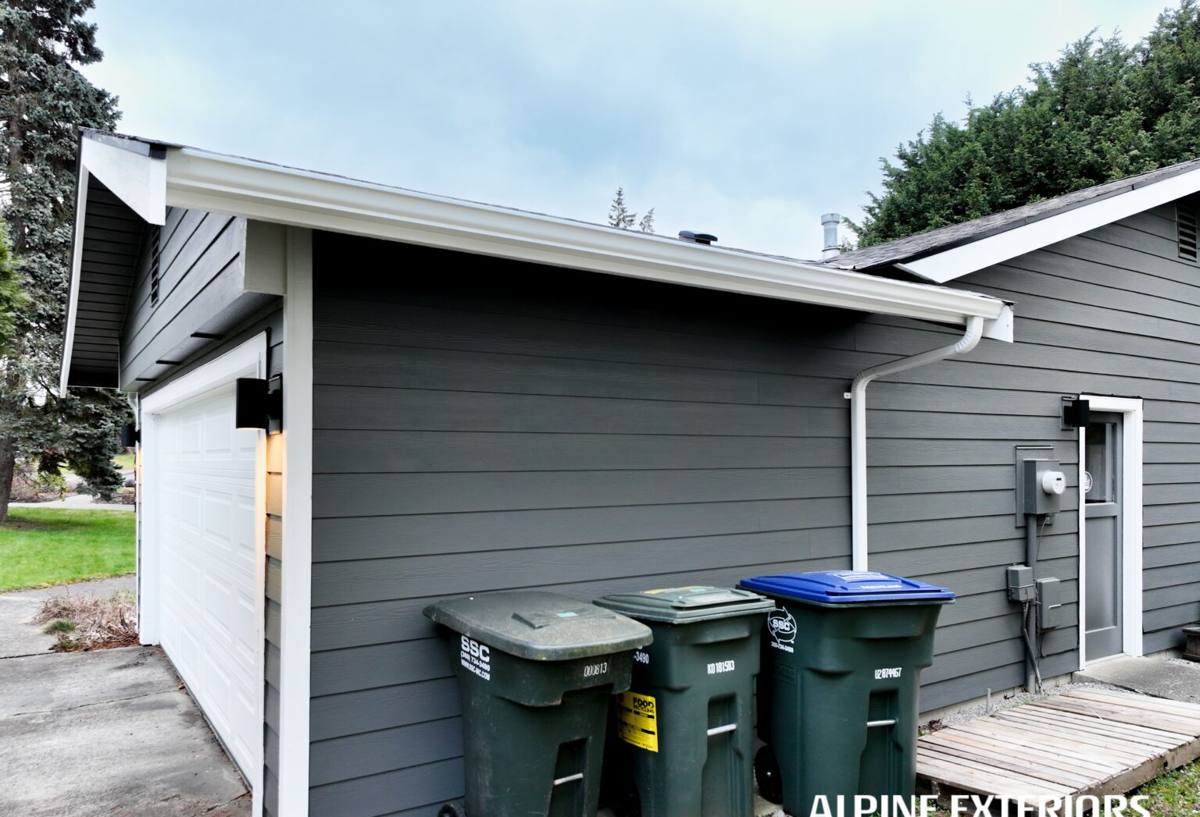
Why Siding Replacement Here Isn't a Generic Job
A siding replacement three miles inland and one on the water in Drayton Harbor can look identical from the street and still need different attention to detail. The differences that matter most:
- Salt exposure accelerates fastener and trim corrosion — hardware and flashing that would last decades elsewhere can start showing rust streaks and staining much sooner this close to the water.
- Wind-driven rain finds gaps that gravity-fed rain never would — laps, butt joints, and penetrations (hose bibs, vents, light fixtures) need tighter, more deliberate flashing and sealing.
- Shade and moisture prolong moss and algae growth — homes with mature trees or north-facing walls near the harbor stay damp longer after storms, which matters when choosing a finish and planning maintenance.
- Older siding on harbor-adjacent homes has often been failing quietly — moisture trapped behind siding for years doesn't always show on the surface until sheathing or framing is already affected.
What a Correct Siding Replacement Actually Involves
Siding replacement is not just pulling off old material and nailing up new panels. Done right, especially in a harbor-exposed location, it's a sequence where each step protects the next:
Tear-off and inspection
Old siding comes off in sections so we can see the sheathing underneath before deciding what happens next. This is the point where hidden moisture damage — soft sheathing, rot at window and door corners, corrosion around old fasteners — gets found and dealt with, rather than sealed back up under new material.
Sheathing repair and water-resistive barrier
Any compromised sheathing gets replaced, not patched over. A new water-resistive barrier goes on with correct lapping (upper courses over lower, always shedding water downward) and careful integration with window and door flashing — this layer is what actually keeps bulk water out of the wall assembly if wind-driven rain gets past the siding itself.
Flashing at every penetration
Every hose bib, vent, light fixture, and deck ledger is a place water wants to get behind the siding. On a harbor-exposed wall, we don't rely on caulk alone at these points — proper flashing does the real work, with sealant as a secondary line of defense, not the only one.
Installation to manufacturer clearance and fastening specs
James Hardie siding has specific requirements for ground clearance, roof-line clearance, fastener spacing, and joint treatment. Skipping these is the single most common cause of premature siding failure — not the product itself, but installation that ignored the spec.
Caulking, trim, and finish details
Trim and joints get sealed with products rated for the exposure, and factory-finished ColorPlus edges are treated correctly at cuts so the factory finish's warranty protection isn't compromised.
Why We Only Install James Hardie Fiber Cement
We standardized on James Hardie siding, and we use their HardieZone system to match the product to this specific climate rather than installing a one-size-fits-all panel. For Whatcom County's wet, marine-influenced weather, that generally means the HZ10 engineered line — formulated for climates that see prolonged moisture exposure, which describes Drayton Harbor about as well as anywhere in the region.
The reasons this matters here specifically:
- Fiber cement doesn't feed moss the way some organic or absorbent materials can — it's a non-combustible cement-based product engineered to resist moisture absorption at the surface, which matters given how long walls here stay damp after a storm.
- ColorPlus factory finish is baked on under controlled conditions — it holds up to salt air and UV better than field-applied paint, and it comes with its own finish warranty separate from the substrate warranty.
- Fiber cement is dimensionally stable — it doesn't expand and contract with humidity swings the way wood-based products can, which reduces the joint movement that lets water in over time.
- Non-combustible construction — an added layer of protection that has nothing to do with the harbor but is worth mentioning as part of why we standardized on it everywhere we work.
How Common Siding Materials Hold Up in This Environment
| Material | Salt air / driving rain performance | Moss and moisture behavior | Long-term maintenance here |
|---|---|---|---|
| Vinyl siding | Can warp or become brittle with temperature swings; seams are a common water entry point | Growth on surfaces that stay damp; harder to fully clean without damaging panels | Low upfront cost, but limited repair options if a section fails |
| Cedar / primed wood | Absorbs moisture readily; needs consistent refinishing to shed wind-driven rain | Prone to moss and mildew without regular treatment | Highest ongoing maintenance of the common options |
| LP SmartSide (engineered wood) | Performs reasonably when installed and maintained precisely, but edges are moisture-sensitive if any coating is compromised | Requires diligent caulking and paint upkeep to prevent moisture intrusion at cut edges | Moderate; installation quality matters more than with fiber cement |
| James Hardie fiber cement | Engineered HZ10 line built for prolonged moisture and marine-influenced climates | Resists surface moisture absorption; factory finish sheds water rather than holding it | Lowest ongoing maintenance of the group when installed to spec |
Our Process for a Drayton Harbor Siding Replacement
- On-site assessment — we walk the exterior, check for soft spots, staining, and failed caulk lines, and look specifically at the walls facing the harbor and prevailing wind.
- Written scope and product selection — we specify the Hardie product line, HZ10 engineering where it applies, color, and trim details before any work starts.
- Tear-off and sheathing inspection — old material comes off in sections so hidden damage is found and repaired, not covered up.
- Water-resistive barrier and flashing installation — done to manufacturer and code requirements at every penetration.
- Hardie siding installation — installed to clearance, fastening, and joint specifications that protect the warranty.
- Final detailing and walkthrough — trim, caulking, and cleanup, with a walkthrough so you know what was done and why.
Signs Your Drayton Harbor Home May Need Replacement Now
- Visible moss or algae staining that comes back within weeks of cleaning
- Soft or spongy spots when you press on siding, especially near the bottom courses
- Paint or finish that's bubbling, peeling, or chalking faster than it used to
- Rust streaks running down from fasteners or trim
- Gaps opening up at butt joints, corners, or around window trim
- A musty smell near exterior walls inside the home, which can indicate moisture already in the wall assembly
What Affects the Cost of a Job Like This
| Factor | Why it matters here |
|---|---|
| Extent of hidden sheathing damage | Harbor-exposed homes more often need sheathing repair discovered during tear-off, which adds scope once walls are open |
| Number of penetrations and trim details | Homes with more windows, vents, and architectural trim take more flashing and detail work per square foot |
| Wall exposure to wind and water | Walls facing the harbor directly may warrant extra attention to flashing and joint treatment |
| Product line and color selection | HZ10 engineered products and certain ColorPlus finishes are priced differently than standard lines |
| Access and site conditions | Waterfront lots, retaining walls, or limited equipment access can affect labor time |
Every one of these gets identified and priced up front in a written scope — not discovered as a surprise mid-project.
Why Local Experience on This Specific Stretch of Shoreline Matters
A crew that already works Drayton Harbor and greater Semiahmoo knows which walls take the worst of the wind-driven rain, how far salt air travels from the water on a given lot, and what moisture problems tend to look like on homes of a certain age in this specific setting. That's not something a crew coming from an inland job across the county picks up on the first visit. It shows up in where we pay extra attention to flashing, how we sequence work around this region's weather windows, and what we flag during the initial walk-through before a single panel comes off.
If your Drayton Harbor home's siding is showing its age, or you just want a straight answer about what shape it's really in, we're happy to take a look. The estimate is free, there's no pressure, and you'll get a clear, written explanation of what we find and what we'd recommend — use the form below to get started.