 Semiahmoo Siding
 Why Peace Arch Decks Wear Out Faster Than the Manual Says
If you own a home near the Peace Arch border area in Semiahmoo, you already know your deck doesn't age like a deck fifty miles inland. Whatcom County's marine layer sits right on top of these properties for much of the year, and that changes the math on how long lumber, fasteners, and finishes actually last. Salt-laden air off the strait accelerates corrosion on anything metal, driving rain gets pushed sideways into ledger boards and stair stringers, and a long moss season keeps deck surfaces damp for weeks at a stretch even when it isn't actively raining.
None of that means a deck near Peace Arch is doomed to fail early. It means the deck has to be built for these specific conditions from the ground up — not built to a generic spec sheet and hoped for the best. That distinction is the whole reason this page exists.
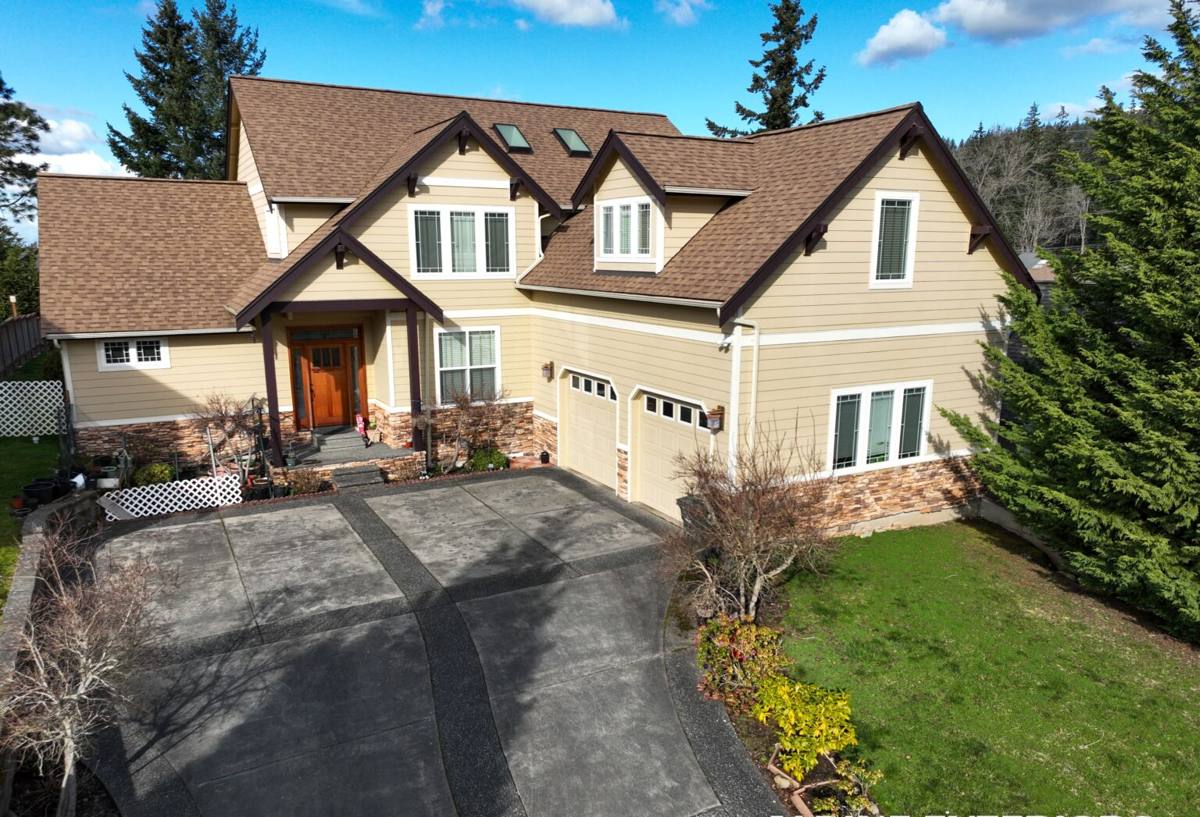
What Actually Fails First on Local Decks
Before we talk about replacement, it helps to know what we're replacing and why it gave out. On the decks we've assessed in this part of Whatcom County, failure almost never starts in the middle of the deck boards. It starts at the connections and the hidden framing.
The usual suspects
- Ledger board attachment — where the deck meets the house is the single most common point of hidden rot, especially on older decks flashed poorly or not at all
- Fasteners and hardware — standard galvanized screws and joist hangers corrode faster in salt air, and once a fastener weakens, it stops doing its job long before it visibly fails
- Post bases — ground contact and splash-back keep post bottoms wet, which is where rot typically starts even on treated lumber
- Stair stringers — exposed on multiple sides to wind-driven rain, stringers often show damage before the deck field does
- Moss and algae buildup — beyond being slippery, sustained moss cover holds moisture against the wood and shortens the life of any finish underneath it
A deck that "looks fine" from the yard can still have a compromised ledger connection or a rotted post base underneath. That's part of why we walk the whole structure, not just the walking surface, before quoting a replacement.
What a Correct Deck Replacement Involves Here
Deck replacement isn't just pulling old boards and screwing down new ones. Done right for this climate, it's a full evaluation of the structure with material and hardware choices that match the exposure.
Framing and structure
We check the ledger flashing, joist condition, post bases, and footing condition before we talk about decking material at all. If the framing is sound, sometimes only the surface needs replacing. If the framing has hidden rot or was never flashed correctly, replacing boards on top of it just delays the same failure.
Fasteners and hardware
In a salt-air environment, hardware grade matters more than most homeowners realize. We use fasteners and structural connectors rated for coastal exposure rather than standard-grade hardware, because the cost difference is small compared to the cost of redoing a deck in eight years instead of twenty-five.
Decking material
There's no single "best" decking material for every home — there are trade-offs, and we lay them out honestly rather than pushing whatever has the best margin.
| Material | How it handles local conditions | Maintenance reality |
|---|---|---|
| Pressure-treated wood | Affordable, widely available; needs consistent sealing to resist moisture and moss in a wet climate | Annual or biennial cleaning and refinishing |
| Cedar | Naturally moisture- and insect-resistant, ages to a silver-grey patina if left unfinished | Periodic cleaning; finish maintenance if you want to keep the original color |
| Composite decking | Resists moisture absorption and moss staining better than wood; performance varies by product line | Occasional washing; no sealing or staining required |
We'll talk through which fits your budget, how much upkeep you actually want to do, and how the deck will be used before recommending a direction — not before.
Drainage and moss prevention
Given how long moss season runs here, deck spacing and slope matter as much as the material itself. Proper board gapping, a slight slope away from the house, and clearing debris paths all reduce standing moisture. We build these details in rather than treating moss as something you fight with a pressure washer every spring.
Signs Your Peace Arch Deck Needs Replacing, Not Patching
Not every deck problem calls for full replacement. Here's how we tell the difference during an inspection.
- Soft or spongy spots when you walk the deck, especially near the house or stairs
- Visible gaps, rust streaks, or movement at the ledger connection
- Posts that feel loose or show soft wood at the base
- Persistent moss or algae that returns within weeks of cleaning
- Fasteners that are rusted, backing out, or showing corrosion stains on the wood around them
- A deck older than 15-20 years that has never had structural hardware upgraded
If you're only seeing surface graying or minor board cupping, that's often a refinishing or partial-board job, not a full tear-out. We'll tell you straight which category your deck falls into — a smaller job done right is better for you and for us than an unnecessary full replacement.
Our Process for a Deck Replacement Project
1. On-site assessment
We walk the full structure — decking, framing, ledger, posts, and stairs — and check for the failure points common to this area. You get a straight answer on what's failing and why.
2. Scope and material discussion
We go over material options, realistic cost ranges, and maintenance expectations based on how you actually use the space, not a one-size answer.
3. Permitting and planning
Deck replacement in Whatcom County often requires permitting depending on size, height, and scope of work. We handle what's needed for your specific project so it's built to code, not just to look right.
4. Demolition and structural repair
Old decking and any compromised framing come out. Ledger flashing, post bases, and connections get corrected before anything new goes down.
5. Installation
New framing hardware, decking, and railing go in to spec, with attention to drainage and airflow underneath — the details that determine whether this deck lasts.
6. Final walkthrough
We walk the finished deck with you, point out any care specifics for the material you chose, and answer questions before we consider the job done.
Why Local Experience Matters for This Job
A deck built to a generic national spec can look identical to one built for this climate — for the first year or two. The difference shows up later, in whether the ledger flashing was detailed for driving rain, whether the hardware was rated for salt exposure, and whether drainage was designed for a moss season that runs longer than most regions deal with. A crew that regularly works Peace Arch and the surrounding Semiahmoo area already knows which details matter here because they've seen what happens when those details get skipped. That's not a sales pitch — it's the practical reason local build experience shows up in how long a deck actually lasts, not just how it looks at handoff.
Cost Factors Worth Understanding Upfront
We don't publish fixed prices because every deck is a different size, structural condition, and material choice — but here's what actually drives the number up or down.
| Factor | Why it matters |
|---|---|
| Deck size and layout | Square footage and shape (multiple levels, angles, built-in benches) directly affect labor and material |
| Framing condition | Hidden rot or an unflashed ledger adds structural repair before new decking can go down |
| Material choice | Pressure-treated, cedar, and composite carry different upfront costs and different long-term maintenance costs |
| Height and stairs | Elevated decks with multiple stair runs require more structural work and railing than a low, single-level deck |
| Permitting scope | Larger or higher decks typically require more involved permitting and inspection |
We give you a real number after we've actually seen the deck — not a phone estimate that changes once we pull the boards.
Get a Straight Answer on Your Deck
If your deck near Peace Arch is showing soft spots, rust stains, moss that won't quit, or it's simply old enough that you're wondering whether it's still safe to use, it's worth having someone look at it before another wet Whatcom County winter goes by. We'll give you an honest read on what's actually needed — repair, partial replacement, or full rebuild — with no pressure either way. Reach out for a free estimate and we'll walk the deck with you in person.