 Semiahmoo Siding
 Decks in Custer take a different kind of beating than decks twenty miles inland. Sitting close to the Semiahmoo shoreline and the open water of Boundary Bay and the Strait of Georgia, Custer homes get a steady diet of salt-laden air, wind-driven rain that finds its way under flashing and into end grain, and a moss and algae season that runs longer here than almost anywhere else in Whatcom County. A deck that would hold up fine in a drier part of Washington can develop real structural problems here in half the time if it isn't built and maintained with that climate in mind.
This page covers what we actually see on Custer decks, how we sort a repairable problem from a replace-it problem, and what a correct repair looks like in this specific environment. It's written for homeowners trying to figure out whether their deck needs a patch job or something more serious, and what a contractor who works this area regularly should be doing differently than a crew coming from somewhere drier.
Why Custer Decks Wear Differently
Three things combine here that don't combine the same way elsewhere in the county:
- Salt air corrosion. Proximity to Semiahmoo Bay and the Strait means airborne salt settles on metal fasteners, joist hangers, and railing hardware. Standard galvanized coatings break down faster under salt exposure than they would twenty miles inland.
- Driving rain. Storms off the water tend to come in sideways rather than straight down, which pushes moisture into joints, under flashing, and behind ledger boards that would stay dry in a calmer rain pattern.
- Extended moss season. Whatcom County's wet months stretch long, and shaded or north-facing decks in Custer can stay damp for weeks at a stretch. Moss and algae hold that moisture directly against the wood surface, which is worse for rot than rain alone.
None of these on their own is unusual for the Pacific Northwest. Together, and applied consistently year after year, they're why we see fastener corrosion and localized rot on Custer decks earlier than the deck's age alone would suggest.
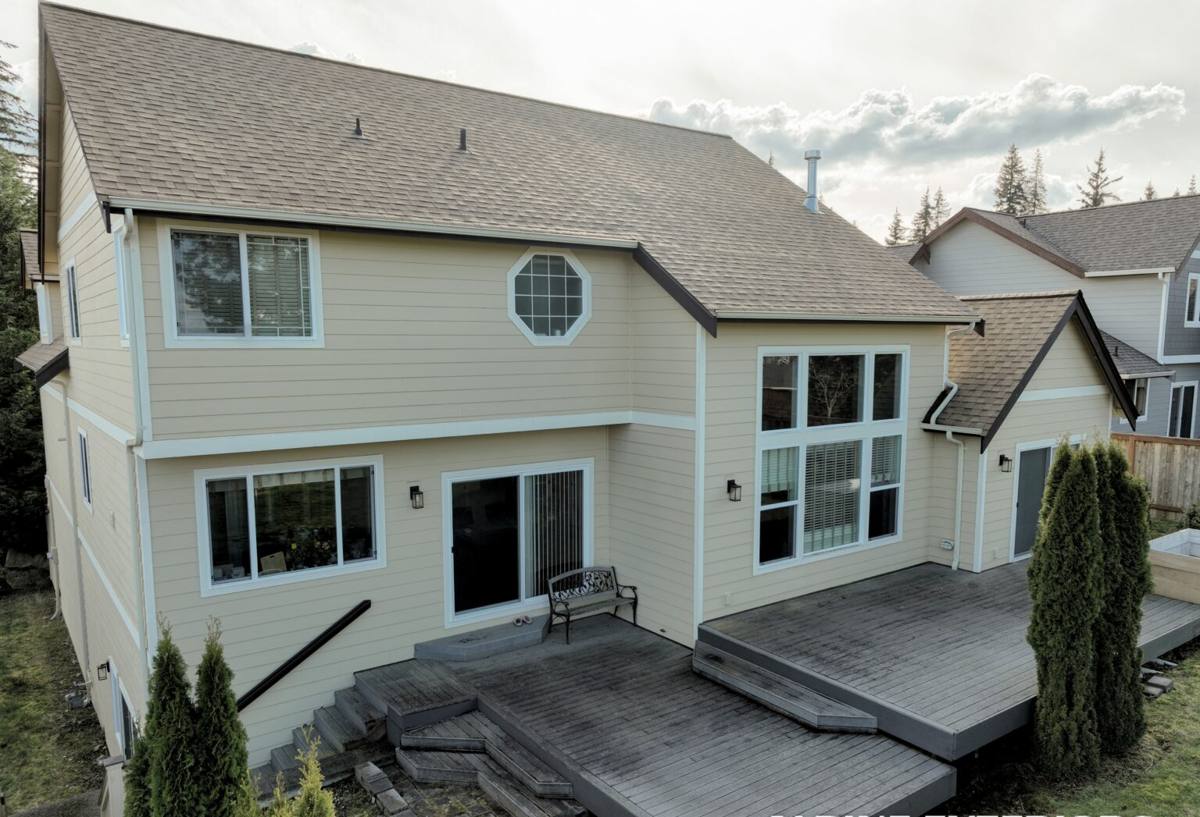
The Repair Problems We Actually See
Ledger board and rim joist rot
The ledger board — where the deck attaches to the house — is the single most common serious repair we find. Wind-driven rain gets behind the flashing (or finds a flashing detail that was never properly installed), and the wood stays wet against the house wall long after the surface deck boards have dried. This is a structural connection, not cosmetic, and it's the first thing we check on any Custer repair call.
Fastener and hardware corrosion
Joist hangers, structural screws, and railing brackets that aren't rated for coastal exposure will show rust streaking and, eventually, weakening well before the wood around them fails. On older Custer decks we regularly find hardware that was fine when installed but was never upgraded to a coastal-rated spec.
Moss and algae buildup on decking and stairs
Beyond being a slip hazard, moss holds moisture against the board surface constantly, which accelerates surface rot and finish failure. Shaded stair treads and north-facing sections are usually the worst offenders.
Railing and post-base failure
Posts anchored with hardware at or near grade level take the brunt of splash-back and standing moisture. We see loose or spongy posts more often at the base than anywhere else on the railing system.
Board cupping, splitting, and surface checking
Repeated wet-dry cycling — soaked in a storm, dried in a break of sun — causes wood decking to cup and check over time. This is often cosmetic early on but becomes an entry point for deeper moisture if left unaddressed.
Repair or Replace: How We Actually Decide
Not every damaged board means a new deck, and not every deck that "looks rough" is actually a repair candidate. We look at three things: how much of the structural frame is affected, how localized the damage is, and how old the existing structure is relative to code and hardware standards.
| Situation | Usually Repair | Usually Replace |
|---|---|---|
| Damage location | Isolated boards, one railing section, one stair run | Ledger, main beams, or multiple joists affected |
| Fastener condition | Localized corrosion, easily swapped | Widespread corrosion across the structure |
| Framing age/spec | Frame is sound and reasonably current | Frame predates current attachment and flashing standards |
| Moisture source | Identifiable and fixable (flashing detail, drainage) | Chronic, structural, or unknown source |
| Cost relative to new build | Repair is a fraction of replacement cost | Repair scope approaches replacement cost anyway |
We'll tell you honestly which category your deck falls into. A deck with a failing ledger connection or widespread frame rot isn't something we'll patch around — that's a safety issue, not a cosmetic one, and we'll say so plainly.
What a Correct Repair Actually Involves
A repair that holds up in Custer's climate goes beyond swapping out the board that looks bad. What we check and address on every repair:
- Full inspection of the ledger-to-house connection and its flashing, since this is the most common hidden failure point
- Condition of joist hangers, structural screws, and connector hardware — not just the wood
- Post bases and any hardware at or near grade, where splash-back exposure is worst
- Drainage path under and around the deck — standing water against framing is a repeat-failure guarantee
- Extent of rot by probing beyond the visibly damaged area, since wood rot often extends further than the surface shows
- Whether existing fasteners are coastal-rated or need to be upgraded during the repair, not just replaced like-for-like
Replacing a rotted board without checking what's underneath it is the most common shortcut repair we see from past work — and it's usually why the same spot fails again within a couple of seasons.
Our Process
1. On-site inspection
We walk the full deck, probe suspect areas, and check the structure from underneath where access allows — not just what's visible from the top.
2. Clear scope and honest recommendation
You get a straightforward explanation of what's actually wrong, what's cosmetic versus structural, and whether repair or replacement makes sense for your situation and budget.
3. Repair work
We address the root moisture or corrosion issue first, then rebuild the affected section with materials and fasteners suited to this coastal environment — not just whatever matches the existing deck.
4. Protection going forward
Where it applies, we'll flag flashing details, drainage fixes, or maintenance steps that will slow down the next round of damage, since a repair without addressing the cause is a temporary fix.
Materials and Fasteners: Why the Choice Matters Here
In a coastal, high-moisture environment, the materials used in a repair matter as much as the workmanship. Our standard approach for Custer repairs:
- Fasteners: stainless steel or coastal-rated coated screws and connectors rather than standard galvanized, given the salt air exposure
- Framing lumber: pressure-treated lumber rated for ground contact where the repair is near grade or in a chronically damp location
- Flashing: proper ledger flashing detail on any repair that touches the house connection — this is the detail most often missing on older decks
- Decking material: we'll discuss wood versus composite honestly, including the real maintenance tradeoffs — composite resists moisture and moss better but costs more up front, while wood is cheaper initially but needs more consistent upkeep in this climate
We don't push one decking product as a cure-all. Composite decking handles Custer's wet, mossy conditions with less maintenance, but it's a bigger investment and still needs proper structural framing underneath it — composite decking doesn't fix a rotted frame, it just sits on top of one. Wood decking is a legitimate, lower-cost choice as long as the homeowner is realistic about cleaning and refinishing on a regular schedule.
Maintenance Checklist for Custer Homeowners
Between repairs, a few habits go a long way toward slowing down the damage cycle in this climate:
- Clear moss and debris off decking and stair treads at least twice a year, more often on shaded sections
- Check for standing water pooling on the deck surface or underneath it after storms
- Look at the ledger board flashing line for gaps, cracking, or discoloration once a year
- Inspect post bases and railing hardware for rust streaking or looseness
- Keep gutters and downspouts near the deck clear so runoff isn't dumping directly onto or under it
- Re-seal or refinish wood decking on the schedule the product actually calls for, not just when it looks bad
Why a Crew That Already Works Custer Makes a Difference
A contractor who works this stretch of Whatcom County regularly has already seen how the local combination of salt air, storm direction, and moss season plays out on real decks — which connection points fail first, which fastener specs actually hold up, and which shortcuts from past construction tend to cause problems down the line. That's not something you get from a general repair crew working from a generic checklist. It shows up in where we look first during an inspection and in the material and hardware choices we default to, without you having to ask.
If you've got a deck in Custer that's showing rot, loose railings, corroded hardware, or just isn't holding up the way it used to, we're happy to take a look. Reach out for a free, no-pressure estimate — we'll tell you honestly what we find and what it would take to fix it right, using the form below.