 Semiahmoo Siding
 Windows Built for the Marietta Waterfront, Not a Catalog Somewhere Inland
Marietta sits close enough to the water that the air itself works against a house year-round. Salt-laden moisture off the bay finds its way into every gap, seam, and fastener a window has. Add Whatcom County's driving rain — the kind that comes in sideways during a winter blow — and a long, damp moss season that keeps humidity high for months at a stretch, and you have a climate that is genuinely harder on windows than most of the country ever deals with. A window that performs fine in a dry inland town can fail early here, not because it's a bad product, but because it was never asked to handle what Marietta throws at it.
"Custom" in this context isn't a marketing word. It means the window openings, the flashing details, the glazing package, and the frame material are all chosen specifically for a house sitting in a salt-air, high-rainfall pocket of Semiahmoo — not picked off a shelf and hoped for.
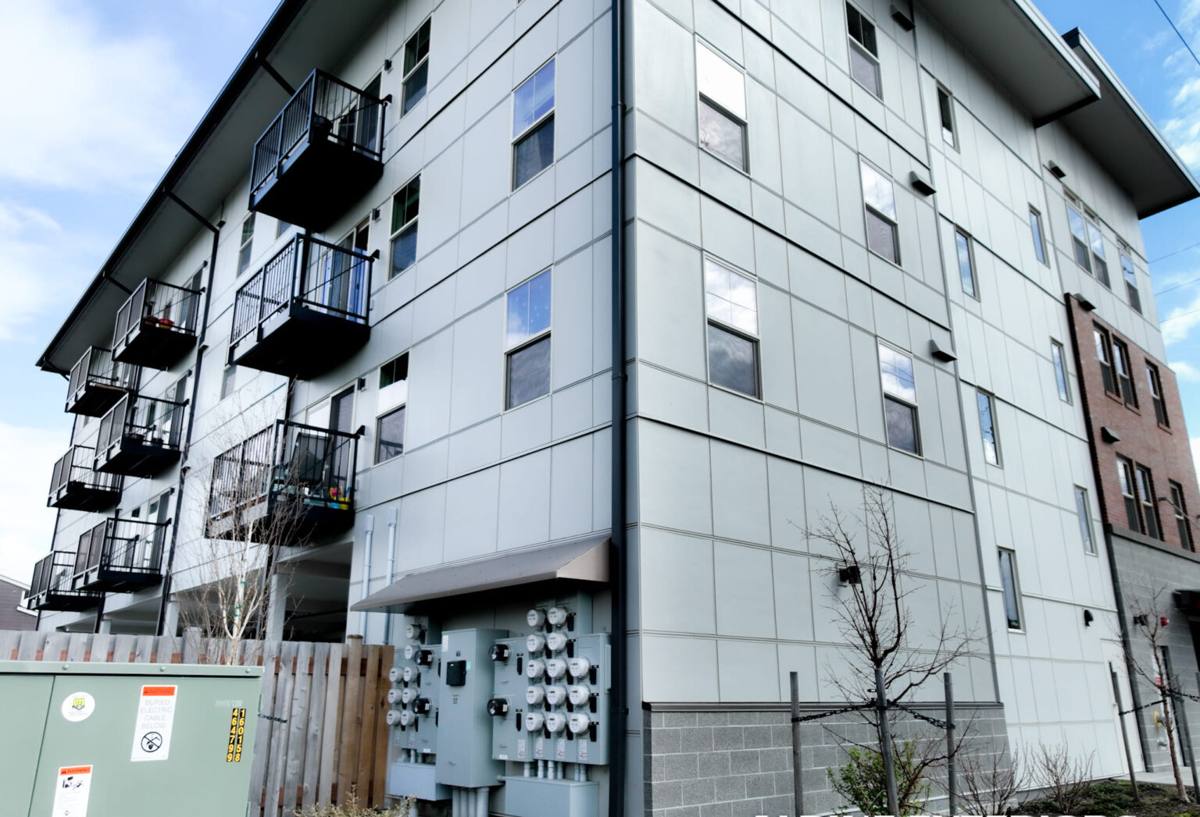
What Salt Air, Driving Rain, and Moss Season Actually Do to a Window
Salt Air
Airborne salt is corrosive to metal hardware — hinges, locks, balance systems, and screws — long before most homeowners notice anything wrong with the glass itself. It also accelerates the breakdown of poor-quality seals and finishes, which is why hardware and finish quality matter more here than they would forty miles inland.
Driving Rain
Wind-driven rain doesn't just fall on a window, it gets pushed into it. Any weakness in the flashing, the sill pan, or the sealant joint becomes an entry point. Over time, water that gets behind the frame rather than running off it causes rot in the surrounding wall framing — a much more expensive problem than the window itself.
Moss and Sustained Moisture
Long stretches of damp, shaded conditions let moss, algae, and mildew take hold on anything that stays wet — including window sills, trim, and cladding around the frame. That constant moisture load is hard on wood components specifically and is one of the biggest reasons material choice matters so much for this area.
Choosing the Right Frame Material for This Climate
There is no single "best" window material everywhere — the right call depends on exposure, budget, and how much upkeep a homeowner wants to take on. Here's how the common options actually hold up in a Marietta-type coastal, high-moisture setting:
| Frame Material | Salt-Air Performance | Moisture / Rot Behavior | Maintenance |
|---|---|---|---|
| Vinyl | Good — won't corrode | Doesn't rot; can flex over decades | Low |
| Fiberglass | Very good — stable, low expansion | Excellent moisture resistance | Low |
| Wood (unclad) | Poor unless finish is maintained | Vulnerable to rot without upkeep | High |
| Wood-clad (aluminum or vinyl exterior) | Good on the exterior face | Interior wood still needs a sound seal | Moderate |
| Aluminum | Fair — needs a quality finish to resist pitting | Doesn't rot, but can corrode without proper coating | Low-Moderate |
We don't push one brand or product line as the answer for every house. Our standard is matching the material to the exposure — a wall that takes the brunt of the weather off the water gets treated differently than a sheltered wall on the same house. We'll tell you plainly where a cheaper option is a fine trade-off and where it isn't worth the risk.
Where Installation Quality Matters More Than the Window Itself
A high-end window installed poorly will leak. A mid-range window installed correctly, with the right flashing and sealing sequence, will outperform it. In a driving-rain climate, installation detail is at least as important as product selection, and it's the part homeowners can't see once trim goes back on.
The details that actually keep water out
- A sloped sill pan under the window that directs any water that does get in back outside, not into the wall cavity
- Flashing tape and building paper integrated in the correct shingle-lap order so water always runs down and over, never behind
- Sealant used at the right joints only — over-sealing everything can trap moisture just as badly as under-sealing
- Proper shimming so the frame isn't racked, which keeps weatherstripping compressing evenly for years instead of failing in one spot first
- Trim and cladding tie-in that sheds water away from the window rather than funneling it toward the frame
This is also where moss and algae growth gets prevented rather than just cleaned later — a window and sill detail that sheds water properly stays drier and doesn't give moss the standing moisture it needs to take hold.
How We Approach a Marietta Custom Window Job
- On-site assessment. We look at each opening individually — sun and wind exposure, existing rot or moisture staining, and how the current windows have actually performed, not just their age.
- Material and glazing recommendation. Based on that exposure, we recommend frame material and glass package per elevation, not a single spec for the whole house.
- Written estimate. Clear line items — no vague allowances you find out about later.
- Removal and structural check. Old windows come out carefully so we can inspect the framing underneath before anything new goes in. If there's hidden rot, you'll know before it's covered back up.
- Installation with full flashing and sealing detail. Sill pan, flashing sequence, insulation, and sealant done to the standard described above — no shortcuts because trim will hide it.
- Final walkthrough. Every window operated, checked, and reviewed with you before we consider the job done.
Signs a Marietta Home's Windows Are Overdue for Attention
- Condensation or fogging between the panes of a double- or triple-glazed unit — the seal has failed
- Soft or discolored wood at the sill or lower corners of the frame
- Difficulty opening, closing, or latching a window that used to operate smoothly
- A persistent musty smell near a window, even when no leak is visible
- Visible moss, algae, or dark staining building up on the sill or trim below the window
- Noticeable draft or temperature difference near the window on a windy day
Any one of these on its own isn't an emergency, but in this climate they tend to compound quickly once moisture gets a foothold.
Why It Matters That We Already Work This Specific Area
Semiahmoo and the Marietta area sit in a distinct microclimate within Whatcom County — closer to the water, more exposed to wind-driven weather, and slower to dry out than areas even a short distance inland. A crew that installs windows across a wide, generic service area treats every job the same. A crew that regularly works Marietta specifically already has a feel for which walls on which exposures take the worst of the weather, what local permitting expects, and how existing homes in the area were originally built and flashed — which matters when a replacement window has to tie into decades-old construction correctly.
That local familiarity shows up in small decisions: which elevation gets the upgraded glazing, whether a sill needs extra pitch, or whether an older home's original trim detail needs to be adapted rather than copied. Those are judgment calls, and judgment improves with repetition in the same conditions.
What Affects the Cost of a Custom Window Project
| Factor | Why It Changes the Price |
|---|---|
| Frame material | Fiberglass and wood-clad options generally cost more upfront than vinyl but can lower long-term maintenance |
| Glazing package | Upgraded glass for noise, energy performance, or added UV protection adds cost per unit |
| Opening condition | Hidden rot or out-of-square framing found during removal adds repair time before the new window goes in |
| Exposure per elevation | Walls facing the worst weather may justify a higher-spec window than sheltered sides of the same house |
| Custom sizing or shape | Non-standard openings, arched or oversized windows cost more than stock sizes |
| Number of openings | Larger projects typically bring a better per-unit price than single-window replacements |
We won't quote a whole-house number without seeing the actual openings — a house with hidden rot behind one window and clean framing everywhere else needs an honest, itemized estimate, not a flat per-window rate that hides the difference.
A Straightforward Local Estimate
If your Marietta home's windows are showing their age, fogging, drafting, or just weren't installed with this climate in mind the first time, we're glad to take a look. The estimate is free, there's no pressure to move forward, and you'll get a plain explanation of what your specific openings need — use the form below to get started.