 Semiahmoo Siding
 Why Birch Bay Decks Need a Different Approach
Birch Bay sits close enough to the water that salt-laden air is a daily fact of life for anything built outdoors. Add Whatcom County's long stretch of driving rain and the low-angle winter sun that lets moss colonize almost any north-facing or shaded horizontal surface, and you have a climate that is genuinely harder on a deck than most inland builders ever have to plan for. A deck built with generic, catalog-standard details will show it within a few seasons — corroding fasteners, soft spots where water pools, and moss creeping across boards that never fully dry out between storms.
None of that means a deck in Birch Bay has to fail early. It means the build has to account for salt exposure, water management, and moss from day one, not as an afterthought or a maintenance chore you take on later. That's the difference between a deck that looks good for a summer and one that's still solid and safe in ten years.
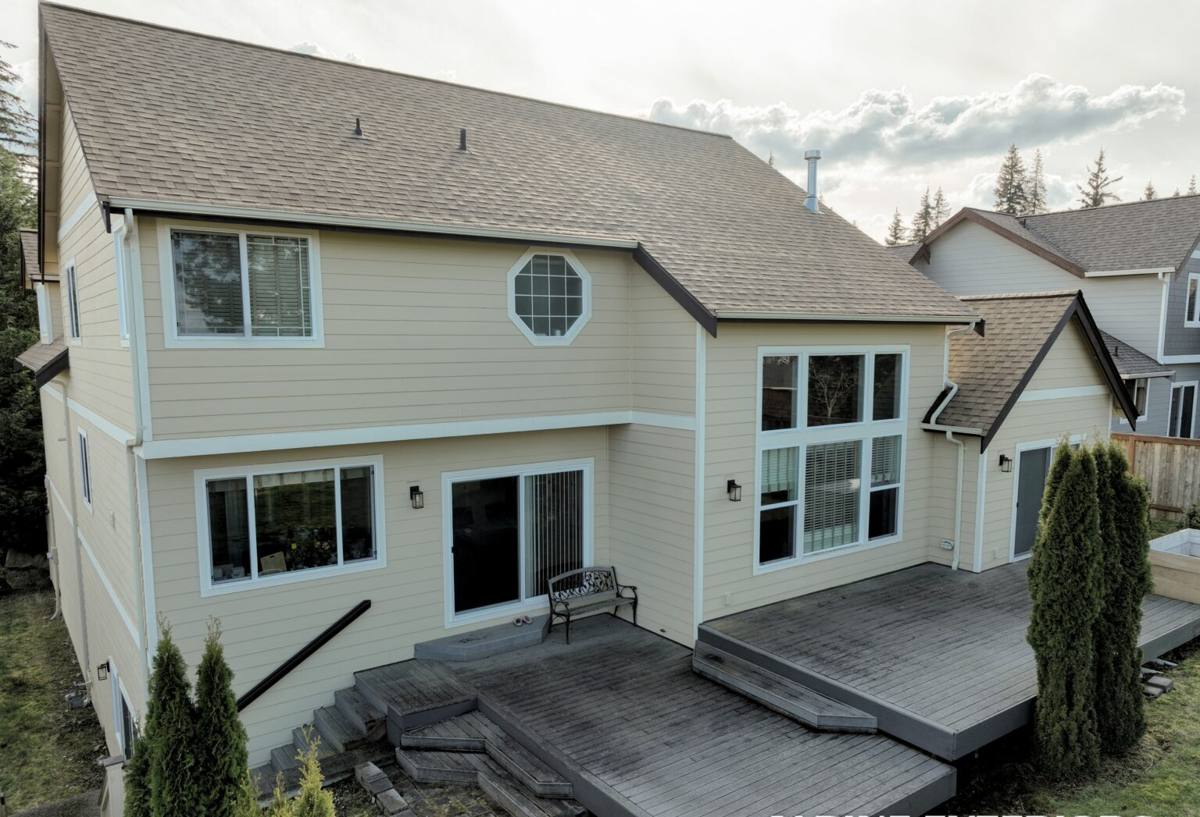
What Salt Air Actually Does to a Deck
Fastener and Hardware Corrosion
Salt air accelerates corrosion on any exposed metal — screws, joist hangers, post bases, and railing hardware. Standard galvanized fasteners that would last decades in a drier, inland part of the county can start rusting and staining the wood around them much sooner near Birch Bay. Once a fastener starts to corrode, it weakens at the exact point where it's holding structural load, and rust streaks bleeding into decking or fascia boards are one of the most common cosmetic complaints we see on older coastal decks.
Finish and Fastener Compatibility
Salt exposure also means finishes and coatings wear faster, so a deck near the water benefits from products actually rated for coastal or marine-adjacent use rather than the cheapest option on the shelf. It's a detail that's invisible on installation day and very visible five years later.
Driving Rain and Where Water Actually Gets In
The Ledger Board Connection
Most deck failures we're called out to inspect don't start with the decking itself — they start at the ledger board, the piece that attaches the deck to the house. Driving rain pushes water sideways and upward in ways that vertical siding details don't always anticipate, and if the ledger flashing isn't installed correctly, water works its way behind it and into the house framing. This is a hidden, slow-moving problem that can go unnoticed for years, which is exactly why it matters more here than in a drier climate.
Deck Surface Drainage
Beyond the ledger, water needs somewhere to go once it hits the deck surface. Proper board spacing, a slight slope away from the house, and gaps that don't trap standing water all matter more in a climate where rain is frequent and heavy rather than occasional. A flat, tightly-fitted deck surface that would be fine in a dry region becomes a moss farm and a rot risk here.
Under-Deck Moisture
On elevated decks, the space underneath rarely gets sun or airflow, which means it stays damp long after a storm has passed elsewhere in the yard. Framing in that zone needs the same moisture-conscious detailing as the visible deck surface, even though it's out of sight.
Moss: A Long-Season Problem, Not a One-Time Cleaning Job
Whatcom County's moss season runs long — shaded, north-facing, and low-airflow areas can stay damp enough to support moss growth for much of the year. On a deck, moss isn't just cosmetic. It holds moisture against the wood surface, and on composite decking it can leave a texture and residue that's genuinely slippery underfoot. The right response isn't just periodic cleaning — it's designing the deck's layout, board spacing, and surface material so moss has a harder time establishing itself in the first place.
Choosing a Deck Material for This Climate
There's no single "best" decking material for every Birch Bay property — it depends on how much shade the site gets, how close it is to the water, and how much upkeep the homeowner actually wants to do. Here's how the common options actually compare under local conditions:
| Material | Salt-Air Resistance | Moss & Moisture Behavior | Maintenance | Typical Lifespan |
|---|---|---|---|---|
| Pressure-treated wood | Fair — hardware is the weak point | Needs regular cleaning and re-sealing to resist moss and softening | High — annual cleaning/sealing | 10-15 years with upkeep |
| Cedar | Good natural rot resistance, but fasteners still corrode | Naturally moss-resistant oils fade over time; needs re-oiling | Moderate to high | 15-20 years with care |
| Composite decking | Very good — doesn't rot or splinter from salt exposure | Resists moisture absorption but can still grow surface moss if shaded and not cleaned | Low — periodic washing | 25-30+ years, manufacturer-dependent |
We don't push one material over another as a rule — we walk the site with you, look at sun exposure and drainage, and talk through the honest maintenance trade-offs before you commit. A shaded, low-airflow lot near the water is a very different recommendation than an open, south-facing yard a few blocks inland.
Our Process for a Birch Bay Deck Build
1. Site Assessment
We look at sun exposure, prevailing wind and rain direction, how close the build is to salt spray, and how the existing structure (if any) has held up. This tells us where to put extra attention in the design — usually the ledger connection, footings, and any shaded zones prone to moss.
2. Design and Material Selection
We talk through decking material, railing style, and layout with the trade-offs above on the table, not hidden in fine print. If you already have a material in mind, we'll tell you honestly what it means for maintenance in this specific location.
3. Permitting
Deck construction in Whatcom County typically requires a building permit, especially for elevated structures or anything attached to the house. We handle that process as part of the job so you're not left navigating it alone.
4. Construction
Footings sized and placed for our soil and frost conditions, ledger flashing detailed to shed water rather than trap it, stainless or coated coastal-rated fasteners throughout, and board spacing set for drainage and airflow rather than just appearance.
5. Walkthrough and Care Guidance
Before we consider the job done, we walk the finished deck with you and explain what upkeep it actually needs — realistically, not the vague "annual maintenance recommended" line you get in a manual.
What to Check Before You Hire Anyone for a Deck Build Here
- Do they mention ledger board flashing specifically, or just talk about the decking material?
- Do they use stainless or coastal-rated fasteners as standard, or only as an upsell?
- Can they explain how the deck will handle standing water and drainage, not just how it will look?
- Do they know Whatcom County's permit requirements for deck construction, and will they handle that process?
- Do they give you an honest maintenance conversation for your specific material choice, not just a sales pitch?
- Have they actually built decks in Birch Bay or similarly exposed coastal areas, not just inland projects?
Why a Crew That Already Works Birch Bay Matters
A deck design that works fine in a dry, inland neighborhood can fail early a few miles away near the water. Knowing that isn't something you pick up from a manufacturer's install manual — it comes from having built and repaired decks in Semiahmoo and the surrounding Whatcom County coastline long enough to see what actually goes wrong here versus what goes wrong elsewhere. That local experience shows up in small decisions: which fastener grade to spec without being asked, where to add extra drainage detail, and which shaded corners of a lot need a different board layout to keep moss from taking hold.
Maintaining Your Deck After the Build
Whatever material you choose, a few habits go a long way in this climate: keep gaps between boards clear of debris so water and air can move through, hose or sweep off accumulated moisture and organic debris before it turns into moss, and do a yearly check of railing hardware and fasteners for early rust staining. Catching a corroding fastener early is a five-minute fix; catching it after it's compromised the board around it is a repair job.
If you're planning a new deck or replacing one that's struggled with moisture, moss, or corrosion, we're happy to come take a look and give you a straightforward, no-pressure estimate — just fill out the form below.