 Semiahmoo Siding
 Roof Repair in Custer: Fixing What's Actually Wrong
Most roof problems in Custer don't start as leaks. They start as a few lifted shingle tabs, a strip of moss on a shaded slope, or a flashing seam that's opened up a hair at a valley or chimney — small things that sit unnoticed for a season or two before water finally finds a path inside. By the time a homeowner sees a stain on the ceiling, the damage has usually been building for a while. Custer sits inland from the water compared to a true waterfront property, but it's still well within reach of the salt-laden air, wind-driven rain, and long moss season that define this stretch of Whatcom County, and all three of those wear on a roof in specific, predictable ways.
This page is about roof repair specifically — not full tear-off replacement — for homes in Custer. It covers what tends to go wrong here, how we tell a real repair candidate from a roof that's past the point of patching, what a correct repair actually involves, and why it matters to hire a crew that already works this part of the county rather than one learning it on your roof.
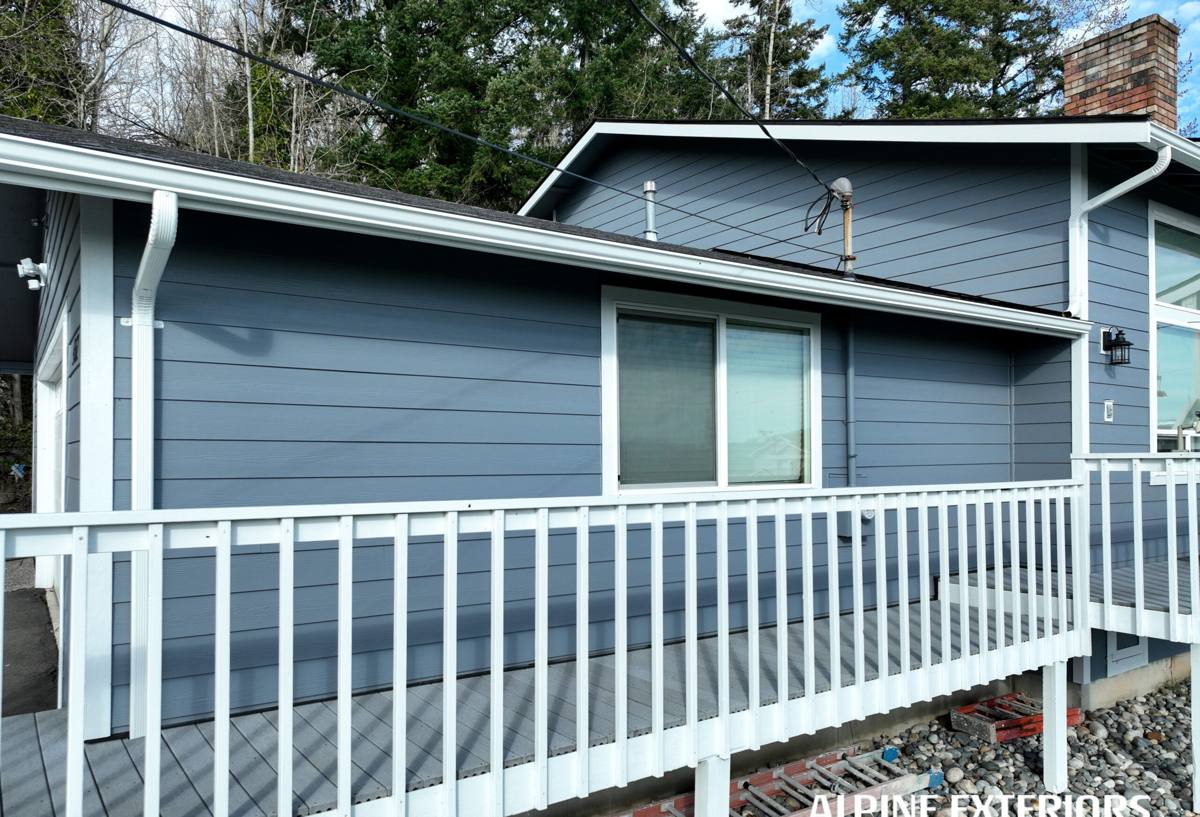
What Custer's Climate Does to a Roof
Salt Air and Corroding Metal
Even set back from the shoreline, Custer gets enough marine air carried inland on winter storms to accelerate corrosion on exposed fasteners, flashing, and any lower-grade metal on a roof. Corrosion is slow and mostly invisible from the ground, which is exactly why it causes problems — a fastener that's lost its holding strength doesn't announce itself until a shingle lifts or a flashing seam starts to gap.
Wind-Driven Rain
The flat, open agricultural land around Custer doesn't offer much of a windbreak, so rain coming off storms in the Strait of Georgia region gets pushed sideways and even upward under shingle edges rather than simply running off. That's a heavier moisture load on flashing, laps, and seams than the area's total rainfall would suggest, and it's the reason a roof that's fine in a calm, sheltered setting can leak here — the water is attacking from an angle the original installation wasn't built to handle.
A Long Moss Season
Mild temperatures and near-constant dampness through fall, winter, and spring give moss a growth season that stretches across most of the year on shaded and north-facing roof planes. Moss isn't just cosmetic — it holds moisture against the shingle surface, works into granule loss over time, and can lift shingle edges as it spreads, giving wind-driven rain an easier way in underneath.
Freeze-Thaw and Temperature Swings
Whatcom County doesn't see the deep freezes some inland climates do, but the repeated cycle of damp, near-freezing nights and wet days still stresses roofing materials and caulked seams over years, especially where a repair was done with sealant alone instead of proper flashing.
Common Roof Repair Issues We See in Custer
- Lifted, cracked, or missing shingles after a windstorm, usually starting at ridge lines or exposed edges
- Flashing that's pulled away or corroded at chimneys, skylights, and roof-to-wall transitions
- Moss buildup on shaded slopes that's started lifting shingle edges or holding constant moisture
- Granule loss and thinning shingles, often visible as grit collecting in gutters
- Valley leaks where two roof planes meet and water volume concentrates
- Soft spots or sagging in the roof deck, usually a sign moisture has been getting in for a while
- Interior ceiling stains or attic moisture that shows up well after the original leak point started
Repair vs. Replacement: How We Make the Call
Not every roof problem in Custer needs a full replacement, and we don't default to recommending one. A roof with a sound deck, reasonable remaining shingle life, and an isolated flashing or storm-damage issue is usually a solid repair candidate. A roof with widespread granule loss, multiple past patch jobs, or deck-level rot is a different story — at that point, repeated repairs start costing more over the years than doing the job right once.
| Condition | Repair Usually Makes Sense | Replacement Usually Makes Sense |
|---|---|---|
| Isolated flashing failure at chimney or valley | Yes — targeted flashing repair | Only if surrounding shingles are also failing |
| Wind damage to a section of shingles | Yes — matched-shingle patch repair | Rarely, unless the roof is already near end of life |
| Moss on an otherwise sound roof | Yes — treatment and targeted shingle repair | Not on its own |
| Widespread granule loss, roof 20+ years old | Short-term only | Yes — the roof is past its useful repair window |
| Soft or sagging roof deck | Only if the soft area is small and isolated | Yes, if deck damage is widespread |
| History of repeated past leak repairs | Case by case | Often, once patch costs start adding up |
How We Diagnose a Roof Before Recommending Anything
A repair estimate that's actually worth relying on starts with a real inspection, not a guess from the driveway. That typically includes:
- Walking the roof itself where it's safe to do so, not just viewing it from the ground or a photo
- Checking the attic for water staining, damp insulation, or daylight coming through decking
- Inspecting flashing at every valley, chimney, skylight, and wall transition, since that's where most leaks actually start
- Assessing shingle condition and granule loss across all roof planes, including shaded, moss-prone slopes
- Probing any soft-feeling deck areas to determine how far moisture damage has actually spread
- Checking ventilation, since poor attic airflow accelerates both deck rot and moss growth
We give homeowners a straightforward read on what we find, including when a repair is genuinely the right call and when it isn't. If a roof is close to the line between the two, we'll explain the trade-offs rather than pushing toward the more expensive option by default.
What a Correct Roof Repair Actually Involves
Matching the Existing Shingle
A patch repair only holds up if the replacement shingles integrate properly with the surrounding roof — matched in profile and, where possible, color, and woven into existing courses rather than just overlaid on top. A mismatched or poorly integrated patch is often where the next leak starts.
Flashing, Not Just Caulk
The most common shortcut we see in prior repair work is caulk used as a stand-in for proper flashing instead of a supplement to it. Caulk breaks down and cracks within a few seasons in this climate; it was never meant to be the only barrier at a valley, chimney, or wall transition. A correct repair rebuilds the flashing detail itself, then seals it — not the other way around.
Underlayment at the Repair Area
Where shingles are pulled back for a repair, the underlayment underneath gets inspected and replaced if it's degraded, not just left in place under new shingles. Skipping this step is a common reason a repair fails within a year or two even though the visible shingle work looks fine.
Addressing Moss at the Source
Removing moss without addressing why it's growing there — usually shade, poor drainage, or restricted airflow — means it comes back. We treat and clear existing growth as part of a repair and talk through what, if anything, can reasonably be done to slow regrowth on that particular slope.
Cost Factors in Roof Repair
Two repair estimates for what sounds like the same problem can land far apart, and the gap is usually real scope rather than one contractor padding the number.
| Factor | What It Affects |
|---|---|
| Size and location of the damaged area | Labor time and how much surrounding material needs to come up to reach it properly |
| Flashing scope | Whether the actual leak source gets rebuilt or just resealed |
| Underlayment condition under the repair area | Whether the fix addresses hidden moisture, not just the visible symptom |
| Shingle availability and matching | How closely the patch blends with the existing roof |
| Roof pitch and access | Staging and safety requirements on steeper or harder-to-reach sections |
| Extent of deck damage found | Whether the job stays a shingle-and-flashing repair or grows to include deck repair |
Our Process
- In-person inspection: We look at the roof and attic ourselves, not from a photo or a satellite image.
- Honest diagnosis: We tell you what's actually causing the problem, including if it's not what you expected, and whether repair or replacement is the right call.
- Written estimate: A clear scope covering exactly what gets repaired, what materials are used, and what's not included, before any work starts.
- Repair work: Shingle, flashing, underlayment, and moss treatment work is carried out to manufacturer and trade specification, not shortcut to save time.
- Final walkthrough: We review the completed repair with you and do a site cleanup, including a check for stray fasteners, before calling the job done.
Why Hiring a Crew That Already Works Custer Matters
A crew that regularly works roofs in and around Custer already knows how far marine air reaches inland to affect fasteners and flashing, how flat, open terrain changes the way wind-driven rain attacks a roof, and which slopes hold moss longest through the wet months. Those are the kinds of details that show up in dozens of small decisions on a repair job — which flashing gets rebuilt versus resealed, how much lap a valley needs, whether a patch is worth doing at all — decisions a crew unfamiliar with this specific part of Whatcom County might get wrong.
It also matters after the repair is done. A workmanship warranty is only as good as the contractor standing behind it a few years later, and a crew with an ongoing, established presence in this area is one you can actually reach if a question comes up down the road.
A Practical Checklist Before Hiring for Roof Repair in Custer
- Do they inspect the roof and attic in person, not just from photos?
- Does the estimate name the actual repair — flashing, shingles, underlayment — rather than a vague "roof fix"?
- Do they explain why repair makes sense over replacement for your specific roof, not just default to the bigger job?
- Do they carry current Washington contractor licensing, liability insurance, and workers' compensation?
- Does the estimate separate manufacturer material warranty from their own workmanship warranty?
- Can they point to recent, real repair work done in or near Custer?
Signs a Custer Roof Needs Repair Now, Not Later
Roofs rarely fail all at once, and catching problems at the repair stage is usually the difference between a manageable cost and a full replacement forced by water damage.
- Granules building up in gutters, a sign shingles are wearing thinner than they should be
- Visible moss or dark streaking on shaded or north-facing slopes
- Shingles that are curling, cracking, or missing after a wind event
- Any interior ceiling stain, even a small one, especially after a heavy rain
- Daylight visible through the attic roof deck
- Flashing that looks lifted, rusted, or separated at a chimney, skylight, or wall
Any one of these is worth a look before the next stretch of heavy weather, not after a leak forces the issue.
If you're dealing with a leak, storm damage, or a roof that just needs an honest second look, we're happy to come take a look at your Custer property. Reach out below for a free, no-pressure estimate.